Issue · Labor & Employment

Labor & Employment

Every labor & employment bill, vote, and legislator stance in Pennsylvania, automatically classified by Maddy, our AI policy reader.

Total bills
355
2025-2026 Regular Session
Top supporter
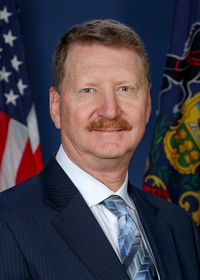
Frank Farry
93% support rate
Top opponent
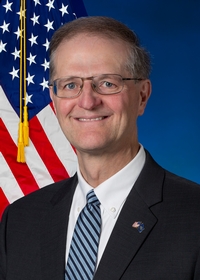
Dawn Keefer
15% support rate
Ranked legislators
10
5 support · 5 oppose
Key legislators

Who's moving labor & employment in Pennsylvania

Legislators moving labor & employment in Pennsylvania
Legislator Party Stance Support rate Votes
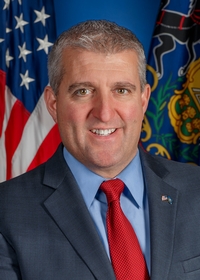
Frank Farry
Frank Farry Senate · District 6
R
Strong +
93% 45
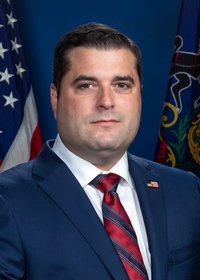
Devlin Robinson
Devlin Robinson Senate · District 37
R
Strong +
90% 52
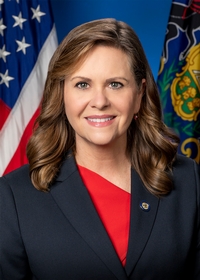
Camera Bartolotta
Camera Bartolotta Senate · District 46
R
Strong +
89% 51
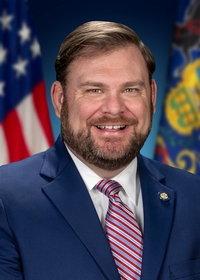
Joe Pittman
Joe Pittman Senate · District 41
R
Strong +
89% 55
Elder Vogel
Elder Vogel Senate · District 47
R
Strong +
88% 56
Dawn Keefer
Dawn Keefer Senate · District 31
R
Strong −
15% 46
Scott Hutchinson
Scott Hutchinson Senate · District 21
R
Oppose
29% 46
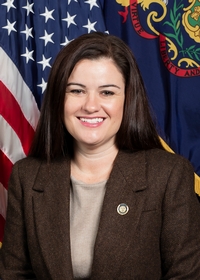
Charity Krupa
Charity Krupa House · District 51
R
Oppose
29% 256
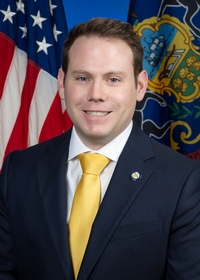
Jarrett Coleman
Jarrett Coleman Senate · District 16
R
Oppose
29% 54
Stephanie Borowicz
Stephanie Borowicz House · District 76
R
Oppose
31% 214
Showing 311–320 of 355 bills

All labor & employment bills

in committee · Pennsylvania · House Aug 19, 2025

HB 1808: An Act amending the act of June 13, 1967 (P.L.31, No.21), known as the Human Services Code, in public assistance, further providing for workfare program.

HB 1808 establishes a workfare pilot program for Temporary Assistance for Needy Families (TANF) recipients in Pennsylvania's fourth and fifth class counties. The program requires recipients to work 40 hours per week for an employer while gradually reducing cash assistance: initially receiving benefits alongside pay for 20 hours of work, then up to 70% of benefits with pay for 30 hours after six months, and finally full pay for 40 hours with cash assistance termination after 12 months. It applies only to the pilot counties and does not alter existing TANF eligibility rules. The bill mandates the department to implement the program within six months of its effective date.
in committee · Pennsylvania · Senate Jan 24, 2025

SB 179: An Act amending the act of August 15, 1961 (P.L.987, No.442), known as the Pennsylvania Prevailing Wage Act, further providing for remedies and penalties.

SB 179 amends Pennsylvania's Prevailing Wage Act to strengthen penalties for contractors who intentionally underpay workers on public projects. It establishes tiered debarment periods: 3 years for unpaid wages under $1 million, 5 years for $1-10 million, and 10 years for over $10 million. This directly affects contractors who violate prevailing wage laws, barring them from winning future public contracts during these periods. The bill also authorizes the Secretary of Labor to request the Attorney General to recover penalties for the state. These changes aim to enforce compliance with prevailing wage requirements on public construction projects.
Sub-Topics Labor Standards
in committee · Pennsylvania · House Feb 4, 2025

HB 470: An Act providing for meal breaks or rest periods for employees; and imposing penalties.

HB 470 requires employers with 15 or more employees in Pennsylvania to provide a paid 30-minute meal break or rest period after five consecutive hours of work. This applies to all covered employees, with exemptions for union contracts that already provide equivalent or better break rights and during workplace emergencies. Employers violating the law face penalties of $100-$500 per affected employee per missed break, with additional recovery of lost wages for workers. The bill takes effect 90 days after enactment.
in committee · Pennsylvania · House Sep 2, 2025

HB 1580: An Act providing for regulations for employers to protect employees from heat-related injury or heat-related illness caused by heat stress; imposing duties on the Department of Labor and Industry and the Secretary of Labor and Industry; establishing the Heat Protection Enforcement Fund; and imposing penalties.

HB 1580 requires employers to implement specific heat safety measures, including providing cooling breaks and access to water, to protect employees working in conditions causing heat stress. It directly affects workers in outdoor and high-heat environments, such as construction, agriculture, and manufacturing. The bill establishes a new Heat Protection Enforcement Fund to support Department of Labor and Industry oversight and imposes penalties for non-compliance. Key provisions mandate employer action plans, define heat illness prevention protocols, and assign enforcement duties to the Department of Labor and Industry.
in committee · Pennsylvania · Senate Jun 18, 2025

SB 853: An Act amending the act of March 4, 1971 (P.L.6, No.2), known as the Tax Reform Code of 1971, providing for small business minimum wage increase tax credit.

SB 853 creates a tax credit for small Pennsylvania businesses (with 50 or fewer full-time equivalent employees) affected by minimum wage increases. It allows employers to claim a credit equal to 50% of the wage increase cost in the first year after a minimum wage hike, and 25% in the second year, against their state tax liability. Unused credit can be carried over for up to three years but cannot be refunded or carried back. Pass-through businesses may also transfer unused credits to owners in proportion to their share of business income.
Sub-Topics Business Taxes Tax Credits Minimum Wage Tags Small Business
in committee · Pennsylvania · House Sep 10, 2025

HB 1855: An Act requiring an employer to provide paid leave to an employee due to a climate-related emergency; establishing the Climate-related Emergency Paid Leave Fund; and imposing duties on the Department of Labor and Industry.

HB 1855 requires most employers to provide paid leave to employees who need time off due to climate-related emergencies, such as hurricanes, wildfires, or extreme weather events. It establishes a state-funded Climate-related Emergency Paid Leave Fund to reimburse employers for the cost of this leave. The Department of Labor and Industry would administer the fund, set eligibility criteria for employees, and manage employer reimbursement processes. This bill directly affects employees in climate-impacted areas and their employers, creating a new paid leave requirement tied to weather emergencies.
Sub-Topics Paid Leave
passed · Pennsylvania · House Mar 25, 2025

HB 118: An Act amending the the act of October 24, 2012 (P.L.1209, No.151), known as the Child Labor Act, further providing for penalties.

HB 118 amends Pennsylvania's Child Labor Act to increase penalties for employers violating child labor laws. It raises the fine for first-time violations from $500 to $1,000 per violation and increases penalties for repeat offenses to $3,000 per violation or up to 10 days in jail. The bill directly affects employers who hire minors in prohibited work situations. These changes are concrete policy adjustments to enforcement, not new work restrictions. The amendment takes effect 30 days after enactment.
in committee · Pennsylvania · House Aug 19, 2025

HB 1810: An Act providing for workplace violence prevention and emergency preparedness standards for retail employers and employees; imposing duties on the Department of Labor and Industry; and imposing penalties.

HB 1810 requires retail employers to establish workplace violence prevention and emergency preparedness standards for their employees. It mandates the Department of Labor and Industry to develop and enforce these safety standards, including specific measures for handling threats or incidents. The bill directly affects retail businesses and their workers by creating new safety obligations. Violations could result in penalties imposed by the Department, though specific penalty amounts are not detailed in the provided context.
in committee · Pennsylvania · House Sep 10, 2025

HB 1629: An Act amending Title 71 (State Government) of the Pennsylvania Consolidated Statutes, providing for public worker safety and protection.

HB 1629 requires Pennsylvania public employers to create safety plans protecting outdoor public workers, including sanitation staff, crossing guards, utility workers, and park maintenance crews. It mandates risk assessments, quarterly incident reviews, and mandatory violence prevention training within 30 days of hire - covering de-escalation, reporting, and legal rights - refreshed every two years. Employers must establish confidential incident reporting systems, provide paid leave for recovery after violent incidents, and offer counseling or legal support. The bill also requires data collection on workplace violence and creates enforcement mechanisms, including fines for non-compliance and protections against retaliation for reporting.
in committee · Pennsylvania · House Jun 16, 2025

HB 1617: An Act amending the act of July 14, 1961 (P.L.637, No.329), known as the Wage Payment and Collection Law, further providing for definitions; and providing for specific liability.

HB 1617 amends Pennsylvania's Wage Payment and Collection Law to clarify that general contractors are jointly and severally liable for unpaid wages owed by subcontractors on construction projects. This directly affects construction workers who may receive faster payment, as well as general contractors (who must cover subcontractors' wage violations) and subcontractors (who must reimburse contractors under specific conditions). Key provisions require general contractors to pay wages if subcontractors fail to do so, unless the subcontractor's contract already covers indemnification or the general contractor delayed payment. The bill applies to new construction contracts entered after its effective date, which is 60 days after passage.
Sub-Topics Labor Standards
Showing 311 to 320 of 355 bills
Previous 1 31 32 33 36 Next