Issue · Labor & Employment

Labor & Employment

Every labor & employment bill, vote, and legislator stance in Pennsylvania, automatically classified by Maddy, our AI policy reader.

Total bills
355
2025-2026 Regular Session
Top supporter
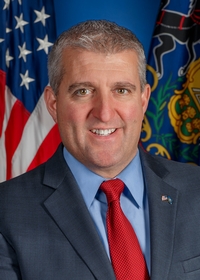
Frank Farry
93% support rate
Top opponent
Dawn Keefer
15% support rate
Ranked legislators
10
5 support · 5 oppose
Key legislators

Who's moving labor & employment in Pennsylvania

Legislators moving labor & employment in Pennsylvania
LegislatorPartyStanceSupport rateVotes
Frank Farry
Frank Farry Senate · District 6
R
Strong +
93%45
Devlin Robinson
Devlin Robinson Senate · District 37
R
Strong +
90%52
Camera Bartolotta
Camera Bartolotta Senate · District 46
R
Strong +
89%51
Joe Pittman
Joe Pittman Senate · District 41
R
Strong +
89%55
Elder Vogel
Elder Vogel Senate · District 47
R
Strong +
88%56
Dawn Keefer
Dawn Keefer Senate · District 31
R
Strong −
15%46
Scott Hutchinson
Scott Hutchinson Senate · District 21
R
Oppose
29%46
Charity Krupa
Charity Krupa House · District 51
R
Oppose
29%256
Jarrett Coleman
Jarrett Coleman Senate · District 16
R
Oppose
29%54
Stephanie Borowicz
Stephanie Borowicz House · District 76
R
Oppose
31%214
Showing 1–10 of 355 bills

All labor & employment bills

in committee · Pennsylvania · House Aug 25, 2026

HB 2748: An Act amending the act of March 4, 1971 (P.L.6, No.2), known as the Tax Reform Code of 1971, in employer child care contribution tax credit, further providing for definitions and for employer child care contribution tax credit.

Pennsylvania House Bill 2748 significantly expands the state's employer child care contribution tax credit for taxable years beginning after December 31, 2025. The bill increases the maximum amount of employee contributions that count toward the credit from $500 to $10,000 per employee and raises the credit rate from 30% to 100% of those qualifying contributions. To manage funding, the legislation caps total annual credits at $10 million and includes a proration mechanism that proportionally reduces individual claims if the total demand exceeds this limit.
in committee · Pennsylvania · House Aug 18, 2026

HB 2733: An Act providing for prenatal care benefits and for prenatal care leave account; conferring powers and imposing duties on the Department of Labor and Industry; and imposing penalties.

Pennsylvania House Bill 2733, known as the Banked Use for Maternity Protection Act, requires employers to provide eligible employees with a dedicated account containing 24 hours of paid leave specifically for prenatal medical appointments and related travel. To qualify, an employee must have worked for the same employer in the Commonwealth for at least 30 days, after which the employer must establish this separate account within two days of notification. The bill mandates that this leave be compensated at the employee's regular rate and count toward seniority and benefits, while prohibiting employers from forcing staff to use other types of leave or retaliating against them for utilizing these protections. Employers with 15 or fewer employees may apply for a six-month hardship exemption, and violations of the act are subject to fines of up to $50,000 per instance.
in committee · Pennsylvania · House Jun 30, 2026

HB 2685: An Act amending the act of March 4, 1971 (P.L.6, No.2), known as the Tax Reform Code of 1971, in tax credit and tax benefit administration, further providing for definitions and providing for tax credits relating to economic development.

This bill amends Pennsylvania's tax code to create a new economic development tax credit designed to support business growth and infrastructure improvements within the state. To receive this credit, entities must hire only Pennsylvania residents, use 100% materials sourced from within the state or the United States, and comply with prevailing wage laws. The Department of Community and Economic Development is tasked with auditing recipients annually to ensure they meet these requirements, and any entity found non-compliant must repay the full amount of the tax credit.
Sub-Topics Business Taxes Tax Credits Tax Incentives Tags Economic Development
in committee · Pennsylvania · House Jul 15, 2026

HB 2700: An Act amending the act of December 17, 1959 (P.L.1913, No.694), known as the Equal Pay Law, further providing for title of act and for definitions; providing for disclosure of wage and benefit information; further providing for penalties; and imposing penalties for nondisclosure of wage and benefit information.

This bill updates Pennsylvania's Equal Pay Law to require employers with fifteen or more workers to share specific wage and benefit details in job advertisements and job offers. Under the new rules, companies must list costs for health insurance, life insurance, and retirement plans in job postings or provide a direct link to this information online. When making a job offer, employers must also state the salary or hourly wage, clarify overtime rules, and include summaries of employee benefit plans. The legislation applies to positions performed in Pennsylvania, including remote roles, and establishes penalties for employers who knowingly fail to provide this required information.
in committee · Pennsylvania · House Jun 17, 2026

HB 131: An Act amending Title 44 (Law and Justice) of the Pennsylvania Consolidated Statutes, in law enforcement background investigations and employment information, further providing for maintenance of records and for hiring report; and imposing penalties.

This bill requires Pennsylvania law enforcement agencies to publicly notify the community 14 days before hiring an officer with a history of specific disciplinary actions, such as excessive force, theft, or sexual misconduct. Agencies must also submit detailed hiring reports explaining their rationale for employing individuals with these records to a state commission, which will maintain these reports in a public database. To ensure compliance, the legislation imposes penalties that could make non-compliant agencies ineligible for state funding related to equipment, hiring, overtime, and community programs. Additionally, the bill mandates an annual public report reviewing the database's impact on police accountability and community safety.
in committee · Pennsylvania · Senate Jun 18, 2026

SR 339: A Resolution designating the week of June 8 through 14, 2026, as "Union Organizing Week" in Pennsylvania, in honor of those workers who have fought for their right to organize and bargain collectively at their workplace.

This Senate Resolution designates the week of June 8 through 14, 2026, as "Union Organizing Week" throughout Pennsylvania. The measure directly affects workers and employers by formally recognizing the historical efforts of employees who have fought for the right to organize and bargain collectively. The resolution highlights the benefits of unionization, such as improved workplace safety and fair wages, while acknowledging the challenges workers face during the organizing process. It serves as a commemorative gesture rather than establishing new legal requirements or changing existing labor laws.
in committee · Pennsylvania · Senate Jun 26, 2026

SB 1389: An Act amending the act of March 4, 1971 (P.L.6, No.2), known as the Tax Reform Code of 1971, providing for Small Business Health Care Premiums Contribution Tax Credit.

This bill creates a new tax credit for small businesses in Pennsylvania that help employees pay for health insurance. To qualify, a business must have 50 or fewer employees and contribute up to $1,000 per employee toward premiums for qualified health plans purchased through the state health exchange. The credit is calculated based on the first $1,000 of contributions made for each eligible employee and can be used to reduce the business's state tax liability. Companies claiming the credit must submit a specific application form to the Department of Revenue that includes detailed information about their employees and the insurance providers they hired.
Sub-Topics Business Taxes Tax Credits Insurance Tags Small Business
in committee · Pennsylvania · Senate Jun 26, 2026

SB 1395: An Act amending the act of January 17, 1968 (P.L.11, No.5), known as The Minimum Wage Act of 1968, further providing for preemption.

This bill updates Pennsylvania's Minimum Wage Act to establish state-level preemption, meaning the state government sets the minimum wage rules that apply to all employers across the state. It prevents local cities and counties from passing their own minimum wage laws that differ from the state standard, with two exceptions: local rules adopted before January 1, 2006, remain valid, and new local rules can still be passed after the bill takes effect. The legislation will become active 60 days after it is signed into law.
in committee · Pennsylvania · House Jun 2, 2026

HB 2585: An Act amending the act of January 17, 1968 (P.L.11, No.5), known as The Minimum Wage Act of 1968, further providing for minimum wages.

This bill amends Pennsylvania's Minimum Wage Act to update provisions regarding training wages for employees under the age of twenty. It allows employers to pay a reduced wage rate during the first sixty days of employment for young workers, provided the employee is informed of their right to the full minimum wage after the training period ends. The legislation also includes a prohibition against hiring new trainees at a lower wage if it results in displacing existing employees through reduced hours or benefits. These changes directly affect employers in the state and young workers entering the workforce, ensuring specific protections while allowing for a temporary training wage structure.
in committee · Pennsylvania · House Jun 3, 2026

HR 549: A Resolution urging the Congress of the United States and the United States Secretary of Labor to review the child labor provisions of the Fair Labor Standards Act and the occupational restrictions issued under the act and take action to increase employment and training opportunities for youth workers.

This Pennsylvania House resolution urges the U.S. Congress and the Secretary of Labor to review and potentially update federal child labor laws under the Fair Labor Standards Act. The bill argues that current restrictions on hours and job types for young workers limit their ability to gain essential training and fill critical skills gaps in industries like construction and manufacturing. While the resolution emphasizes that safety must remain a priority, it calls for reforms that would allow more youth employment opportunities to support the state's economy. Because this is a non-binding resolution, it does not change any laws but instead serves as a formal request for federal officials to reconsider existing regulations.
Sub-Topics Child Labor Labor Standards Minimum Wage Tags Children
Showing 1 to 10 of 355 bills
1 2 3 36 Next