Issue · Labor & Employment

Labor & Employment

Every labor & employment bill, vote, and legislator stance in Pennsylvania, automatically classified by Maddy, our AI policy reader.

Total bills
30
2025-2026 Regular Session
Top supporter
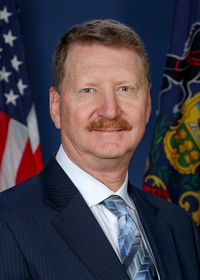
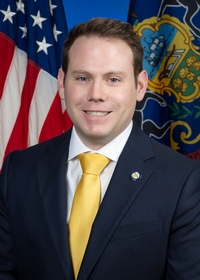
Frank Farry
93% support rate
Top opponent
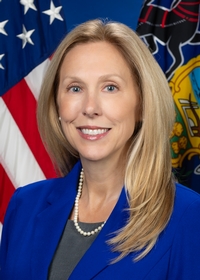
Dawn Keefer
15% support rate
Ranked legislators
10
5 support · 5 oppose
Key legislators

Who's moving labor & employment in Pennsylvania

Legislators moving labor & employment in Pennsylvania
Legislator Party Stance Support rate Votes
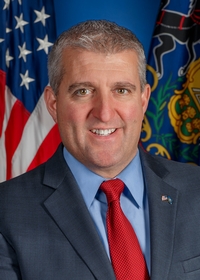
Frank Farry
Frank Farry Senate · District 6
R
Strong +
93% 45
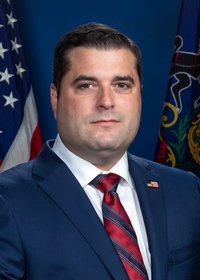
Devlin Robinson
Devlin Robinson Senate · District 37
R
Strong +
90% 52
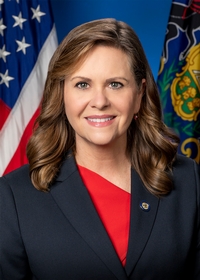
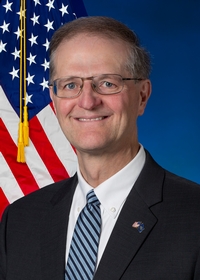
Camera Bartolotta
Camera Bartolotta Senate · District 46
R
Strong +
89% 51
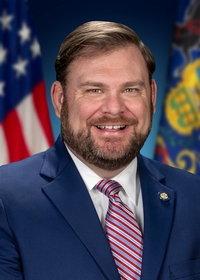
Joe Pittman
Joe Pittman Senate · District 41
R
Strong +
89% 55
Elder Vogel
Elder Vogel Senate · District 47
R
Strong +
88% 56
Dawn Keefer
Dawn Keefer Senate · District 31
R
Strong −
15% 46
Scott Hutchinson
Scott Hutchinson Senate · District 21
R
Oppose
29% 46
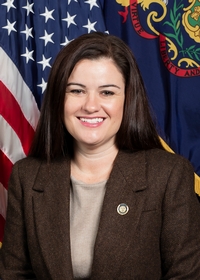
Charity Krupa
Charity Krupa House · District 51
R
Oppose
29% 256
Jarrett Coleman
Jarrett Coleman Senate · District 16
R
Oppose
29% 54
Stephanie Borowicz
Stephanie Borowicz House · District 76
R
Oppose
31% 214
Showing 1–10 of 30 bills

All labor & employment bills

in committee · Pennsylvania · Senate Jun 26, 2026

SB 1395: An Act amending the act of January 17, 1968 (P.L.11, No.5), known as The Minimum Wage Act of 1968, further providing for preemption.

This bill updates Pennsylvania's Minimum Wage Act to establish state-level preemption, meaning the state government sets the minimum wage rules that apply to all employers across the state. It prevents local cities and counties from passing their own minimum wage laws that differ from the state standard, with two exceptions: local rules adopted before January 1, 2006, remain valid, and new local rules can still be passed after the bill takes effect. The legislation will become active 60 days after it is signed into law.
in committee · Pennsylvania · House Jun 2, 2026

HB 2585: An Act amending the act of January 17, 1968 (P.L.11, No.5), known as The Minimum Wage Act of 1968, further providing for minimum wages.

This bill amends Pennsylvania's Minimum Wage Act to update provisions regarding training wages for employees under the age of twenty. It allows employers to pay a reduced wage rate during the first sixty days of employment for young workers, provided the employee is informed of their right to the full minimum wage after the training period ends. The legislation also includes a prohibition against hiring new trainees at a lower wage if it results in displacing existing employees through reduced hours or benefits. These changes directly affect employers in the state and young workers entering the workforce, ensuring specific protections while allowing for a temporary training wage structure.
in committee · Pennsylvania · Senate May 7, 2026

SB 1327: An Act amending Title 24 (Education) of the Pennsylvania Consolidated Statutes, in preliminary provisions relating to retirement for school employees, further providing for definitions; and, in membership, contributions and benefits, further providing for mandatory and optional membership in the system and participation in the plan.

This bill updates Pennsylvania's school employee retirement system by clarifying which organizations are eligible to participate. It specifically prohibits certain school employees and any new hires at non-governmental entities from joining the retirement plan, while allowing current participants at those entities to remain enrolled until they leave their jobs. To manage the exit of ineligible organizations, the bill replaces standard withdrawal liability with a one-time administrative fee capped at 5% of the potential liability, which funds the administrative costs of removing these entities from the system.
Sub-Topics Retirement Benefits
in committee · Pennsylvania · Senate Apr 23, 2026

SB 1301: An Act amending the act of December 5, 1936 (2nd Sp.Sess., 1937 P.L.2897, No.1), known as the Unemployment Compensation Law, in preliminary provisions, further providing for definitions.

This bill amends Pennsylvania's Unemployment Compensation Law to clarify how the state defines "employment." Specifically, it adds a provision stating that temporary, seasonal labor performed by aliens admitted under specific federal immigration categories does not count as employment for unemployment compensation purposes. The change directly affects the Department of Labor and Industry by updating the rules used to determine eligibility for benefits. The legislation applies to services performed on or after its effective date, which is set to occur 60 days after enactment.
Sub-Topics Unemployment
in committee · Pennsylvania · House Mar 13, 2025

HB 903: An Act prohibiting the employment of unauthorized employees; requiring meat packing and food preparation industry employers to verify the Social Security numbers of employees; imposing duties on the Department of Labor and Industry; and imposing penalties.

This bill requires employers in Pennsylvania's meat packing and food preparation industries to verify the work authorization status of their employees using the federal E-Verify system. It applies specifically to businesses with 100 or more employees at a single facility or those licensed under state food safety and meat hygiene laws. Employers must keep verification records for the duration of employment or three years, whichever is longer, and the Department of Labor and Industry will be authorized to investigate complaints and inspect business records for compliance. The legislation prohibits knowingly hiring unauthorized employees and establishes a formal complaint process for individuals alleging violations. Penalties for non-compliance are imposed through existing state legal frameworks.
in committee · Pennsylvania · House Mar 13, 2025

HB 905: An Act prohibiting the employment of unauthorized employees; requiring hotel and lodging industry employers to verify the Social Security numbers of employees; imposing duties on the Department of Labor and Industry; and imposing penalties.

This Pennsylvania bill requires hotels and lodgings with at least 150 rooms to verify the work authorization status of all employees through the federal E-Verify system and maintain verification records for at least three years or the duration of employment. The law prohibits employers from knowingly hiring individuals who lack legal permission to work in the United States and applies to staffing agencies supplying workers to the hotel industry. The Department of Labor and Industry will be tasked with investigating complaints about violations, conducting inspections of employer records, and interviewing relevant personnel. Employers who violate the prohibition face penalties, while individuals who knowingly submit false information in complaints could face criminal charges.
Sub-Topics Work Authorization
in committee · Pennsylvania · House Feb 9, 2026

HB 2204: An Act amending the act of June 2, 1915 (P.L.736, No.338), known as the Workers' Compensation Act, in liability and compensation, further providing for schedule of compensation and for physical examination or expert interview.

HB 2204 modifies Pennsylvania's Workers' Compensation Act to require injured workers who have received total disability payments for 104 weeks to undergo a medical examination. This exam, requested by the insurer within 60 days after the 104-week period ends, must be conducted by a Pennsylvania-licensed physician certified by an American Board of Medical Specialties-approved board (and actively practicing at least 20 hours weekly). The examination determines the degree of lasting disability using the American Medical Association's impairment guidelines, affecting workers transitioning from temporary to permanent disability benefits and insurers seeking to assess long-term compensation needs.
in committee · Pennsylvania · Senate Jan 30, 2026

SB 1151: An Act amending the act of June 2, 1915 (P.L.736, No.338), known as the Workers' Compensation Act, in liability and compensation, further providing for schedule of compensation.

SB 1151 amends Pennsylvania's Workers' Compensation Act to require workers receiving total disability compensation for 104 weeks (approximately 2 years) to undergo a medical exam. The insurer must request this exam within 60 days after the 104-week period ends, to assess any permanent impairment from the work injury. The exam must be conducted by a licensed Pennsylvania physician certified by an American Board of Medical Specialties-approved board (and active in clinical practice), using the American Medical Association's impairment guidelines. This change directly affects workers who have exhausted the initial disability compensation period and insurers who must initiate the evaluation process.
in committee · Pennsylvania · House Jan 16, 2025

HB 161: An Act amending the act of August 15, 1961 (P.L.987, No.442), known as the Pennsylvania Prevailing Wage Act, further providing for definitions.

HB 161 amends Pennsylvania's Prevailing Wage Act by adding specific definitions to clarify which construction projects are covered. It defines "public work" to exclude school safety and security improvements, such as projects funded under the Public School Code for safety upgrades. This directly affects construction contractors working on public projects costing over $25,000, as school safety projects will no longer require prevailing wage rates. The bill takes effect 60 days after enactment.
in committee · Pennsylvania · Senate Sep 19, 2025

SB 1016: An Act amending the act of June 13, 2008 (P.L.182, No.27), known as the Clean Indoor Air Act, further providing for title of act, for definitions, for prohibition, for signage, for enforcement, for preemption of local ordinances and for repeal; and making editorial changes.

This bill amends Pennsylvania's Clean Indoor Air Act (2008) to update definitions, expand smoking prohibitions, clarify signage requirements, strengthen enforcement mechanisms, and clarify that state law preempts stricter local smoking ordinances. It directly affects businesses operating in public spaces (like restaurants, bars, and workplaces) and local governments that previously enacted more restrictive smoking bans. The key change is reinforcing state-level rules over local ones, while making editorial updates to the existing law's structure. This focuses on maintaining consistent indoor air quality standards across the state.
Showing 1 to 10 of 30 bills
1 2 3 Next