Issue · Education

Education (K-12 Education)

Every education bill, vote, and legislator stance in North Carolina, automatically classified by Maddy, our AI policy reader.

Total bills
61
2025-2026 Session
Top supporter
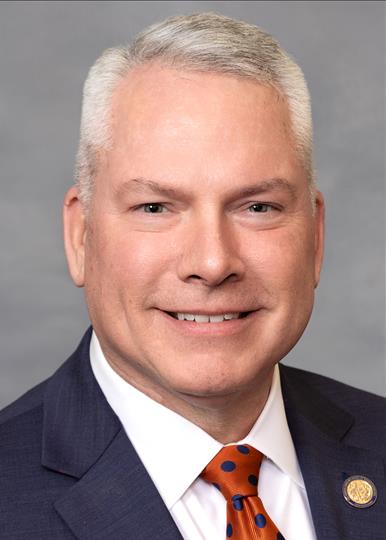
Carla Cunningham
80% support rate
Top opponent
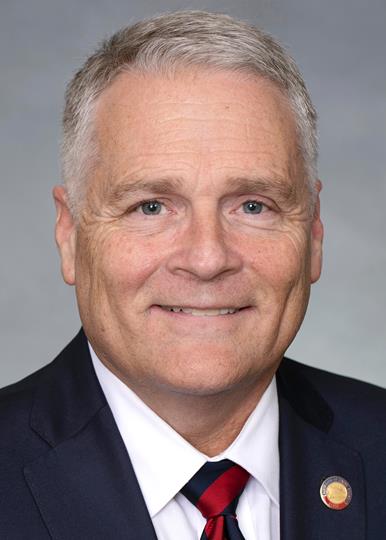
Anna Ferguson
33% support rate
Ranked legislators
10
5 support · 5 oppose
Key legislators

Who's moving k-12 education in North Carolina

Legislators moving k-12 education in North Carolina
Legislator Party Stance Support rate Votes
Carla Cunningham
Carla Cunningham House · District 106
I
Strong +
80% 5
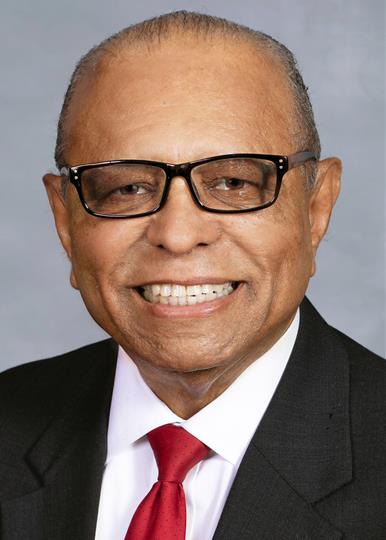
Abe Jones
Abe Jones House · District 38
D
Support
67% 6
Charles Smith
Charles Smith House · District 44
D
Support
67% 6
Chris Humphrey
Chris Humphrey House · District 12
R
Support
67% 6
Grant Campbell
Grant Campbell House · District 83
R
Support
67% 6
Anna Ferguson
Anna Ferguson House · District 119
R
Oppose
33% 3
EP
Erin Paré House · District 37
R
Oppose
40% 5
Jimmy Dixon
Jimmy Dixon House · District 4
R
Oppose
40% 5
Kelly Hastings
Kelly Hastings House · District 110
R
Oppose
40% 5
Nasif Majeed
Nasif Majeed House · District 99
I
Oppose
40% 5
Showing 1–10 of 61 bills

All education bills

died · North Carolina · Senate May 13, 2026

SB 1044: Foundational Mathematics Act.

The Foundational Mathematics Act establishes state requirements to improve math proficiency for North Carolina students from kindergarten through eighth grade. It mandates that schools provide at least 60 minutes of daily, evidence-based math instruction and require students to take math assessments three times per year to identify skill gaps. Students who fall below grade level must receive targeted interventions documented in a Mathematics Success Plan, while the state will also create a new program to support artificial intelligence in math instruction.
Sub-Topics K-12 Education
died · North Carolina · Senate May 5, 2026

SB 981: AI in Ed Task Force and Standards.

This North Carolina bill creates a temporary Artificial Intelligence in Education Task Force to study how AI tools are used in schools and to develop rules for their regulation. The task force will include representatives from the state government, universities, and private businesses, and it must submit its findings by March 2028. Separately, the legislation requires the State Board of Education to create standards for teaching AI concepts to students from kindergarten through grade 12, covering topics like how AI works, ethical use, and critical thinking. To support these efforts, the bill appropriates $250,000 to provide professional development for teachers and administrators.
died · North Carolina · Senate May 4, 2026

SB 948: Screen Free Schools Act.

This bill requires North Carolina public schools to create policies limiting the use of wireless devices like phones and tablets during instructional time. It mandates that students in kindergarten through fifth grade cannot use any such devices in classrooms, while older students face stricter limits on device usage and access to non-instructional content like social media. To support these restrictions, the legislation appropriates funds to hire one teacher assistant for every classroom serving students in grades K through five. Additionally, the law grants parents the right to opt out of their children being issued wireless devices by the school and ensures that printed materials are used for instruction in elementary and middle schools.
passed · North Carolina · Senate May 13, 2026

SB 990: Students First Act.

This bill, known as the Students First Act, introduces three main changes to North Carolina's education system. First, it protects student privacy by explicitly classifying personally identifiable disciplinary records as confidential, preventing them from being released as public records. Second, it creates a work group to study and plan a transition to a weighted student funding model for K-12 public schools, aiming to increase flexibility and transparency in how schools receive state money. Finally, the bill establishes a pilot program for the 2027-2028 school year that would provide high school students with funds to participate in personalized learning and credit-bearing activities. The legislation also appropriates $300,000 to support the formation of the funding strategy work group.
passed · North Carolina · Senate Jun 3, 2026

SB 1006: K-12 Innovation and Transformation Act.

This bill creates the North Carolina High School Redesign Commission to study and recommend ways to better prepare students for college and careers by exploring flexible diploma requirements, work-based learning, and competency-based education. The fifteen-member commission includes representatives from the legislature, governor, universities, community colleges, and business organizations, and it must submit its findings by April 2027. Additionally, the legislation appropriates $3.6 million to fund a pilot program for ten high schools focused on STEM education and manufacturing skills. The bill also establishes a new procedure to monitor and prevent local school districts from spending more than their state-funded allotments.
in committee · North Carolina · House May 4, 2026

HB 1161: Omnibus Artificial Intelligence Protections.

HB 1161 establishes state protections for artificial intelligence across elections, education, employment, courts, and insurance. In elections, the bill bans the use of AI-generated images, videos, voices, or text in political advertisements and imposes severe penalties, including donation freezes, for violations. For schools, it empowers local districts to restrict student access to AI tools and allows for disciplinary action, while also mandating new middle school courses on critical thinking and technology awareness. The legislation appropriates funds to help implement these measures and applies to political ads immediately and to school policies starting in the 2026-2027 academic year.
in committee · North Carolina · Senate Apr 29, 2026

SB 864: Safe and Responsible AI in Schools Act.

This bill requires North Carolina public schools to update their computer science standards to include age-appropriate artificial intelligence literacy for students from kindergarten through 12th grade, with a focus on ethics, privacy, and safety. It mandates that all local school boards, charter schools, and state agencies adopt specific AI use policies based on a model policy developed by the Department of Public Instruction by mid-2027. Additionally, the bill establishes a framework for evaluating AI educational tools and requires the state to contract with the Friday Institute to provide training for educators and administrators on using AI effectively. These measures are designed to ensure that schools have clear guidelines and resources for integrating AI into their educational environments while protecting student data and maintaining academic integrity.
died · North Carolina · Senate May 13, 2026

SB 991: Community College Workforce Readiness Act.

This bill allocates state funds to enhance workforce training for individuals with intellectual and developmental disabilities in North Carolina community colleges. It establishes a program to offer micro-credentials and on-the-job training, while funding specific roles to connect colleges with business partners and expand career pathways for high school students. Additionally, the legislation directs money toward a study on creating faster routes for apprentices to become teachers and provides resources to implement a secure digital wallet system for managing academic credentials.
died · North Carolina · Senate May 5, 2026

SB 1035: Revise Math Graduation Requirements.

This North Carolina bill updates high school graduation requirements for mathematics by replacing a single sequence of four courses with four distinct pathways aligned to student goals. Students must complete NC Math 1, NC Math 2, and two additional math courses chosen from options like college preparatory, career and technical education, quantitative reasoning, or STEM. The law also mandates that each student's career development plan include these specific math pathways and requires the State Board of Education to finalize the course rules by July 2027. Implementation begins in the 2028-2029 school year for students entering ninth grade, with funding provided to the Department of Public Instruction for rollout.
died · North Carolina · Senate Apr 30, 2026

SB 913: Screen Free Schools.

This bill, titled Screen Free Schools, requires public schools in North Carolina to create policies that limit the use of wireless devices like cell phones, tablets, and laptops during instructional time. Under the new rules, students in kindergarten through eighth grade must keep these devices off at all times on school property, while high school students may only use them during specific state testing periods unless a teacher grants permission for educational or emergency reasons. The legislation includes exceptions for students who need devices for individualized education plans, medical conditions, or teacher-approved learning activities. To help schools implement these changes, the state will provide $100,000 in funding for the 2026-2027 school year, and the law takes effect on July 1, 2026.
Showing 1 to 10 of 61 bills
1 2 3 7 Next