Maddy summaryHB 635 requires all individuals seeking positions involving direct contact with children in Maryland child care facilities - including staff and volunteers - to undergo a criminal history background check. It creates a centralized unit within the State Department of Education to process these checks, with strict timelines (10 days for initial status, 45 days for final eligibility) and strict confidentiality rules prohibiting unauthorized sharing of results. The bill directly affects child care facilities, their employees, and volunteers by mandating these checks and establishing a standardized process for handling them. It also updates existing licensing rules to align with this new requirement, effective October 1, 2026.
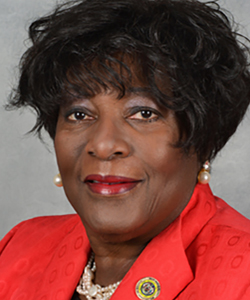
Rep. Edith Patterson
Sponsored bills
Maddy summaryHB 721, the Uniformed Services Spouses Act, extends existing Maryland benefits for military service members and veterans to include their spouses. It adds "eligible spouse" as a defined term to priority registration at public colleges (within 15 years of service member’s last active duty, max four academic years), community college resource centers with tailored support, and senatorial/Delegate scholarships for spouses of active service members. The bill also modifies hiring preferences for state public service roles to include spouses of veterans. These changes directly affect spouses of active-duty service members and veterans living in Maryland who seek education, career support, or scholarships. The law updates multiple sections of Maryland’s education and employment codes to include spouses in eligibility criteria previously limited to service members themselves.
Maddy summaryHB 829 requires drivers applying for for-hire or transportation network operator licenses (like Uber/Lyft drivers) in Maryland to complete human trafficking awareness training. The training must cover recognizing trafficking victims, responding appropriately, and connecting victims with resources. Licensed drivers who report suspected trafficking in good faith are protected from civil or criminal liability. This applies to taxi drivers, for-hire drivers, and transportation network operators seeking new or renewed licenses.
Maddy summaryHB 895 prohibits large food retailers (defined as those with at least 15,000 square feet selling tax-exempt food) from using dynamic pricing (real-time price changes based on demand or AI) or consumer surveillance data to set prices for individual shoppers. It also bans retailers from using data about protected characteristics (like race or gender) to deny discounts or services to specific customers. The bill further protects union rights by preventing retailers from weakening employee benefits under existing collective bargaining agreements without negotiation. Violations would be treated as unfair trade practices under Maryland’s Consumer Protection Act, subject to enforcement and penalties.
Maddy summaryHB 980 (Kanaiyah's Law) creates the Office of the Child Welfare Ombudsman within the Attorney General's office to handle complaints about Maryland's child welfare system. It requires juvenile courts to include specific information-sharing requirements in guardianship orders and expands criminal background checks to cover all adults living in a child's guardian's home. The bill also prohibits unlicensed placements for certain children, protects complainants from retaliation, and exempts certain complaint records from public disclosure. These changes directly affect child welfare agencies, guardians, and families navigating the system, aiming to improve transparency and accountability.
Maddy summaryHB 175 repeals the $300 annual limit on Maryland’s income tax credit for hunters donating processed antlerless deer meat to 501(c)(3) organizations, allowing individuals to claim up to $75 per deer processed for human consumption. It requires hunters to comply with state hunting laws and donate meat through eligible nonprofit programs, while mandating donation programs to report donor names and donation counts to the Comptroller annually. The bill directly affects hunters who process and donate antlerless deer meat to qualified nonprofits, removing a previous cap on the total credit amount. Key provisions include maintaining the $75 per deer limit, requiring donations to 501(c)(3) organizations, and adding reporting requirements for donation programs. This changes the policy by expanding access to the credit without increasing the per-deer benefit.
Maddy summaryHB 480 requires transportation network companies (like Uber or Lyft) operating in Maryland to create and follow a clear written policy for deactivating drivers. The bill mandates companies must notify drivers of deactivation reasons and provide specific information, and prohibits deactivation unless it follows the published policy. It defines "egregious misconduct" (such as repeated traffic violations or safety threats) as the only valid reason for deactivation, excluding minor violations. This directly affects drivers who could be deactivated and companies required to maintain transparent, consistent procedures.
Maddy summaryHB 429 establishes two grant programs to reduce food waste and promote composting. The On-Farm Organics Diversion Grant Program (under Agriculture) funds farmers, urban farmers, and related entities to implement on-farm composting, food rescue, and waste prevention. The Wasted Food Reduction Grant Program (under Environment) funds projects like food rescue infrastructure, community composting, and education to reduce wasted food statewide. Eligible projects must meet specific standards, such as producing certified compost and prioritizing underserved communities, with grants awarded annually starting July 2028.
Maddy summaryHB 478 modifies Maryland's income tax by expanding the existing $250 deduction for unreimbursed classroom supply expenses to include prekindergarten teachers. Previously, only K-12 classroom teachers qualified; this bill explicitly adds prekindergarten teachers employed full-time in state programs. The deduction remains limited to $250 per year for supplies used by students or for teaching preparation, excluding expenses already deducted federally. This change affects prekindergarten teachers statewide who purchase classroom supplies without reimbursement, effective for taxable years starting after December 31, 2025.
Maddy summaryHB 393 requires health insurers, nonprofit health plans, HMOs, and managed care organizations in Maryland to cover scalp cooling systems when they provide coverage for chemotherapy treatments for cancer. This applies directly to cancer patients undergoing chemotherapy who use scalp cooling to prevent hair loss, and to the insurers that must now include this coverage. The bill defines scalp cooling systems as medical devices designed for repeated use to preserve hair during cancer treatment. Coverage must be provided for these systems as part of chemotherapy treatment plans, effective January 1, 2027. The law amends Maryland’s Insurance Article (Section 15-864) to mandate this coverage for qualifying health plans.