Issue · Criminal Justice

Criminal Justice

Every criminal justice bill, vote, and legislator stance in Maryland, automatically classified by Maddy, our AI policy reader.

Total bills
288
2026 Regular Session
Top supporter
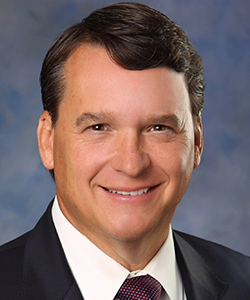
Stuart Schmidt
91% support rate
Top opponent
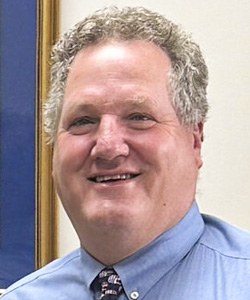
Jim Hinebaugh
41% support rate
Ranked legislators
10
5 support · 5 oppose
Key legislators

Who's moving criminal justice in Maryland

Legislators moving criminal justice in Maryland
Legislator Party Stance Support rate Votes
Stuart Schmidt
Stuart Schmidt House · District 33B
R
Strong +
91% 182
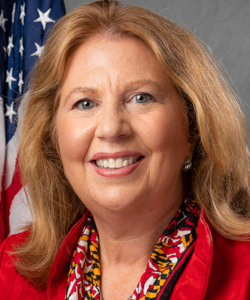
Katie Hester
Katie Hester Senate · District 9
D
Strong +
80% 86
Brian Crosby
Brian Crosby House · District 29B
D
Support
72% 101
Mary-Dulany James
Mary-Dulany James Senate · District 34
D
Support
71% 88
Matthew Schindler
Matthew Schindler House · District 2B
D
Support
67% 191
Jim Hinebaugh
Jim Hinebaugh House · District 1A
R
Mixed −
41% 162
Dalya Attar
Dalya Attar Senate · District 41
D
Mixed −
42% 77
Kevin Anderson
Kevin Anderson House · District 38A
R
Mixed −
42% 119
Steve Hershey
Steve Hershey Senate · District 36
R
Mixed −
43% 108
Mary Beth Carozza
Mary Beth Carozza Senate · District 38
R
Mixed −
43% 110
Showing 281–288 of 288 bills

All criminal justice bills

died · Maryland · House of Delegates Feb 23, 2026

HB 287: Criminal Procedure - Lifetime Sexual Offender Supervision - Conditions, Violations, and Petitions for Discharge

HB 287 modifies Maryland's lifetime sexual offender supervision requirements. It mandates lifelong supervision for individuals convicted of specific serious sexual offenses (like crimes against minors under certain age thresholds or repeat offenses), requiring conditions such as GPS tracking, restrictions near schools, mandatory treatment programs, and prohibitions on contact with minors. Violating these conditions can result in misdemeanor or felony penalties (up to 10 years in jail), with supervision continuing even after punishment. Individuals may petition for discharge after serving at least five years, subject to court review.
Sub-Topics Corrections Courts
in committee · Maryland · Senate Feb 9, 2026

SB 406: Criminal Law - Drug Trafficking Crime - Definition

SB 406 redefines "drug trafficking crime" in Maryland law to include misdemeanor violations of cannabis possession (specifically § 5-602(b)(1) and § 5-603(b)), not just felonies. This means individuals charged with misdemeanor cannabis offenses - like possessing quantities suggesting intent to distribute - will now be subject to firearm restrictions during those offenses. The bill adds that possessing a firearm during such a misdemeanor cannabis violation constitutes a separate felony, carrying a mandatory minimum 5-year prison sentence for a first offense. It directly affects people facing misdemeanor cannabis charges by expanding the scope of offenses triggering enhanced firearm penalties. The changes take effect October 1, 2026.
in committee · Maryland · House of Delegates Jan 30, 2026

HB 592: Task Force to Study Forced Infant Separation From Incarcerated Individuals

HB 592 establishes a task force to study the forced separation of infants from incarcerated mothers in Maryland. The task force, composed of state officials, formerly incarcerated individuals, family members, social workers, and legal experts, will examine the number of pregnant and postpartum incarcerated individuals, the impact of separation, and best practices from other states. It must make recommendations to reduce forced separation and improve family bonds, reporting by December 31, 2027. The task force will operate for two years, from July 1, 2026, to June 30, 2028.
passed · Maryland · Senate Mar 26, 2026

SB 483: Criminal Procedure - Automated Shielding (Clean Slate Act of 2026)

SB 483 (Clean Slate Act of 2026) automatically removes certain criminal records from public view without requiring individuals to apply. It affects people with eligible misdemeanor convictions (excluding domestic violence cases and specific assaults) that are at least 7 years old, or cases where all charges were dismissed (with at least 3 years elapsed since the outcome). The law requires the Department of Public Safety and the Judiciary to expunge all currently eligible cases by July 1, 2028, and then automatically process newly qualifying cases monthly starting August 1, 2028. Expungement means permanently removing all references to the case from electronic court records and the central repository, with no need for manual redaction.
signed · Maryland · House of Delegates May 12, 2026

HB 115: Election Law - Individuals Released From State Correctional Facilities - Automatic Restoration of Voter Registration

HB 115 automatically restores voting rights for Maryland residents released from state prisons who were registered to vote before incarceration. The Department of Public Safety must send the State Board of Elections a weekly list of released individuals' names and new addresses, prompting the Board to reactivate their voter registration at their updated address. The bill requires the Board to send notification cards confirming voting eligibility and the right to update address or decline registration, while prohibiting public disclosure of how someone was restored through this process. This applies to all released individuals with prior registration who now reside in Maryland, effective January 2027.
in committee · Maryland · House of Delegates Jan 29, 2026

HB 471: Public Safety - State and Local Governments - Use of Unmanned Aircraft

HB 471 restricts how Maryland state and local governments can use drones (unmanned aircraft). It prohibits most deployments for surveillance or evidence collection, and bans using information gathered by drones unless specific exceptions apply. Evidence obtained through unauthorized drone use becomes inadmissible in court. Exceptions allow drone use only for activities like executing search warrants, active rescues, or responding to credible terrorism threats, as outlined in the bill. This directly affects state agencies and local governments operating drones for public safety purposes.
passed · Maryland · House of Delegates Apr 9, 2026

HB 687: Criminal Procedure - Evidence - Protecting Artists' Creative Expression (PACE Act)

HB 687 (the PACE Act) protects criminal defendants and juvenile respondents in Maryland from having their creative works (like music, poetry, visual art, or film) used as evidence against them in court. It blocks such evidence unless a court finds, by a preponderance of evidence, that the creator intended the work to be literal (not fictional), it directly references the specific facts of the alleged crime, and it's relevant to a disputed fact. The bill explicitly excludes this protection for juvenile cases where creative expression is used to evaluate mental health or diversion programs. This law directly affects artists facing criminal or juvenile charges in Maryland, changing how their original creative expression can be considered as evidence. The law takes effect October 1, 2026.
in committee · Maryland · House of Delegates Feb 5, 2026

HB 719: Public Safety - Immigration Enforcement - Prohibition Against Sanctuary Policies

HB 719 prohibits Maryland state and local government entities, including county sheriffs and agencies, from adopting "sanctuary policies" that restrict cooperation with federal immigration enforcement. It repeals existing laws that previously limited police from asking about immigration status during routine stops or detaining individuals solely for immigration violations. The bill requires local law enforcement to comply with federal immigration detainers when legally required and removes barriers to federal agents accessing sensitive locations (like schools) with valid warrants. This directly affects police departments, sheriffs' offices, and local government agencies in their daily interactions with federal immigration authorities.
Showing 281 to 288 of 288 bills
Previous 1 27 28 29