Issue · Criminal Justice

Criminal Justice (Probation & Parole)

Every criminal justice bill, vote, and legislator stance in Maryland, automatically classified by Maddy, our AI policy reader.

Total bills
32
2026 Regular Session
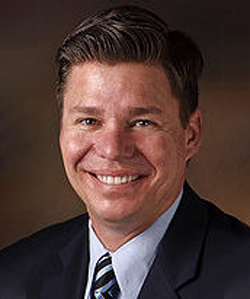
Top supporter
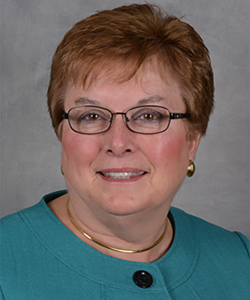
Nancy King
100% support rate
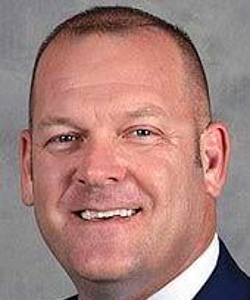
Top opponent
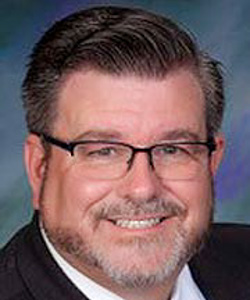
Mike McKay
0% support rate
Ranked legislators
10
5 support · 5 oppose
Key legislators

Who's moving probation & parole in Maryland

Legislators moving probation & parole in Maryland
Legislator Party Stance Support rate Votes
Nancy King
Nancy King Senate · District 39
D
Strong +
100% 8
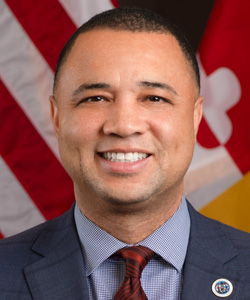
Antonio Hayes
Antonio Hayes Senate · District 40
D
Strong +
100% 7
Karen Young
Karen Young Senate · District 3
D
Strong +
100% 7
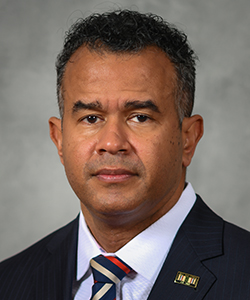
Alonzo Washington
Alonzo Washington Senate · District 22
D
Strong +
100% 5
C.T. Wilson
C.T. Wilson House · District 28
D
Strong +
100% 5
Mike McKay
Mike McKay Senate · District 1
R
Strong −
0% 8
William Folden
William Folden Senate · District 4
R
Strong −
0% 4
Mark Fisher
Mark Fisher House · District 27C
R
Strong −
10% 10
Jim Hinebaugh
Jim Hinebaugh House · District 1A
R
Strong −
11% 9
Terry Baker
Terry Baker House · District 1C
R
Strong −
11% 9
Showing 1–10 of 32 bills

All criminal justice bills

in committee · Maryland · House of Delegates Feb 5, 2026

HB 935: Correctional Services - Comprehensive Rehabilitative Prerelease Services - Female Incarcerated Individuals

HB 935 requires Maryland to establish a dedicated prerelease facility for female incarcerated individuals, directly affecting women eligible for prerelease programs at the Maryland Correctional Institution for Women. The bill mandates a separate facility meeting specific criteria: at least 3 acres, not within 1 mile of other prisons, and designed to house 1.25 times the 2024 prerelease-eligible population. It requires the Department of Public Safety and Correctional Services to provide comprehensive rehabilitative services (including gender-responsive programming) and report progress to legislative committees by a specified deadline. The facility must operate by June 1, 2023, with the Department of General Services directing procurement for its construction.
Sub-Topics Probation & Parole
signed · Maryland · House of Delegates May 26, 2026

HB 852: Higher Education - Scholarships for Correctional Officers

HB 852 expands Maryland's existing scholarship program to include correctional officers. It amends the Maryland Police Officers and Probation Agents Scholarship Program (now titled "Maryland Police Officers, Probation Agents, AND CORRECTIONAL OFFICERS Scholarship Program") to allow current or future correctional officers to qualify. Eligible recipients must be Maryland residents or graduates of Maryland high schools, enrolled at an eligible institution (public university or community college), and agree to work as correctional officers for at least 5 years within 8 years of graduation. The bill does not create a new program but updates the eligibility criteria of an existing scholarship.
in committee · Maryland · House of Delegates Feb 20, 2026

HB 1340: State Government - Prison Education Delivery Reform Commission - Establishment

HB 1340 establishes the Prison Education Delivery Reform Commission as an independent state body to improve education access for people in Maryland's criminal and juvenile justice systems. The commission, composed of 11 appointed members including state agency heads, legislators, and external experts, must develop a statewide education framework using data to reduce recidivism and increase public safety. Key tasks include researching best practices for education programs, evaluating current workforce training, forming an advisory group with justice reform organizations, and seeking technical assistance from national experts. This commission directly affects incarcerated individuals and justice system stakeholders by focusing on education as a strategy to improve outcomes. The bill creates a structured process for policy recommendations but does not change existing education programs.
in committee · Maryland · House of Delegates Mar 11, 2026

HB 1505: Higher Education - Loan Repayment and Scholarships for Correctional Officers

HB 1505 expands Maryland’s existing loan repayment and scholarship programs to include correctional officers. It amends two programs: the "Maryland Loan Assistance Repayment Program for Police Officers, Probation Agents, and Correctional Officers" (for repaying education loans) and the "Maryland Police Officers, Probation Agents, and Correctional Officers Scholarship Program" (for tuition assistance). Correctional officers who work in state correctional facilities for at least 2 years (for loan repayment) or commit to 5 years of service (for scholarships) become eligible. The bill directly affects current and future correctional officers pursuing or completing degrees in Maryland. It does not create new funding but extends existing benefits to this workforce.
signed · Maryland · Senate May 12, 2026

SB 822: Correctional Services - Maryland Parole Commission and Erroneously Convicted Individuals - Improvements in Transparency and Equity

SB 822 requires the Maryland Parole Commission to include race-disaggregated data in its annual report, detailing parole grants, denials (with reasons), administrative releases, hearing purposes, and parole-eligible individuals not granted parole. It mandates that the Commission provide incarcerated individuals with copies of all documents used in parole decisions *before* hearings (instead of allowing on-request examination), and requires the Commission to document reasons for denials and make hearing recordings publicly available after redaction. The bill also prohibits the Commission from permanently denying parole and requires it to hold subsequent parole hearings for eligible individuals after a set timeframe. These changes directly affect incarcerated individuals in Maryland and the Parole Commission’s operational transparency.
Sub-Topics Probation & Parole
in committee · Maryland · House of Delegates Feb 5, 2026

HB 819: Commission to Examine the Expungement Laws of Maryland

HB 819 establishes a commission to examine Maryland's expungement laws, which allow individuals to clear criminal records from public records. The commission includes 12 members - such as two people with criminal records currently ineligible for expungement, state officials, public defenders, and experts in employment and reentry - to review current processes, compare them with other states, and develop a new system that would streamline eligibility and expand access. It must submit a report to the Maryland General Assembly by December 31, 2027, outlining findings and recommendations. The bill expires on June 30, 2028, requiring the commission to complete its work within two years.
Sub-Topics Probation & Parole
passed · Maryland · Senate Mar 26, 2026

SB 689: Task Force on the Creation of a Division of Returning Citizens and Expanded Reentry Services - Requirement Alterations and Extension of Report Deadline (Bri's Law)

SB 689 (Bri's Law) creates a task force to study postrelease services for people leaving prison in Maryland, focusing on programs designed to prevent re-arrest. The task force, composed of legislative members, corrections officials, and state's attorneys, must examine all release types and existing post-release requirements by July 2027. It will recommend improvements to these programs based on its findings. The bill expires automatically on June 30, 2028, with no further legislative action required. This study directly affects individuals transitioning from incarceration back into communities.
died · Maryland · House of Delegates Feb 25, 2026

HB 1489: Criminal Procedure - Motion to Reduce Duration of Sentence - Eligibility (Vincent Anthony Fisher III Act)

HB 1489, the "Vincent Anthony Fisher III Act," allows certain incarcerated individuals to seek sentence reductions by modifying eligibility rules for motions to reduce sentence duration. It applies to two groups: (1) people convicted as adults for crimes committed as minors (with at least 20 years served and no life without parole), and (2) those convicted between ages 18-25 (with at least 20 years served, not a sex offender, and not convicted of specific violent offenses like murder of first responders or certain vehicular homicides). Courts must hold hearings considering factors like the person’s age at the offense, rehabilitation efforts, victim impact statements, and whether the individual poses a public safety risk. If the court finds the person is not a danger and justice requires it, it may reduce the sentence.
signed · Maryland · Senate Apr 28, 2026

SB 710: Correctional Officers' Retirement System - Reemployment After Retirement - Exemption from Earnings Offset

SB 710 exempts retirees from Maryland's Correctional Officers' Retirement System from having their retirement benefits reduced if they return to work as correctional officers or parole/probation staff in specific state correctional facilities. The bill amends pension law to remove the earnings offset requirement for these retirees when reemployed by the Division of Corrections, Division of Pretrial Detention, or Patuxent Institution for up to four years. This directly affects correctional officers who retired from the system and are rehired in authorized roles within state correctional facilities. The change ensures their retirement payments remain unchanged during this reemployment period, unlike the standard rule that reduces benefits for most other retirees returning to work.
died · Maryland · Senate Mar 2, 2026

SB 679: Criminal Procedure - Motion to Reduce Duration of Sentence - Eligibility (Vincent Anthony Fisher III Act)

SB 679, the "Vincent Anthony Fisher III Act," allows certain individuals to request a reduction in their prison sentence. It applies to people convicted as adults for offenses committed when they were minors (before October 1, 2021) and imprisoned for at least 20 years, or those convicted between ages 18-24 (not life without parole, not sex offenders, and not convicted of specific violent crimes like murder of first responders or hate crimes) with 20+ years served. The bill requires a court hearing where the person must show they are not a public danger and that a reduced sentence serves justice, considering factors like their age at the offense, rehabilitation efforts, victim input, and family circumstances. The court must consider these factors before deciding whether to shorten the prison term.
Showing 1 to 10 of 32 bills
1 2 3 4 Next