Issue · Transportation

Transportation (Rail)

Every transportation bill, vote, and legislator stance in California, automatically classified by Maddy, our AI policy reader.

Total bills
27
2025-2026 Regular Session
Top supporter
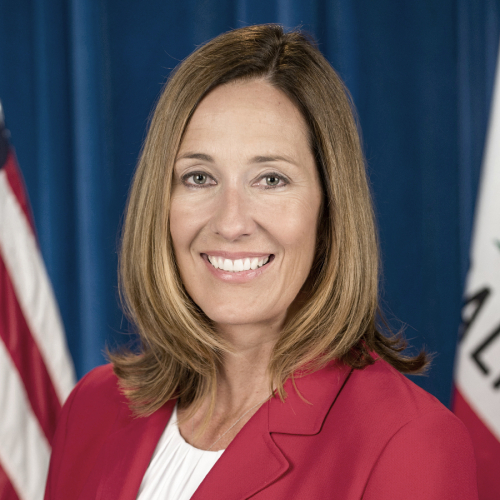
Diane Papan
100% support rate
Top opponent
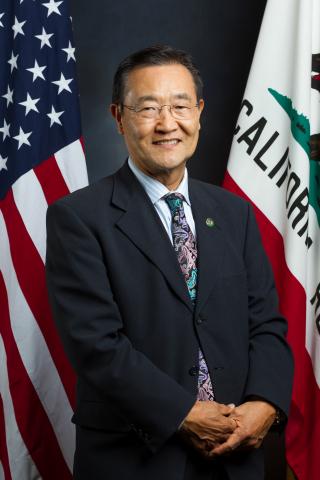
Kelly Seyarto
11% support rate
Ranked legislators
10
5 support · 5 oppose
Key legislators

Who's moving rail in California

Legislators moving rail in California
Legislator Party Stance Support rate Votes
Diane Papan
Diane Papan House · District 21
D
Strong +
100% 9
Cottie Petrie-Norris
Cottie Petrie-Norris House · District 73
D
Strong +
100% 5
Alex Lee
Alex Lee House · District 24
D
Strong +
100% 4
Jacqui Irwin
Jacqui Irwin House · District 42
D
Strong +
100% 3
Chris Ward
Chris Ward House · District 78
D
Strong +
89% 9
Kelly Seyarto
Kelly Seyarto Senate · District 32
R
Strong −
11% 19
Steve Choi
Steve Choi Senate · District 37
R
Strong −
15% 13
Joe Patterson
Joe Patterson House · District 5
R
Strong −
17% 6
Joshua Hoover
Joshua Hoover House · District 7
R
Strong −
18% 11
Laurie Davies
Laurie Davies House · District 74
R
Strong −
18% 11
Showing 11–20 of 27 bills

All transportation bills

in committee · California · Assembly Apr 13, 2026

AB 1678: Claremontclair Authority: Metro A Line Extension project.

Existing law creates the Metro Gold Line Foothill Extension Construction Authority for purposes of awarding and overseeing all design and construction contracts for completion of a light rail project extending from Union Station in the City of Los Angeles to Sierra Madre Villa Boulevard in the City of Pasadena and any mass transit guideway that may be planned along the rail right-of-way extending to the City of Montclair in the County of San Bernardino, as provided. This bill would reduce the scope of the light rail project overseen by the Metro Gold Line Foothill Extension Construction Authority by instead providing that the project extends to any mass transit guideway that may be planned along the rail right-of-way to the City of Claremont in the County of Los Angeles. This bill would instead require the Claremontclair Authority (authority) , which the bill would create, to award and oversee all design and construction contracts for completion of a light rail project extending from and including the rail tracks located to the east of the Claremont light rail station to be constructed by the Metro Gold Line Foothill Extension Construction Authority and continuing to the Montclair Transit Center in the City of Montclair in the County of San Bernardino. The bill would grant the authority all the powers necessary for completion of the project, as provided. The bill would require the authority to conduct financial studies and planning and engineering necessary for completion of the project and to make reasonable progress in the design and construction of the project. The bill would require the authority to be dissolved upon completion of project construction. The bill would also make conforming changes. This bill would require the authority to be governed by a board of 5 voting members and one nonvoting member, with the city councils of the Cities of Claremont and Montclair, the Los Angeles County Metropolitan Transportation Authority (LACMTA) , the president of the board of directors of the San Bernardino County Transportation Authority (SBCTA) , and the County of San Bernardino Board of Supervisors each appointing one voting member and the Governor appointing the nonvoting member. The bill would authorize the board to appoint an executive director and authorize the executive director to appoint staff or retain consultants as necessary to carry out the duties of the authority. This bill would require LACMTA and SBCTA to enter into an agreement with the authority to grant to the authority or hold in trust with the authority all real property and real property rights, and other assets, as necessary for the completion of the project. The bill would also require LACMTA and the authority to enter into a memorandum of understanding that specifically addresses the ability of LACMTA to review any significant changes in the scope of the design or construction, or both the design and construction, of the project. The bill would require LACMTA to assume responsibility for operating all completed phases of the project, with operation of certain portions of the project being contingent upon LACMTA entering into an operations and maintenance agreement with SBCTA, as provided. By imposing new duties on local agencies, this bill would impose a state-mandated local program. The California Constitution requires the state to reimburse local agencies and school districts for certain costs mandated by the state. Statutory provisions establish procedures for making that reimbursement. This bill would provide that, if the Commission on State Mandates determines that the bill contains costs mandated by the state, reimbursement for those costs shall be made pursuant to the statutory provisions noted above.
Sub-Topics Public Transit Rail
passed · California · Senate Feb 23, 2026

SB 117: Transit and Intercity Rail Capital Program: loans: transit operating purposes: San Francisco Bay area.

SB 117 is a procedural bill that formally declares the Legislature's intent to later enact statutory changes to the Budget Act of 2025. It does not implement any specific budget policies, funding allocations, or changes to existing law at this time. The bill simply sets the stage for future legislative action on the state budget framework. It passed the Senate unanimously (28-10) and was referred to the Assembly's Budget Committee for further consideration.
Sub-Topics Public Transit Rail
passed both · California · Senate Aug 30, 2026

SB 677: Housing financing: joint powers agreements: bond approvals: subdivisions: tentative and final maps: appeals.

Existing law, the Joint Exercise of Powers Act, authorizes 2 or more public agencies, by agreement, to form a joint powers authority to exercise any power common to the contracting parties, as specified. Existing law, for the purposes of that act, defines the term "public agency" to include various federal, state, local, and tribal entities. Existing law requires approval by the Department of General Services of certain joint powers agreements that include the state as a member, as provided. Existing law authorizes a joint powers authority to issue revenue bonds to pay the costs and expenses of acquiring, constructing, or conducting a program for, among other things, low-income housing projects owned or operated by a city, county, city and county, or housing authority. Existing law provides that the Treasurer and the Secretary of State are designated as elected representatives for federal tax purposes of a joint powers agency created to approve or certify the issuance of bonds, notes, or other evidence of indebtedness issued by or on behalf of the joint powers agency to the extent approval is required by federal tax law. This bill would provide that the geographic jurisdiction of a joint powers authority is the area encompassed by the combined geographical boundaries of all of its member public agencies. The bill would declare that these provisions are declaratory of existing law. This bill would additionally authorize the Treasurer to execute an agreement including the state as a member of a joint powers authority without obtaining approval from the Department of General Services only for the Treasurer to provide specified approvals for bonds issued by the joint powers authority to finance specified residential rental projects for which a city, county, or city and county that is a member of the joint powers authority has failed to provide specified approval required by federal tax law, as defined and provided. The bill would provide that its provisions do not expand, limit, or otherwise affect the authority of, among others, the state, or any officer or agency of the state, to enter into a joint exercise of powers agreement or cause the state to become a member of a joint powers authority, as specified. Existing law additionally authorizes, subject to specified limitations, any city or county to issue revenue bonds for the purpose of financing the acquisition, construction, rehabilitation, refinancing, or development of multifamily rental housing and for the provision of capital improvements in connection with, and determined necessary to, that multifamily rental housing. This bill would specify that, for the purposes of the above-described provisions, "city" or "county" is deemed to include the state when the state is a member of a joint powers authority pursuant to the bill's provisions only to provide the state with the power to issue bonds and provide approval, consent, or other action required to finance specified residential rental projects, as provided. Existing law provides that the State of California will not change the composition of a joint powers authority that has issued bonds, unless the change is authorized by a majority vote of applicable legislative bodies, as provided. Existing law defines "change in composition" to include, among others, the addition of a public agency, as defined, to a joint powers authority. This bill would, notwithstanding the above-described definition, provide that the state becoming a member of an existing joint powers authority shall not, in and of itself, constitute a "change in composition." The bill would make additional nonsubstantive and conforming changes. Existing law, the Subdivision Map Act, provides for the approval of tentative and final parcel maps by various local officials, as specified. The act authorizes an appeal of the local official's decision to the local legislative body, as provided. This bill would create an exception from the above-described authority as it applies to appeals by an interested person for maps that meet specified criteria, as provided. The bill would exempt from these provisions an appeal filed by an applicant, subdivider, tenant, advisory agency, or public agency or official, as specified. This bill would make the provisions of the act severable.
failed · California · Assembly Feb 2, 2026

AB 267: Greenhouse Gas Reduction Fund: high-speed rail: water infrastructure and wildfire prevention.

The California Global Warming Solutions Act of 2006 designates the State Air Resources Board as the state agency charged with monitoring and regulating sources of emissions of greenhouse gases. The act authorizes the state board to include in its regulation of those emissions the use of market-based compliance mechanisms. Existing law requires all moneys, except for fines and penalties, collected by the state board from the auction or sale of allowances as part of a market-based compliance mechanism to be deposited in the Greenhouse Gas Reduction Fund. Existing law continuously appropriates 25% of the annual proceeds of the fund to the High-Speed Rail Authority for certain purposes. This bill would suspend the appropriation to the High-Speed Rail Authority for the 2026–27 and 2027–28 fiscal years and would instead require those amounts from moneys collected by the state board to be transferred to the General Fund. The bill would specify that the transferred amounts shall be available, upon appropriation by the Legislature, to augment funding for water infrastructure and wildfire prevention.
signed · California · Senate Oct 6, 2025

SB 727: The Great Redwood Trail Agency.

(1) Existing law creates the Great Redwood Trail Agency with various powers and duties relating to rail service in the north coast area of the state, including the authority to acquire, own, lease, and operate railroad lines and equipment, and requires the agency, to the extent funding is available, to initiate or complete a railbanking process on its rail rights-of-way and to plan, design, construct, operate, and maintain a trail in, or parallel to, its rail rights-of-way. For purposes of these provisions, existing law grants the agency specified powers including, among others, the power to enter into and perform all necessary contracts in accordance with certain requirements. Under existing law, the authority is governed by a board of directors composed of nonvoting members appointed by the Governor and 9 voting members appointed by various local governments in the north coast area including a city representative selected by the cities served by the authority's rail line. This bill would expressly state that the agency is a subdivision of the state and would require the city representative to be selected by the cities through a process adopted by the board. The bill would require the board to adopt an annual budget and to provide for regular audits of the agency's accounts and records and to maintain accounting records and report accounting transactions in accordance with generally accepted accounting principles, as specified. The bill would require a contract and prescribe competitive bidding procedures for any work, as defined, not performed by the personnel of the agency if the agency estimates the work to cost over a specified threshold, as prescribed. This bill would exempt the agency, except with respect to the development of any projects on properties that are not owned or directly controlled by the agency, from building ordinances and zoning ordinances of the counties and cities in the jurisdiction of the agency. The bill would exempt certain uses of agency real property by third parties from laws governing the disposition of surplus property. The bill would exempt railroad tracks and ties owned by the agency from laws governing the control of hazardous waste if they remain in place within the agency's right-of-way, as specified. (2) Existing law authorizes the agency to contract with the State Coastal Conservancy, a state agency, or another organization to staff the agency. This bill would also authorize the agency to receive funds from the conservancy or any other state agency as may be appropriated by the Legislature. (3) Existing law authorizes the agency to adopt ordinances and to adopt and enforce rules and regulations for the administration, operation, use, and maintenance of trails, excursion rail service, and other recreational facilities and programs, as specified. The bill would authorize the agency to contract with state law enforcement agencies, or local law enforcement agencies of jurisdictions within the service area of the agency, to enforce the adopted rules, regulations, and ordinances of the agency. (4) Existing law requires the ancillary bicycle and pedestrian pathways that provide connections between and access to Sonoma-Marin Area Rail Transit District station sites and the district's other pathways to be known as "The Great Redwood Trail, Southern Segment." This bill would require the planned bike and pedestrian pathway running from the district's station in the City of Larkspur to the northern terminus of the Golden Gate Bridge in the County of Marin to be known as the Great Redwood Trail. (5) By imposing additional duties on the Great Redwood Trail Agency, this bill would impose a state-mandated local program. The California Constitution requires the state to reimburse local agencies and school districts for certain costs mandated by the state. Statutory provisions establish procedures for making that reimbursement. This bill would provide that, if the Commission on State Mandates determines that the bill contains costs mandated by the state, reimbursement for those costs shall be made pursuant to the statutory provisions noted above.
passed both · California · Senate Aug 30, 2026

SB 741: Low Carbon Transit Operations Program.

Existing law creates the Low Carbon Transit Operations Program to provide operating and capital assistance for transit agencies to reduce the emissions of greenhouse gases and improve mobility. Existing law requires the Department of Transportation to administer the program and to adopt guidelines, in coordination with the State Air Resources Board, that describe the methodologies to be used by a recipient transit agency to demonstrate that proposed expenditures will meet specified program expenditure requirements and establish the reporting requirements for documenting ongoing compliance with those expenditure requirements. This bill would repeal the requirement for the department to adopt guidelines. Existing law continuously appropriates a specified amount of money from the Greenhouse Gas Reduction Fund for the program and requires the Controller to allocate those moneys according to the requirements of the program. Existing law requires a recipient transit agency to demonstrate that expenditures of program moneys allocated to the agency reduce the emission of greenhouse gases and do not supplant other sources of funds. Existing law requires moneys for the program to be expended to provide transit operating or capital assistance that directly enhances or expands transit services, increases transit mode share, or is related to the purchase of zero-emission buses, as specified. Before seeking a disbursement of funds pursuant to the program, existing law requires a recipient transit agency to submit to the department a list of proposed expense types and documentation required by the guidelines that demonstrates compliance with the above-described expenditure requirements. For capital projects funded by the program, existing law requires a transit agency to specify the phases of work for which an allocation of program moneys is sought, identify sources and timing of all moneys required for those phases of work, and describe intended sources and timing of funding for subsequent phases of work, as provided. Existing law requires a recipient transit agency to provide an annual report to the department, as provided. Existing law requires the department and a recipient transit agency to comply with guidelines developed by the State Air Resources Board to ensure that the requirements of a certain investment plan are met to maximize the benefits to disadvantaged communities, as provided. This bill would revise and recast the program to, among other things, require program funds to be expended only on maintenance or expansion of bus, rail, or ferry services, transit fare subsidies, and network and fare integration technology improvements. By altering the permissible uses for which continuously appropriated funds may be used, the bill would make an appropriation. Before receiving program funds, the bill would require a recipient transit agency to submit to the department a list of services or programs to be funded by those funds, as specified. The bill would require the department to report to the Controller the recipient transit agencies that have submitted the list, and would, upon receipt of the report from the department, require the Controller to allocate program funds. The bill would require a recipient transit agency to report to the department on the expenditure of program funds, as specified.
Sub-Topics Rail
failed · California · Assembly Feb 2, 2026

AB 273: Greenhouse Gas Reduction Fund: high-speed rail: infrastructure improvements.

The California Global Warming Solutions Act of 2006 designates the State Air Resources Board as the state agency charged with monitoring and regulating sources of emissions of greenhouse gases. The act authorizes the state board to include in its regulation of those emissions the use of market-based compliance mechanisms. Existing law requires all moneys, except for fines and penalties, collected by the state board from the auction or sale of allowances as part of a market-based compliance mechanism to be deposited in the Greenhouse Gas Reduction Fund. Existing law continuously appropriates 25% of the annual proceeds of the fund to the High-Speed Rail Authority for certain purposes. This bill would eliminate the continuous appropriation of 25% of the annual proceeds of the Greenhouse Gas Reduction Fund to the High-Speed Rail Authority on June 30, 2026. The bill, beginning with the 2026–27 fiscal year, would instead require 25% of the annual proceeds of the Greenhouse Gas Reduction Fund to be transferred to the General Fund and for those moneys, upon appropriation, to be used to augment funding provided to local governments to improve infrastructure.
Sub-Topics Climate Change Rail
failed · California · Assembly Feb 2, 2026

AB 861: Community colleges: students: public transportation: Los Angeles Community College District.

Existing law establishes the California Community Colleges, under the administration of the Board of Governors of the California Community Colleges, as one of the segments of public postsecondary education in this state. Existing law creates the Los Angeles County Metropolitan Transportation Authority ("LA Metro") with specified powers and duties relative to transportation planning, programming, and operations in the County of Los Angeles. This bill would (1) require the Los Angeles Community College District to annually enter into a memorandum of understanding with LA Metro for purposes of providing GoPass TAP cards to participating students enrolled at a campus of the community college district, as specified, and (2) establish a student ambassador program within LA Metro where students assist with security, rider assistance, and facility upkeep on LA Metro rail and bus lines serving campuses of the Los Angeles Community College District. The bill would require the Los Angeles Community College District to submit an annual report to the Department of Finance and the budget committees of the Assembly and Senate that includes specified information about the transit pass program and the student ambassador program. By imposing additional duties on the Los Angeles Community College District and LA Metro, the bill would impose a state-mandated local program. This bill would make legislative findings and declarations as to the necessity of a special statute for the Los Angeles Community College District and Los Angeles County Metropolitan Transportation Authority. The California Constitution requires the state to reimburse local agencies and school districts for certain costs mandated by the state. Statutory provisions establish procedures for making that reimbursement. This bill would provide that, if the Commission on State Mandates determines that the bill contains costs mandated by the state, reimbursement for those costs shall be made pursuant to the statutory provisions noted above.
failed · California · Assembly Feb 2, 2026

AB 1372: Renewable electrical generation facilities: electrified commuter railroads: regenerative braking: net billing.

Existing law vests the Public Utilities Commission with regulatory authority over public utilities, including electrical corporations. Existing law requires every electric utility, except as provided, to develop a standard contract or tariff providing for net energy metering, and to make this standard contract or tariff available to eligible customer-generators using renewable electrical generation facilities, as specified. Pursuant to its authority, the commission issued a decision revising net energy metering tariff and subtariffs, commonly known as the net billing tariff. This bill would include the regenerative braking from electric trains as a renewable electrical generation facility for those purposes, as provided. This bill would, upon an electrical corporation and an operator of an electrified commuter railroad that produces electricity through the regenerative braking of electric trains, including the Peninsula Corridor Joint Powers Board, completing certain technical studies, require the electrical corporation to adopt or modify a net billing contract or tariff that is approved by the commission. The bill would require that contract or tariff to, among other things, require the electrical corporation to apply bill credits for the electricity exported to the electrical grid based on its value, as specified. The bill would require the electrical corporation to provide, or install at its cost, if necessary, metering that records and documents electricity imports and exports, as specified. Under existing law, a violation of any order, decision, rule, direction, demand, or requirement of the commission is a crime. Because a violation of a commission action implementing this bill's requirements would be a crime, the bill would impose a state-mandated local program. The California Constitution requires the state to reimburse local agencies and school districts for certain costs mandated by the state. Statutory provisions establish procedures for making that reimbursement. This bill would provide that no reimbursement is required by this act for a specified reason.
failed · California · Senate Feb 2, 2026

SB 94: Transportation funding: Greenhouse Gas Reduction Fund: Motor Vehicle Fuel Account.

The California Global Warming Solutions Act of 2006 designates the State Air Resources Board as the state agency charged with monitoring and regulating sources of emissions of greenhouse gases. The act authorizes the state board to include in its regulation of those emissions the use of market-based compliance mechanisms. Existing law requires all moneys, except for fines and penalties, collected by the state board from the auction or sale of allowances as part of a market-based compliance mechanism to be deposited in the Greenhouse Gas Reduction Fund. Existing law continuously appropriates 25% of the annual proceeds of the fund to the High-Speed Rail Authority for certain purposes, as specified. This bill would eliminate the continuous appropriation of 25% of the annual proceeds of the Greenhouse Gas Reduction Fund to the High-Speed Rail Authority on June 30, 2026. The bill, beginning with the 2026–27 fiscal year, and until December 31, 2030, would require 25% of the annual proceeds of the Greenhouse Gas Reduction Fund to be transferred to the Motor Vehicle Fuel Account. Existing law, the Motor Vehicle Fuel Tax Law, imposes a tax upon each gallon of motor vehicle fuel removed from a refinery or terminal rack in this state, entered into this state, or sold in this state, at a specified rate per gallon. Existing law provides that amounts received pursuant to the Motor Vehicle Fuel Tax Law are deposited into the Motor Vehicle Fuel Account in the Transportation Tax Fund. Existing law transfers the portions of those motor vehicle fuel tax revenues attributable to various off-highway uses of motor vehicle fuel to specified funds and transfers the remaining revenues to the Highway Users Tax Account for allocation to various state and local transportation purposes consistent with the expenditure restrictions imposed by Article XIX of the California Constitution on excise tax revenues from fuels used in motor vehicles on the highway. This bill, beginning July 1, 2026, and before January 1, 2031, would reduce the rate of the tax imposed upon each gallon of fuel by a specified percentage based annually on the amount transferred to the Motor Vehicle Fuel Account from the Greenhouse Gas Reduction Fund. By transferring moneys to a continuously appropriated account, this bill would make an appropriation.
Showing 11 to 20 of 27 bills