Issue · Transportation

Transportation

Every transportation bill, vote, and legislator stance in California, automatically classified by Maddy, our AI policy reader.

Total bills
261
119th Congress
Top supporter
Alex Padilla
67% support rate
Top opponent
J. Luis Correa
47% support rate
Ranked legislators
8
5 support · 3 oppose
Key legislators

Who's moving transportation in California

Legislators moving transportation in California
Legislator Party Stance Support rate Votes
Alex Padilla
Alex Padilla Senate
D
Support
67% 152
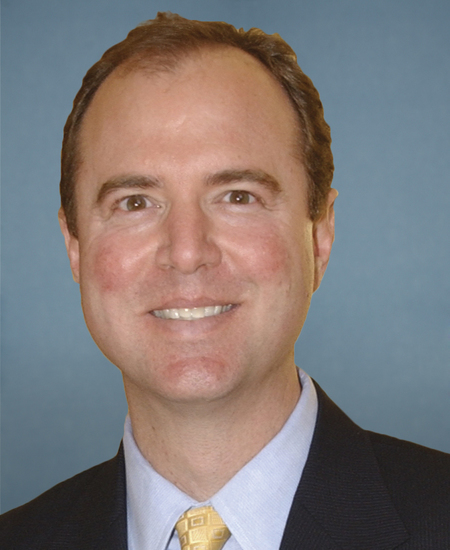
Adam B. Schiff
Adam B. Schiff Senate
D
Support
67% 152
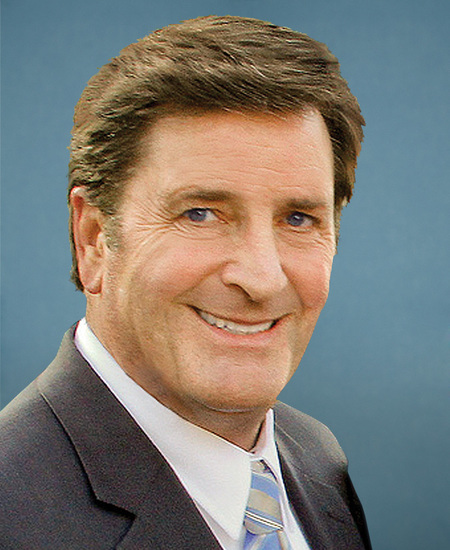
John Garamendi
John Garamendi House · District 8
D
Support
62% 112
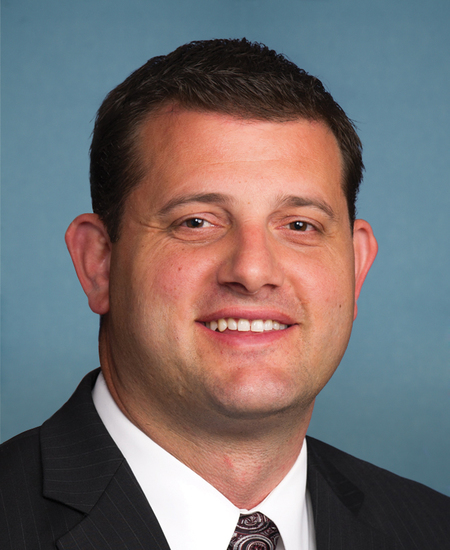
David G. Valadao
David G. Valadao House · District 22
R
Support
60% 121
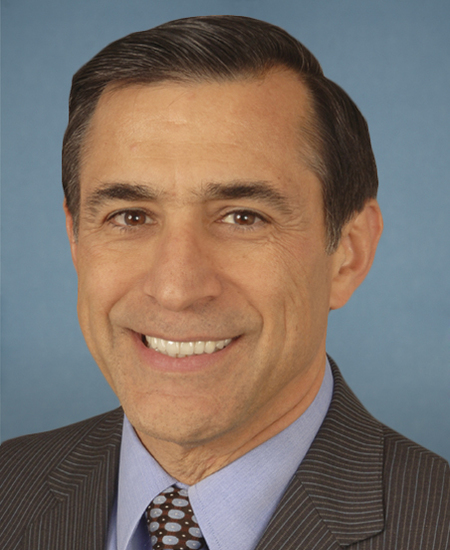
Darrell Issa
Darrell Issa House · District 48
R
Support
60% 123
J. Luis Correa
J. Luis Correa House · District 46
D
Mixed −
47% 118
George Whitesides
George Whitesides House · District 27
D
Mixed −
47% 122
Tom McClintock
Tom McClintock House · District 5
R
Mixed −
47% 119
Showing 1–10 of 261 bills

All transportation bills

in committee · United States · House Sep 8, 2026

HR 10304: Drone Safety Statement Modernization Act

The Drone Safety Statement Modernization Act requires manufacturers of small unmanned aircraft systems to provide a safety statement to operators at the time they first activate their drones. Operators must electronically acknowledge that they have read and understood this document, which covers applicable laws, airspace restrictions, and potential penalties for unsafe operation. The Federal Aviation Administration is tasked with developing these requirements and issuing an example statement within 120 days of enactment. The FAA must also review and update the safety statement requirements annually to ensure they remain current.
Sub-Topics Airports
in committee · United States · House Sep 2, 2026

HR 10221: Flock-Off Act

The Flock-Off Act prohibits federal agencies, state and local governments, and other recipients of federal funds from using federal money to purchase, operate, or maintain automated camera systems that capture biometric data or license plate information. The bill requires these entities to remove any existing covered camera systems within 180 days of enactment, with violations resulting in the withholding of further federal funding until reimbursed. Specific exceptions allow for the continued use of such systems within one mile of the U.S. borders for security purposes and on toll roads strictly for toll collection and enforcement.
in committee · United States · Senate Aug 3, 2026

S 5215: Cleaner Transportation Access for All Act

The Cleaner Transportation Access for All Act extends federal tax credits for purchasing clean vehicles and installing charging equipment through 2031, while also allowing a higher credit amount for home charging installations. It establishes a new Joint Office of Energy and Transportation to coordinate federal efforts on electric vehicle infrastructure and creates an Electric Vehicle Commission to study industry needs and safety issues. The legislation authorizes billions in funding to expand charging networks, with specific requirements that states prioritize underserved communities and medium- and heavy-duty vehicles. Additionally, the bill mandates that electric vehicle charging stations be permitted on public curbsides and expands access to high-occupancy vehicle lanes for clean vehicles.
in committee · United States · House Aug 3, 2026

HR 10033: AV Emergency Response Coordination Act

The AV Emergency Response Coordination Act requires manufacturers and operators of autonomous vehicles to provide emergency responders with detailed guides and rescue sheets detailing how to safely interact with these vehicles during incidents. These documents must outline procedures for communicating with the vehicle, assessing its operational status, accessing occupants, and recovering data, and they must be submitted to the National Highway Traffic Safety Administration and made publicly available online. The bill also mandates that autonomous vehicle operators maintain a 24/7 hotline for emergency coordination and comply with geofence notices issued by government agencies to restrict vehicle movement in specific areas during emergencies. Furthermore, the Administrator is tasked with establishing uniform standards for emergency response procedures within two years, after which compliance with these standards becomes mandatory for operating or selling autonomous vehicles on public roads.
Sub-Topics Autonomous Vehicles Roads & Highways Traffic Safety Tags Emergency Management Public Safety
in committee · United States · House Aug 3, 2026

HR 10019: Incentivizing Value Capture for Greener Transportation Act

The Incentivizing Value Capture for Greener Transportation Act establishes a federal program to help states and local governments develop strategies for funding public transit through value capture, which involves collecting a portion of the increased economic value generated by government infrastructure investments. To receive grants under this program, recipients must demonstrate that their plans will increase transit ridership and reduce greenhouse gas emissions, vehicle miles traveled, and traffic congestion while maintaining existing funding levels for these initiatives. The legislation also requires that construction projects funded by these grants adhere to prevailing wage standards and mandates an evaluation of the program's effectiveness three years after funding is received. Additionally, the bill directs the Secretary of Transportation to create voluntary best practices for value capture and publish a report on existing state and local laws that successfully promote affordable transit-oriented development.
in committee · United States · Senate Aug 3, 2026

S 5220: Clean Transportation Jobs and Development Act of 2026

The Clean Transportation Jobs and Development Act of 2026 directs the Department of Energy to expand funding and oversight for battery manufacturing, critical mineral processing, and advanced vehicle technologies through 2031. A primary provision increases the authorized budget for battery processing grants to $6 billion for fiscal years 2027 through 2031, while also requiring applicants to include specific workforce safety and fire prevention plans. The bill establishes a new Office of Critical Minerals and Energy Innovation to coordinate supply chain resilience and manages multiple research programs focused on extreme-fast charging, vehicle safety, and heavy-duty commercial vehicle electrification. Additionally, the legislation authorizes over $3 billion in total funding for these research and development activities across five fiscal years to support domestic manufacturing and reduce reliance on foreign energy sources.
in committee · United States · House Aug 6, 2026

HR 10050: Uniform Vehicle Safety Standards Act of 2026

This bill, titled the Uniform Vehicle Safety Standards Act of 2026, aims to standardize how motor vehicle safety rules are applied across the United States. It directly affects vehicle manufacturers and legal proceedings by modifying federal law to explicitly exempt companies from liability when they meet existing safety standards set by the National Highway Traffic Safety Administration. The key provision prevents courts from using common law lawsuits to require vehicles to exceed these established federal safety requirements, thereby reducing legal uncertainty for interstate commerce. By clarifying that compliance with federal standards is sufficient, the legislation seeks to prevent additional lawsuits that could disrupt the national vehicle market.
in committee · United States · Senate Aug 3, 2026

S 5222: DRIVE Across America Act of 2026

The DRIVE Across America Act of 2026 establishes the Cleaner TRAILS Initiative to promote zero-emission vehicles and fueling infrastructure on National Forest and National Park lands. This program requires the Forest Service and National Park Service to develop a strategy for installing charging stations, purchasing electric vehicles for their fleets, and offering shuttle services that run on clean energy. The bill also directs the Department of Energy and the Department of Transportation to expand electric vehicle charging access near airports and tourist destinations, while authorizing $1 billion in federal funding between 2027 and 2031 to support these efforts. Additionally, the legislation mandates that agreements for transportation services on federal lands give priority to providers using zero-emission vehicles and requires regular reporting to Congress on progress and spending.
in committee · United States · House Aug 6, 2026

HJRES 210: Providing for congressional disapproval under chapter 8 of title 5, United States Code, of the rule submitted by the Environmental Protection Agency relating to "California State Nonroad Engine Pollution Control Standards; Ocean-Going Vessels At-Berth; Notice of Decision".

This bill proposes to reject a specific rule issued by the Environmental Protection Agency regarding pollution control standards for ocean-going vessels at ports in California. If passed, the measure would use a congressional veto to cancel the rule, preventing it from taking legal effect. The legislation directly impacts the EPA's ability to enforce these specific emission limits and affects shipping companies and ports in California that would have been subject to the new standards.
in committee · United States · Senate Jun 24, 2026

S 4887: Hazardous Fuels Transportation Assistance Act of 2026

The Hazardous Fuels Transportation Assistance Act of 2026 creates a competitive grant program to help organizations transport materials removed during wildfire risk reduction projects on National Forest System lands. Eligible recipients include for-profit companies, nonprofits, state and local governments, Indian Tribes, and universities, with funding available from fiscal years 2027 through 2031. Grants can cover costs for transporting wood and biomass, maintaining transport equipment, and workforce training, but cannot be used for construction or buying timber. The program prioritizes projects in high-risk wildfire areas and offers higher funding percentages to Indian Tribes compared to other applicants.
Sub-Topics Forestry
Showing 1 to 10 of 261 bills
1 2 3 27 Next