Issue · Transportation

Transportation

Every transportation bill, vote, and legislator stance in California, automatically classified by Maddy, our AI policy reader.

Total bills
231
2025-2026 Regular Session
Top supporter
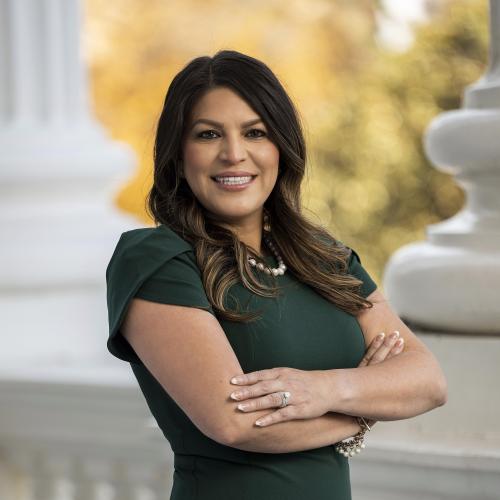
Esmeralda Soria
100% support rate
Top opponent
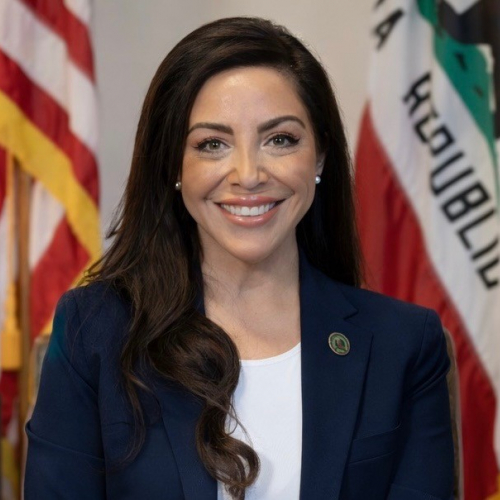
Natasha Johnson
3% support rate
Ranked legislators
10
5 support · 5 oppose
Key legislators

Who's moving transportation in California

Legislators moving transportation in California
Legislator Party Stance Support rate Votes
Esmeralda Soria
Esmeralda Soria House · District 27
D
Strong +
100% 140
Alex Lee
Alex Lee House · District 24
D
Strong +
98% 168
Rebecca Bauer-Kahan
Rebecca Bauer-Kahan House · District 16
D
Strong +
98% 105
Diane Papan
Diane Papan House · District 21
D
Strong +
96% 135
Maggy Krell
Maggy Krell House · District 6
D
Strong +
96% 133
Natasha Johnson
Natasha Johnson House · District 63
R
Strong −
3% 85
Kate Sanchez
Kate Sanchez House · District 71
R
Strong −
4% 179
Stan Ellis
Stan Ellis House · District 32
R
Strong −
5% 172
Kelly Seyarto
Kelly Seyarto Senate · District 32
R
Strong −
6% 320
Carl DeMaio
Carl DeMaio House · District 75
R
Strong −
6% 179
Showing 101–110 of 231 bills

All transportation bills

passed both · California · Assembly Aug 27, 2026

AB 1837: Video imaging of parking violations.

Existing law authorizes a public transit operator in the state, until January 1, 2027, and authorizes the City and County of San Francisco indefinitely, to enforce parking violations in specified transit-only traffic lanes and at transit stops through the use of video imaging, and to install automated forward facing parking control devices on city-owned public transit vehicles for the purpose of video imaging parking violations occurring in transit-only traffic lanes, as specified. Existing law requires a public transit operator, prior to issuing notices of parking violations, to issue warning notices for the first 60 days and to make a public announcement of the program. Existing law requires a designated employee, or a contracted law enforcement agency, to review video image recordings for the purpose of determining whether a parking violation occurred in a transit-only traffic lane or at a transit stop and to issue a notice of violation to the registered owner of a vehicle within 15 calendar days, as specified. Existing law makes these video image records confidential and provides that these records are available only to public agencies to enforce parking violations. Existing law requires a public transit operator that implements an automated enforcement system to enforce parking violations in transit-only traffic lanes and at transit stops to submit a report to specified committees of the Legislature by no later than January 1, 2025. This bill would extend the authorization for the use of video imaging to enforce parking and stopping violations until January 1, 2034. The bill would require that a public transit operator issue warnings for 60 days prior to issuing notices of violations when it uses video imaging for enforcement of a violation that it has not previously used video imaging to enforce. The bill would require a public transit operator that uses video imaging to enforce parking violations to report to the Legislature, as specified. The bill would exempt the City and County of San Francisco from this requirement. The bill would allow only local agencies to use video image records to enforce parking violations and would prohibit the use or access of these records for general law enforcement purposes or by federal authorities, as specified. Existing constitutional provisions require that a statute that limits the right of access to the meetings of public bodies or the writings of public officials and agencies be adopted with findings demonstrating the interest protected by the limitation and the need for protecting that interest. This bill would make legislative findings to that effect. This bill would make legislative findings and declarations as to the necessity of a special statute for the City and County of San Francisco.
passed · California · Senate Aug 13, 2026

SB 1198: Vehicles: reckless driving: impoundment.

Under existing law, a court is authorized to suspend the driving privilege of a licensed driver convicted of a violation relating to the speed of vehicles or reckless driving for a period not to exceed 30 days for a first conviction, for a period not to exceed 60 days upon a 2nd conviction, and for a period not to exceed 6 months upon a 3rd or any subsequent conviction. This bill would, commencing on January 1, 2028, authorize a court, for a conviction of reckless driving, to suspend the driving privilege for a period not to exceed 60 days, and for a period of not less than 30 days and not to exceed 6 months when the offense occurred within 10 years of a separate reckless driving violation. The bill would require a court to suspend the driving privilege for a period of not less than 90 days and not to exceed one year if the offense occurred within 10 years of 2 or more separate reckless driving violations. Existing law authorizes a peace officer to arrest a person and seize the motor vehicle of the person if a peace officer determines that the person was engaged in a motor vehicle speed contest, reckless driving, or an exhibition of speed on a highway or in an offstreet parking facility. Existing law allows a vehicle seized under this provision to be impounded for up to 30 days. Existing law requires an impounding agency to release a motor vehicle to the registered owner or their agent prior to the conclusion of the impoundment period if, among other reasons, the person alleged to have been engaged in the motor vehicle speed contest was not authorized by the registered owner to operate the motor vehicle at the time of the commission of the offense, or if the registered owner was neither the driver nor a passenger of the motor vehicle or was unaware that the driver was using the motor vehicle to engage in the prohibited activities. If an impounding agency releases a motor vehicle to the registered owner or agent prior to the conclusion of the impoundment period, this bill would require the registered owner to provide evidence that the driver did not have authorization from the registered owner to operate the motor vehicle, as specified, or require the registered owner to submit a written, signed statement attesting that the registered owner was unaware that the driver was using the vehicle to engage in reckless driving. The bill would allow a registered owner or their agent to obtain their vehicle prior to the conclusion of the impoundment period based on the reason that the registered owner was not the driver or passenger of the motor vehicle or was unaware that the driver was engaging in reckless driving 3 times. The bill would prohibit a registered owner from using this reason to obtain the motor vehicle prior to the conclusion of the impoundment period for a 4th or any subsequent arrest that involves the same driver and vehicle. Existing law requires an impounding agency to release an impounded vehicle before the conclusion of the impound period if the charges against the driver are dismissed. This bill would prohibit the registered owner or driver of the vehicle from being charged any towing or storage fees if the vehicle is released for this reason.
signed · California · Senate Jul 16, 2026

SCR 124: Transportation access: persons with epilepsy.

This measure would encourage relevant stakeholders to evaluate existing transportation programs, develop policy options, and consider pilot initiatives that improve reliable, affordable, and accessible transportation for individuals with epilepsy. The measure would also encourage coordination with federal partners and welcome the participation of advocacy groups in informing and advancing complementary state-federal strategies.
Sub-Topics Electric Vehicles
in committee · California · Senate Mar 4, 2026

SB 1121: Vehicles: commercial electric vehicle safety.

Existing law requires the Department of the California Highway Patrol to regulate the safe operation of certain vehicles, including, but not limited to, motortrucks of 3 or more axles that are more than 10,000 pounds gross vehicle weight rating, truck tractors, and specified other motortrucks regulated by the department, the Department of Consumer Affairs, or the United States Secretary of Transportation. Existing law establishes the Office of Emergency Services within the office of the Governor and requires the office to be responsible for the state's emergency and disaster response services for natural, technological, or man-made disasters and emergencies. This bill would require the Office of Emergency Services, on or before January 1, 2028, to develop and post on its internet website an action plan for responding to electric commercial motor vehicle battery fires that covers specified topics, including best practices for reducing wildfire risk and mitigating the risk of battery reignition. The bill would require the office, in developing the action plan, to consult with certain stakeholders, including the Department of the California Highway Patrol, electric truck manufacturers, and labor organizations.
Sub-Topics Electric Vehicles Roads & Highways Tags Public Safety
passed · California · Assembly Aug 26, 2026

AB 2059: California Environmental Quality Act: transportation impacts: vehicle miles traveled: mitigation.

The California Environmental Quality Act (CEQA) requires a lead agency, as defined, to prepare, or cause to be prepared, and certify the completion of an environmental impact report on a project that it proposes to carry out or approve that may have a significant effect on the environment or to adopt a negative declaration if it finds that the project will not have that effect. CEQA also requires a lead agency to prepare a mitigated negative declaration for a project that may have a significant effect on the environment if revisions in the project would avoid or mitigate that effect and there is no substantial evidence that the project, as revised, would have a significant effect on the environment. CEQA requires the Office of Land Use and Climate Innovation to prepare, develop, and transmit to the Secretary of the Natural Resources Agency for certification and adoption proposed revisions to the CEQA implementation guidelines to establish criteria for determining the significance of transportation impacts of projects within transit priority areas, and requires the criteria to promote the reduction of greenhouse gas emissions, the development of multimodal transportation networks, and a diversity of land uses. CEQA requires the office to recommend potential metrics, including, among other metrics, vehicle miles traveled, to measure these transportation impacts. This bill would require the Department of Transportation, in consultation with specified entities, to, on or before December 31, 2030, develop guidance on vehicle-miles-travel mitigation measures for transportation projects in nonmetropolitan counties, as provided. The bill would require the department to publish the guidance on its internet website and add the guidance as an addendum to the Transportation Analysis Framework and the Transportation Analysis under CEQA. The bill would specify that a transportation project for which the lead agency has issued a notice of preparation for the project's environmental impact report on or before December 31, 2031 is presumed to have a less than significant transportation impact as determined by the vehicle-miles-traveled metric if at least 70% of the project lies within one or more nonmetropolitan counties. Because the bill would impose additional duties on a lead agency in its analysis of significant transportation impacts, this bill would impose a state-mandated local program. The California Constitution requires the state to reimburse local agencies and school districts for certain costs mandated by the state. Statutory provisions establish procedures for making that reimbursement. This bill would provide that no reimbursement is required by this act for a specified reason.
Sub-Topics Electric Vehicles
passed both · California · Assembly Aug 26, 2026

AB 1664: Elections: law enforcement investigations of election records or voting technology.

The Secretary of State is the chief elections officer of the state, and the Attorney General is the chief law officer of the state. Existing law requires a state or local agency that files or is served with an elections-related claim arising under federal law to provide written notice to the Secretary of State and the Attorney General within 3 court days. Existing law requires a state or local agency that intends to enter into a settlement, consent decree, or other court-approved agreement related to the claim to provide a draft copy of the settlement, consent decree, or agreement to the Secretary of State and the Attorney General at least 14 court days before entering into it. This bill would require a local agency, political subdivision, or elections official to provide notice to the Secretary of State and the Attorney General immediately, but no later than one calendar day, after becoming aware of any warrant, subpoena, or active law enforcement investigation pertaining to any election records or certified voting technology under their custody or control. The bill would authorize the Secretary of State or the Attorney General to intervene in, or initiate, any court proceedings to challenge a warrant or subpoena on any valid grounds or seek any other appropriate relief. The bill would repeal these provisions on January 1, 2030. By increasing the duties of local elections officials, this bill would create a state-mandated local program. The California Constitution requires the state to reimburse local agencies and school districts for certain costs mandated by the state. Statutory provisions establish procedures for making that reimbursement. This bill would provide that, if the Commission on State Mandates determines that the bill contains costs mandated by the state, reimbursement for those costs shall be made pursuant to the statutory provisions noted above. This bill would declare that it is to take effect immediately as an urgency statute.
signed · California · Senate Jul 16, 2026

SB 722: Transit-oriented housing development: excluded parcels and sites.

Existing law requires that a housing development project, as defined, within a specified distance of a transit-oriented development stop, as defined, be an allowed use as a transit-oriented housing development on any site zoned for residential, mixed, or commercial development, if the development complies with certain, applicable requirements, as provided. Among these requirements, existing law prohibits a proposed development under these provisions from being located on sites where the development would require demolition of housing, or that was previously used for housing, that is subject to rent or price controls, as provided. This bill would additionally prohibit the development from being located on an existing parcel of land or site governed under the Mobilehome Residency Law, the Recreational Vehicle Park Occupancy Law, the Mobilehome Parks Act, or the Special Occupancy Parks Act. This bill would declare that it is to take effect immediately as an urgency statute.
passed both · California · Assembly Aug 26, 2026

AB 1599: Public transit: California Transit Stop Registry: transit datasets.

Existing law establishes the Department of Transportation and vests it with various powers and duties. This bill would require the department to create, on or before June 1, 2027, and with input from transit operators, the California Transit Stop Registry as a centralized, statewide dataset of standardized information regarding transit stops that includes, but is not limited to, each transit stop's name, location, available seating, and unique identifier, and information on whether the transit stop is sheltered, as specified. Existing law provides for the funding of public transit, including under the Mills-Alquist-Deddeh Act, also known as the Transportation Development Act. This bill would require a transit operator, as defined, on or before January 1, 2028, to (1) ensure that the name and location of each of its transit stops conforms with the name and location for the stop in the California Transit Stop Registry, (2) use a transit stop's unique identifier listed in the registry when publishing any dataset with stop information or during publication of agency open datasets, and (3) report, for inclusion in the California Transit Stop Registry, if each of its transit stops has seating and shelter. By requiring a transit operator to perform new duties, the bill would impose a state-mandated local program. The California Constitution requires the state to reimburse local agencies and school districts for certain costs mandated by the state. Statutory provisions establish procedures for making that reimbursement. This bill would provide that, if the Commission on State Mandates determines that the bill contains costs mandated by the state, reimbursement for those costs shall be made pursuant to the statutory provisions noted above.
Sub-Topics Public Transit
signed · California · Assembly Jun 30, 2026

AB 1614: Vehicles: bicycles.

Existing law, the California Bicycle Transportation Act, establishes 4 classifications of facilities, referred to as bikeways, that provide primarily for, and promote, bicycle travel. Existing law requires a person operating a bicycle, which includes an electric bicycle, upon a highway to ride the bicycle upon or astride a permanent and regular seat unless the bicycle was designed by the manufacturer to be ridden without a seat. Existing law requires a person riding as a passenger on a bicycle upon a highway to be upon or astride a seat attached to the bicycle, as specified. A violation of these provisions in punishable as an infraction. This bill would make those provisions applicable to the operation of a bicycle upon a Class I bikeway. By expanding an existing infraction, this bill would impose a state-mandated local program. The California Constitution requires the state to reimburse local agencies and school districts for certain costs mandated by the state. Statutory provisions establish procedures for making that reimbursement. This bill would provide that no reimbursement is required by this act for a specified reason.
failed · California · Assembly Apr 20, 2026

AB 1654: Vehicles: commercial driver's licenses.

Existing law prohibits a person from operating a commercial motor vehicle unless that person has in their immediate possession a valid commercial driver's license of the appropriate class. Existing law requires a person to pass a knowledge test and driving test for the operation of a commercial motor vehicle that complies with minimum federal standards, as specified, before being issued a commercial driver's license. This bill would require the Department of Motor Vehicles, before issuing or renewing a commercial driver's license, to verify the applicant's lawful presence in the United States, as specified. The bill would require the department to revoke any commercial driver's license issued to a person subsequently determined to be unlawfully present in the United States, as specified.
Sub-Topics Driver Licensing
Showing 101 to 110 of 231 bills
Previous 1 10 11 12 24 Next