Issue · Energy

Energy

Every energy bill, vote, and legislator stance in California, automatically classified by Maddy, our AI policy reader.

Total bills
196
2025-2026 Regular Session
Top supporter
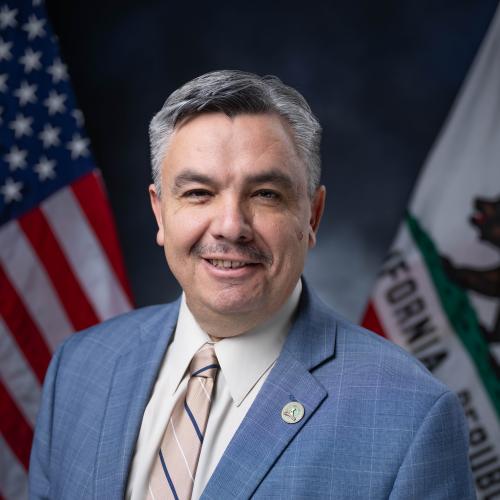
Jesse Arreguín
96% support rate
Top opponent
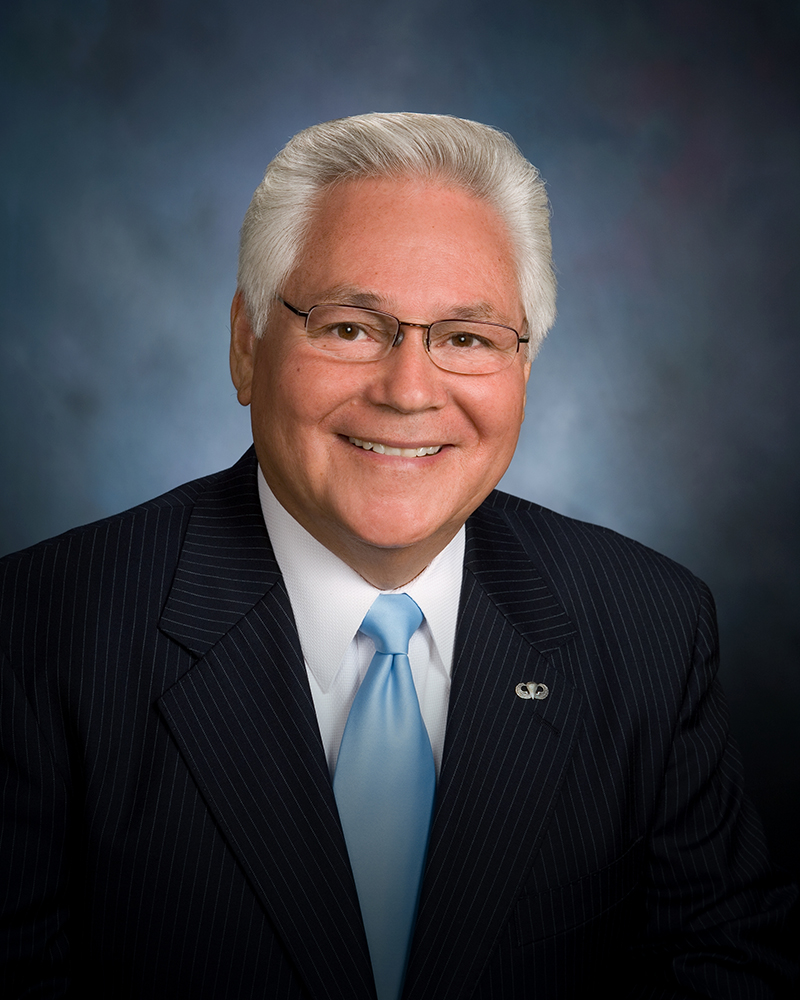
Tony Strickland
7% support rate
Ranked legislators
10
5 support · 5 oppose
Key legislators

Who's moving energy in California

Legislators moving energy in California
Legislator Party Stance Support rate Votes
JA
Jesse Arreguín Senate · District 7
D
Strong +
96% 299
Juan Carrillo
Juan Carrillo House · District 39
D
Strong +
96% 188
Bob Archuleta
Bob Archuleta Senate · District 30
D
Strong +
96% 271
Aisha Wahab
Aisha Wahab Senate · District 10
D
Strong +
95% 344
Esmeralda Soria
Esmeralda Soria House · District 27
D
Strong +
95% 155
Tony Strickland
Tony Strickland Senate · District 36
R
Strong −
7% 263
Diane Dixon
Diane Dixon House · District 72
R
Strong −
8% 246
Marie Alvarado-Gil
Marie Alvarado-Gil Senate · District 4
R
Strong −
9% 178
Roger Niello
Roger Niello Senate · District 6
R
Strong −
11% 217
Brian Jones
Brian Jones Senate · District 40
R
Strong −
11% 177
Showing 41–50 of 196 bills

All energy bills

passed · California · Assembly Aug 13, 2026

AB 2612: Building standards: qualified plug-in photovoltaic systems.

Existing law establishes the Department of Housing and Community Development in the Business, Consumer Services, and Housing Agency. Existing law, the California Building Standards Law, establishes the California Building Standards Commission. Existing law requires the commission to approve and adopt building standards and to codify those standards in the California Building Standards Code. Existing law, the State Housing Law, establishes statewide construction and occupancy standards for buildings used for human habitation. Existing law, until January 1, 2033, requires the commission and the department, commencing with the next triennial edition of the code adopted after January 1, 2023, to research and develop, and authorizes the commission and the department to propose for adoption by the commission, mandatory building standards for the installation of electric vehicle charging stations in existing multifamily dwellings, hotels, motels, and nonresidential developments, as specified. This bill would authorize the commission, commencing with the first triennial edition of the code adopted after June 1, 2031, to adopt, approve, codify, and publish building energy standards for building electrical circuit features to enable a qualified plug-in photovoltaic system, as defined, to function as an energy source within the electrical circuit of a single-family residential dwelling, multiunit residential dwelling, or nonresidential development, that is constructed after that edition is adopted, as specified. The bill would, for purposes of that requirement, require the department to research, develop, and propose for adoption building standards for a qualified plug-in photovoltaic system to function as an energy source within the electrical circuit of a single-family residential dwelling, multiunit residential dwelling, or nonresidential development, as specified. The bill would require the commission and the department, in satisfying those requirements, to, among other things, consult with certain interested parties and invite the participation of the public at large in the development of those building energy standards through open consensus-based processes.
passed both · California · Assembly Aug 24, 2026

AB 2163: Energy: Strategic Clean Energy and Critical Mineral Development Zones.

Existing law, the Warren-Alquist State Energy Resources Conservation and Development Act, establishes the State Energy Resources Conservation and Development Commission and prescribes the authorities, duties, and responsibilities of the commission pertaining to energy matters. This bill would require the commission, in consultation with the Governor's Office of Business and Economic Development and other relevant state agencies, to identify and designate Strategic Clean Energy and Critical Mineral Development Zones. The bill would authorize the county in which a proposed zone is located to submit a request for designation and would authorize the county board of supervisors to, by resolution, authorize the request for designation. The bill would authorize multiple counties to submit a request for designation if a proposed zone crosses the jurisdictional boundaries of the counties, as provided. The bill would require the commission to approve or deny a complete submission within 180 days. The bill would require a zone to consist only of geographic areas located within the jurisdictional boundaries of the county submitting the request for designation and would require that certain criteria be satisfied, including that the zone be in an area identified by state or federal agencies as containing significant deposits or identified production potential of critical minerals used in battery, clean energy, or advanced manufacturing supply chains, as specified. The bill would require the commission to review the designated zones at least every 5 years and authorize the commission to update the designated zones as appropriate based on changes in energy resources, infrastructure, or economic development planning. The bill would require state agencies administering programs related to economic development, advanced manufacturing, workforce development, or critical mineral supply chains to give priority consideration to projects, infrastructure investments, and technical assistance located within designated zones that support large-scale clean energy production or energy-intensive industrial development. The bill would require the Governor's Office of Business and Economic Development to consider designated zones when administering programs intended to support advanced manufacturing, clean technology industries, energy storage supply chains, and other energy-intensive industries. The bill would authorize the Governor's Office of Business and Economic Development to coordinate with the commission and other relevant state agencies to support site readiness, infrastructure development, and attracting investment within designated zones. The bill would require the Governor's Office of Business and Economic Development and state agencies administering programs related to economic development, advanced manufacturing, workforce development, or critical mineral supply chains to give priority consideration to projects that will provide for the payment of prevailing wages, the employment of apprentices from state-approved projects, and the use of a skilled and trained workforce.
Sub-Topics Energy Storage Renewable Energy Conservation Tags Economic Development
passed both · California · Senate Aug 30, 2026

SB 1398: State agencies: building and renovation projects: Green Globes certification.

Existing law requires all new building and major renovation projects larger than 10,000 gross square feet undertaken by state agencies, and for which the project schematic design documents are initiated by the state agency on or after January 1, 2024, to obtain the Leadership in Energy and Environmental Design or "LEED" Gold or higher certification, except as provided. Existing law requires state agencies to obtain LEED Silver certification for new buildings or major renovations, as described above, if the state agency concerned makes a finding that achieving LEED Gold conflicts with critical operational or security requirements, is demonstrably cost ineffective, or conflicts with California Building Code requirements. This bill would, as an alternative to obtaining LEED Gold certification as described above, allow building or renovation projects to obtain Three Green Globes or higher certification, as specified. This bill would, as an alternative to obtaining LEED Silver as described above, allow building or renovation projects to obtain Two Green Globes certification, as specified. The bill would make its requirements apply to projects for which the project schematic design documents are initiated by a state agency on or after January 1, 2027.
in committee · California · Assembly May 14, 2026

AB 2508: Public Utilities Public Purpose Programs Fund.

Existing law vests the Public Utilities Commission with regulatory authority over public utilities, including electrical corporations. Under existing law, the commission administers, or otherwise oversees, various public purpose programs, including energy efficiency and conservation programs, cost-effective energy efficiency programs, rate assistance programs for eligible food banks, and home insulation financial assistance programs. Under existing law, those programs are generally funded through a charge on electrical service, which is collected through customer rates. This bill would establish the Public Utilities Public Purpose Programs Fund. The bill would require the commission, no later than January 1 of each year, commencing January 1, 2027, to determine and publish the amount necessary to fund certain public purpose programs and programs administered by electrical regional energy networks for the following fiscal year, as provided. The bill would require the Controller to transfer, on July 1 of each fiscal year, from the Greenhouse Gas Reduction Fund to the Public Utilities Public Purpose Programs Fund moneys appropriated by the Legislature for that purpose. The bill would require all moneys in the Public Utilities Public Purpose Programs Fund to be allocated by the commission, upon appropriation by the Legislature, to fund the public purpose programs and programs administered by electrical regional energy networks, as provided. The bill would repeal various charges on electrical service that fund public purpose programs and, instead, provide mechanisms for funding those public purpose programs through the Public Utilities Public Purpose Programs Fund, as specified. Under existing law, a violation of the Public Utilities Act or any order, decision, rule, direction, demand, or requirement of the commission is a crime. Because certain of the above provisions would be part of the act and a violation of a commission action implementing this bill's requirements would be a crime, the bill would impose a state-mandated local program. The California Constitution requires the state to reimburse local agencies and school districts for certain costs mandated by the state. Statutory provisions establish procedures for making that reimbursement. This bill would provide that no reimbursement is required by this act for a specified reason.
failed · California · Assembly Apr 6, 2026

AB 1757: Energy: nuclear facilities.

Existing law prohibits the State Energy Resources Conservation and Development Commission from certifying a nuclear fission thermal powerplant, except for specified powerplants, and provides that a nuclear fission thermal powerplant, except specified powerplants, is not a permitted land use in California unless certain conditions are met regarding the existence of technology for the construction and operation of nuclear fuel rod processing plants and of demonstrated technology or means for the disposal of high-level nuclear waste, as specified. This bill would exempt a nuclear microreactor, as defined, from those provisions.
Sub-Topics Nuclear
in committee · California · Assembly May 14, 2026

AB 2396: Community choice aggregators: eligible transmission projects.

Existing law authorizes a community choice aggregator to aggregate the electrical load of interested electricity consumers within its boundaries and requires a community choice aggregator to file an implementation plan with the Public Utilities Commission, to register with the commission, and to enter into an operating service agreement with an electrical corporation. Existing law requires the Energy Unit within the Governor's Office of Business and Economic Development to establish a Transmission Infrastructure Accelerator (accelerator) to develop a financing and development strategy for eligible transmission projects, as defined, to receive California Transmission Accelerator financing, and requires the accelerator to take the necessary steps to accelerate the development and deployment of those projects to maximize ratepayer savings. This bill would authorize a community choice aggregator to sponsor, develop, finance, construct, operate, lease, purchase, and own an eligible transmission project, regardless of whether the electrical transmission lines are used for the purpose of conveying electricity to the customers of the community choice aggregator. Under existing law, a violation of an order, decision, rule, direction, demand, or requirement of the commission is a crime. Because a violation of a commission action implementing the provisions of this bill would be a crime, the bill would impose a state-mandated local program. The California Constitution requires the state to reimburse local agencies and school districts for certain costs mandated by the state. Statutory provisions establish procedures for making that reimbursement. This bill would provide that no reimbursement is required by this act for a specified reason.
passed · California · Assembly Aug 13, 2026

AB 1704: Greenhouse gases: embodied carbon building materials.

Existing law requires, by December 31, 2026, the State Air Resources Board, in consultation with relevant stakeholders, as provided, to develop a framework for measuring the average carbon intensity of the materials used in the construction of new buildings, including those for residential uses. Existing law requires, by December 31, 2028, the state board to develop a comprehensive strategy for the state's building sector to achieve a 40% net reduction in greenhouse gas emissions of building materials, as specified, as soon as possible, but no later than December 31, 2035. Existing law authorizes the state board to establish an embodied carbon trading system, as defined, in compliance with these requirements, as provided. This bill would require the state board to determine whether using building materials with lower embodied carbon would be cost effective during the first 2-year period of their use compared to using conventional building materials before implementing the above-described provisions. If the state board determines that using building materials with lower embodied carbon would not be cost effective during the first 2-year period of their use compared to using conventional building materials, the bill would require the state board to delay or suspend, as applicable, implementation of those provisions for not less than 5 years, not to exceed 10 years in total.
Sub-Topics Climate Change
in committee · California · Senate May 6, 2026

SB 1118: Personal Income Tax Law: Corporation Tax Law: tax credits: backup generators: solar batteries.

The Personal Income Tax Law and the Corporation Tax Law allow various credits against the taxes imposed by those laws. This bill would, for taxable years beginning on or after January 1, 2027, and before January 1, 2032, allow a credit against those taxes equal to 50% of the cost of a backup electricity generator or solar battery, as specified, by a qualified taxpayer, as defined, for use in a residence or commercial property. The bill would limit the credit to $5,000 per residence or commercial property in the case of the purchase of a backup electricity generator, and to $7,500 in the case of a solar battery. The bill would only apply these provisions in taxable years for which an appropriation is made in the Budget Act or another statute for the purposes of administering the credits. Existing law requires any bill authorizing a new tax expenditure to contain, among other things, specific goals the tax expenditure will achieve, detailed performance indicators, and data collection requirements. This bill would include additional information required for any bill authorizing a new tax expenditure. This bill would take effect immediately as a tax levy.
passed · California · Senate Jun 30, 2026

SB 1424: Sales and use taxes: zero-emission vehicle fueling or charging.

Existing state sales and use tax laws impose a tax on retailers measured by the gross receipts from the sale of tangible personal property sold at retail in this state of, or on the storage, use, or other consumption in this state of, tangible personal property purchased from a retailer for storage, use, or other consumption in this state. The Sales and Use Tax Law provides various exemptions from those taxes, including a partial exemption for the sale of, or the storage, use, or consumption of, qualified tangible personal property purchased for use by a qualified person to be used primarily in any stage of the manufacturing, processing, refining, fabricating, or recycling of tangible personal property, beginning at the point any raw materials are received by the qualified person and introduced into the process and ending at the point at which the manufacturing, processing, refining, fabricating, or recycling has altered tangible personal property to its completed form, including packaging, if required. Existing law (backfill requirement) requires an amount that equals the estimated revenue loss to the General Fund from the allowance of the above-described exemptions, with the concurrence of the Department of Finance, to be transferred from the Greenhouse Gas Reduction Fund to the General Fund, as prescribed. This bill would, beginning July 1, 2027, define "processing" to include the altering, converting, conditioning, or other preparation of hydrogen or electricity for the purposes of selling the hydrogen for fueling or the electricity for charging a vehicle and would define "qualified tangible personal property" to include hydrogen fueling station equipment and charging station equipment and component parts used as an integral part of those activities. By expanding the scope of the crime of perjury, this bill would impose a state-mandated local program. This bill would provide that the backfill requirement does not apply with respect to the exemptions allowed by the bill, as specified. Existing law requires any bill authorizing a new tax expenditure to contain, among other things, specific goals, purposes, and objectives that the tax expenditure will achieve, detailed performance indicators, and data collection requirements. This bill would include additional information required for any bill authorizing a new tax expenditure. The California Constitution requires the state to reimburse local agencies and school districts for certain costs mandated by the state. Statutory provisions establish procedures for making that reimbursement. This bill would provide that no reimbursement is required by this act for a specified reason. This bill would take effect immediately as a tax levy.
in committee · California · Assembly May 14, 2026

AB 2088: Public Utilities: thermal energy networks.

Existing law vests the Public Utilities Commission (PUC) with regulatory authority over public utilities, including gas corporations and heat corporations. Existing law requires every public utility to furnish and maintain adequate, efficient, just, and reasonable service, instrumentalities, equipment, and facilities, as are necessary to promote the safety, health, comfort, and convenience of its customers, its employees, and the public. Existing law authorizes a gas corporation to cease providing service if a certain pilot program has been implemented and the PUC determines that adequate substitute energy service is reasonably available for the energy end uses of affected gas corporation customers. This bill would authorize a utility regulated by the PUC to own and operate thermal energy service through thermal energy networks, as defined, and would require the PUC to ensure that the substitution of thermal energy service for gas service offers an adequate substitute for the thermal end-use energy needs of customers, as provided. The bill would prohibit a utility regulated by the PUC from recovering costs for gas infrastructure in areas approved to be served by a thermal energy network, except as specified. The bill would require the commission and gas corporations to prioritize the use of the existing gas utility workforce for the transition to thermal energy network operations, as specified. The bill would require a utility to ensure that all contractors and subcontractors performing work on a thermal energy network project use a skilled and trained workforce. The bill would require the PUC, on or before December 31, 2027, to initiate a proceeding to establish a regulatory framework for the provision of cost-effective thermal energy service by gas corporations or other public utilities, as provided. This bill would require the State Energy Resources Conservation and Development Commission (Energy Commission) , in consultation with the PUC, on or before December 31, 2027, to develop technical standards for thermal energy networks, as provided. The bill would require the Energy Commission to complete the development of the technical standards before the PUC initiates the proceeding described above. Under existing law, a violation of the Public Utilities Act or an order, decision, rule, direction, demand, or requirement of the PUC is a crime. Because the labor requirements for a thermal energy network project would be part of the act and a violation of a PUC action implementing those requirements would be a crime, this bill would impose a state-mandated local program. The California Constitution requires the state to reimburse local agencies and school districts for certain costs mandated by the state. Statutory provisions establish procedures for making that reimbursement. This bill would provide that no reimbursement is required by this act for a specified reason.
Sub-Topics Utility Regulation
Showing 41 to 50 of 196 bills
Previous 1 4 5 6 20 Next