Issue · Budget & Taxes

Budget & Taxes (Business Taxes)

Every budget & taxes bill, vote, and legislator stance in California, automatically classified by Maddy, our AI policy reader.

Total bills
47
2025-2026 Regular Session
Top supporter
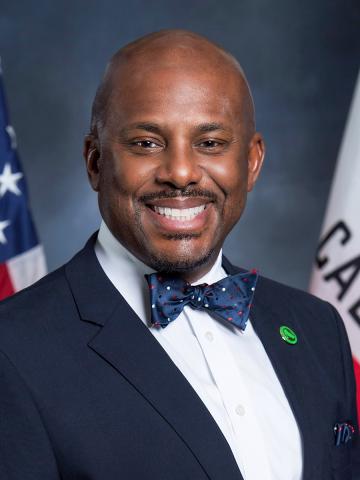
Mike Gipson
100% support rate
Top opponent
Carl DeMaio
0% support rate
Ranked legislators
10
5 support · 5 oppose
Key legislators

Who's moving business taxes in California

Legislators moving business taxes in California
Legislator Party Stance Support rate Votes
Mike Gipson
Mike Gipson House · District 65
D
Strong +
100% 12
Sharon Quirk-Silva
Sharon Quirk-Silva House · District 67
D
Strong +
100% 12
Tina McKinnor
Tina McKinnor House · District 61
D
Strong +
100% 12
Gail Pellerin
Gail Pellerin House · District 28
D
Strong +
100% 10
Jessica Caloza
Jessica Caloza House · District 52
D
Strong +
100% 10
Carl DeMaio
Carl DeMaio House · District 75
R
Strong −
0% 12
David Tangipa
David Tangipa House · District 8
R
Strong −
0% 9
Joshua Hoover
Joshua Hoover House · District 7
R
Strong −
0% 8
Kelly Seyarto
Kelly Seyarto Senate · District 32
R
Strong −
0% 8
Megan Dahle
Megan Dahle Senate · District 1
R
Strong −
0% 8
Showing 1–10 of 47 bills

All budget & taxes bills

in committee · California · Assembly Apr 27, 2026

AB 2591: Personal income tax: standard deduction: federal poverty level.

The Personal Income Tax Law imposes taxes based upon taxable income of individuals, estates, and trusts, at specified rates, and allows a taxpayer to elect to take a standard deduction in lieu of itemizing deductions. Under existing law, for the taxable year beginning on January 1, 2025, the standard deduction is $11,412 for heads of household, surviving spouses, and married couples filing a joint return and $5,706 for other individuals. Existing law requires the Franchise Tax Board to adjust those amounts annually for inflation, as provided. This bill, the Taxing Californians into Poverty Protection Act, for taxable years beginning on or after July 1, 2027, would instead allow a taxpayer to elect to take a standard deduction equal to the federal poverty level, as adjusted for the number of persons in the household, as specified, in lieu of itemizing deductions. The federal poverty level for 2025 was $15,650 for a household of one, as specified. This bill would take effect immediately as a tax levy.
in committee · California · Assembly May 14, 2026

AB 1790: Corporations Tax Law: water's-edge election: global intangible low-taxed income.

The Corporation Tax Law imposes on every corporation doing business in the state, as defined, a tax according to or measured by net income and, in the case of a corporation with income derived from or attributable to sources both within and without this state, apportions the income between this state and other states and foreign countries in accordance with a single sales formula based on the sales within and without this state, except that in the case of an apportioning trade or business that derives more than 50% of its gross business receipts from conducting one or more qualified business activities, as defined, business income is apportioned in accordance with a specified 3-factor formula. Existing federal law, for purposes of determining a taxpayer's gross income for federal income tax purposes, requires that a person who is a United States shareholder of any controlled foreign corporation, as defined, to include in their gross income the net CFC tested income, as provided. The Corporation Tax Law, for taxable years beginning on or after January 1, 2003, for purposes of determining income derived from or attributable to sources within this state, allows corporations to make a statutory election as to whether their income is determined on a "water's-edge" basis or on a worldwide unitary basis. Under existing law, the election to report income on a water's-edge basis remains in effect until terminated, and provides conditions for the termination of the election. This bill, for taxable years beginning on or after January 1, 2026, would require a taxpayer that files on a water's-edge basis to account for net CFC tested income within the water's-edge group, as provided. The bill would require a taxpayer that files on a water's-edge basis to include all income and apportionment factors of any corporation, other than a bank, whose sales factor, instead of the average of 3 factors, in the United States is at least 20%. The bill would also terminate all water's-edge elections for the first taxable year beginning on or after January 1, 2028, and would not allow a taxpayer to make a water's-edge election, or file on a water's-edge basis, for taxable years beginning on or after January 1, 2028. The bill would authorize any taxpayer that has made a water's-edge election to terminate that election without the consent of the Franchise Tax Board for taxable years beginning on or after January 1, 2026, and before January 1, 2028. This bill would include a change in state statute that would result in a taxpayer paying a higher tax within the meaning of Section 3 of Article XIIIA of the California Constitution, and thus would require for passage the approval of 23 of the membership of each house of the Legislature. This bill would take effect immediately as a tax levy.
in committee · California · Assembly Apr 27, 2026

AB 2673: Personal Income Tax Law: Corporation Tax Law: credit: childcare.

The Personal Income Tax Law and the Corporation Tax Law allow various credits against the taxes imposed by those laws. This bill would allow a credit against those taxes for each taxable year beginning on or after January 1, 2027, and before January 1, 2032, in an amount equal to 50% of qualified contributions to promote childcare, up to $100,000, as specified. Existing law requires any bill authorizing a new tax expenditure, as defined, to include tax credits, to contain, among other things, specific goals, purposes, and objectives that the tax credit will achieve, detailed performance indicators, and data collection requirements. This bill would include findings and reporting requirements in compliance with this requirement. This bill would take effect immediately as a tax levy.
passed both · California · Assembly Aug 30, 2026

AB 611: Voluntary tax contribution funds: spinal cord injury research.

Existing law allows an individual taxpayer to contribute amounts in excess of their personal income tax liability for the support of specified funds and accounts, including, among others, to the California Cancer Research Voluntary Tax Contribution Fund. This bill, for taxable years beginning on or after January 1, 2027, and before January 1, 2034, would allow an individual to designate on their tax return that a specified amount in excess of their tax liability be transferred to the continuously appropriated California Spinal Cord Injury Research Voluntary Tax Contribution Fund, which would be created by this bill. The bill would require the Franchise Tax Board to revise the tax return form to include a space for the designation of contributions to the fund. By establishing a new continuously appropriated fund, this bill would make an appropriation. The bill would repeal its provisions on December 1, 2034, except as specified.
passed · California · Assembly Aug 13, 2026

AB 2403: Income tax: credits: commercial production.

The Personal Income Tax Law and the Corporation Tax Law allow various credits against the taxes imposed by those laws, including numerous motion picture credits. This bill, for taxable years beginning on or after January 1, 2027, and before January 1, 2032, would allow a credit against the taxes imposed by those laws to a qualified taxpayer that produces qualified commercials, as defined, in the state in an amount equal to 20% or 30% of the qualified production costs in excess of $500,000 that are attributable to the production of a qualified commercial, as specified. The bill would exclude any commercial that is created entirely by generative artificial intelligence, as specified, or that utilizes generative artificial intelligence or autonomous vehicles in a manner that replaces the job functions customarily performed by a human worker in the production. The bill would require the qualified commercial to adhere to specified labor standards. The bill would require the California Film Commission to establish an application process and allocate the credits on or after July 1 each year, in accordance with certain requirements. The bill would limit the aggregate amount of credits that may be allocated for a fiscal year under these provisions to $15,000,000. The bill would require specified certifications under penalty of perjury. By expanding the scope of a crime, this bill would impose a state-mandated local program. Existing law requires any bill authorizing a new tax expenditure to contain, among other things, specific goals, purposes, and objectives that the tax expenditure will achieve, detailed performance indicators, and data collection requirements. This bill would include additional information required for any bill authorizing a new tax expenditure. The California Constitution requires the state to reimburse local agencies and school districts for certain costs mandated by the state. Statutory provisions establish procedures for making that reimbursement. This bill would provide that no reimbursement is required by this act for a specified reason. This bill would take effect immediately as a tax levy.
in committee · California · Senate May 14, 2026

SB 984: Personal Income Tax Law: deductions: tips.

The Personal Income Tax Law, in modified conformity with federal income tax laws, allows various deductions in calculating taxable income. Existing federal income tax law, for taxable years beginning before January 1, 2029, allows deductions in determining taxable income, as defined, for amounts equal to the qualified tips, as defined. This bill, for taxable years beginning on or after January 1, 2026, and before January 1, 2029, would conform to federal income tax law with regard to qualified tips, except as provided. Existing law requires any bill authorizing a new tax expenditure to contain, among other things, specific goals that the tax expenditure will achieve, detailed performance indicators, and data collection requirements. This bill also would include additional information required for any bill authorizing a new tax expenditure. This bill would take effect immediately as a tax levy.
passed both · California · Assembly Aug 27, 2026

AB 2084: Corporation Tax Law: tax-exempt organizations: revocation of tax-exempt status.

Existing law, the Corporation Tax Law, exempts organizations that are organized and operated for nonprofit purposes, as specified, from taxes imposed by that law if the Franchise Tax Board issues a determination exempting the organization from tax, except as provided. To receive a determination of exemption from the board, existing law requires the organization to either submit an application for exemption or to submit documentation of exemption from federal income tax law, as provided. For organizations that submit documentation of their federal exemption, existing law requires the board to suspend or revoke, as applicable, an organization's state exemption upon notification that the organization's federal exemption is suspended or revoked. This bill would instead authorize the board, in its discretion, to retain the organization's tax-exempt status for state income tax purposes if it determines this suspension or revocation occurred for reasons other than fraud, intentional misrepresentation, misuse or diversion of organizational funds, failure to file necessary returns or reports, or other breaches of organizational reporting or governance requirements. This bill would take effect immediately as a tax levy.
passed both · California · Senate Aug 30, 2026

SB 1168: Data centers: rate structures.

Existing law vests the Public Utilities Commission with regulatory authority over public utilities. Existing law authorizes the commission to fix the rates and charges for every public utility and requires that those rates and charges be just and reasonable. This bill would require the commission to assess opportunities for rate structures to ensure data centers pay a reasonable share of their costs associated with transmission and distribution needs, ensure that data centers pay for their proportionate share of load increases and procurements needed to reliably serve their loads while maintaining consistency with the applicable integrated resource planning requirements, and alleviate cost pressures on residential ratepayers.
Sub-Topics Business Taxes
in committee · California · Senate Apr 27, 2026

SB 1144: Personal income taxes: exemption credit: dependents.

The Personal Income Tax law authorizes an exemption credit of $227 for each dependent of a taxpayer for each taxable year beginning on or after January 1, 1999, adjusted for inflation, which may be reduced if a taxpayer's federal adjusted gross income exceeds a threshold amount. The credit amount for the 2025 taxable year is $475. This bill would increase that credit to $700 for taxable years beginning on or after January 1, 2026, and before January 1, 2031, and would require that the Franchise Tax Board adjust that amount for inflation for taxable years beginning on or after January 1, 2027, as prescribed. This bill would take effect immediately as a tax levy.
in committee · California · Senate May 14, 2026

SB 1137: Personal income tax: deduction: medical expenses.

The Personal Income Tax Law, in conformity or modified conformity with federal income tax laws, allows various deductions in computing the income that is subject to the taxes imposed by that law, including a deduction for the medical and dental expenses paid during the taxable year, not compensated for by insurance or otherwise, for the medical or dental care of the taxpayer, spouse, or a dependent, to the extent that such expenses exceed 7.5% of federal adjusted gross income. This bill would, for taxable years beginning on or after January 1, 2026, and before January 1, 2031, allow a deduction from adjusted gross income for the costs of medical care, as defined, of a qualified taxpayer to the extent the costs exceed 4% of the qualified taxpayer's federal adjusted gross income. The bill would limit the deduction to $5,000. The bill would define "qualified taxpayer" for this purpose to mean an individual with adjusted gross income that does not exceed 300% of the federal poverty level and who does not take an itemized deduction for costs of medical care pursuant to the above-referenced provisions on their California income tax return. Existing law requires any bill authorizing a new tax expenditure to contain, among other things, specific goals that the tax expenditure will achieve, detailed performance indicators, and data collection requirements. This bill also would include additional information required for any bill authorizing a new tax expenditure. This bill would take effect immediately as a tax levy.
Showing 1 to 10 of 47 bills
1 2 3 5 Next