Issue · Technology

Technology

Every technology bill, vote, and legislator stance in United States, automatically classified by Maddy, our AI policy reader.

Total bills
1,447
119th Congress
Top supporter
Ami Bera
86% support rate
Top opponent
Scott Perry
14% support rate
Ranked legislators
10
5 support · 5 oppose
Key legislators

Who's moving technology in United States

Legislators moving technology in United States
Legislator Party Stance Support rate Decisive votes
Ami Bera
Ami Bera House · District 6
D
Strong +
86% 22
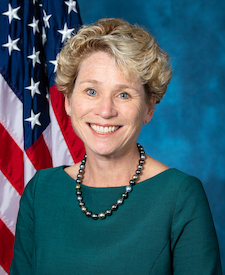
Chrissy Houlahan
Chrissy Houlahan House · District 6
D
Strong +
86% 22
Kim Schrier
Kim Schrier House · District 8
D
Strong +
86% 22
Mike Thompson
Mike Thompson House · District 4
D
Strong +
86% 22
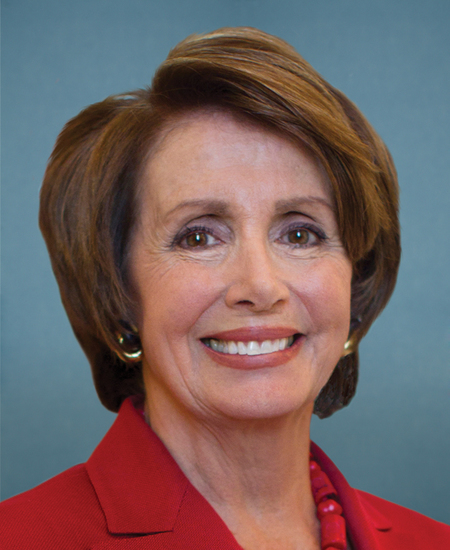
Nancy Pelosi
Nancy Pelosi House · District 11
D
Strong +
86% 22
Scott Perry
Scott Perry House · District 10
R
Strong −
14% 21
AA
Alan Armstrong Senate
R
Strong −
17% 29
Rand Paul
Rand Paul Senate
R
Strong −
17% 46
Josh Hawley
Josh Hawley Senate
R
Strong −
18% 45
Andy Harris
Andy Harris House · District 1
R
Strong −
18% 22
Showing 291–300 of 1,447 bills

All technology bills

in committee · United States · House May 4, 2026

HR 8652: YODA

The You Own the Data Act (YODA) establishes new federal rules requiring major online platforms and data brokers to give users greater control over their personal information. Covered entities, defined as large websites with over 100 million users or data brokers generating significant revenue from user data, must obtain written consent before sharing contact lists and allow users to access, correct, delete, or export their data within 90 days. The bill also mandates that these companies stop tracking cookies without permission, limit data retention to 60 days for browsing and biometric data, and provide clear privacy notices in under 1,000 words. Enforcement is handled by the Federal Trade Commission and state attorneys general, while individuals can sue companies for violations and receive damages of up to $750 per incident.
in committee · United States · House May 13, 2026

HR 8777: GUIDANCE Act of 2026

The GUIDANCE Act of 2026 restores 23 specific rules and policies previously withdrawn by the Bureau of Consumer Financial Protection. These provisions directly affect consumers, financial institutions, and debt collectors by reinstating protections related to credit reporting, debt collection practices, lending discrimination, and data security. The bill effectively reverses recent administrative actions, ensuring that regulations covering medical debt, overdraft fees, and whistleblower protections remain in force.
in committee · United States · Senate Aug 5, 2026

S 4407: CHATBOT Act

The CHATBOT Act establishes new federal rules requiring companies that provide open-ended artificial intelligence chatbots to implement strict privacy protections and parental controls for users under the age of 18. Under this legislation, platforms must create "family accounts" for children under 13 and obtain verifiable parental consent before allowing teens to create their own accounts, while also mandating the deletion of personal data if these requirements are not met. The bill further requires that default settings on these accounts prioritize child safety by limiting screen time, disabling financial transactions, and preventing the chatbot from generating unsolicited outputs. Companies are prohibited from using the personal data of children and teens for targeted advertising, and the Federal Trade Commission is authorized to enforce these provisions as unfair or deceptive practices. Additionally, the Act mandates a study by the National Science Foundation on the social impacts of AI chatbots on young people and requires a report from the Government Accountability Office to evaluate the law's effectiveness.
in committee · United States · Senate Apr 28, 2026

S 4414: LIFT AI Act

The LIFT AI Act authorizes the National Science Foundation to provide competitive grants to universities and nonprofits for developing AI literacy programs in K-12 schools. These funds are intended to create educational curricula, train teachers on the responsible use of artificial intelligence, and build tools to assess student proficiency in AI concepts. The legislation defines AI literacy as the ability to use, interpret, and mitigate risks associated with AI technology in an age-appropriate manner. By supporting research and professional development, the bill aims to prepare the next generation of students to effectively navigate and innovate within an AI-driven world.
in committee · United States · Senate Apr 23, 2026

S 4382: Workforce Data Enhancement Act

The Workforce Data Enhancement Act creates a new grant program to help states improve their workforce data systems by integrating information from education, labor markets, and other sources. Eligible entities, such as state agencies or groups of states, can apply for funding to build or upgrade statewide longitudinal data systems that track individual employment and earnings outcomes over time. The bill prioritizes grants for multi-state collaborations and projects that enhance data accuracy, privacy, and the ability to identify emerging job skills, including those related to artificial intelligence. Funds awarded for up to three years must be used to supplement existing state efforts rather than replace them, and recipients are required to report on how the data improvements help workers and employers make better decisions.
in committee · United States · House Apr 28, 2026

HR 8564: Local Law Enforcement Support Act of 2026

The Local Law Enforcement Support Act of 2026 expands funding opportunities for local police departments through the Byrne JAG and COPS programs. These funds can be used to recruit and train officers, purchase protective gear, and acquire specific tools like digital forensics equipment, drone technology, and ballistics analysis systems. The bill also allows for investments in software for cyber investigations and victim services. By adding these categories to the list of eligible expenses, the legislation provides law enforcement agencies with more options for addressing modern crime challenges.
passed · United States · Senate Apr 22, 2026

SRES 685: A resolution designating April 22, 2026, as "National Assistive Technology Awareness Day".

This resolution designates April 22, 2026, as National Assistive Technology Awareness Day to highlight the importance of devices that help people with disabilities and older adults perform daily tasks. The bill directly affects individuals with disabilities, older adults, assistive technology specialists, and organizations that support access to these tools. It serves as a commemorative measure to recognize the role of assistive technology in promoting inclusion, education, and employment, while also honoring the professionals who facilitate its distribution. The text provides background statistics on disability prevalence and explains how state programs assist with device exchange, loans, and financing.
Tags People with Disabilities
in committee · United States · House Apr 28, 2026

HR 8560: Shifting Forward Vehicle Technologies Research and Development Act

This bill directs the Department of Energy to expand research and development efforts focused on creating cleaner, more efficient, and domestically produced vehicle technologies. It establishes multiple new programs to investigate advanced materials, battery systems, electric drivetrains, and alternative fuels like hydrogen and synthetic fuels, with a specific emphasis on reducing greenhouse gas emissions and manufacturing costs. The legislation also mandates the creation of an advisory committee to oversee these initiatives, requires regular reporting on progress, and authorizes funding to establish educational centers for training future engineers in automotive technology.
in committee · United States · Senate Apr 30, 2026

S 4470: Supporting Urban and Innovative Farming Act of 2026

This bill establishes a new Office of Urban Agriculture and Innovative Production within the Department of Agriculture to support farming methods like hydroponics and controlled-environment agriculture. It creates a competitive grant program that provides funding to nonprofits, local governments, Tribal organizations, and schools to help urban farmers navigate regulations, access land, and improve food availability in underserved areas. Additionally, the legislation updates federal data collection requirements to include modern farming technologies and allocates specific funding amounts to support these initiatives from 2026 through 2030.
Sub-Topics Data Privacy Tags Agriculture
in committee · United States · House Apr 27, 2026

HR 8513: PROTECT Act

The PROTECT Act requires the Department of Homeland Security to share safety and data protection guidelines with government agencies and private organizations within a year of passing. These guidelines focus on how to securely handle personal information for law enforcement officers and employees, as well as steps they can take to stay safe. The law defines personal information broadly to include any data that can identify an individual, regardless of their citizenship status. This initiative aims to improve security practices across federal, state, local, and private sectors without changing existing legal requirements for data handling.
Showing 291 to 300 of 1,447 bills
Previous 1 29 30 31 145 Next