Issue · Technology

Technology

Every technology bill, vote, and legislator stance in United States, automatically classified by Maddy, our AI policy reader.

Total bills
1,647
119th Congress
Top supporter
Ami Bera
86% support rate
Top opponent
Alan Armstrong
14% support rate
Ranked legislators
10
5 support · 5 oppose
Key legislators

Who's moving technology in United States

Legislators moving technology in United States
Legislator Party Stance Support rate Decisive votes
Ami Bera
Ami Bera House · District 6
D
Strong +
86% 22
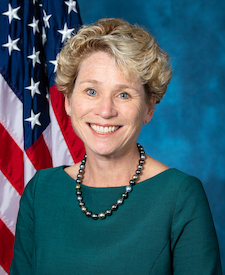
Chrissy Houlahan
Chrissy Houlahan House · District 6
D
Strong +
86% 22
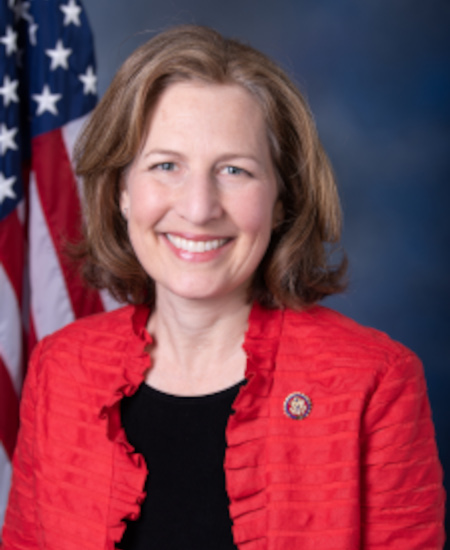
Kim Schrier
Kim Schrier House · District 8
D
Strong +
86% 22
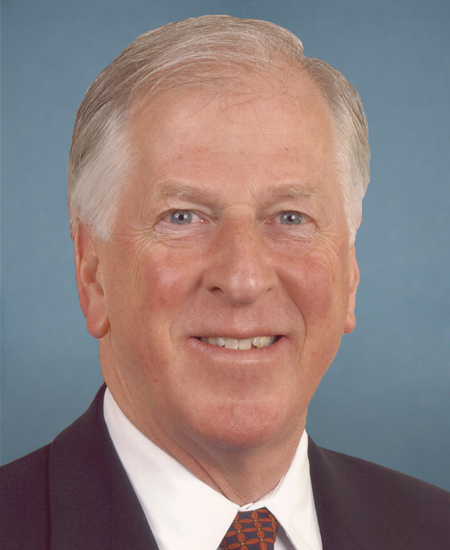
Mike Thompson
Mike Thompson House · District 4
D
Strong +
86% 22
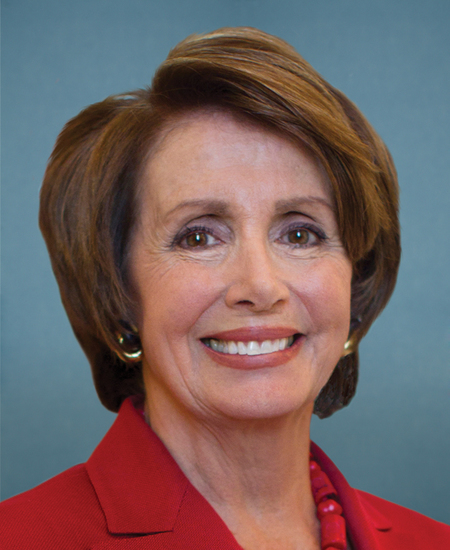
Nancy Pelosi
Nancy Pelosi House · District 11
D
Strong +
86% 22
AA
Alan Armstrong Senate
R
Strong −
14% 28
Scott Perry
Scott Perry House · District 10
R
Strong −
14% 21
Rand Paul
Rand Paul Senate
R
Strong −
16% 45
Josh Hawley
Josh Hawley Senate
R
Strong −
18% 44
Andy Harris
Andy Harris House · District 1
R
Strong −
18% 22
Showing 1,371–1,380 of 1,647 bills

All technology bills

in committee · United States · House Dec 16, 2025

HR 6746: Sunset To Reform Section 230 Act

HR 6746, the "Sunset To Reform Section 230 Act," would amend Section 230 of the Communications Act to end its legal protections for online platforms after December 31, 2026. This bill directly affects websites, social media companies, and other online platforms that currently benefit from Section 230 immunity, which shields them from most lawsuits over user-generated content. The key provision is a fixed expiration date - Section 230 would no longer apply to these platforms after 2026, meaning they could face greater legal liability for user content starting in 2027. The bill does not change Section 230's current rules but sets a specific end date for its operation.
in committee · United States · House Dec 5, 2025

HR 6429: Expanding Cybersecurity Workforce Act of 2025

The Expanding Cybersecurity Workforce Act of 2025 establishes a new program under CISA to promote cybersecurity careers to underrepresented groups, including racial and ethnic minorities, veterans, formerly incarcerated individuals, people with disabilities, older adults (40+), and those from low-income or nontraditional educational backgrounds (like community colleges or HBCUs). The program requires CISA to tailor outreach to regional needs, partner with schools, unions, and community organizations, and report annually on workforce impact. It authorizes $20 million annually for fiscal years 2026-2031 to support these efforts, aiming to diversify the cybersecurity workforce through targeted recruitment and training.
in committee · United States · Senate Feb 4, 2026

S 3774: SCAM Act

The SCAM Act requires online platforms that accept payment for advertisements to verify advertiser identities (including government ID and business documentation) and implement systems to detect and remove scam ads within 72 hours of reporting. It mandates platforms to conduct investigations, remove verified fraudulent ads within 24 hours, and maintain active impersonation detection programs. The law directly affects major social media and digital advertising platforms by imposing new verification and monitoring obligations to prevent deceptive ads targeting consumers. Enforcement falls to the Federal Trade Commission, treating violations as unfair or deceptive practices under existing law.
in committee · United States · Senate Sep 17, 2025

S 2851: Protecting Americans from Doxing and Political Violence Act

This bill would protect Members of Congress, their immediate family members, designated congressional employees, and candidates for Congress from having their personal information publicly disclosed. It requires government agencies to remove protected information - including home addresses, phone numbers, school schedules, and geolocation data - from public records within 72 hours of a request. The bill also prohibits data brokers and businesses from selling or displaying this protected information online without consent, with exceptions for news reporting and information voluntarily shared by the individual. Individuals affected by violations would have the right to seek legal action to enforce the law.
in committee · United States · House Jan 13, 2026

HR 5037: Middle Mile for Rural America Act

The Middle Mile for Rural America Act extends the deadline for funding rural broadband infrastructure projects under the Rural Electrification Act from 2023 to 2031. This directly affects rural communities by providing more time to build the backbone internet networks that connect local areas to broader high-speed services. The key mechanism is amending Section 602(g) of the Rural Electrification Act to update the program's timeframe, allowing eligible projects to qualify for support through 2031. The bill focuses on concrete policy changes to support existing infrastructure funding, without adding new programs or resources.
Sub-Topics Broadband Access Telecommunications Tags Rural Communities
in committee · United States · House Feb 4, 2026

HR 2985: Modernizing Government Technology Reform Act

This bill reforms how the Technology Modernization Fund is used to upgrade outdated federal computer systems. It requires agencies to identify and report high-risk legacy systems to a central office, which then compiles a national inventory and prioritizes the most critical systems for modernization. Agencies that receive funds must repay the fund under specific terms to ensure it remains fully operational until 2032. The bill also blocks funding for projects with fraudulent claims about their technology plans or costs.
Sub-Topics Digital Government
passed · United States · House Jul 13, 2026

HR 915: Small Business Technological Advancement Act

HR 915, the Small Business Technological Act of 2025, expands the use of Small Business Administration (SBA) Section 7(a) loans to cover business software, cloud computing services, and AI-powered tools that handle payroll, HR, sales, billing, accounting, and inventory management. It directly affects small businesses seeking loans for operational technology upgrades, allowing them to use SBA funds for these specific tech services without changing existing loan purposes. The bill amends the Small Business Act to explicitly permit these uses under Section 7(a), clarifying that existing loans for similar purposes before the law's enactment remain valid. It does not expand loan use for research, development, or working capital beyond current definitions.
Sub-Topics Artificial Intelligence Tags Small Business
passed · United States · House Apr 8, 2025

HRES 294: Providing for consideration of the joint resolution (S.J. Res. 18) disapproving the rule submitted by the Bureau of Consumer Financial Protection relating to "Overdraft Lending: Very Large Financial Institutions"; providing for consideration of the joint resolution (S.J. Res. 28) disapproving the rule submitted by the Bureau of Consumer Financial Protection relating to "Defining Larger Participants of a Market for General-Use Digital Consumer Payment Applications"; providing for consideration of the bill (H.R. 1526) to amend title 28, United States Code, to limit the authority of district courts to provide injunctive relief, and for other purposes; providing for consideration of the bill (H.R. 22) to amend the National Voter Registration Act of 1993 to require proof of United States citizenship to register an individual to vote in elections for Federal office, and for other purposes; and for other purposes.

HRES 294 is a procedural resolution that sets rules for the House to debate and vote on four specific legislative items. It enables consideration of two disapproval resolutions targeting Consumer Financial Protection Bureau rules (one on overdraft fees for large banks, another on digital payment app regulations), a bill limiting court injunctions (H.R. 1526), and a voting rights bill requiring citizenship proof for federal elections (H.R. 22). The resolution waives objections to these items and specifies debate time and amendment procedures. It does not change policy itself but streamlines the process for the House to act on these proposals. This is a procedural step, not a substantive policy change.
in committee · United States · Senate Oct 22, 2025

S 3029: DOE and NASA Interagency Research Coordination Act

This bill requires the Department of Energy (DOE) and NASA to formally coordinate research and development through agreements and collaborative projects. It authorizes joint funding competitions for specific areas like nuclear propulsion, quantum computing, Arctic science, wildfire resilience, and space weather forecasting, directly affecting DOE and NASA operations. Key mechanisms include mandatory interagency agreements, merit-based funding for federal labs and universities, and shared data infrastructure. The bill also mandates a biennial report to Congress detailing coordination progress and future collaboration opportunities, with no new funding or tax changes.
in committee · United States · Senate Dec 3, 2025

S 3319: Workforce of the Future Act of 2025

The Workforce of the Future Act of 2025 requires federal agencies to study AI's impact on jobs through reports due within 6 months, 1 year, and 3 years of enactment, focusing on data needs, affected industries, and vulnerable demographics. It authorizes $160 million in Department of Education grants to expand emerging and advanced technology education in schools, with specific emphasis on making these programs accessible to underrepresented groups including minorities, girls, and students from low-income families. The bill also allocates $90 million in Department of Labor grants to provide training for workers most impacted by AI in industries where AI is projected to significantly affect job opportunities. Grantees must report on program participation and outcomes, disaggregated by race, ethnicity, gender, and socioeconomic status, and demonstrate how programs will be sustained after funding ends. The legislation emphasizes collaboration between schools, industry, and labor organizations to develop curricula and training aligned with future workforce needs.
Showing 1,371 to 1,380 of 1,647 bills