Issue · Environment

Environment

Every environment bill, vote, and legislator stance in United States, automatically classified by Maddy, our AI policy reader.

Total bills
1,975
119th Congress
Top supporter
Martin Heinrich
84% support rate
Top opponent
Marsha Blackburn
11% support rate
Ranked legislators
10
5 support · 5 oppose
Key legislators

Who's moving environment in United States

Legislators moving environment in United States
Legislator Party Stance Support rate Votes
Martin Heinrich
Martin Heinrich Senate
D
Strong +
84% 215
Adam B. Schiff
Adam B. Schiff Senate
D
Support
79% 231
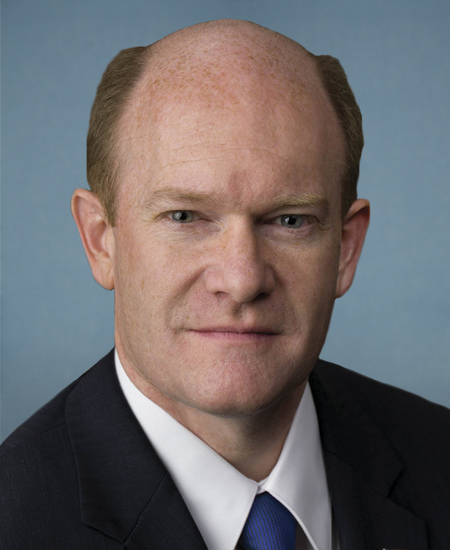
Christopher A. Coons
Christopher A. Coons Senate
D
Support
79% 229
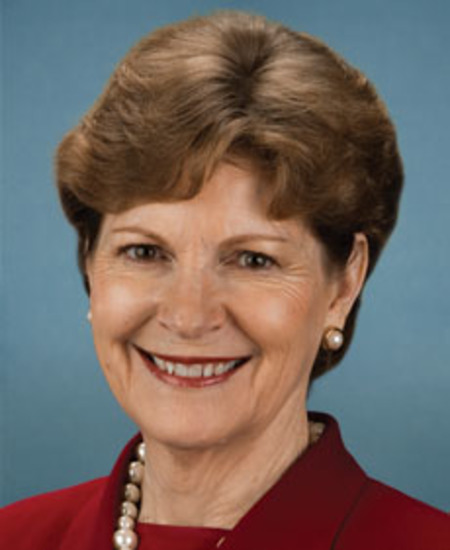
Jeanne Shaheen
Jeanne Shaheen Senate
D
Support
78% 232
Alex Padilla
Alex Padilla Senate
D
Support
78% 232
Marsha Blackburn
Marsha Blackburn Senate
R
Strong −
11% 211
Ted Budd
Ted Budd Senate
R
Strong −
20% 220
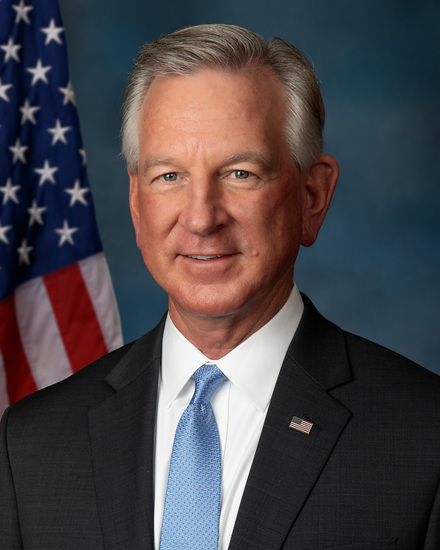
Tommy Tuberville
Tommy Tuberville Senate
R
Oppose
21% 229
Bill Cassidy
Bill Cassidy Senate
R
Oppose
22% 221
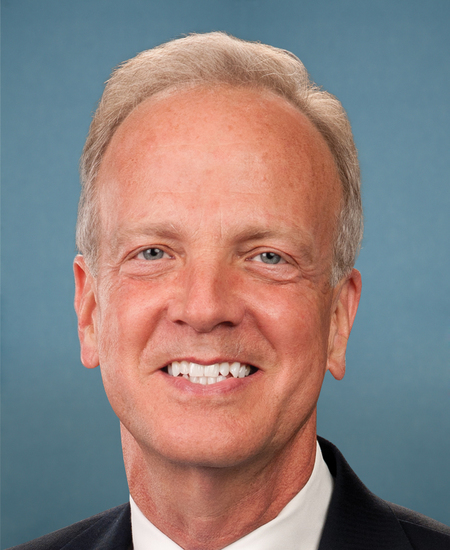
Jerry Moran
Jerry Moran Senate
R
Oppose
23% 228
Showing 1,611–1,620 of 1,975 bills

All environment bills

in committee · United States · House Jan 31, 2025

HR 848: Voluntary Food Climate Labeling Act

HR 848 establishes a voluntary program allowing food manufacturers, importers, distributors, or sellers to display a standardized "food climate label" on products. The label provides two numerical summaries of a food's total lifecycle greenhouse gas emissions: one covering production (growing, processing, packaging, distribution) and another covering consumption (storage, retail, home use, disposal). The Environmental Protection Agency (EPA) develops the label format, verification standards, and a public database to ensure accuracy and accessibility, while requiring businesses to verify their own production data and EPA to validate consumption data. Participation is optional, with no requirement for businesses to reduce emissions - only to disclose verified emissions data to help consumers make informed choices.
Sub-Topics Climate Change
in committee · United States · Senate Mar 13, 2025

S 1067: Concrete and Asphalt Innovation Act of 2025

The Concrete and Asphalt Innovation Act of 2025 establishes a federal research, development, and demonstration program focused on reducing greenhouse gas emissions in cement, concrete, asphalt binder, and asphalt mixture production. The program, funded with $200 million over fiscal years 2025-2029, will support demonstration projects, provide technical assistance to update building codes and standards, and establish Manufacturing USA institutes for low-emissions materials. It also creates a Federal Highway Administration initiative that reimburses states for higher costs of using low-emissions materials in highway projects and offers 2% incentives on project costs. The bill aims to reduce embodied greenhouse gas emissions in construction materials while supporting domestic manufacturing and creating jobs in the construction sector.
in committee · United States · House Jul 16, 2025

HR 4420: Cool Corridors Act of 2025

The Cool Corridors Act of 2025 expands the existing Healthy Streets program to fund tree planting, shade structures, and green infrastructure along transportation corridors - like bus stops, transit hubs, and school zones - to reduce heat exposure. It directly affects communities facing extreme heat and limited tree canopy (especially low-income or historically underserved areas), as well as state/local transit agencies, schools, and environmental groups. Key provisions include requiring projects to prioritize heat-vulnerable regions, mandate annual reporting on temperature reduction and equity outcomes, and ensure tree planting doesn’t obstruct traffic safety. The bill also extends program funding through 2030 and mandates coordination with agencies like the EPA and Forest Service.
in committee · United States · House May 15, 2025

HR 3433: WILD Act of 2025

This bill allows federal, state, local, and tribal agencies to use drones in wilderness areas for three specific purposes: monitoring environmental issues (like harmful algal blooms and invasive species), supporting law enforcement and search/rescue operations (including U.S. Customs and Border Protection), and tracking natural disasters. It amends the Wilderness Act to create these exceptions, explicitly limiting drone use to these defined activities. The bill defines "natural disaster" and "unmanned aircraft system" to align with existing federal laws. This directly affects agencies managing wilderness areas, not the general public.
Sub-Topics Natural Disasters
in committee · United States · Senate May 13, 2025

S 1724: Town of North Topsail Beach Coastal Barrier Resources System Map Amendment Act of 2025

This bill amends the map for Unit L06 of the John H. Chafee Coastal Barrier Resources System to exclude specific parcels in North Topsail Beach, North Carolina, that are zoned for non-conservation uses under local regulations. It requires the Secretary of the Interior to correct the map within 30 days of enactment, removing these parcels from the system. This change directly affects the town's land by lifting federal restrictions on development and federal funding that previously applied to those areas. The amendment applies only to parcels within North Topsail Beach's municipal boundaries in Unit L06.
in committee · United States · Senate Dec 2, 2025

S 1476: M.H. Dutch Salmon Greater Gila Wild and Scenic River Act

This bill designates specific segments of New Mexico's Gila River system as Wild and Scenic Rivers, protecting them from development while preserving existing rights. It classifies over 50 river segments totaling hundreds of miles as "wild," "recreational," or "scenic" rivers and withdraws federal lands within these areas from mining, logging, and other development activities. The legislation also modifies boundaries of Gila Cliff Dwellings National Monument and Gila National Forest to incorporate these protected areas. Existing water rights, grazing permits, and mining operations remain unaffected by the designation. The bill aims to protect the ecological and recreational value of these rivers while respecting current land uses and rights.
Sub-Topics Forestry Public Lands
in committee · United States · Senate Mar 9, 2026

SJRES 119: A joint resolution providing for congressional disapproval under chapter 8 of title 5, United States Code, of the rule submitted by the Environmental Protection Agency relating to "Air Plan Approval; Montana; Regional Haze Plan for the Second Implementation Period".

This joint resolution (SJRES 119) seeks congressional disapproval of an Environmental Protection Agency (EPA) rule approving Montana's regional haze plan for the second implementation period under federal air quality standards. If passed, it would nullify the EPA's rule (published in the Federal Register on November 28, 2025), meaning the EPA's approval of Montana's plan would have no legal effect. The bill directly affects Montana's air quality management by blocking federal approval of its haze reduction plan for the second phase. It uses the statutory disapproval process under Title 5 of the U.S. Code to override the EPA's action without changing Montana's underlying air quality plan.
Sub-Topics Air Quality
in committee · United States · House Oct 25, 2025

HR 5833: Clean Water Affordability Act

This bill amends the Federal Water Pollution Control Act to improve access to wastewater treatment services for low-income households. It changes how states can use funds in water pollution control revolving loan programs by requiring states to dedicate at least 20% of their annual federal capitalization grants to additional subsidies for ratepayers (water customers). The bill also revises subsidy calculations, allowing states to use up to 50% of their annual grants or the 10-year average of state deposits, whichever is greater, to help households maintain access to wastewater and stormwater treatment. These changes directly affect states managing water funds and the households relying on subsidized wastewater services.
in committee · United States · House Dec 1, 2025

HR 4341: International Maritime Pollution Accountability Act of 2025

This bill establishes fees on carbon emissions and air pollutants from maritime shipping, with reporting requirements starting in 2027. Ship operators must report detailed voyage data including fuel consumption, ports visited, and cargo details, while importers of cargo bound for the U.S. face similar reporting and fee obligations. Revenue from these fees funds specific decarbonization programs: 25% supports modernizing Jones Act vessels, 25% funds low-carbon fuel research, 10% each goes to harbor craft and ferry electrification, and 5% each supports workforce development and air monitoring in port communities. The bill creates a structured funding mechanism to reduce emissions from shipping while requiring transparency through comprehensive reporting.
in committee · United States · House Mar 28, 2025

HR 1565: Voluntary Public Access Improvement Act of 2025

HR 1565, the Voluntary Public Access Improvement Act of 2025, directs $150 million in federal funds (from the Commodity Credit Corporation) to support public access to wetland conservation areas between fiscal years 2025 and 2029. Specifically, $3 million of this funding must be used to create voluntary agreements with states and tribal governments, encouraging public access to lands protected under wetland reserve easements. This bill directly affects landowners with these easements and state/tribal entities managing conservation programs. It provides a concrete funding mechanism to improve public access without mandating access or changing landowner obligations. The focus is on using existing federal resources to facilitate voluntary partnerships for recreation and education on conservation lands.
Showing 1,611 to 1,620 of 1,975 bills