Issue · Environment

Environment

Every environment bill, vote, and legislator stance in United States, automatically classified by Maddy, our AI policy reader.

Total bills
1,975
119th Congress
Top supporter
Martin Heinrich
84% support rate
Top opponent
Marsha Blackburn
11% support rate
Ranked legislators
10
5 support · 5 oppose
Key legislators

Who's moving environment in United States

Legislators moving environment in United States
Legislator Party Stance Support rate Votes
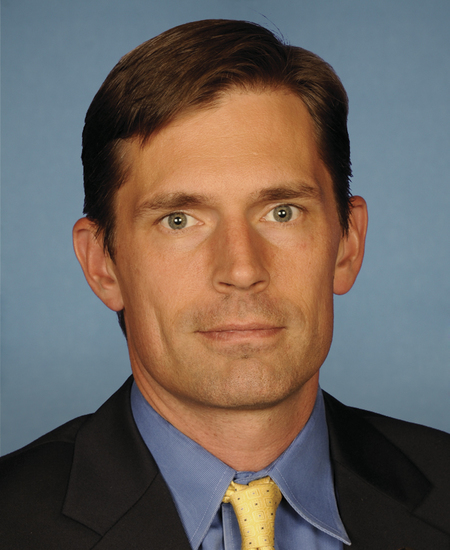
Martin Heinrich
Martin Heinrich Senate
D
Strong +
84% 215
Adam B. Schiff
Adam B. Schiff Senate
D
Support
79% 231
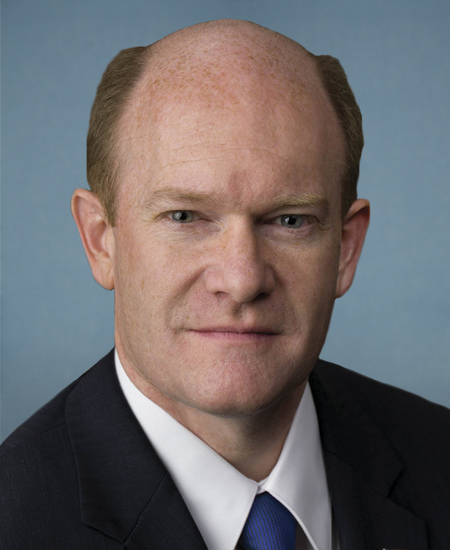
Christopher A. Coons
Christopher A. Coons Senate
D
Support
79% 229
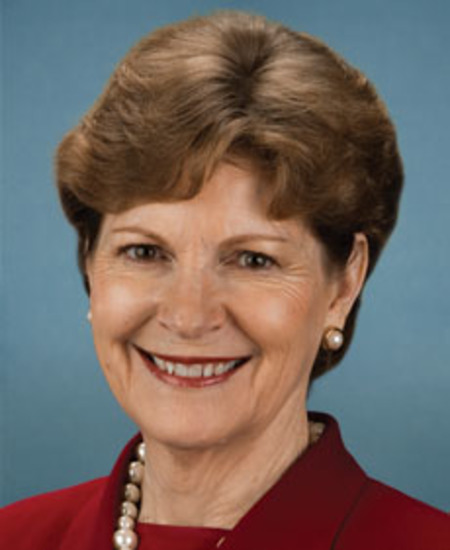
Jeanne Shaheen
Jeanne Shaheen Senate
D
Support
78% 232
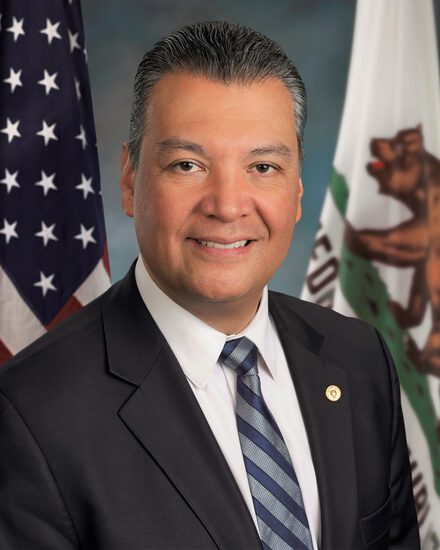
Alex Padilla
Alex Padilla Senate
D
Support
78% 232
Marsha Blackburn
Marsha Blackburn Senate
R
Strong −
11% 211
Ted Budd
Ted Budd Senate
R
Strong −
20% 220
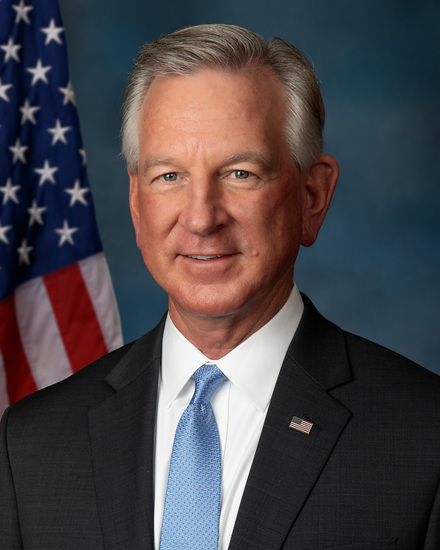
Tommy Tuberville
Tommy Tuberville Senate
R
Oppose
21% 229
Bill Cassidy
Bill Cassidy Senate
R
Oppose
22% 221
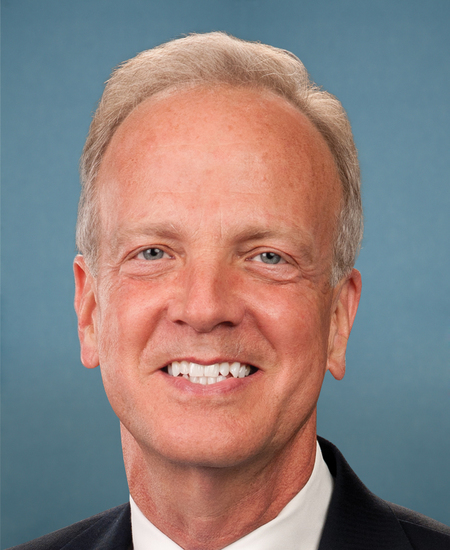
Jerry Moran
Jerry Moran Senate
R
Oppose
23% 228
Showing 1,601–1,610 of 1,975 bills

All environment bills

in committee · United States · House Jun 12, 2025

HR 3991: Research for Healthy Soils Act

HR 3991, the Research for Healthy Soils Act, authorizes federal research grants to study how microplastics and PFAS chemicals (like those in firefighting foam) in agricultural compost and biosolids affect farmland. It directs research on measuring these substances in soil, developing filtration methods for compost, assessing crop uptake, and finding ways to clean contaminated soil. The bill does not regulate or ban these chemicals but funds scientific study to understand their agricultural impacts. It also extends funding deadlines for existing research programs through 2031. This affects researchers, agricultural extension services, and farmers through future scientific findings, not immediate policy changes.
Sub-Topics Drinking Water
in committee · United States · House Mar 14, 2025

HR 2122: IMPACT Act 2.0

HR 2122, the IMPACT Act 2.0, provides federal funding to help states adopt low-emission construction materials for highway projects. It reimburses states for the extra cost of using low-emission cement, concrete, asphalt binder, or mixtures (up to 2% of project costs) and creates a public directory of approved materials. States must update their specifications to prioritize performance and emissions data to qualify, with $15 million authorized for 2025-2027. The bill also allows states to enter multi-year contracts for innovative, domestically produced low-emission materials that meet durability and environmental standards. It directly affects state highway departments and construction material producers seeking to supply these materials.
in committee · United States · House Dec 11, 2025

HR 6674: CLAIM Act of 2025

HR 6674, the CLAIM Act of 2025, changes the annual maintenance fee for hardrock mining claims on federal land based on proximity to protected areas like National Parks and monuments. It establishes tiered fees: $1,100 for claims mostly within protected areas, decreasing to $300 for claims over 30 miles away, replacing the traditional "assessment work" requirement under the 1872 Mining Law. Small miners (holding ≤10 claims, ≤200 acres, or earning <$50,000 annually from mining) are exempt from these fees. Excess fees collected fund conservation programs, with 40% allocated to infrastructure projects, 20% to Tribal preservation, and 10% each to the Land and Water Conservation Fund and national park restoration. The bill directly affects individual miners and small operations holding claims near protected lands.
in committee · United States · House Jan 13, 2026

HR 6388: Conservation Reserve Program Modernization Act

This bill modernizes the Conservation Reserve Program (CRP), which pays farmers to convert environmentally sensitive land to conservation uses. It clarifies definitions for "conservation buffers" (like riparian buffers, prairie strips, and wetland buffers), expands eligible land to include grasslands, wetlands (such as prairie potholes), and marginal pasture, and updates payment rules. Payments for establishing conservation practices (e.g., fencing, vegetation) remain at 50% of costs, but annual rental payments for reenrolled land decrease by 10 percentage points per renewal (starting at 85% for the first reenrollment). The changes directly affect farmers and landowners enrolled in CRP, as well as state/tribal partners proposing conservation plans.
in committee · United States · Senate Feb 27, 2025

S 795: Farmers Freedom Act of 2025

Farmers Freedom Act of 2025 This bill excludes certain prior converted cropland from permit requirements under the Clean Water Act, including Section 404 permits for discharges of dredged materials into waters of the United States (WOTUS). The exclusion applies to areas that were converted to cropland prior to December 23, 1985. However, the bill does not exclude an area that has reverted to wetlands and has not been used for agricultural purposes in five years. In recent years, there has not been regulatory consistency about which cropland, such as cropland that has reverted to wetlands, is protected under the scope of the act as WOTUS. In 2020, the Environmental Protection Agency (EPA) and the U.S. Army Corps of Engineers issued the Navigable Waters Protection Rule that, among other provisions, defined  prior converted cropland in order to specify which cropland is excluded from the scope of the act. However, the U.S. District Court for the District of Arizona vacated the rule in Pascua Yaqui Tribe v. EPA . In 2023, the EPA and the Army Corps of Engineers issued another rule that excluded prior converted cropland from the scope of the act, but they defined the exclusion more narrowly than the exclusion in the 2020 rule.  Similar to the 2020 rule, this bill broadens the exclusion. The bill determines the scope of the exclusion by defining the term prior converted cropland in statute .
Sub-Topics Water Quality Tags Agriculture
in committee · United States · Senate Mar 9, 2026

SJRES 122: A joint resolution providing for congressional disapproval under chapter 8 of title 5, United States Code, of the rule submitted by the Environmental Protection Agency relating to "Air Plan Approval; Indiana; Regional Haze Plan for the Second Implementation Period".

SJRES 122 is a joint resolution seeking to disapprove an Environmental Protection Agency (EPA) rule that approved Indiana's Regional Haze Plan for the second implementation period under federal air quality regulations. If passed, the resolution would block the rule from taking effect, preventing the EPA's approval of Indiana's haze reduction plan from being enforced. This follows a standard congressional disapproval process under federal law that allows Congress to halt agency rules within a specific timeframe. The resolution directly affects the EPA's ability to implement the approved plan in Indiana.
Sub-Topics Air Quality
in committee · United States · Senate Feb 11, 2025

S 508: BEACH Act of 2025

The BEACH Act of 2025 updates federal water quality monitoring for coastal areas by expanding the definition of covered waters to include nearby shallow upstream waters and areas "adjacent to or present on" public beaches. It allows states and local governments using federal grants to identify specific pollution sources in these waters, rather than just monitoring general water quality. The bill extends annual funding for the program from $30 million per year through 2029 (previously 2001-2005) and requires the Environmental Protection Agency to update guidance to reflect new water testing technologies. This directly affects coastal states managing beach water quality and public health notifications.
in committee · United States · House Dec 1, 2025

HR 5735: Coastal Infrastructure Improvement Act

HR 5735, the Coastal Infrastructure Improvement Act, establishes a 6-year federal research program to develop nature-inspired erosion control technologies for coastal areas. The bill directly affects coastal communities vulnerable to flooding and erosion by funding research into alternatives to traditional hard structures like seawalls. Key provisions require the Army Corps of Engineers to study biomimetic methods (such as systems mimicking natural processes) that protect shorelines while supporting ecosystems, with research conducted across diverse geographic locations. The program mandates annual reports to Congress evaluating outcomes and recommending future action, focusing on cost-effective, habitat-friendly solutions.
in committee · United States · House May 17, 2025

HR 3476: Forest Conservation Easement Program Act of 2025

The Forest Conservation Easement Program Act of 2025 establishes a new federal program to conserve forest land through easements. The program provides cost-share assistance (50-75% of fair market value) for eligible entities to purchase forest land easements or for the Secretary to purchase forest reserve easements directly. It requires forest management plans for enrolled land, prioritizes protection of endangered species habitat, and sets aside 10% of annual funding for beginning, socially disadvantaged, veteran, and limited resource forest landowners. The program replaces the Healthy Forests Reserve Program and allocates $100 million annually from 2026-2030 for implementation.
in committee · United States · House Mar 11, 2025

HR 2063: To prohibit natural asset companies from entering into any agreement with respect to land in the State of Utah or natural assets on or in land in the State of Utah.

HR 2063 prohibits "natural asset companies" from entering agreements related to land or natural assets in Utah. These companies are defined as corporations managing defined areas for conservation, restoration, or sustainable use, or similar organizations. The bill directly affects such companies by banning all agreements involving Utah land or its natural assets. This creates a clear legal restriction on their operations within the state.
Showing 1,601 to 1,610 of 1,975 bills