Issue · Labor & Employment

Labor & Employment

Every labor & employment bill, vote, and legislator stance in Pennsylvania, automatically classified by Maddy, our AI policy reader.

Total bills
325
2025-2026 Regular Session
Top supporter
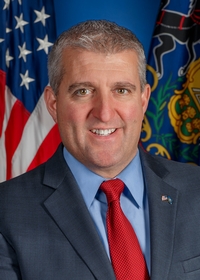
Frank Farry
93% support rate
Top opponent
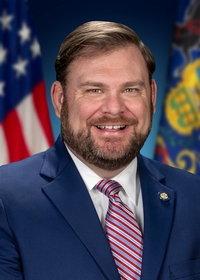
Dawn Keefer
15% support rate
Ranked legislators
10
5 support · 5 oppose
Key legislators

Who's moving labor & employment in Pennsylvania

Legislators moving labor & employment in Pennsylvania
Legislator Party Stance Support rate Votes
Frank Farry
Frank Farry Senate · District 6
R
Strong +
93% 45
Devlin Robinson
Devlin Robinson Senate · District 37
R
Strong +
90% 52
Camera Bartolotta
Camera Bartolotta Senate · District 46
R
Strong +
89% 51
Joe Pittman
Joe Pittman Senate · District 41
R
Strong +
89% 55
Elder Vogel
Elder Vogel Senate · District 47
R
Strong +
88% 56
Dawn Keefer
Dawn Keefer Senate · District 31
R
Strong −
15% 46
Scott Hutchinson
Scott Hutchinson Senate · District 21
R
Oppose
29% 46
Charity Krupa
Charity Krupa House · District 51
R
Oppose
29% 256
Jarrett Coleman
Jarrett Coleman Senate · District 16
R
Oppose
29% 54
Stephanie Borowicz
Stephanie Borowicz House · District 76
R
Oppose
31% 214
Showing 251–260 of 325 bills

All labor & employment bills

in committee · Pennsylvania · House Jan 27, 2025

HB 323: An Act amending Title 15 (Corporations and Unincorporated Associations) of the Pennsylvania Consolidated Statutes, in general provisions relating to nonprofit corporations, providing for eligibility for receipt of State resources.

HB 323 requires nonprofit corporations (both domestic and foreign with 200+ Pennsylvania employees) to meet specific conditions to receive state contracts, funding, or grants. Key provisions include: prohibiting eligibility if the nonprofit violated federal labor laws in the past five years, was found guilty of unfair labor practices in Pennsylvania within five years, or fails to submit bylaws requiring at least 20% of board members to be current employees elected by staff. Healthcare-related funding (like Medicaid reimbursements) and past violations occurring before the law's effective date are exempt. The law applies to new state contracts, funding, or grants approved on or after its effective date, which is 60 days after enactment.
in committee · Pennsylvania · House Feb 24, 2025

HB 717: An Act amending Title 62 (Procurement) of the Pennsylvania Consolidated Statutes, in source selection and contract formation, further providing for debarment or suspension.

HB 717 amends Pennsylvania's procurement law to add wage law violations as a specific reason for barring state contractors from future government contracts. It directly affects state contractors who fail to pay wages owed to workers under the 1961 Wage Payment and Collection Law. The bill adds a new subsection (531(b)(6.1)) to the debarment rules, requiring state agencies to suspend or debar contractors found in violation of wage payment laws. This change creates a direct link between wage compliance and eligibility for state contracts. The bill takes effect 60 days after enactment.
in committee · Pennsylvania · House Jan 29, 2025

HB 405: An Act amending Title 15 (Corporations and Unincorporated Associations) of the Pennsylvania Consolidated Statutes, in general provisions relating to business corporations, providing for eligibility for receipt of State resources.

HB 405 would require businesses with 200+ Pennsylvania employees to meet specific standards to receive state contracts, funding, or grants. Corporations would be ineligible if they violated federal labor laws (within 5 years), committed unfair labor practices (within 5 years), broke Pennsylvania's prevailing wage law (within 5 years), or failed to submit bylaws ensuring at least 20% of their governing board consists of employee-elected members. The bill applies only to new or renewed state contracts, funding, or grants approved after its effective date (60 days after enactment). This directly affects large corporations seeking state business by linking eligibility to labor compliance and employee representation requirements.
in committee · Pennsylvania · House Apr 28, 2025

HB 1321: An Act amending Title 51 (Military Affairs) of the Pennsylvania Consolidated Statutes, in Pennsylvania National Guard, Pennsylvania Guard and militia, providing for leaves of absence for military spouses, for anti-retaliation protection and for employment protection.

HB 1321 creates a new "Military Spouse Leave and Employment Protection Act" in Pennsylvania law. It requires employers with 20+ employees to provide up to 14 paid days per year of leave for employees when their spouse is deployed to a combat zone or during a declared emergency, and up to 14 unpaid days for training deployments. The law prohibits employers from retaliating against employees who request this leave and mandates that employers maintain an employee's position, title, and accrued benefits during the leave. This directly affects Pennsylvania employees with military-connected spouses working at qualifying employers.
in committee · Pennsylvania · Senate May 22, 2025

SB 757: An Act providing for notice and disclosure of proposed collective bargaining agreements and related documents and for open records.

SB 757 requires public employers in Pennsylvania to publicly post proposed collective bargaining agreements, including cost estimates, on their websites for at least two weeks before signing. It mandates that these agreements become public records accessible online within 48 hours of receipt. The law applies to most public employees (excluding elected officials, management staff, and police/fire unions under separate law) and makes agreements unenforceable if proper notice isn't provided. This aims to increase transparency around public sector pay, benefits, and working conditions.
Sub-Topics Collective Bargaining Tags Government Transparency
in committee · Pennsylvania · Senate Apr 28, 2025

SB 678: An Act amending the act of July 14, 1961 (P.L.637, No.329), known as the Wage Payment and Collection Law, further providing for definitions; and providing for specific liability.

SB 678 amends Pennsylvania's Wage Payment and Collection Law to establish specific liability for general contractors in the construction industry. It makes general contractors jointly responsible for violations of wage payment laws committed by subcontractors providing construction services. The bill also requires subcontractors to repay general contractors for these liabilities, including wages and fees, unless otherwise specified in their contract or if the general contractor caused the violation by not paying promptly. These changes apply to construction contracts entered into on or after the bill's effective date.
Sub-Topics Labor Standards
in committee · Pennsylvania · Senate May 28, 2025

SB 13: An Act providing for mandatory Statewide employer-paid sick leave for employees and for civil penalties and remedies.

This bill requires most Pennsylvania employers to provide paid sick leave to employees, directly affecting workers and their families who need time for medical care, family health needs, or public health emergencies. Employees earn one hour of paid sick leave for every 30 hours worked (max 56 hours/year), with rules on accrual, carryover, and usage. Employers with existing equivalent paid leave policies (covering the same purposes and conditions) are exempt. The bill mandates employers to provide written notice of leave policies and prohibits retaliation against employees using sick leave, with pay calculated at the employee's regular rate or minimum wage.
in committee · Pennsylvania · House Mar 19, 2025

HB 964: An Act providing for employment leave for victims and victims' families because of violence; prohibiting certain acts by employers; prescribing penalties; and providing for a cause of action.

HB 964, the Victims of Violence Safe Employment Act, provides eligible Pennsylvania employees with up to 160 hours of protected leave when they or a defined family member experience a "qualifying act" of violence - including domestic violence, sexual violence, stalking, or abuse of a vulnerable adult. Employers cannot retaliate against employees for taking this leave, and employees can sue if they face adverse actions like termination or demotion for using it. The bill defines "family member" broadly to include domestic partners, caregivers, and others with significant emotional ties, and "qualifying acts" cover both criminal and non-criminal violent conduct. It requires employers to allow the leave without penalty, with penalties for violations including fines and legal liability.
Sub-Topics Paid Leave
in committee · Pennsylvania · House Apr 3, 2025

HB 1150: An Act amending the act of January 17, 1968 (P.L.11, No.5), known as The Minimum Wage Act of 1968, further providing for definitions, for minimum wages and for preemption.

HB 1150 raises Pennsylvania's minimum wage to $15 per hour starting January 1, 2026, with annual increases thereafter. It also establishes a phased timeline for tipped employees: requiring higher base cash wages starting in 2025 (e.g., $5.00/hour after June 2025) and mandating that by July 1, 2029, employers must pay the full minimum wage without relying on tips. The bill ensures all tips received by employees remain their property and cannot be used by employers to meet minimum wage requirements. This directly affects most private-sector employers and tipped workers in Pennsylvania, particularly in hospitality and service industries.
in committee · Pennsylvania · Senate Jun 3, 2025

SB 817: An Act amending the act of March 4, 1971 (P.L.6, No.2), known as the Tax Reform Code of 1971, providing for prevailing wage and apprenticeship requirements.

SB 817 amends Pennsylvania's Tax Reform Code to require businesses seeking tax incentives (like exemptions or credits) for construction projects to meet prevailing wage and apprenticeship standards. Specifically, businesses making capital investments over $25,000 for construction, reconstruction, or repair on property where they seek tax benefits must ensure 70% of workers are skilled craft laborers and all workers receive the state-set prevailing wage. Violations require the business to refund 100% of the tax benefit received for that year. This applies to construction work (excluding routine maintenance) and is enforced by the Department of Labor and Industry under existing prevailing wage laws.
Sub-Topics Apprenticeships
Showing 251 to 260 of 325 bills
Previous 1 25 26 27 33 Next