

Issue · Labor & Employment
Labor & Employment
Every labor & employment bill, vote, and legislator stance in Pennsylvania, automatically classified by Maddy, our AI policy reader.
Total bills
355
2025-2026 Regular Session
Top supporter
Frank Farry
93% support rate
Top opponent
Dawn Keefer
15% support rate
Ranked legislators
10
5 support · 5 oppose
Key legislators
Who's moving labor & employment in Pennsylvania
| Legislator | Party | Stance | Support rate | Votes |
|---|---|---|---|---|
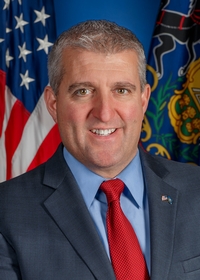
Frank Farry
Senate · District 6
|
R |
Strong +
|
93% | 45 |

Devlin Robinson
Senate · District 37
|
R |
Strong +
|
90% | 52 |
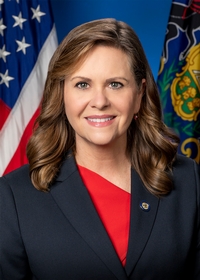
Camera Bartolotta
Senate · District 46
|
R |
Strong +
|
89% | 51 |
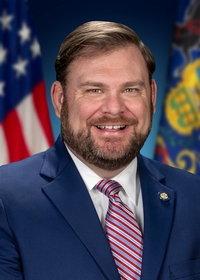
Joe Pittman
Senate · District 41
|
R |
Strong +
|
89% | 55 |

Elder Vogel
Senate · District 47
|
R |
Strong +
|
88% | 56 |

Dawn Keefer
Senate · District 31
|
R |
Strong −
|
15% | 46 |
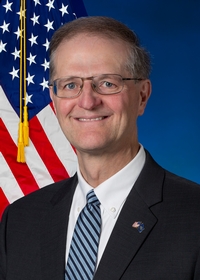
Scott Hutchinson
Senate · District 21
|
R |
Oppose
|
29% | 46 |
Charity Krupa
House · District 51
|
R |
Oppose
|
29% | 256 |

Jarrett Coleman
Senate · District 16
|
R |
Oppose
|
29% | 54 |

Stephanie Borowicz
House · District 76
|
R |
Oppose
|
31% | 214 |
Showing 161–170 of 355
bills
All labor & employment bills
SR 83: A Resolution urging the Congress of the United States to adopt H.R. 1876, the "Keeping Our Field Offices Open Act," H.R. 1877, the "Protecting Americans' Social Security Data Act," and S. 770, the "Social Security Expansion Act."
Topics
✓ Labor & EmploymentSupports Labor & EmploymentBill urges adoption of S. 770 (Social Security Expansion Act) to expand benefits, directly aligning with 'expands worker benefits' indicator under Labor & Employment.
✓ TechnologySupports TechnologyResolution urges adoption of H.R. 1877, which protects Social Security data privacy, directly aligning with data privacy protections under technology policy.
SB 478: An Act establishing the Office of Employee Ownership within the Department of Community and Economic Development; establishing the Employee Ownership Advisory Board; establishing the Main Street Employee Ownership Grant Program; and providing technical and financial assistance to employee-owned enterprises.
Tags
Small Business
SB 1016: An Act amending the act of June 13, 2008 (P.L.182, No.27), known as the Clean Indoor Air Act, further providing for title of act, for definitions, for prohibition, for signage, for enforcement, for preemption of local ordinances and for repeal; and making editorial changes.
Topics
✓ HealthcareSupports HealthcareExpands smoking prohibitions in public spaces to reduce secondhand smoke exposure, a core public health measure under healthcare policy
✗ Labor & EmploymentOpposes Labor & EmploymentBill preempts stricter local smoking bans, weakening more protective workplace safety measures under state law instead of allowing local enhancements.
HB 1521: An Act amending the act of June 28, 1935 (P.L.477, No.193), referred to as the Enforcement Officer Disability Benefits Law, further providing for disability benefits and for definitions.
Tags
Public Safety
SB 351: An Act amending the act of May 17, 1921 (P.L.682, No.284), known as The Insurance Company Law of 1921, in casualty insurance, providing for coverage for infertility treatment.
Topics
✓ HealthcareSupports HealthcareMandates insurance coverage for infertility treatments, expanding reproductive healthcare access beyond pregnancy benefits while allowing limited restrictions.
✓ Labor & EmploymentSupports Labor & EmploymentMandates infertility treatment coverage under pregnancy-related health insurance, expanding employee health benefits and strengthening workplace healthcare access for workers.
Sub-Topics
Insurance
HB 1653: An Act amending the act of June 13, 1967 (P.L.31, No.21), known as the Human Services Code, in children and youth, providing for child-care center assistance grants.
Topics
✓ Budget & TaxesSupports Budget & TaxesBill allocates state grants for child-care center construction/salary supplements, increasing public service funding for rural child-care programs.
✓ EducationSupports EducationProvides competitive grants for child-care centers partnering with schools, funds facilities, and offers salary supplements to align staff pay with public school teachers.
✓ Labor & EmploymentSupports Labor & EmploymentBill provides salary supplements to ensure child-care staff earn comparable pay to public school teachers, directly increasing wages for workers in the child-care sector.
Sub-Topics
Early Childhood
HB 237: An Act amending the act of June 24, 1976 (P.L.424, No.101), referred to as the Emergency and Law Enforcement Personnel Death Benefits Act, further providing for title of act, for application and authority for payment and eligibility and amount of benefit and for definitions.
Topics
✓ HealthcareSupports HealthcareBill explicitly expands death benefits to cover mental health conditions linked to on-duty trauma, supporting mental health recognition for first responders' families.
✓ Labor & EmploymentSupports Labor & EmploymentExpands death benefits for first responders' families to include on-duty mental health conditions, strengthening worker benefit protections and workplace safety support for emergency personnel.
Sub-Topics
Mental Health
HB 1070: An Act amending the act of July 2, 1996 (P.L.514, No.85), known as the Health Security Act, further providing for definitions and for postpartum coverage standards; providing for provisions relating to involuntary discharge; and imposing duties on the Department of Human Services.
Topics
✓ HealthcareSupports HealthcareRequires 24 additional hours of postpartum coverage and prohibits involuntary discharges between 10 PM-8 AM, expanding maternal health protections and patient rights.
✓ Labor & EmploymentSupports Labor & EmploymentExpands maternity healthcare benefits by mandating 24+ hours postpartum coverage and prohibiting involuntary discharge, strengthening employee health protections under employment standards.
HB 1246: An Act amending the act of March 10, 1949 (P.L.30, No.14), known as the Public School Code of 1949, in grounds and buildings, providing for temperature control standards.
Topics
✓ EducationSupports EducationMandates temperature standards (68-79°F) to ensure safe learning environments, requiring relocations during unsafe conditions and inspections for compliance, directly protecting student/staff well-being in schools.
✓ Labor & EmploymentSupports Labor & EmploymentBill mandates workplace temperature safety standards for school staff, directly addressing workplace safety under Labor & Employment policies.