Issue · Labor & Employment

Labor & Employment

Every labor & employment bill, vote, and legislator stance in Pennsylvania, automatically classified by Maddy, our AI policy reader.

Total bills
355
2025-2026 Regular Session
Top supporter
Frank Farry
93% support rate
Top opponent
Dawn Keefer
15% support rate
Ranked legislators
10
5 support · 5 oppose
Key legislators

Who's moving labor & employment in Pennsylvania

Legislators moving labor & employment in Pennsylvania
Legislator Party Stance Support rate Votes
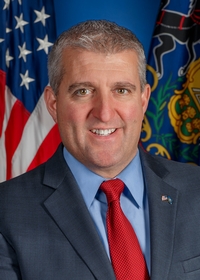
Frank Farry
Frank Farry Senate · District 6
R
Strong +
93% 45
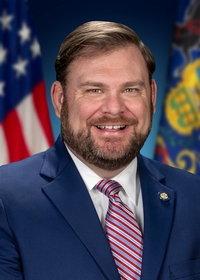
Devlin Robinson
Devlin Robinson Senate · District 37
R
Strong +
90% 52
Camera Bartolotta
Camera Bartolotta Senate · District 46
R
Strong +
89% 51
Joe Pittman
Joe Pittman Senate · District 41
R
Strong +
89% 55
Elder Vogel
Elder Vogel Senate · District 47
R
Strong +
88% 56
Dawn Keefer
Dawn Keefer Senate · District 31
R
Strong −
15% 46
Scott Hutchinson
Scott Hutchinson Senate · District 21
R
Oppose
29% 46
Charity Krupa
Charity Krupa House · District 51
R
Oppose
29% 256
Jarrett Coleman
Jarrett Coleman Senate · District 16
R
Oppose
29% 54
Stephanie Borowicz
Stephanie Borowicz House · District 76
R
Oppose
31% 214
Showing 151–160 of 355 bills

All labor & employment bills

in committee · Pennsylvania · House Jun 4, 2025

HB 1557: An Act amending Title 35 (Health and Safety) of the Pennsylvania Consolidated Statutes, in COVID-19 enforcement officer disability benefits, further providing for enforcement officer disability benefits.

HB 1557 provides temporary disability pay for Pennsylvania police and firefighters (enforcement officers) who contract COVID-19 or are quarantined due to exposure during the state's declared pandemic emergency. It ensures these officers receive compensation under existing law when temporarily unable to work because of the illness or quarantine. Benefits are limited to 60 days per illness incident. The bill clarifies and extends disability benefits specifically for enforcement officers affected by the pandemic, as defined in the Governor's March 2020 emergency declaration.
in committee · Pennsylvania · House Feb 24, 2025

HB 716: An Act amending the act of July 14, 1961 (P.L.637, No.329), known as the Wage Payment and Collection Law, further providing for notification; providing for duty of employer; and imposing criminal and civil penalties.

HB 716 amends Pennsylvania's Wage Payment and Collection Law to require employers to provide employees with specific pay details (including rate, time of payment, and fringe benefits) at hiring and to post a summary of the law in a visible workplace location. Employers who fail to meet these notification or posting requirements face a $500 fine per violation. The bill also extends the time limit for employees to file legal claims for unpaid wages: if an employer didn't provide required notice or post the summary, the deadline becomes the later of three years after wages were due or the day the requirements were satisfied. This affects all employers in Pennsylvania subject to the Wage Payment and Collection Law.
Sub-Topics Labor Standards
passed · Pennsylvania · House Jun 25, 2025

HB 506: An Act amending the act of June 13, 1967 (P.L.31, No.21), known as the Human Services Code, providing for Child Care Staff Recruitment and Retention Program.

HB 506 amends Pennsylvania's Human Services Code to establish a state-funded Child Care Staff Recruitment and Retention Program. It directly affects licensed child care providers and their staff by creating a new program to address staffing shortages. The key mechanism provides state funding for recruitment incentives and retention support, such as signing bonuses or professional development, for child care workers. The bill passed final passage on June 25, 2025, and was referred to the Health & Human Services committee.
in committee · Pennsylvania · Senate Apr 2, 2025

SB 110: An Act amending the act of June 24, 1976 (P.L.424, No.101), referred to as the Emergency and Law Enforcement Personnel Death Benefits Act, further providing for title of act, for application and authority for payment and eligibility and amount of benefit and for definitions.

This bill expands death benefits for first responders whose deaths are linked to on-duty traumatic stress. It creates a legal presumption that firefighters, police officers, EMTs, and National Guard members who die from diagnosed or undiagnosed mental health conditions (like PTSD) related to traumatic incidents (e.g., crime scenes, mass casualties, or exposure to serious injury) were killed in the line of duty. The law updates definitions to include "traumatic event" and "personal injury sustained in the line of duty" for mental health conditions, applying retroactively to all eligible deaths since January 2019. It takes effect in 60 days.
in committee · Pennsylvania · Senate Apr 4, 2025

SB 558: An Act amending Title 38 (Holidays and Observances) of the Pennsylvania Consolidated Statutes, providing for election day and for observance of Election Day as a legal holiday; and imposing a penalty.

SB 558 would require public employers (like state and local government offices) to observe Election Day as a legal holiday, meaning they must close on election days. School districts and counties could also choose to observe Election Day as a holiday. Private employers must provide employees with at least two hours of unpaid leave for voting on Election Day, and face a $1,000 civil penalty for violating this requirement. The Department of State would enforce these rules, and the law would take effect 60 days after enactment.
Tags Elections
in committee · Pennsylvania · Senate Mar 17, 2025

SB 439: An Act amending the act of July 14, 1961 (P.L.604, No.304), known as The Apprenticeship and Training Act, further providing for powers and duties; providing for supervision; and abrogating a regulation.

SB 439 updates Pennsylvania's Apprenticeship and Training Act by establishing new supervisor-to-apprentice ratios based on occupational hazard levels determined using U.S. Bureau of Labor Statistics fatality data. High-hazard jobs (9+ fatalities per 100,000 workers) require no more than three supervisors per apprentice, medium-hazard (2-9 fatalities) allows two supervisors, and low-hazard (≤2 fatalities) requires one supervisor. The bill mandates annual reviews of hazard classifications by the Department of Labor and Industry, with changes taking effect July 1 each year after public notice in the Pennsylvania Bulletin. This directly affects all apprenticeship programs in Pennsylvania, particularly those in industries like construction or manufacturing, by standardizing supervision requirements for safety and training consistency.
in committee · Pennsylvania · Senate Aug 25, 2025

SB 976: An Act amending Title 48 (Lodging and Housing) of the Pennsylvania Consolidated Statutes, in hotels, providing for protection of hotel employees; and imposing penalties.

SB 976 requires hotels with 100+ guest rooms in Pennsylvania to provide hotel employees working alone in guest rooms with a safety device (like a two-way radio) at no cost. The bill mandates that hotels must respond immediately when an employee activates the device due to threats of violence, sexual assault, harassment, or other emergencies, and reassign the employee to a safer area without losing pay. Hotels must also protect employees from retaliation for using the device, notify staff about guests who caused incidents, and provide safety education. Violations result in a $5,000 administrative penalty per offense after a warning. This applies to all hotel employers not covered by existing collective bargaining agreements.
in committee · Pennsylvania · Senate May 12, 2025

SB 503: An Act establishing the Pennsylvania Climate Emissions Reduction Program; imposing powers and duties on the Environmental Quality Board, the Pennsylvania Public Utility Commission and the Department of Environmental Protection; and establishing the Consumer Protection Account, the Pennsylvania Energy Transformation Account, the Workforce Enhancement Fund, the Workforce Enhancement Fund Board and the Low-income Support Account.

Senate Bill 503 establishes the Pennsylvania Climate Emissions Reduction Program (PACER), a state-run "cap-and-invest" system to regulate carbon dioxide emissions from the power sector. Under PACER, the Department of Environmental Protection will conduct auctions where electricity generators and other eligible parties must purchase CO2 allowances. The program's revenue is intended to fund specific accounts for consumer protection, energy transformation, workforce enhancement, and low-income support. The Department is also mandated to review the program's emissions budget, considering its impacts on jobs, consumers, and the environment. This program aims to replace Pennsylvania's participation in any other multi-state carbon auction for the electric generation sector.
in committee · Pennsylvania · House Feb 10, 2025

HB 540: An Act amending Title 66 (Public Utilities) of the Pennsylvania Consolidated Statutes, in railroads, providing for crew requirement; and imposing penalties.

HB 540 requires freight trains operating in Pennsylvania to have at least two crew members: one conductor and one locomotive engineer, directly affecting railroads transporting goods across the state. Exceptions include trains within repair facilities or under federal law compliance. Railroads violating this rule face escalating civil penalties ($5,000-$20,000 per offense), with fines deposited into the General Fund for enforcement. The bill amends Pennsylvania's Public Utilities code to establish these safety standards and penalties for noncompliance.
in committee · Pennsylvania · Senate Oct 27, 2025

SB 69: An Act establishing Recovery-to-work as a pilot program within the Department of Labor and Industry; and providing for local recovery-to-work pilot programs, for incentives to encourage business participation and for powers and duties of the Department of Labor and Industry.

SB 69 establishes a temporary pilot program called "Recovery-to-work" within Pennsylvania's Department of Labor and Industry to help individuals recovering from drug or alcohol substance use disorders gain employment. The program requires local workforce development boards to create local pilot initiatives focused on job training, career readiness skills, and recovery support services, partnering with businesses and treatment providers. Businesses that participate receive incentives, and the program leverages existing funds like the Opioid Settlement Account and Reemployment Fund. Local programs must include support services providers, secure business partner commitments, and target in-demand local jobs with industry-recognized credentials. The bill mandates annual reporting to evaluate effectiveness and ensure accountability.
Showing 151 to 160 of 355 bills
Previous 1 15 16 17 36 Next