Maddy summaryThis bill authorizes a one-time $40,000 payment to former Air America employees who served at least five years during 1950-1976, or to their survivors (widows/widowers, dependents, or children). Additional $8,000 payments are provided for each full year of service beyond five years. The total funding is capped at $60 million, with claims due within two years of regulations being finalized. It does not create ongoing benefits or change Air America’s legal status, and payments are issued as a single lump sum.
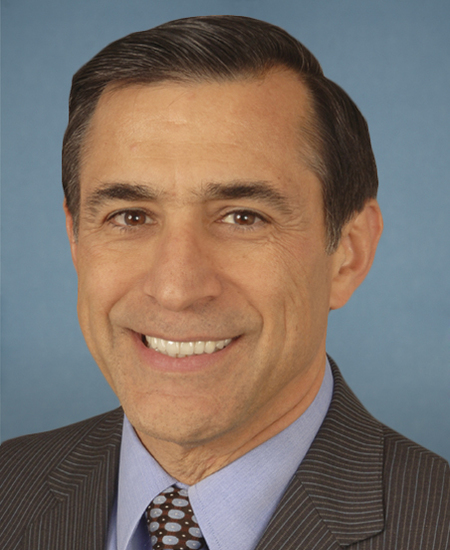
Rep. Darrell Issa
Sponsored bills
Johanna's Law Reauthorization Act This bill reauthorizes through FY2026 and otherwise revises the Centers for Disease Control and Prevention (CDC) national awareness campaign regarding gynecologic cancers. The CDC must target specified populations of women at higher risk for gynecologic cancers in the campaign. Additionally, the CDC may establish a grant program to evaluate different strategies to increase knowledge and awareness of gynecologic cancers among women and health care providers. In awarding these grants, the CDC must give preference to (1) grantees with expertise in gynecologic cancer education or treatment or expertise in working with groups of women at increased risk of such cancers; and (2) projects that will establish links between health care providers, hospitals, insurance companies, and state health departments.
Maddy summaryHRES 746 is a symbolic House resolution designating September 2023 as "National Ovarian Cancer Awareness Month." It does not create new laws or policies but aims to raise public awareness about ovarian cancer. The resolution highlights the disease's impact - such as it being the fifth leading cause of cancer deaths in women - and emphasizes the importance of recognizing symptoms early. This designation supports educational efforts by organizations like the Ovarian Cancer Research Alliance during September to improve public and healthcare provider understanding of the disease.
Maddy summaryHRES 739 is a House resolution disapproving of a September 11, 2023, sanctions waiver that would release $6 billion in Iranian assets held in South Korea. The resolution states this waiver weakens U.S. policy by allowing Iran access to funds that could support its nuclear program and terrorism, and criticizes the delayed notification to Congress. It specifically condemns the administration's nonenforcement of mandatory sanctions and the release of assets without proper congressional review. The resolution demands the administration submit any Iran nuclear agreement to Congress before further sanctions relief. This is a procedural disapproval, not a law altering sanctions.
Maddy summaryThe Abbey Gate Gold Star Families Dignified Transport Act changes how the government covers transportation costs for the remains of fallen service members. It requires the government to pay directly for transporting remains to two locations (with the second being a national cemetery), eliminating the need for families to pay upfront and seek reimbursement. This policy directly affects Gold Star Families - those who have lost a service member in the line of duty - by reducing financial and administrative burdens during funeral arrangements. The bill amends U.S. Code Section 1482 to replace reimbursement with direct payment for these specific transportation needs.
Maddy summaryHR 5654, the "Hot Showers Act," directs the Secretary of Energy to withdraw a specific proposed rule on water heater energy efficiency standards. The bill mandates the withdrawal of the "Energy Conservation Program: Energy Conservation Standards for Consumer Water Heaters" rule (88 Fed. Reg. 49058, July 28, 2023), and prohibits the Department of Energy from finalizing, implementing, or enforcing that rule or any substantially similar rule. This action directly affects the Department of Energy and manufacturers of consumer water heaters by halting the proposed efficiency standards. The bill is procedural, focusing solely on withdrawing the rule without creating new policy.
Maddy summaryHR 5561, the Protecting the Right to Keep and Bear Arms Act of 2023, prevents federal agencies from using emergency declarations to implement gun control measures. It specifically prohibits the President from declaring a national emergency under the National Emergencies Act or the Robert T. Stafford Act for gun control purposes, and stops the Health and Human Services Secretary from declaring a public health emergency under the Public Health Service Act for the same reason. The bill also amends the Stafford Act to explicitly prohibit any emergency-related restrictions on possessing, manufacturing, selling, or transferring firearms, ammunition, ammunition feeding devices, or firearm accessories. This directly affects how federal agencies can respond during emergencies without violating the Second Amendment. The law aims to limit executive actions during emergencies that could restrict gun rights.
Maddy summaryHRES 684 is a symbolic congressional resolution passed by the U.S. House of Representatives on September 14, 2023, condemning New Mexico Governor Michelle Lujan Grisham's emergency order that temporarily suspended open and concealed carry firearm rights for 30 days. The resolution asserts the order violated the Second Amendment, citing Supreme Court precedents (Heller, McDonald, Bruen) and noting a federal judge had already blocked the order's firearm restrictions. It does not change any laws or impose legal consequences - it is solely a formal expression of disapproval from Congress. The resolution directly addresses the Governor's actions but has no effect on New Mexico's laws or citizens' rights.
Maddy summaryThis bill creates a new exemption from U.S. passport application fees for first responders participating in disaster relief. Specifically, it allows the Secretary of State to waive both passport issuance and execution fees for volunteers working under U.S. government contracts, grants, or agreements to conduct search, rescue, or disaster relief operations within seven days of a natural disaster in a foreign country. The bill does not change existing fee exemptions for military personnel, seamen, or families of fallen service members. It also requires the Secretary of State to report annually on the number of such fee waivers granted to first responders.
Maddy summaryHR 1435, the Preserving Choice in Vehicle Purchases Act, amends the Clean Air Act to restrict states from implementing vehicle emissions rules that limit the sale or use of new gasoline-powered cars. It directly affects states with stricter emissions standards (like California) by adding a new definition that blocks state rules "directly or indirectly" limiting internal combustion engine vehicles as defined in federal regulations as of January 1, 2023. The bill requires the EPA to revoke existing state emissions waivers granted between January 2022 and the bill’s enactment if they don’t comply with this new definition. This creates a concrete federal standard preventing states from advancing policies that could reduce demand for conventional vehicles.