

Maddy summaryHR 5465, the Congressional Access to Bureaucratic Offices Act (CABO Act), requires federal agency heads to allow Members of Congress and their staff access to agency headquarters buildings during regular business hours. It mandates that access be granted upon presentation of valid congressional identification (for Members) or a staff badge while accompanied by the employing Member (for staff), with exceptions for areas requiring secret-level security clearance. The bill also ensures this access applies during declared emergencies (like national emergencies under the National Emergencies Act or public health emergencies), without imposing additional costs by using existing agency funds. This directly affects how federal agencies manage physical access for congressional personnel.
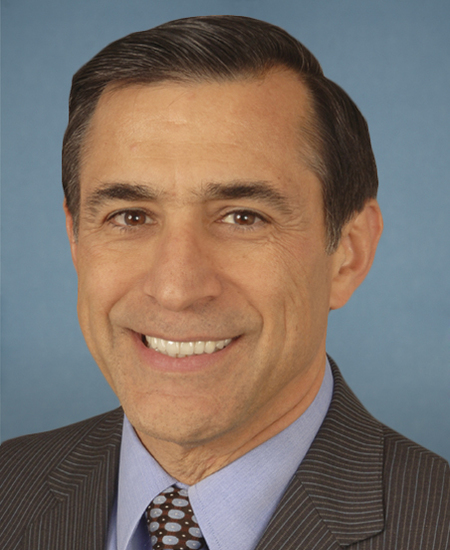
Rep. Darrell Issa
Sponsored bills
Maddy summaryHR 5495, the Political BIAS Emails Act of 2023, prohibits email providers from automatically labeling political campaign emails as spam without a user’s explicit action. It requires email providers to publish quarterly transparency reports showing spam rates for Republican and Democratic campaign emails separately, including how often algorithms flagged them without user input. Political campaigns can request detailed reports about their own email delivery rates and best practices for reaching inboxes, with limits on how frequently they can request this data. The Federal Trade Commission will enforce these rules as unfair or deceptive practices under existing law. The bill directly affects major email services and political campaigns, aiming to increase transparency in how political communications are filtered.
Maddy summaryHR 5475, the Prohibiting Adversarial Patents Act of 2023, requires patent applicants to disclose if they or their invention received funding from state-affiliated research funds or talent programs of specific foreign adversaries (including China, Russia, Iran, North Korea, Cuba, and Venezuela under Maduro) within five years of filing. It also prohibits U.S. patents for individuals or entities identified on certain national security lists (like the OFAC CMIC List or Chinese military company designations) and makes existing patents from such entities unenforceable. The bill directly affects patent applicants with ties to these nations and patent holders later added to designated lists. Small businesses subject to existing disclosure rules under the Small Business Act are exempt from the new disclosure requirement.
Maddy summaryHR 3389, the Emergency Wildfire Fighting Technology Act of 2023, requires the Secretaries of Agriculture and Interior, along with key aviation committees, to evaluate the use of container aerial firefighting systems (CAFFS) for wildfire suppression within 60 days of enactment. The bill mandates that agencies update their deployment protocols for CAFFS based on this evaluation within 90 days, and submit reports to specific congressional committees detailing both the evaluation results and protocol changes. This bill directly affects federal wildfire management agencies and their operational procedures, focusing on assessing and refining the use of an existing aerial firefighting technology. It does not create new funding or alter wildfire policy, but establishes a timeline for evaluating and implementing CAFFS protocols.
Maddy summaryHR 5419, the Direct Seller and Real Estate Agent Harmonization Act, amends the Fair Labor Standards Act to exclude direct sellers (like door-to-door sales representatives) and qualified real estate agents from the federal definition of "employee." This change means these workers would no longer be automatically covered by federal minimum wage and overtime protections under the Fair Labor Standards Act. The bill directly affects individuals working in these specific roles by altering their legal classification under labor law. The key provision is a new definition inserted into existing law, aligning labor classification with existing tax code definitions for these professions.
Maddy summaryThis bill renames a U.S. Postal Service facility in Escondido, California, to honor Captain E. Royce Williams. It officially designates the building at 1157 West Mission Avenue as the "Captain E. Royce Williams Post Office Building" and updates all federal references to the location to use this new name. The change affects only official documents and records, not the building's operations or services. This is a purely administrative naming action with no policy or funding implications.
This resolution honors and recognizes the patriotism and contributions made by generations of veterans service organizations, veteran advocacy groups, and volunteers and commends the members of such organizations for their dedicated service to members of the Armed Forces, veterans, their families, and their communities. The resolution also encourages the people of the United States to promote awareness of the contributions and dedication of members of veterans service, organizations, veteran advocacy groups, and volunteers to members of the Armed Forces, veterans, and their families. Additionally, the resolution calls on citizens to follow the example of such groups and volunteer support and services to those who have served the country.
Maddy summaryThe Pala Band of Mission Indians Land Transfer Act of 2023 directs the U.S. government to take approximately 721 acres of land in San Diego County, California, into federal trust for the Pala Band of Mission Indians. The tribe must transfer the land to the U.S. within 180 days of the bill’s enactment, after which the Secretary of the Interior will place it into trust within another 180 days. This land will become part of the Pala Indian Reservation and be managed under federal trust laws for tribes, while protecting existing tribal water rights, land claims, and access rights. The bill explicitly prohibits the tribe from operating gaming activities on this land under federal gaming laws, including the Indian Gaming Regulatory Act.
Maddy summaryHCONRES 57 is a non-binding concurrent resolution expressing Congress's support for Israel. It states three key points: (1) that Israel is not a racist or apartheid state, (2) that Congress rejects antisemitism and xenophobia, and (3) that the U.S. will remain a steadfast supporter of Israel. This resolution does not create new laws or alter policies - it simply records the expressed sentiment of Congress. It directly affects the U.S. government's public stance on Israel, with no legal effect on citizens or other entities.
This resolution condemns Iran for the 1988 massacre of political prisoners. It also urges the Biden Administration and U.S. allies to publicly condemn the massacre and to pressure Iran to provide information to the families of the victims.