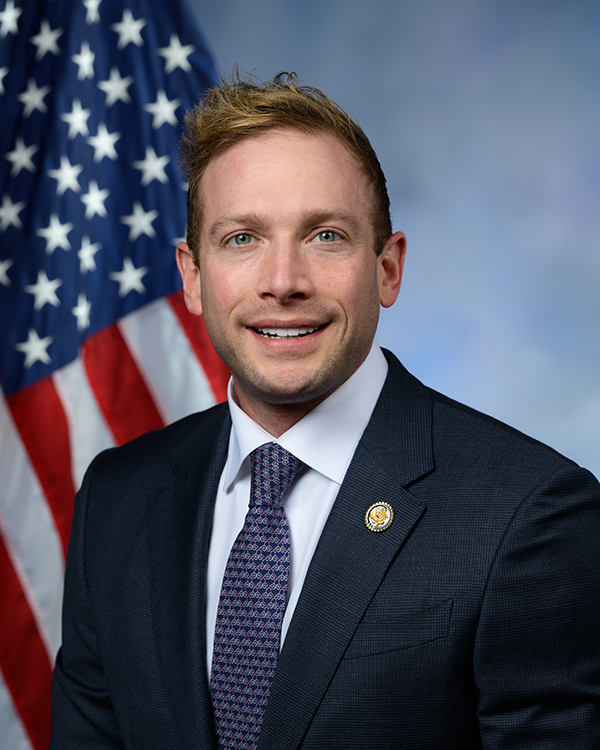
Photo of Max L. Miller
R United States House · District 7 · Ohio On the 2026 ballot

Rep. Max L. Miller

Compare
Total votes
1,879
all sessions
Attendance
96%
81 missed
Near the chamber average
With party
93%
of cast votes
Near the chamber average
Bipartisan score
4%
crosses aisle rarely
Near the chamber average
Sponsored
509
bills & resolutions
Near the chamber average
Committees
6
assignments
509 bills and resolutions

Sponsored bills

Total
509
Primary
44
Co-sponsor
465
This page
509
matching current filters
Co-sponsor HR 7253
In committee · Oklahoma House · Co-sponsor
Ticket to Work Advertisement Act

Maddy summaryThis bill requires the Social Security Administration to regularly inform disabled beneficiaries about the Ticket to Work program. Specifically, the Commissioner must send program information to each disabled beneficiary within one year of the law's enactment, and then every six months thereafter. The program helps disabled individuals access employment services while retaining benefits. This change directly affects Social Security disability beneficiaries by mandating ongoing outreach about work support options, without altering the program's existing rules or benefits.

In committee Jan 27, 2026 1 co-sponsor
Co-sponsor HR 4323
Signed into law · Oklahoma House · Co-sponsor
Trafficking Survivors Relief Act

Maddy summaryThe Trafficking Survivors Relief Act (HR 4323) allows victims of human trafficking to petition courts to vacate convictions for non-violent federal crimes (level A offenses) or expunge arrest records if those offenses were directly related to their trafficking victimization. The bill establishes clear procedures for filing these motions, requires courts to consider testimony from anti-trafficking service providers, and ensures confidentiality for petitioners. It also adds a new "human trafficking defense" that permits defendants to claim duress due to trafficking victimization in criminal cases. The law mandates reports to Congress on implementation, including the number of petitions filed and outcomes, to assess its impact on trafficking survivors.

Signed into law Jan 23, 2026 1 co-sponsor
Co-sponsor HR 7230
In committee · Oklahoma House · Co-sponsor
Buying American Cotton Act of 2026

Maddy summaryThis bill creates a tax credit for businesses selling products made with U.S.-grown cotton. The credit equals 24% of the cotton's market value if processed only in the U.S. or in countries with U.S. trade deals, or 18% for other processing locations. To qualify, cotton must be digitally traced from U.S. farms to finished products and certified by the USDA as meeting origin requirements. It directly affects clothing and textile manufacturers selling qualifying products in the U.S. market.

In committee Jan 22, 2026 1 co-sponsor
Co-sponsor HR 6875
In committee · Oklahoma House · Co-sponsor
AI OVERWATCH Act

Maddy summaryThe AI OVERWATCH Act requires U.S. exporters to obtain a license for sending certain high-performance integrated circuits (defined by specific technical specifications like processing power or bandwidth) to countries designated as "concerns," including China, Russia, Iran, and North Korea. Before approving such licenses, the Commerce Department must submit detailed certifications to Congress, including assurances the export won’t support military/intelligence capabilities of the recipient country and won’t harm U.S. semiconductor availability or AI leadership. The bill also creates an exemption for U.S. companies meeting strict security and ownership standards ("trusted United States persons") to export these chips to non-target countries without a license. Additionally, it mandates a national security strategy assessing how such exports affect U.S. AI competitiveness, particularly regarding China’s semiconductor production and capabilities.

In committee Jan 21, 2026 1 co-sponsor
Co-sponsor HR 3307
In committee · Oklahoma House · Co-sponsor
Eastern Mediterranean Gateway Act

Maddy summaryHR 3307, the Eastern Mediterranean Gateway Act, directs the U.S. government to prioritize diplomatic and security cooperation with Egypt, Greece, Cyprus, and Israel to support their role as a strategic gateway for the India-Middle East-Europe Economic Corridor (IMEC). The bill requires the Secretary of State to institutionalize strategic dialogues with these countries, prioritize energy and defense cooperation in the region, and submit annual reports on implementation and multilateral initiatives. It also mandates studies on expanding U.S. bilateral programs (like those with Israel) to include Eastern Mediterranean partners and analyzing the Cyprus security center as a model. The bill does not create new funding but guides existing U.S. policy and coordination efforts.

In committee Jan 21, 2026 1 co-sponsor
Co-sponsor HR 7137
In committee · Oklahoma House · Co-sponsor
Shutdown Fairness Act

Maddy summaryHR 7137, the Shutdown Fairness Act, requires federal agencies to pay covered employees (including most federal workers and military personnel) and covered contractors their regular pay during government shutdowns. It appropriates funds from the Treasury to cover standard employee compensation and contractor payments for work performed during a lapse in regular appropriations, ensuring pay continues without delay (within 7 days if a shutdown is ongoing at enactment) and aligns with regular pay schedules. The bill applies only to individuals employed or with accepted offers before the shutdown began and mandates that these payments be charged to future appropriations. It does not change agency obligations under existing contracts or authorize new spending beyond the specified shutdown period.

In committee Jan 16, 2026 1 co-sponsor
Co-sponsor HR 7025
In committee · Oklahoma House · Co-sponsor
Evidence-Based Grantmaking Act

Maddy summaryHR 7025, the Evidence-Based Grantmaking Act, requires 15 federal agencies (including Education, Health and Human Services, and Housing and Urban Development) to use proven methods in awarding grants. It mandates that agencies clearly define grant goals in funding notices, prioritize applicants using evidence-based practices, and require grant recipients to implement such practices when delivering services. Agencies must also conduct regular evaluations of grant effectiveness, publicly share results, and use findings to improve future funding decisions. This law directly affects federal grant recipients and aims to ensure taxpayer funds achieve measurable outcomes through data-driven approaches.

In committee Jan 13, 2026 1 co-sponsor
Co-sponsor HR 7033
In committee · Oklahoma House · Co-sponsor
Federal Correctional Officer Paycheck Protection Act of 2026

Maddy summaryThis bill would increase the base pay for Federal Bureau of Prisons correctional officers by 35 percent, replacing their current base rate for all pay calculations (including retirement and locality adjustments). It applies to officers whose duties involve inmate custody, control, or direct custodial contact, including certain supervisory staff and lower-grade Bureau of Prisons employees with similar duties. The pay increase is capped at the Executive Schedule level V rate and would expire after five years unless a Department of Justice Inspector General review finds progress in reducing non-custodial staff use for custodial duties and excessive overtime. The review, required 180 days before expiration, would assess impacts on recruitment, retention, and institutional safety.

In committee Jan 13, 2026 1 co-sponsor
Co-sponsor HR 4782
In committee · Oklahoma House · Co-sponsor
Local Farmers Feeding our Communities Act

Maddy summaryHR 4782, the Local Farmers Feeding our Communities Act, establishes a USDA program to connect local farmers with food distribution networks. It requires eligible entities (like state agriculture agencies) to use funds to purchase unprocessed or minimally processed local foods from covered producers - including at least 25% from small-size, mid-size, beginning, or veteran farmers - while providing technical assistance for food safety and supply chains. The bill allocates $200 million annually (2026-2030) from the Commodity Credit Corporation, mandating 10% for Tribal governments and 1% per state before distributing remaining funds. This directly supports regional food security by boosting economic opportunities for local farmers and improving access to fresh, nutritious food through established distribution channels.

In committee Jan 13, 2026 1 co-sponsor
Co-sponsor HR 909
Passed · Oklahoma House · Co-sponsor
Crime Victims Fund Stabilization Act of 2025

Maddy summaryHR 909, the Crime Victims Fund Stabilization Act of 2025, modifies how funds from the False Claims Act are deposited into the Crime Victims Fund. It specifies that from 2025 through 2029, certain False Claims Act proceeds (specifically those for qui tam plaintiff payments and government damage reimbursements) cannot be deposited into the fund. This change directly affects the composition of the Crime Victims Fund by excluding these specific revenue streams during the specified period. The bill does not create new benefits or alter victim services; it only adjusts fund allocation rules for existing False Claims Act revenues.

Passed Jan 13, 2026 1 co-sponsor
Showing 81 to 90 of 509 bills
Previous 1 … 8 9 10 … 51 Next