

Crime Victims Fund Stabilization Act of 2025
HR 909, the Crime Victims Fund Stabilization Act of 2025, modifies how funds from the False Claims Act are deposited into the Crime Victims Fund. It specifies that from 2025 through 2029, certain False Claims Act proceeds (specifically those for qui tam plaintiff payments and government damage reimbursements) cannot be deposited into the fund. This change directly affects the composition of the Crime Victims Fund by excluding these specific revenue streams during the specified period. The bill does not create new benefits or alter victim services; it only adjusts fund allocation rules for existing False Claims Act revenues.
Bill status
passed
3 of 5 stages cleared
Introduction
Feb 2025
Committee Review
Jan 2026
House Passage
Jan 2026
Senate Passage
President
Introduced Feb 4, 2025
Last action Jan 13, 2026
Maddy AI version diff · 1 comparison
What changed between versions
Introduced in House
→
Engrossed in House
·
3 edits
·
Jan 12, 2026
MINOR
The engrossed version adds a new section (Section 3) requiring the Department of Justice Inspector General to conduct an audit of the Crime Victims Fund and report findings to Congress by September 30, 2028. The remaining changes are minor technical corrections: a more precise U.S.C. citation, a small wording adjustment ('from' to 'beginning on'), and capitalization fixes. The new audit requirement is the only substantive policy addition.
ENFORCEMENT
New Section 3 requires the DOJ Inspector General to submit an audit report to four congressional committees (House and Senate Judiciary and Appropriations) by September 30, 2028. The audit must cover fund sustainability, the effects of both the 2021 VOCA Fix Act and this 2025 Act on the fund's balance and stability, legislative recommendations, administrative recommendations, and the methodology used.
TECHNICAL
The U.S.C. citation in Section 2 was corrected from '34 U.S.C. 20101' to '34 U.S.C. 20101(b)(6)' for greater precision about which subsection is being amended.
The phrase 'from the date of enactment' was changed to 'beginning on the date of enactment' in Section 2(3), a minor wording adjustment with no substantive effect.
Floor votes
How they voted
This bill passed the House by voice vote (no roll call recorded).
Full legislative history
Actions timeline
Total actions
12
Key actions
1
Committee
2
Amendments
2
Jan 13, 2026
Committee
Received in the Senate and Read twice and referred to the Committee on the Judiciary.
upper
Jan 12, 2026
Introduced
On motion to suspend the rules and pass the bill, as amended Agreed to by voice vote. (text: CR H623)
lower
Jan 12, 2026
Lower · Passed
Passed/agreed to in House: On motion to suspend the rules and pass the bill, as amended Agreed to by voice vote. (text: CR H623)
lower
Jan 12, 2026
Introduced
Mrs. Wagner moved to suspend the rules and pass the bill, as amended.
lower
Sep 10, 2025
Introduced
Motion to place bill on Consensus Calendar filed by Mrs. Wagner.
lower
Feb 4, 2025
Committee
Referred to the House Committee on the Judiciary.
lower
Feb 4, 2025
Introduced
Introduced in House
lower
1 primary · 327 co-sponsors
Sponsors
Role
Legislator
Party
State
District
P
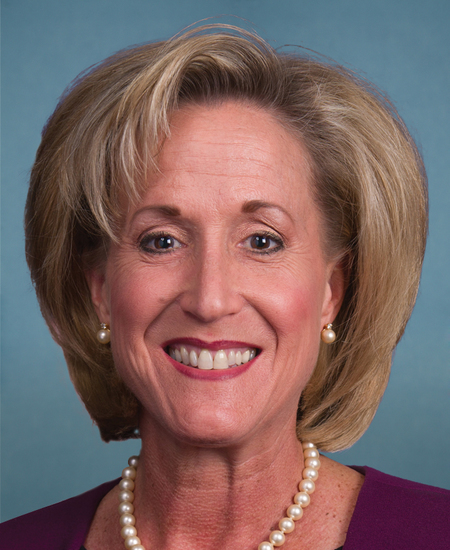
Ann Wagner
RRepublican
Co

Aaron Bean
RRepublican
Co

Adam Smith
DDemocratic
Co

Addison P. McDowell
RRepublican
Co

Adrian Smith
RRepublican
Co
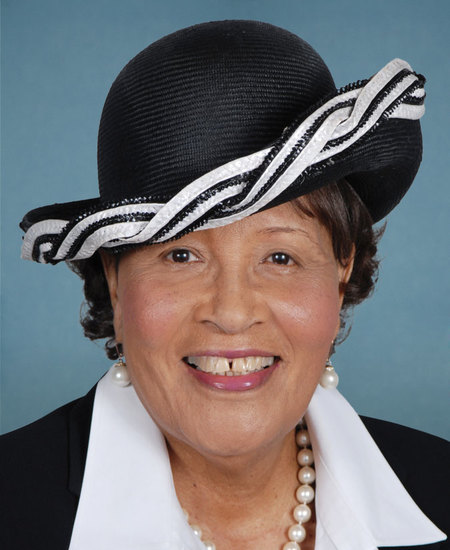
Alma S. Adams
DDemocratic
Co

Ami Bera
DDemocratic
Co

Andrea Salinas
DDemocratic
Co

Andrew R. Garbarino
RRepublican
Co

Andy Barr
RRepublican
Co
Angie Craig
DDemocratic



































































































































































































































Ask Maddy
·
AI policy assistant
Ask Maddy about HR 909
Scope: US
Hi! I can help you understand HR 909. What would you like to know?
Try one of these
i
Maddy answers using official bill text and legislative records. Always verify before sharing.
Sources cited inline