

In committee Sep 24, 2026
1 co-sponsor
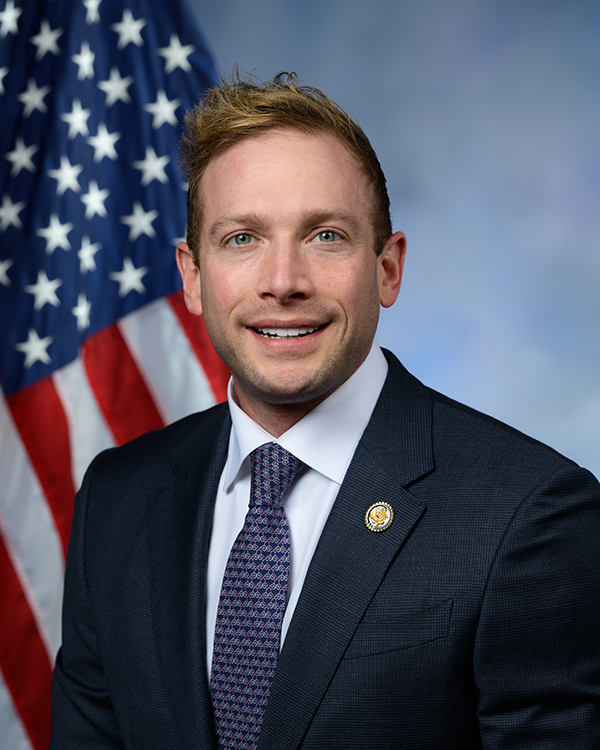
Rep. Max L. Miller
Total votes
1,879
all sessions
Attendance
96%
81 missed
Near the chamber average
With party
93%
of cast votes
Near the chamber average
Bipartisan score
4%
crosses aisle rarely
Near the chamber average
Sponsored
509
bills & resolutions
Near the chamber average
Committees
6
assignments
509 bills and resolutions
Sponsored bills
Total
509
Primary
44
Co-sponsor
465
This page
509
matching current filters
To designate the facility of the United States Postal Service located at 189 East Main Street in Xenia, Ohio, as the "Gil Whitney Post Office Building".
This bill designates the facility of the United States Postal Service located at 189 East Main Street in Xenia, Ohio, as the "Gilman 'Gil' Whitney Post Office Building".
Passed Sep 17, 2026
1 co-sponsor
Digital Asset Tax Certainty Act
Maddy summaryThe Digital Asset Tax Certainty Act amends the Internal Revenue Code to clarify how cryptocurrency and other digital assets are taxed, creating a framework that treats them more like traditional financial securities for many purposes. Key provisions include allowing taxpayers to ignore small transaction fees under $10, offering simplified annual accounting methods for widely traded cryptocurrencies, and treating U.S. dollar stablecoins as cash for tax basis calculations. The bill also extends existing anti-abuse rules, such as wash sale restrictions, to digital assets and establishes a voluntary disclosure program that allows individuals to correct past reporting errors in exchange for reduced penalties. These changes aim to reduce compliance burdens for individual investors while ensuring that professional traders and dealers face tax obligations similar to those in the traditional stock market.
In committee Sep 16, 2026
1 co-sponsor
Tax Relief for Fraud Victims Act
Maddy summaryThe Tax Relief for Fraud Victims Act helps individuals who suffer financial losses due to theft involving fraud, deceit, or misrepresentation by changing how they can claim tax deductions. It allows taxpayers to treat these theft losses as occurring when they discover them rather than when the theft happens, giving them more time to file for refunds. The bill also extends the deadline for filing refund claims related to these losses and provides special rules for withdrawing retirement funds to cover such losses without immediate tax penalties. Additionally, the legislation includes specific provisions for victims of pyrrhotite-related home damage, allowing them to claim deductions and file refunds based on discovery dates rather than the standard future effective date.
Passed Sep 16, 2026
0 co-sponsors
ASAP Act
Maddy summaryThis bill would require Medicare to cover early detection screening tests for Alzheimer's disease and related dementias starting January 1, 2028. It defines eligible tests as FDA-cleared genomic blood tests, blood product analyses, or equivalent medical imaging methods (like protein expression or whole genome sequencing) that detect pre-symptomatic or early-stage conditions. Medicare beneficiaries would receive this coverage without cost-sharing for these specific screenings. The bill amends Medicare coverage rules to explicitly include these tests under Section 1861(nnn) of the Social Security Act.
In committee Sep 16, 2026
1 co-sponsor
Apples to Apples Comparison Act of 2025
Maddy summaryThe Apples to Apples Comparison Act of 2025 requires the Centers for Medicare & Medicaid Services (CMS) to publish detailed Medicare spending data starting in 2025. It mandates that CMS release machine-readable, county- and Metropolitan Statistical Area-level expenditure information for over 30 distinct beneficiary categories (e.g., Part A-only enrollees, Medicare Advantage members, and those with supplemental coverage) on its public website. The law also requires the Medicare Payment Advisory Commission (MedPAC) to analyze Medicare Advantage vs. traditional Medicare spending patterns beginning in 2026, with public methodology and data transparency. Additionally, the Medicare Trustees must include disaggregated expenditure data in their annual reports starting in 2026. This bill directly affects how CMS and federal agencies collect and share Medicare spending data, not beneficiaries' coverage or costs.
In committee Sep 16, 2026
1 co-sponsor
AM Radio for Every Vehicle Act of 2025
Maddy summaryThis bill requires all new passenger vehicles manufactured for sale in the U.S. to include AM radio as standard equipment (not an optional add-on) by 2027-2028, depending on manufacturer size. It mandates that AM radio receivers must be easily accessible to drivers and allows compliance through digital AM broadcast technology. During a transition period, manufacturers must clearly label vehicles without AM radio but cannot charge extra for this feature. The bill also mandates a GAO study on AM radio's role in emergency alerts and includes a 10-year sunset provision for the rule. It preempts state laws regarding AM radio access in vehicles.
Passed Sep 16, 2026
1 co-sponsor
Pray Safe Act of 2025
Maddy summaryThe Pray Safe Act of 2025 establishes a federal Clearinghouse within the Department of Homeland Security to provide houses of worship, faith-based organizations, and nonprofit groups at risk of threats with evidence-based safety resources. The Clearinghouse will publish online best practices for security planning, facility safety, and incident response, while listing existing federal and state grant programs to help these organizations implement these measures. It requires annual updates based on user feedback and includes a centralized resource section for contacts like Protective Security Advisors and Fusion Centers. The program expires four years after enactment and does not create new funding but coordinates existing federal and state safety resources.
In committee Sep 15, 2026
1 co-sponsor
To designate the facility of the United States Postal Service located at 201 East Grant Avenue in Georgetown, Ohio, as the "Ulysses S. Grant Post Office Building".
This bill designates the facility of the United States Postal Service located at 201 East Grant Avenue in Georgetown, Ohio, as the "Ulysses S. Grant Post Office Building".
Passed Sep 14, 2026
1 co-sponsor
To name the community-based outpatient clinic of the Department of Veterans Affairs in Medina County, Ohio, as the "Leland John Codding VA Clinic".
Maddy summaryThis bill designates the Department of Veterans Affairs community-based outpatient clinic located in Medina County, Ohio, as the "Leland John Codding VA Clinic." It requires that all future legal and official references to this specific facility use its new name.
In committee Sep 8, 2026
0 co-sponsors
Ask Maddy
·
AI policy assistant
Ask Maddy about Max L. Miller
Scope: oklahoma
Hi! I can help you understand Max L. Miller's legislative record. What would you like to know?
Try one of these
i
Maddy answers using official bill text and legislative records. Always verify before sharing.
Sources cited inline