Issue · Criminal Justice

Criminal Justice

Every criminal justice bill, vote, and legislator stance in Oklahoma, automatically classified by Maddy, our AI policy reader.

Total bills
448
2026 Regular Session
Top supporter
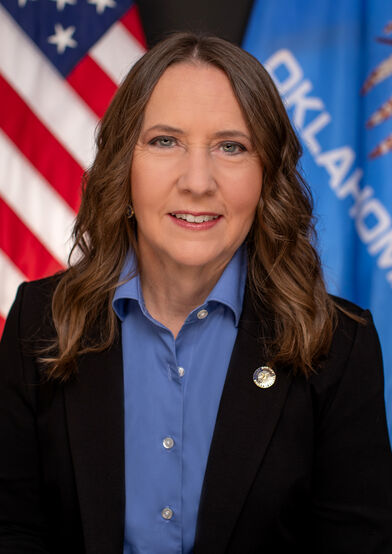
Aletia Timmons
76% support rate
Top opponent
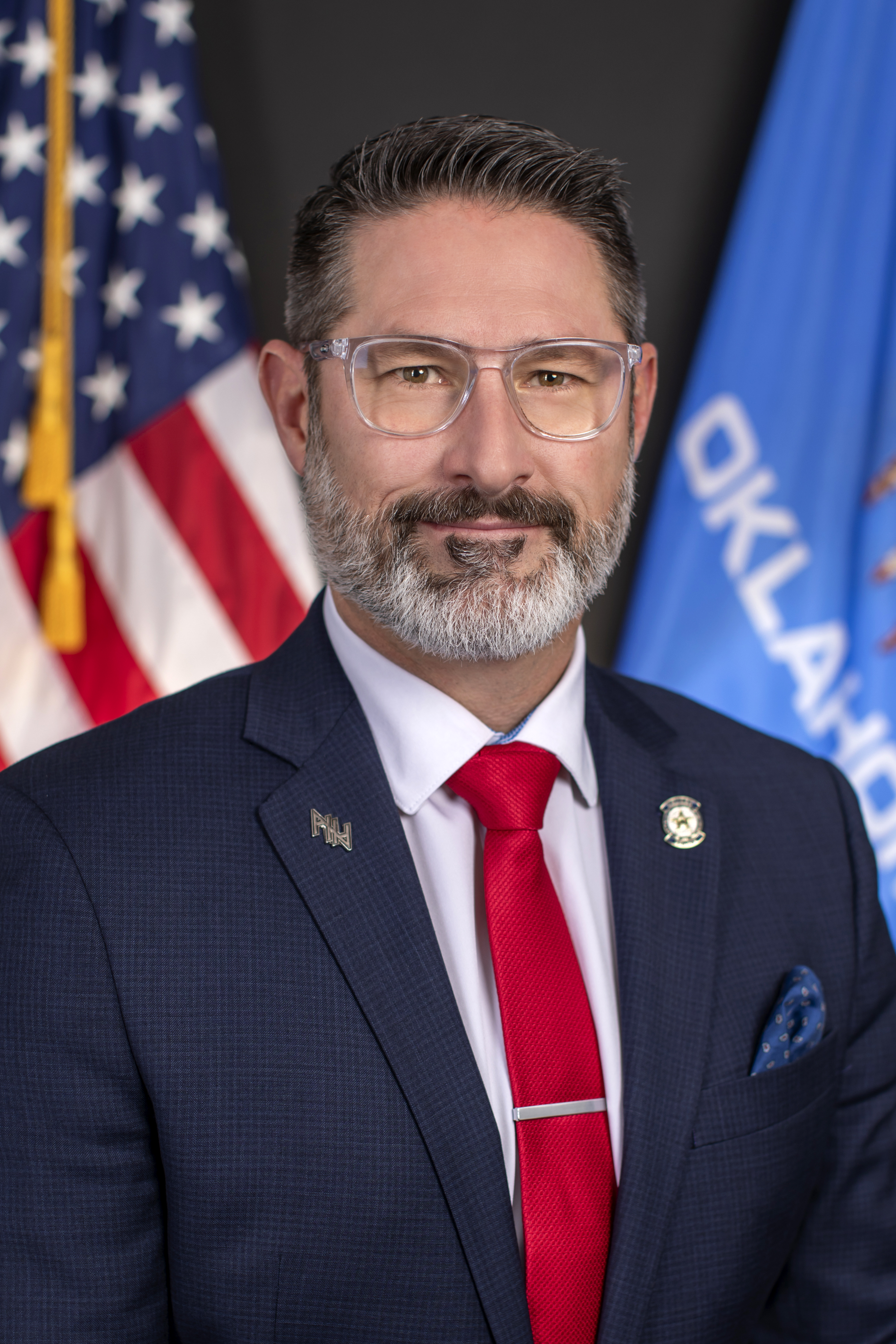
Brian Guthrie
24% support rate
Ranked legislators
10
5 support · 5 oppose
Key legislators

Who's moving criminal justice in Oklahoma

Legislators moving criminal justice in Oklahoma
Legislator Party Stance Support rate Votes
Aletia Timmons
Aletia Timmons House · District 97
D
Support
76% 91
Regina Goodwin
Regina Goodwin Senate · District 11
D
Support
73% 225
Michael Brooks
Michael Brooks Senate · District 44
D
Support
72% 274
Carri Hicks
Carri Hicks Senate · District 40
D
Support
71% 184
Julia Kirt
Julia Kirt Senate · District 30
D
Support
70% 174
Brian Guthrie
Brian Guthrie Senate · District 25
R
Oppose
24% 158
Lisa Standridge
Lisa Standridge Senate · District 15
R
Oppose
26% 220
Jay Steagall
Jay Steagall House · District 43
R
Oppose
27% 149
Julie McIntosh
Julie McIntosh Senate · District 3
R
Oppose
28% 164
Dusty Deevers
Dusty Deevers Senate · District 32
R
Oppose
28% 156
Showing 311–320 of 448 bills

All criminal justice bills

in committee · Oklahoma · Senate Feb 4, 2025

SB 145: Department of Corrections; requiring certain accommodations for certain inmates. Effective date.

SB 145 requires Oklahoma correctional facilities to provide specific accommodations for lactating inmates, including equipment for pumping breast milk, storage bags, refrigeration/freezing options, and safe handling procedures for delivering breast milk to a designated recipient. The bill directly affects incarcerated individuals who are postpartum and lactating. The Oklahoma Department of Corrections must create implementing rules to administer these requirements, with the law taking effect November 1, 2025. This policy change mandates concrete facility provisions rather than altering broader correctional practices.
Sub-Topics Corrections
in committee · Oklahoma · House Feb 4, 2025

HB 1994: Crimes and punishments; increasing certain age limitation for rape; emergency.

HB 1994 amends Oklahoma's rape statutes to increase age thresholds for certain definitions of rape and conviction limitations. It raises the age where consent is automatically invalid from under 16 to under 18 in most cases, and updates age ranges for student-employee relationships (e.g., from under 20 to under 22 for secondary school students). The bill also adjusts the age gap requirement for consensual acts, changing the minimum age from 14 to 15 years while maintaining a four-year age difference rule for conviction. These changes directly affect minors under 18 in school, foster care, or higher education settings interacting with employees of those institutions. The bill declares an emergency to take effect immediately upon passage.
in committee · Oklahoma · Senate Feb 4, 2025

SB 379: Arrest booking photographs; establishing procedures for removal of certain photographs from publication or dissemination under certain circumstances. Effective date.

SB 379 requires websites or businesses publishing arrest booking photographs to remove them within a set timeframe upon a written request from the affected individual. It prohibits charging for removal, bans republication after removal, and allows affected people to sue for civil penalties of $1,000 per day of noncompliance, with recovery funds deposited into the state’s General Revenue Fund. The law excludes businesses that primarily profit from selling or sharing arrest photos, such as mugshot websites that charge for removal.
signed · Oklahoma · House May 5, 2025

HB 1364: Crimes and punishments; sexual obscenity; making certain acts unlawful; effective date.

HB 1364 prohibits the nonconsensual sharing of AI-generated sexual images or real images of someone in a sexual act or showing intimate body parts without their consent. It defines "artificially generated sexual depiction" as images created using AI or photo editing that appear authentic but did not occur in reality. Violating this law is a misdemeanor (up to 1 year in jail or $1,000 fine) for first offenses, and a felony (up to 10 years in prison and sex offender registration) for repeated violations (three or more images within six months). The law applies to both real images and AI-generated content, with exemptions for criminal investigations and public exposure.
signed · Oklahoma · Senate May 14, 2026

SB 1216: Drug courts; modifying eligibility requirements. Effective date.

SB 1216 updates Oklahoma's drug court eligibility rules by clarifying who can participate. It requires offenders to not be charged with drug trafficking under the Trafficking In Illegal Drugs Act, have committed a felony or specific misdemeanor, and demonstrate a substance abuse addiction (through admission, apparent signs, or known history) or have an offense eligible for drug court. The bill mandates an eligibility form explaining the program process, required waivers (including giving up the right to a quick trial), and consequences of failure (such as up to six months in an intermediate facility). This bill takes effect November 1, 2026, and directly affects offenders seeking drug court alternatives in Oklahoma.
Sub-Topics Courts Drug Policy
signed · Oklahoma · House May 30, 2025

HB 2104: Classification of felony offenses; designating classification for certain offenses; effective date.

HB 2104 reclassifies specific existing criminal offenses as felonies under Oklahoma law. It amends multiple statutes to establish felony classification for crimes including murder (first/second degree), kidnapping, child abuse, robbery, assault with a weapon, drug trafficking, and certain sex offenses. The bill does not create new crimes but changes the legal classification of these specific offenses from lower-level violations to felonies. This reclassification affects the severity of penalties for these offenses under Oklahoma's criminal code, with the law taking effect on June 10, 2025.
Sub-Topics Violent Crime
in committee · Oklahoma · Senate Feb 4, 2025

SB 593: Obscenity and child sexual abuse material; creating felony offenses and providing penalties. Effective date.

SB 593 creates new felony offenses for possessing or distributing child sexual abuse material in Oklahoma. It defines such material as any visual depiction of a child (under 18) engaged in explicit sexual acts - including simulated or altered images - or images appearing to show children in such acts, regardless of whether the image is real. Each separate image or depiction is treated as a distinct offense, increasing penalties for repeat violations. The bill updates legal definitions of terms like "sexually explicit conduct" (e.g., intercourse, bondage, or explicit exhibition) to clarify what constitutes illegal material. These changes aim to strengthen enforcement against offenders while providing clear legal standards for prosecutors and courts.
in committee · Oklahoma · Senate Mar 24, 2025

SB 596: Asset forfeiture transparency; making certain reports available for public inspection; requiring submission of report on seizure of property. Effective date.

SB 596 requires Oklahoma law enforcement agencies to make public reports about property seizures (asset forfeiture) on a designated website. It directly affects police departments and sheriff's offices, mandating they submit detailed annual reports on seized items and their disposition. The bill updates existing laws to ensure these reports include specific details about seizures and is designed to increase transparency around how police handle seized property. Public access to these reports aims to allow citizens to review how law enforcement uses asset forfeiture powers.
in committee · Oklahoma · House Feb 4, 2025

HB 1625: Crimes and punishments; modifying scope of crime to include strangulation; effective date.

HB 1625 amends Oklahoma's law defining aggravated assault on law enforcement officers to explicitly include strangulation as a criminal act. The bill expands the felony assault definition to cover any act causing asphyxia through neck pressure or closing air passages (e.g., choking), directly affecting police officers, sheriffs, deputies, highway patrol officers, corrections personnel, and state peace officers. This change makes strangulation during an assault on these officers a separate felony offense with penalties of 5 years to life in prison or fines up to $5,000. The bill takes effect November 1, 2025, and does not alter existing penalties for other assault types.
passed · Oklahoma · Senate Apr 16, 2026

SB 1256: Bail; requiring ignition interlock device for certain defendants. Effective date.

SB 1256 requires courts to mandate ignition interlock devices for defendants charged with second or subsequent DUI offenses (Section 11-902 of Title 47) as a condition of bail. It applies specifically to individuals with documented alcohol dependence or a pattern of regular alcohol abuse, as determined by evidence presented during bail hearings. The bill amends Oklahoma's bail procedures to add this requirement, ensuring that repeat DUI offenders cannot secure release without installing an ignition interlock device. This policy change directly affects defendants facing second or subsequent DUI charges who are deemed to have alcohol abuse issues. The bill does not alter DUI penalties but modifies bail conditions to include this safety measure.
Showing 311 to 320 of 448 bills
Previous 1 31 32 33 45 Next