Issue · Healthcare

Healthcare

Every healthcare bill, vote, and legislator stance in Michigan, automatically classified by Maddy, our AI policy reader.

Total bills
530
2025-2026 Regular Session
Top supporter
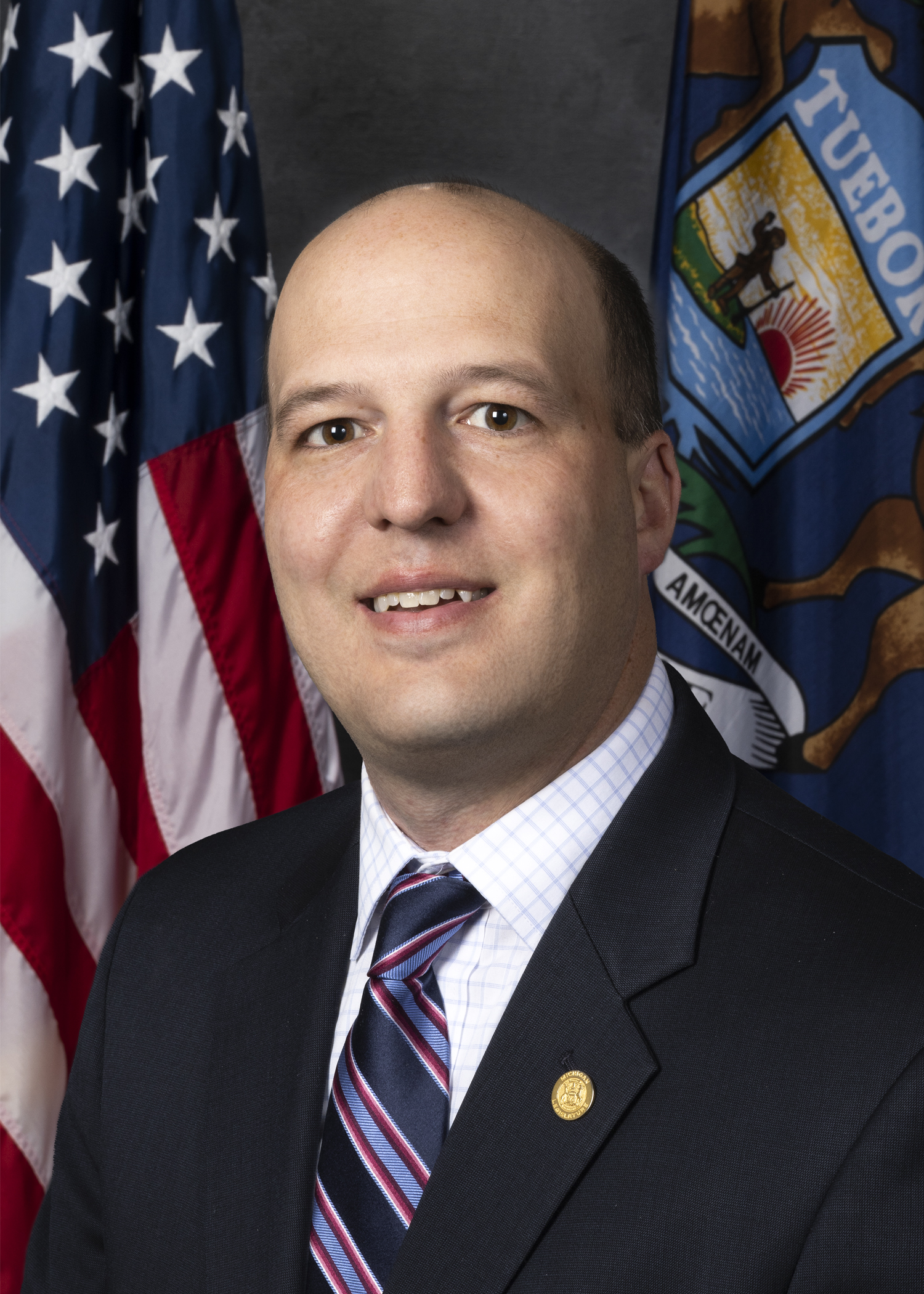
Veronica Klinefelt
96% support rate
Top opponent
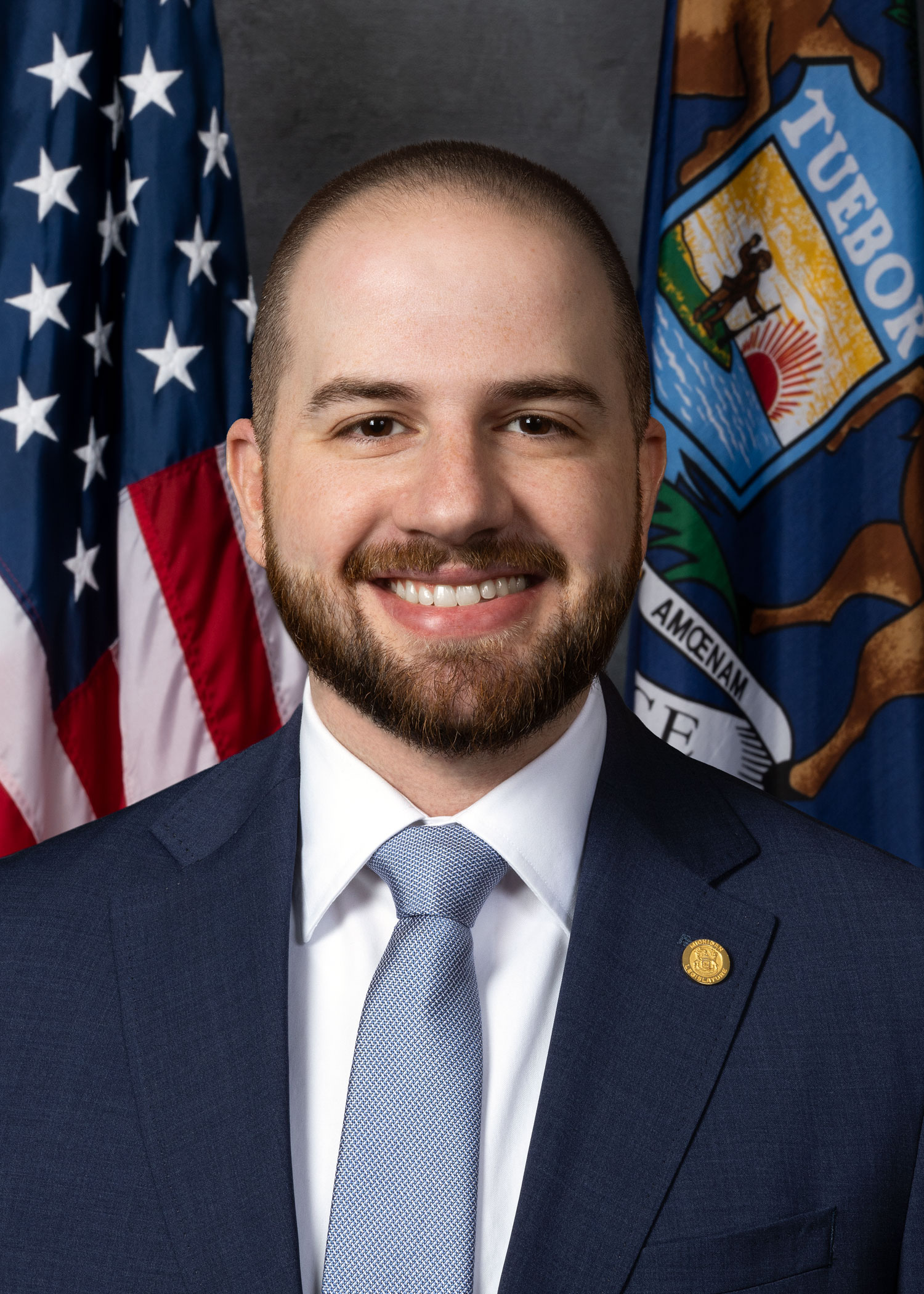
Jim Runestad
8% support rate
Ranked legislators
10
5 support · 5 oppose
Key legislators

Who's moving healthcare in Michigan

Legislators moving healthcare in Michigan
Legislator Party Stance Support rate Votes
Veronica Klinefelt
Veronica Klinefelt Senate · District 11
D
Strong +
96% 60
Winnie Brinks
Winnie Brinks Senate · District 29
D
Strong +
93% 64
Mallory McMorrow
Mallory McMorrow Senate · District 8
D
Strong +
93% 60
Kevin Hertel
Kevin Hertel Senate · District 12
D
Strong +
93% 63
Jeremy Moss
Jeremy Moss Senate · District 7
D
Strong +
93% 62
Jim Runestad
Jim Runestad Senate · District 23
R
Strong −
8% 49
Michele Hoitenga
Michele Hoitenga Senate · District 36
R
Strong −
17% 62
Dan Lauwers
Dan Lauwers Senate · District 25
R
Strong −
17% 63
Thomas Albert
Thomas Albert Senate · District 18
R
Strong −
17% 61
Lana Theis
Lana Theis Senate · District 22
R
Strong −
19% 59
Showing 441–450 of 530 bills

All healthcare bills

passed · Michigan · Senate Apr 17, 2025

SB 37: Insurance: health insurers; coverage for gynecological and perinatal services; require. Amends 1956 PA 218 (MCL 500.100 - 500.8302) by adding sec. 3406cc.

SB 37 requires Michigan health insurers to cover gynecological and perinatal care services provided by in-network physicians, certified nurse midwives, or midwives at in-network facilities or at home. This applies to any health insurance policy that already includes coverage for these services. The bill defines key terms like "certified nurse midwife" and "midwife" to clarify which providers and settings qualify for the required coverage. The policy change ensures patients using in-network providers for these services have access without gaps in coverage.
passed · Michigan · Senate Apr 17, 2025

SB 36: Health: occupations; Michigan essential health provider recruitment strategy; expand to include midwives. Amends secs. 2701, 2705, 2709 & 2723 of 1978 PA 368 (MCL 333.2701 et seq.).

Senate Bill 36 expands Michigan's essential health provider recruitment strategy to include midwives. The bill amends the public health code, adding midwives to the list of "designated professionals" eligible for a state-administered debt repayment program. Under this program, midwives who have incurred educational debt may receive repayment for their loans or expenses. In exchange, they must commit to practicing full-time in a state-designated health resource shortage area for a specified period.
passed · Michigan · Senate Apr 17, 2025

SB 31: Health facilities: hospitals; certain policies on patients who are giving birth; require a hospital to adopt. Amends secs. 20201 & 21513 of 1978 PA 368 (MCL 333.20201 & 333.21513) & adds sec. 21537.

SB 31 amends Michigan's Public Health Code to require hospitals to adopt written policies covering specific patient rights during childbirth. It directly affects all Michigan hospitals licensed under the Public Health Code and their patients receiving care while pregnant and in labor. The key new provision mandates that hospitals must stabilize a pregnant patient's condition before terminating care if the patient refuses treatment, ensuring they cannot be discharged without medical stabilization. This adds to existing requirements for hospitals to clearly outline patient rights like privacy, access to medical records, and the right to refuse treatment in their written policies.
passed both · Michigan · House Mar 12, 2025

HB 4032: Health occupations: physicians; interstate medical licensure compact; remove sunset. Amends sec. 16189 of 1978 PA 368 (MCL 333.16189).

HB 4032 permanently extends Michigan's participation in the Interstate Medical Licensure Compact by removing a scheduled expiration date (sunset) from the law. This change directly affects physicians in Michigan who use the compact to practice medicine across state lines, as it eliminates the need for periodic legislative renewal. The bill's key provision amends Michigan's Public Health Code to make the compact's terms permanent, ensuring uninterrupted eligibility for physicians seeking multi-state licensure. The compact allows doctors to obtain licenses in multiple participating states more efficiently, reducing administrative barriers for cross-state medical practice.
in committee · Michigan · Senate Jul 17, 2025

SB 482: Health: patient directives; Michigan medical treatment decisions act; enact. Creates new act.

SB 482 creates the "Michigan Medical Treatment Decisions Act," establishing a clear process for who can make medical decisions for adults (18+) unable to do so themselves. It sets a priority order for decision-makers: spouse, adult children, parents, siblings, grandparents, or a designated "surrogate" (a concerned relative/friend), with physicians as a last resort if no one else is available. The law requires decision-makers to follow the patient’s known wishes or best interests, but explicitly prohibits authorizing life-sustaining treatment withdrawal, sterilization, pregnancy termination, or specific facility admissions. This directly affects patients in medical crises and the family/friends designated to act on their behalf.
in committee · Michigan · Senate Jun 26, 2025

SB 469: Insurance: health insurers; prohibition on denying or conditioning coverage of a Medicare supplement policy; expand. Amends sec. 3829 of 1956 PA 218 (MCL 500.3829).

This bill amends Michigan law to prevent health insurers from denying or conditioning Medicare supplement insurance coverage based on an applicant's health status, pre-existing conditions, or medical history. It directly affects individuals aged 65+ during their initial Medicare Part B enrollment window, non-age-eligible applicants with specific Medicare enrollment timing, and those switching insurers while maintaining the same policy. Key provisions require insurers to offer these policies without health-based exclusions or higher pricing (capping rates at those for 65-year-olds), and to reduce pre-existing condition waiting periods based on prior continuous health coverage. The law ensures equal access to Medicare supplement plans during defined enrollment periods while clarifying what counts as qualifying prior coverage.
Sub-Topics Medicare
passed · Michigan · Senate Jul 1, 2025

SB 414: Insurance: health insurers; coverage for group prenatal care services; require. Amends 1956 PA 218 (MCL 500.100 - 500.8302) by adding sec. 3406ss.

This bill requires Michigan health insurers to cover group prenatal care services for all policyholders. It defines these services as evidence-based, group-based prenatal visits in a family-centered setting that include health assessments, social support, education, and peer interaction. The law applies to all health insurance policies issued in Michigan, directly affecting pregnant individuals and their insurers by mandating coverage for this specific care model.
signed · Michigan · Senate Jul 29, 2026

SB 415: Human services: medical services; coverage for group prenatal care services; require. Amends 1939 PA 280 (MCL 400.1 - 400.119b) by adding sec. 109t.

SB 415 requires Michigan's medical assistance program to cover group prenatal care services beginning on the bill's effective date. This directly affects pregnant individuals enrolled in Michigan's medical assistance program (like Medicaid) by mandating coverage for a specific type of care. The bill defines "group prenatal care services" as evidence-based, group-based visits that include health assessments, social support, education, and peer interaction in a family-centered setting. These services aim to support pregnant people through shared experiences and structured care, extending into early childhood.
Sub-Topics Women's Health
passed · Michigan · Senate Apr 24, 2025

SB 3: Health: pharmaceuticals; prescription drug cost and affordability review act; create. Creates new act.

SB 3 creates a Prescription Drug Affordability Board to establish maximum payment limits for certain prescription drugs, including brand-name, generic, biologic, and biosimilar medications. The Board, appointed by the governor with health care expertise, will review drug costs and set these limits to improve affordability for Michigan residents. It also establishes a Prescription Drug Affordability Stakeholder Council to provide input and a fund to support the program. This law directly affects drug manufacturers, health insurers, pharmacy benefit managers, and state agencies by requiring adherence to the set payment limits.
Sub-Topics Prescription Drugs
passed · Michigan · Senate Apr 24, 2025

SB 4: Insurance: health insurers; compliance with the prescription drug cost and affordability review act; require. Amends 1956 PA 218 (MCL 500.100 - 500.8302) by adding sec. 3406tt. TIE BAR WITH: SB 0003'25

Senate Bill 4 amends Michigan's insurance code to require health insurers that provide prescription drug coverage to comply with section 12 of the prescription drug cost and affordability review act. This means insurers delivering or renewing health policies in the state must adhere to specific provisions outlined in that separate act related to prescription drug costs. The bill's enactment is dependent on Senate Bill No. 3 also becoming law.
Showing 441 to 450 of 530 bills
Previous 1 44 45 46 53 Next