Issue · Labor & Employment

Labor & Employment

Every labor & employment bill, vote, and legislator stance in Maryland, automatically classified by Maddy, our AI policy reader.

Total bills
181
2026 Regular Session
Top supporter
Nick Charles
100% support rate
Top opponent
William Folden
0% support rate
Ranked legislators
10
5 support · 5 oppose
Key legislators

Who's moving labor & employment in Maryland

Legislators moving labor & employment in Maryland
Legislator Party Stance Support rate Votes
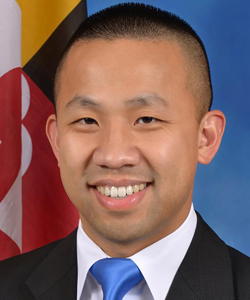
Nick Charles
Nick Charles Senate · District 25
D
Strong +
100% 83
Shelly Hettleman
Shelly Hettleman Senate · District 11
D
Strong +
100% 100
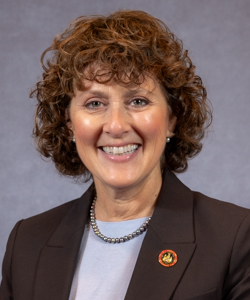
Dalya Attar
Dalya Attar Senate · District 41
D
Strong +
100% 70
Ben Brooks
Ben Brooks Senate · District 10
D
Strong +
100% 99
Clarence Lam
Clarence Lam Senate · District 12
D
Strong +
100% 97
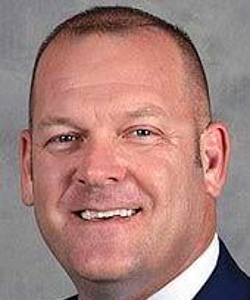
William Folden
William Folden Senate · District 4
R
Strong −
0% 81
Jason Gallion
Jason Gallion Senate · District 35
R
Strong −
0% 100
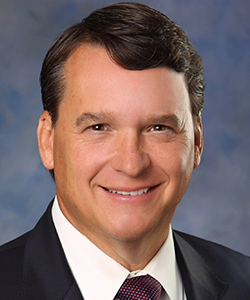
Steve Hershey
Steve Hershey Senate · District 36
R
Strong −
0% 97
Johnny Mautz
Johnny Mautz Senate · District 37
R
Strong −
0% 100
J.B. Jennings
J.B. Jennings Senate · District 7
R
Strong −
0% 100
Showing 121–130 of 181 bills

All labor & employment bills

signed · Maryland · Senate Apr 14, 2026

SB 136: Collective Bargaining - Alcohol, Tobacco, and Cannabis Commission - Police Officers

SB 136 extends collective bargaining rights under Maryland's state employee laws to police officers employed by the Alcohol, Tobacco, and Cannabis Commission (ATCC) who are authorized to make arrests. It amends state law to explicitly include these officers under Section 3-102(a)(4) of the State Personnel and Pensions article, placing them in the same category as other covered state employees. This change applies to all full-time ATCC police officers at the rank of first sergeant and below, excluding supervisory or confidential roles as defined by regulations. The bill takes effect on October 1, 2026.
signed · Maryland · Senate Apr 28, 2026

SB 449: Workers' Compensation - Heart Disease and Hypertension Presumption and Permanent Partial Disability - Carroll County Correctional Deputies

SB 449 extends workers' compensation benefits to Carroll County correctional deputies who develop heart disease or hypertension. It creates a legal presumption that these conditions are work-related (and thus compensable) if they result in partial disability or death, provided the condition is more severe than any pre-existing condition and the deputy had a medical exam before employment. The bill amends Maryland law to explicitly include "Carroll County Correctional Deputy" in the definition of "public safety employee" for these benefits. This change applies specifically to Carroll County deputies and requires meeting the severity and medical exam conditions to qualify.
signed · Maryland · House of Delegates Apr 28, 2026

HB 532: Employment Standards - Firefighters - Payment of Wages and Payroll Information

HB 532 requires counties and municipalities in Maryland to calculate overtime pay for government-employed firefighters based on hours worked over 168 in a 28-day period (instead of the standard 40-hour workweek). It also mandates that these employers provide firefighters with specific payroll information at hiring, during pay rate changes, and with each paycheck - including pay rates, overtime rates, hours worked, and deductions. If employers fail to provide this information or pay due wages, firefighters or their representatives can file a grievance, triggering automatic damages that increase by 30% per pay period until resolved, capped at three times the missing amount. The bill directly affects all firefighters employed by Maryland local governments and aims to standardize overtime calculations and improve payroll transparency.
Sub-Topics Labor Standards
in committee · Maryland · House of Delegates Jan 27, 2026

HB 542: Earned Income Tax Credit - Individuals Without Qualifying Children - Eligibility

HB 542 expands Maryland's Earned Income Tax Credit (EITC) for low-income residents without qualifying children by raising the income level at which the credit begins to phase out. Specifically, it increases the phase-out threshold from $19,160 to higher amounts that will automatically adjust annually for inflation starting in 2026. This change directly benefits working Marylanders earning below the new phase-out limits, allowing them to retain more of their EITC. The bill modifies existing tax code (Section 10-704) to implement these higher income thresholds and annual inflation adjustments.
Sub-Topics Income Tax Tax Credits
signed · Maryland · House of Delegates Apr 28, 2026

HB 480: Transportation Network Companies - Deactivation of Operators

HB 480 requires transportation network companies (like Uber or Lyft) operating in Maryland to create and follow a clear written policy for deactivating drivers. The bill mandates companies must notify drivers of deactivation reasons and provide specific information, and prohibits deactivation unless it follows the published policy. It defines "egregious misconduct" (such as repeated traffic violations or safety threats) as the only valid reason for deactivation, excluding minor violations. This directly affects drivers who could be deactivated and companies required to maintain transparent, consistent procedures.
Sub-Topics Gig Economy
in committee · Maryland · House of Delegates Jan 19, 2026

HB 148: Consumer Protection and Labor and Employment - Surveillance-Based Price and Wage Setting - Prohibition

HB 148 prohibits businesses from using surveillance data (like personal behavior or biometric information) with automated systems to set customized prices for individual consumers or groups. It also bans employers from using such data to set customized wages for employees. The bill allows price/wage customization based on actual costs or standard, publicly available discounts (e.g., student or senior rates) that are openly disclosed. Violations would be enforced under Maryland’s existing consumer protection laws, with remedies including fines or injunctions. The law takes effect October 1, 2026.
passed · Maryland · Senate Mar 24, 2026

SB 387: Food Retailers and Third-Party Food Delivery Service Providers - Dynamic Pricing and Personal Data (Protection From Predatory Pricing Act)

SB 387 prohibits large food retailers (15,000+ sq ft) in Maryland from using dynamic pricing (real-time price changes based on demand or AI) or consumer surveillance data (like location or biometric tracking) to set prices for individual customers. It also bans using protected class data (e.g., race, gender) to deny accommodations or advantages to consumers. The bill further prevents retailers from reducing union-guaranteed employee benefits without negotiating with union representatives. These provisions aim to regulate pricing practices, prevent discriminatory data use, and protect collective bargaining agreements, with violations subject to enforcement under Maryland’s consumer protection laws.
in committee · Maryland · House of Delegates Feb 3, 2026

HB 516: Maryland Department of Labor - Investigation of Complaints - Requirements (Worksite Enforcement Act of 2026)

HB 516, the "Worksite Enforcement Act of 2026," requires the Maryland Department of Labor to establish standardized procedures for handling workplace complaints related to safety risks, wage theft, or administrative issues. It mandates specific response times to complainants (7 days for imminent safety risks, 14 days for wage theft, 30 days for record-keeping issues) and requires the Department to hire one investigator per defined regional zone (e.g., Western Maryland, Baltimore County/City) starting in FY2027. The bill also requires the Governor to include a $500,000 annual budget appropriation for these investigators beginning in FY2027. This law directly affects workers filing complaints, the Department of Labor, and state budget planning, focusing on improving complaint resolution speed and investigative capacity.
Sub-Topics Labor Standards
signed · Maryland · House of Delegates May 26, 2026

HB 168: Housing and Community Development - Affordable Housing - Educator Workforce Housing and Municipal Corporations

HB 168 allows Maryland school districts to use state housing funds for developing housing specifically for teachers and school staff (called "educator workforce housing"). It explicitly states that such housing qualifies as an eligible use of state financial assistance under housing programs and ensures teachers are recognized as a "specified group" for federal low-income housing tax credits. The bill modifies existing laws to clarify that school districts can repurpose unused school properties for this housing and that state housing agencies must inform applicants about this eligibility. This directly affects school districts seeking to address housing needs for educators and teachers applying for federal housing tax credits.
in committee · Maryland · House of Delegates Feb 17, 2026

HB 366: Workers' Compensation - Exemption From Exclusivity of Remedy - Action for Wrongful Death by Nondependent Child

HB 366 allows a nondependent child (such as an adult child or a child not financially supported by the parent) of a covered worker to file a wrongful death lawsuit against an employer following a work-related death. The bill amends Maryland law to explicitly state that the workers' compensation exclusivity rule - typically preventing other lawsuits - does not apply to nondependent children in these cases. This change directly affects nondependent children who would otherwise be barred from seeking damages beyond workers' compensation. The bill does not alter the general rule that workers' compensation remains the primary remedy for most workplace injuries and deaths.
Showing 121 to 130 of 181 bills
Previous 1 12 13 14 19 Next