Issue · Labor & Employment

Labor & Employment (Collective Bargaining)

Every labor & employment bill, vote, and legislator stance in Maryland, automatically classified by Maddy, our AI policy reader.

Total bills
25
2026 Regular Session
Top supporter
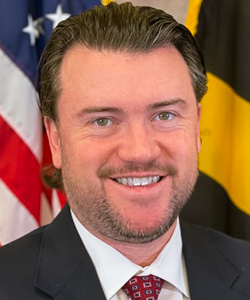
Kevin Hornberger
100% support rate
Top opponent
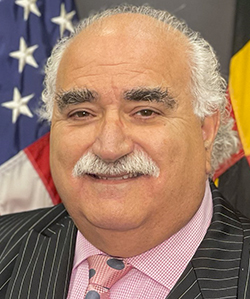
Ric Metzgar
0% support rate
Ranked legislators
10
5 support · 5 oppose
Key legislators

Who's moving collective bargaining in Maryland

Legislators moving collective bargaining in Maryland
Legislator Party Stance Support rate Votes
Kevin Hornberger
Kevin Hornberger House · District 35B
R
Strong +
100% 15
Cheryl Pasteur
Cheryl Pasteur House · District 11A
D
Strong +
100% 12
Jennifer White Holland
Jennifer White Holland House · District 10
D
Strong +
100% 12
Sarah Wolek
Sarah Wolek House · District 16
D
Strong +
100% 12
Caylin Young
Caylin Young House · District 45
D
Strong +
100% 11
Ric Metzgar
Ric Metzgar House · District 6
R
Strong −
0% 9
J.B. Jennings
J.B. Jennings Senate · District 7
R
Strong −
0% 7
Jack Bailey
Jack Bailey Senate · District 29
R
Strong −
0% 7
Jason Gallion
Jason Gallion Senate · District 35
R
Strong −
0% 7
Johnny Mautz
Johnny Mautz Senate · District 37
R
Strong −
0% 7
Showing 1–10 of 25 bills

All labor & employment bills

in committee · Maryland · House of Delegates Mar 26, 2026

HB 1634: Cannabis Licensure - Labor Peace Agreements and Collective Bargaining

This bill requires cannabis license applicants and existing licensees in Maryland to obtain a labor peace agreement as a condition of licensure, unless they already have a collective bargaining agreement in place. A labor peace agreement is defined as a contract between the cannabis business and a labor organization that prohibits strikes, picketing, boycotts, or other economic disruptions for the first five years of the license. The bill applies to all cannabis facilities and requires businesses to provide clear and convincing evidence that such agreements exist with any union or employee group representing workers in the state. This policy aims to prevent labor disputes from disrupting cannabis operations during the critical early years of business operation.
in committee · Maryland · Senate Feb 21, 2026

SB 995: Cannabis Licensure - Labor Peace Agreements and Collective Bargaining

This bill requires cannabis license applicants and existing licensees in Maryland to secure a labor peace agreement with any labor organization representing workers in the state as a condition for receiving a license. The agreement must prohibit strikes, picketing, boycotts, or other economic disruptions for the first five years of the license and must be legally enforceable under federal law. Licensees already covered by collective bargaining agreements are exempt from this requirement. The law takes effect on October 1, 2026.
in committee · Maryland · House of Delegates Feb 20, 2026

HB 1539: Maryland Labor Relations Act

HB 1539 creates the Maryland Labor Relations Board as an independent state agency to oversee collective bargaining for certain private sector employees. The bill establishes that eligible employees have the right to form or join unions, elect certified representatives, and engage in collective bargaining with employers. It outlines procedures for union elections, certification of representatives, and resolving disputes over unfair labor practices. The law specifically covers most private sector workers but excludes agricultural laborers, domestic workers, independent contractors, and supervisors. The new board will enforce these provisions and handle related elections and complaints.
passed · Maryland · House of Delegates Mar 19, 2026

HB 1108: Labor and Employment - Greenhouse Workers - Collective Bargaining and Heat Protection

HB 1108 grants collective bargaining rights to workers in Maryland greenhouses (controlled-environment agricultural operations), allowing them to form unions and negotiate wages, hours, and working conditions with employers. The bill requires the state Labor Secretary to establish regulations for union elections, certification, and resolving bargaining disputes, while mandating greenhouse employers to provide rest breaks during extreme heat to prevent heat-related illness. This law directly affects greenhouse workers and their employers, creating a formal process for union representation and heat protection. It amends Maryland's labor code to include these specific protections for greenhouse workers, who previously lacked these rights under state law.
signed · Maryland · House of Delegates Apr 28, 2026

HB 895: Food Retailers and Third-Party Delivery Service Providers - Dynamic Pricing and Personal Data (Protection From Predatory Pricing Act)

HB 895 prohibits large food retailers (defined as those with at least 15,000 square feet selling tax-exempt food) from using dynamic pricing (real-time price changes based on demand or AI) or consumer surveillance data to set prices for individual shoppers. It also bans retailers from using data about protected characteristics (like race or gender) to deny discounts or services to specific customers. The bill further protects union rights by preventing retailers from weakening employee benefits under existing collective bargaining agreements without negotiation. Violations would be treated as unfair trade practices under Maryland’s Consumer Protection Act, subject to enforcement and penalties.
in committee · Maryland · Senate Feb 12, 2026

SB 922: Collective Bargaining - Local Government Employees and Public Employee Relations Act

SB 922 establishes collective bargaining rights for county and municipal employees in Maryland by applying the state's Public Employee Relations Act to local governments. It defines "public local employees" (excluding confidential/management staff and school/library workers) and requires counties/municipalities to adopt local labor laws for negotiations. Key provisions include mandatory good-faith bargaining, binding arbitration for unresolved disputes, and procedures for local governments to seek board reviews of their labor policies. The bill directly affects local government workers and employers across Maryland's counties and cities, excluding school boards, community colleges, and public libraries.
in committee · Maryland · House of Delegates Feb 19, 2026

HB 1173: State Procurement - Contractors and Vendors - Restrictions on Use of State Funds and Resources

HB 1173 prohibits state contractors and vendors from using public funds to influence employees of their company (including subcontractors) regarding union membership or support for employee organizations. It specifically bans using state funds to fund anti-union campaigns, efforts to prevent collective bargaining rights, or activities opposing union certification. The law applies to all contractors and vendors working with state government units, covering both direct employee influence and third-party anti-union activities. Exceptions include standard collective bargaining processes, grievance resolution, and activities required by law. This bill directly affects state contractors, vendors, and their employees by restricting how public funds can be used in labor relations.
in committee · Maryland · House of Delegates Feb 19, 2026

HB 831: Collective Bargaining - Local Government Employees and Public Employee Relations Act

HB 831 establishes collective bargaining rights for county and municipal employees in Maryland by applying the state's Public Employee Relations Act (PERA) to local government workplaces. It defines "public local employees" (excluding confidential and management staff) and creates procedures for negotiations, including binding arbitration to resolve disputes between local governments and employee representatives. The bill also modifies the Public Employee Relations Board's structure and explicitly excludes school boards, community college boards, and public library systems from coverage. This directly affects thousands of local government workers across Maryland's counties and municipalities who will now have formalized bargaining processes for wages, hours, and working conditions.
in committee · Maryland · House of Delegates Mar 11, 2026

HB 1492: Collective Bargaining - Public Employees - Revocation of Certification and School and Library Employees' Right to Strike

HB 1492 establishes the right to strike for specific public school and library employees in Maryland, including certificated and noncertificated staff like substitute teachers, nurses, and JROTC instructors in certain counties. The bill prohibits public school and library employers from taking disciplinary action against employees who participate in or support strikes. It repeals the Public Employee Relations Board’s authority to deny or revoke a union’s certification as an exclusive bargaining representative under certain circumstances. These changes apply to defined groups of employees under Maryland’s Education Article, ensuring their collective bargaining rights are protected from employer retaliation.
in committee · Maryland · Senate Feb 14, 2026

SB 978: Community Colleges - Collective Bargaining - Definition of Supervisory Employee

SB 978 defines "supervisory employee" for collective bargaining purposes in Maryland community colleges. It specifies that a supervisory employee must have authority to hire/fire/promote, direct over 50% of another employee's work hours, and resolve complaints. The bill excludes department heads, comparable positions, and faculty below assistant dean level from this classification. This definition directly affects community college staff whose bargaining rights depend on their supervisory role.
Showing 1 to 10 of 25 bills
1 2 3 Next