

Maddy summaryThe Fair Day in Court for Kids Act of 2026 aims to improve the immigration court process for unaccompanied children by guaranteeing them government-funded legal representation. Under this bill, the Department of Health and Human Services would appoint lawyers for these children as soon as they enter federal custody, ensuring they have an attorney for every stage of their case, even if they turn 18 or are reunited with family while proceedings are pending. The law also requires that children receive copies of their immigration files at least seven days before a hearing and allows them to have a lawyer present during interviews and detention facility visits. Additionally, the bill mandates annual reports on how many children received counsel and establishes rules for pro bono legal services to support these efforts.
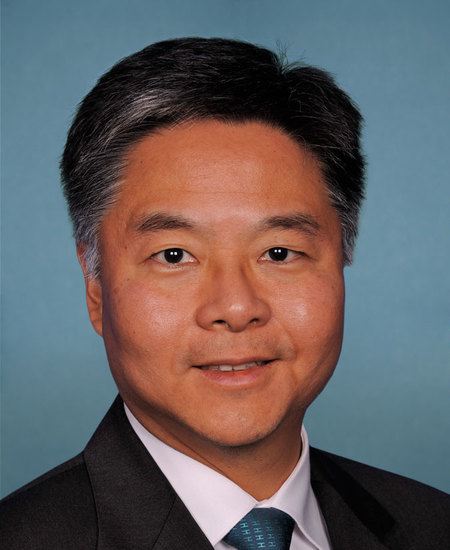
Rep. Ted Lieu
Sponsored bills
Maddy summaryThis bill is a resolution that formally recognizes the week of June 14 through June 21, 2026, as National Men's Health Week. It does not create new laws or change federal funding but instead encourages the President to issue a proclamation asking the public and organizations to observe the week with awareness events. The measure highlights statistics on men's health disparities, such as lower life expectancy and higher rates of certain diseases, to emphasize the importance of preventive care and early detection. By promoting these health goals, the resolution aims to encourage men to seek medical checkups and adopt healthier lifestyles without altering any existing policies.
Maddy summaryThis resolution formally appoints specific members to various standing committees within the U.S. House of Representatives. It assigns Ms. Wasserman Schultz, Mr. Pocan, and Mr. Bell to the Foreign Affairs Committee, Ms. Lee of Pennsylvania to the Judiciary Committee, and Mr. Menefee to the Oversight and Government Reform Committee. Additionally, Ms. Mejia is placed on the Small Business Committee and Ms. Goodlander on the Veterans' Affairs Committee. The text specifies that Mr. Menefee will hold a rank immediately after Mr. Walkinshaw on the Oversight committee. This action organizes the legislative body by defining which representatives serve on these key policy-making groups.
Maddy summaryThe No Toxic Chemicals in Food Packaging Act of 2026 prohibits the use of specific chemicals, including PFAS, certain phthalates, and bisphenols, in materials that come into contact with food. This law directly affects manufacturers and distributors of food packaging by requiring the FDA to consider potential health risks to vulnerable populations, such as children and pregnant women, when evaluating alternative substances. While the federal restrictions do not take effect for two years after enactment, the bill explicitly preserves the right of states and local governments to pass stricter regulations on food additives.
Maddy summaryHR 3429 establishes a formal US-Japan-ROK Inter-Parliamentary Dialogue to deepen trilateral cooperation. It creates a US delegation of up to 8 Congress members (2 each from House/Senate leadership, with committee requirements) to meet annually with Japanese and South Korean legislators. The bill mandates annual reports to the Foreign Affairs and Foreign Relations committees and requires the delegation to rotate leadership between House and Senate every two years. This legislation directly affects US congressional members appointed to the delegation and provides a structured mechanism for ongoing policy coordination among the three nations.
United States Commission on International Religious Freedom Reauthorization Act of 2026 This bill reauthorizes the U.S. Commission on International Religious Freedom through 2028. The commission is an independent federal commission tasked with monitoring international religious freedom conditions, reviewing U.S. government policy, and making policy recommendations. (Under current law, the commission is authorized through FY2026.)
Maddy summaryThis bill, known as the Alice Cogswell and Anne Sullivan Macy Act, amends the Individuals with Disabilities Education Act to improve special education services for children who are deaf, hard of hearing, deafdisabled, blind, visually impaired, or deafblind. It requires states to identify these students regardless of how they are currently classified, ensuring they receive specialized instruction in their primary language and access to qualified professionals. Key provisions mandate that state plans include specific strategies for language development, Braille instruction, and the use of assistive technologies, while also establishing a new national center to support research and training for educators of students with visual disabilities. Additionally, the legislation clarifies definitions for deafblindness and interveners, updates data reporting requirements to track these populations more accurately, and ensures early intervention services are delivered in natural environments to support language and communication milestones.
Maddy summaryThis resolution expresses support for designating June 5, 2026, as National Gun Violence Awareness Day and June 2026 as National Gun Violence Awareness Month. The bill calls on the public to wear orange on the designated day to honor victims and promote awareness of gun safety. It highlights statistics on gun-related deaths and injuries to underscore the need for community discussions on making neighborhoods safer.
Maddy summaryThis resolution expresses support for recognizing June 7, 2026, as Tourette Syndrome Awareness Day to promote understanding and reduce stigma for individuals with the condition. The measure highlights that Tourette Syndrome is a neurological disorder affecting approximately 1 in 50 children, often accompanied by other mental health challenges. By designating this specific date, the House aims to encourage public awareness and compassion for those living with the disorder.
Maddy summaryThe Sectoral AI Governance Act of 2026 gives federal agencies with enforcement powers the ability to create specific rules targeting algorithmic decision-making systems that are likely to cause violations of existing federal laws. Under this bill, agencies must publish a public notice at least 60 days before proposing rules to allow for feedback, while also consulting with other agencies and technical experts to ensure consistency and avoid conflicts. The legislation requires agencies to periodically review these rules every five years and submit biennial reports to Congress detailing their rulemaking activities, enforcement actions, and assessments of potential discriminatory impacts. By clarifying regulatory authority and mandating transparency, the bill aims to improve coordination across the federal government without preempting state laws on the same topics.