Issue · Education

Education

Every education bill, vote, and legislator stance in Hawaii, automatically classified by Maddy, our AI policy reader.

Total bills
149
119th Congress
Top supporter
Jill N. Tokuda
78% support rate
Top opponent
Mazie K. Hirono
43% support rate
Ranked legislators
4
3 support · 1 oppose
Key legislators

Who's moving education in Hawaii

Legislators moving education in Hawaii
Legislator Party Stance Support rate Votes
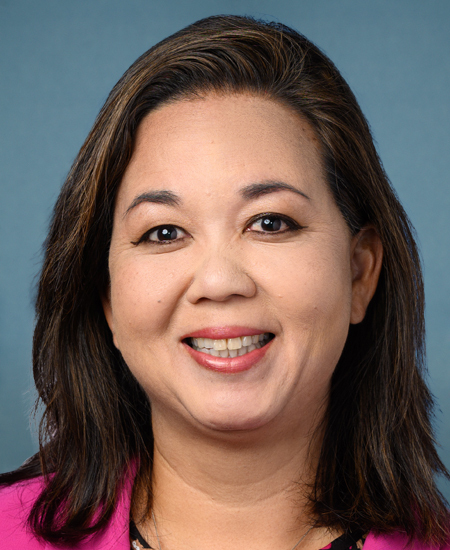
Jill N. Tokuda
Jill N. Tokuda House · District 2
D
Support
78% 130
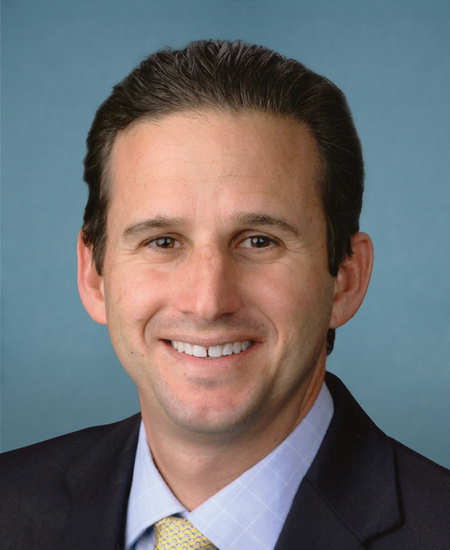
Brian Schatz
Brian Schatz Senate
D
Support
71% 168
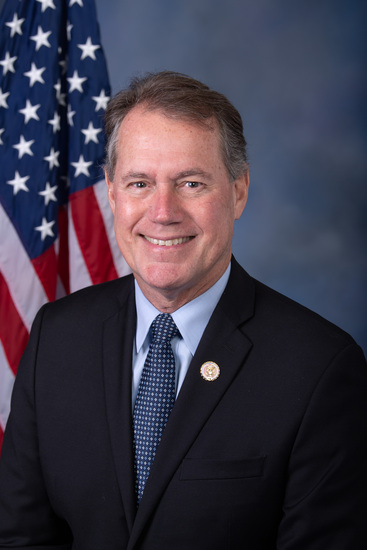
Ed Case
Ed Case House · District 1
D
Mixed
56% 130
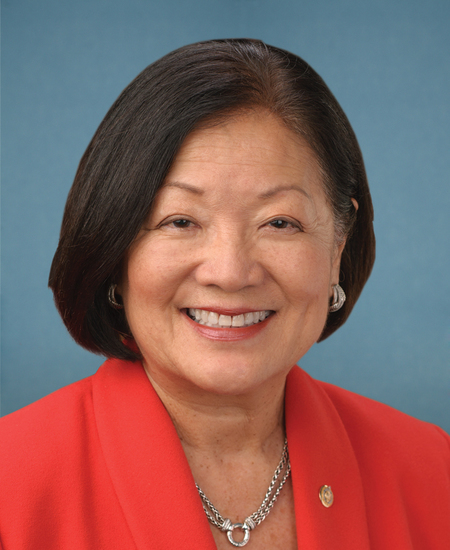
Mazie K. Hirono
Mazie K. Hirono Senate
D
Mixed −
43% 168
Showing 1–10 of 149 bills

All education bills

in committee · United States · House Aug 31, 2026

HR 10202: High School Voter Empowerment Act of 2026

The High School Voter Empowerment Act of 2026 requires all public high schools in the United States to be designated as voter registration agencies under federal law. Schools must conduct at least one voter registration drive each academic year, with a specific goal of registering eligible students who are at least 17 years old and enrolled in American Government or Economics classes. To support these efforts, the Department of Education would establish a grant program that reimburses schools for the reasonable costs associated with running these drives. Additionally, state election officials may provide voting machines to schools upon request for use in student council elections.
Sub-Topics K-12 Education Tags Elections
in committee · United States · Senate Aug 6, 2026

S 5317: INSPIRES Act

The INSPIRES Act authorizes the Department of Education to provide funding for the modernization, renovation, or construction of science, technology, engineering, and mathematics (STEM) facilities in public schools and career and technical education institutions. The bill establishes two primary grant programs: one that allocates funds to states to subgrant to local agencies for upgrading rural and Native American-serving schools, and another that offers direct grants, loan guarantees, or interest payments to eligible entities for broader STEM and vocational facility improvements. To receive these federal funds, states must contribute a 25 percent non-federal match, while local agencies receiving subgrants are required to provide a 10 percent match, with priority given to applicants who form public-private partnerships. The legislation authorizes at least $25 million annually for each program starting in fiscal year 2027 and requires the Secretary of Education to report biennially on how these facility upgrades impact student academic achievement.
in committee · United States · Senate Jul 23, 2026

S 5110: Improving America's Literacy Act

The Improving America's Literacy Act amends the Elementary and Secondary Education Act to provide grants to states that implement specific reading instruction methods. These funds are restricted to programs that use evidence-based strategies focusing on phonics and other core literacy skills while explicitly prohibiting the use of the "three-cueing model," an approach that relies on context and pictures for word recognition. The bill also requires states receiving these grants to undergo annual reviews of student outcomes and mandates that school improvement funds be directed only to districts utilizing approved literacy activities. Additionally, the legislation directs the Institute of Education Sciences to conduct research on effective literacy strategies and submit findings to Congress within five years. Finally, the act includes a provision ensuring that these new requirements do not limit protections for students with disabilities or allow the federal government to dictate specific local curriculum content.
Sub-Topics Curriculum
in committee · United States · Senate Jul 14, 2026

S 4976: Native Children’s Commission Implementation Act of 2026

This bill establishes the Native Children's Commission Implementation Act of 2026 to improve health, education, and safety outcomes for Native American, Alaska Native, and Native Hawaiian children and families. It creates several new advisory committees within federal agencies to provide ongoing guidance on issues such as juvenile justice, maternal health, substance abuse, and environmental protection. The legislation also authorizes grants and pilot programs to expand access to mental health services, increase the perinatal workforce, support Native language schools, and provide housing assistance for homeless youth and families. Additionally, it modifies existing laws to allow Tribes greater flexibility in administering nutrition and child care programs while ensuring they receive adequate funding for administrative costs.
in committee · United States · Senate Jun 23, 2026

S 4859: Pell Grant Preservation and Expansion Act of 2026

The Pell Grant Preservation and Expansion Act of 2026 aims to increase financial aid for college students by doubling the maximum Federal Pell Grant award to $10,000 for the 2026-2027 school year, with amounts rising annually to reach $15,000 by 2031-2032. The bill also changes the funding structure so that Pell Grants become a mandatory program that automatically adjusts for inflation rather than relying on annual congressional appropriations. Additional provisions expand eligibility to include students with negative financial aid indexes, provide special rules for recipients of means-tested benefits, and allow Dreamer students who become citizens or permanent residents to qualify for aid. The legislation further restores the total number of semesters a student can receive Pell Grants from 12 to 18 and modifies how institutions determine satisfactory academic progress to reduce penalties for students struggling with course requirements.
in committee · United States · Senate Jun 22, 2026

S 4847: Summer for All Act

The Summer for All Act authorizes the Secretary of Health and Human Services to provide competitive grants to organizations and state agencies for creating affordable, high-quality summer programs for youth aged 5 to 22. These grants prioritize serving low-income, rural, and underserved populations, including English learners, students with disabilities, and those experiencing homelessness, by offering free programming that includes academic enrichment, health activities, and social support. The legislation allocates $4 billion over four years, with the majority of funds designated for direct community programs and a smaller portion for state-level planning to expand access and improve program quality. Recipients must use the funds to provide safe, supervised environments during the summer months and are required to submit annual reports detailing how the money was spent and how many youth were served.
Sub-Topics Homelessness
in committee · United States · Senate Jun 23, 2026

SRES 785: A resolution celebrating the accomplishments of title IX of the Education Amendments of 1972, also known as the Patsy Takemoto Mink Equal Opportunity in Education Act, and recognizing the need to continue pursuing the goal of educational opportunities for all women and girls.

This Senate resolution celebrates the history and achievements of Title IX, a 1972 law that prohibits sex discrimination in any federally funded education program. It highlights the progress made in areas such as athletic opportunities, graduation rates, and access to nontraditional fields of study for women and girls. The document also calls on the executive branch to protect students from discrimination based on sex, pregnancy, sexual orientation, and gender identity, while condemning efforts to use the law to harm transgender or nonbinary students.
in committee · United States · House May 21, 2026

HR 8975: All Students Count Act of 2026

The All Students Count Act of 2026 requires schools to break down student performance data into more specific ethnic categories for Asian Americans and Native Hawaiians and Pacific Islanders. Currently, federal education reporting only uses broad groupings, but this bill mandates that states include detailed subgroups such as Chinese, Vietnamese, Samoan, and Chamorro in their accountability systems. The law aims to provide more accurate information about the educational progress of these diverse communities by updating the Elementary and Secondary Education Act of 1965. These new data reporting requirements will take effect 18 months after the bill is enacted.
in committee · United States · Senate May 20, 2026

S 4579: All Students Count Act of 2026

The All Students Count Act of 2026 requires schools to break down educational data into more specific categories for Asian American and Native Hawaiian and Pacific Islander students, moving beyond broad groupings to include distinct ethnicities like Chinese, Vietnamese, and Samoan. This change mandates that states report performance metrics for these detailed subgroups within their existing accountability systems to better reflect the diverse backgrounds of these communities. The bill takes effect 18 months after enactment, allowing time for states to adjust their data collection and reporting processes to accommodate the new requirements.
in committee · United States · Senate Apr 16, 2026

S 4319: Rehabilitation Through Reading Act of 2026

The Rehabilitation Through Reading Act of 2026 requires the Bureau of Prisons to create a Publication Review Committee to oversee which books are available in federal prisons. This committee, composed of librarians, incarcerated individuals, legal experts, and the federal prison ombudsman, must approve any decision to ban a book after reviewing the specific reasons provided by prison officials. The law explicitly forbids banning books simply because their viewpoints are unpopular or disagreeable, and it mandates that books remain accessible while appeals against their removal are being reviewed. Additionally, the Act requires the Bureau of Prisons to submit annual reports to Congress detailing every book that was prohibited and the outcomes of any related appeals.
Sub-Topics Corrections Libraries
Showing 1 to 10 of 149 bills
1 2 3 15 Next