

Maddy summaryHR 1435, the Preserving Choice in Vehicle Purchases Act, amends the Clean Air Act to restrict states from implementing vehicle emissions rules that limit the sale or use of new gasoline-powered cars. It directly affects states with stricter emissions standards (like California) by adding a new definition that blocks state rules "directly or indirectly" limiting internal combustion engine vehicles as defined in federal regulations as of January 1, 2023. The bill requires the EPA to revoke existing state emissions waivers granted between January 2022 and the bill’s enactment if they don’t comply with this new definition. This creates a concrete federal standard preventing states from advancing policies that could reduce demand for conventional vehicles.
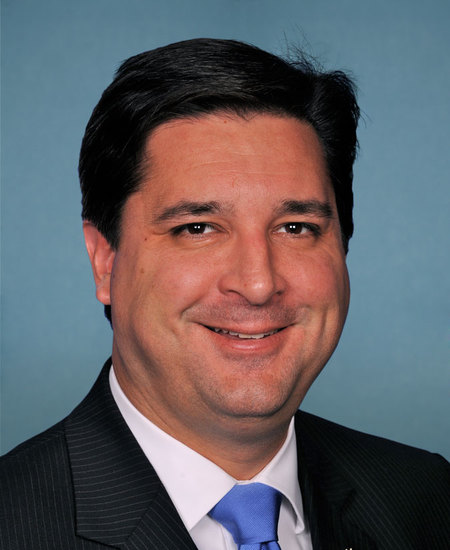
Rep. David Rouzer
Sponsored bills
Maddy summaryHR 5455, the Collision Avoidance Systems Act of 2023, allows automakers to install pulsating light systems as rear-end collision avoidance technology on new vehicles. The bill requires the Secretary of Transportation to issue new regulations within 180 days updating Federal Safety Standard 108 to include performance-based rules for these systems. Specifically, it defines a "pulsating light system" as a high-mounted brake light that flashes rapidly (up to 4 times for no more than 1.2 seconds) before switching to steady light, with a 5-second lockout period after braking stops. This directly affects vehicle manufacturers who must comply with the updated safety standards for brake lights.
Maddy summaryThe Life.Gov Act (HR 5406) requires the U.S. Department of Health and Human Services to create a federal website called life.gov within one year of enactment. The website will provide pregnant and postpartum women with locally tailored resources - such as health services, financial assistance, and mental health support - via zip code searches, multilingual access, and user feedback tools. States must submit resource recommendations meeting strict criteria (e.g., no abortion providers, 3+ years of service), and the website cannot list "prohibited entities" (defined as abortion providers or supporters). The Secretary must report to Congress within 180 days on website usage, user feedback, and gaps in resources, using existing HHS funding.
Maddy summaryHR 5507 prohibits the use of federal funds to establish a Disinformation Governance Board within the Department of Homeland Security. The bill directly affects the Secretary of Homeland Security by blocking any funding from being used for this specific board's creation. It is a straightforward funding restriction with no additional policy mechanisms or provisions beyond preventing the board's establishment.
Maddy summaryHR 3152, the "Fight CRIME Act," aims to maintain international restrictions on Iran's missile-related activities by requiring diplomatic efforts to extend these restrictions before they expire in October 2023. The bill mandates annual reports detailing U.S. diplomatic strategies, potential impacts of expiration, and measures to deter missile technology transfers to Iran. It establishes sanctions against foreign individuals or entities that knowingly support Iran's missile or drone programs, including asset freezes and visa restrictions. These sanctions apply regardless of whether UN restrictions remain in effect after their expiration, directly affecting foreign entities involved in these activities.
Maddy summaryHCONRES 18 sets strict 30-day deadlines for the Joint Committee on the Library to review and act on North Carolina's submission for a statue of Reverend Billy Graham in the National Statuary Hall. It requires the Committee to approve or deny the clay model design within 30 days of receiving detailed submissions (including photos, dimensions, and engineering data), then approve the final statue within another 30 days of receiving final documentation. If approved, the Committee must also select a Capitol location within 30 days. This procedural bill directly affects North Carolina (as the submitting state) and the Joint Committee, streamlining an existing approval process without altering substantive policy.
Maddy summaryThe Jobs in the Woods Act creates a federal grant program to train workers for forestry jobs in rural communities. It provides competitive grants (ranging from $500,000 to $2 million) to eligible groups like states, tribes, nonprofits, or schools for career training programs in forestry operations and products. Priority is given to projects addressing aging workforces, youth engagement through school partnerships, and job placement. The program is funded at $10 million annually from 2024 through 2028, targeting low-income rural areas with populations under 50,000.
Stop Pot Act of 2023 This bill directs the Department of Transportation to withhold 10% of apportioned federal highway funds from states that allow for the lawful purchase or public possession of marijuana for recreational purposes. The bill specifically applies to the withholding of federal funds under the National Highway Performance Program, the Highway Safety Improvement Program, and the Congestion Mitigation and Air Quality Improvement Program.
Maddy summaryHR 4800, the GATES Act, modifies a provision in the Food Security Act of 1985 to create a new exception for agricultural income. It allows farmers, ranchers, and forestry businesses to receive certain payments or benefits without being subject to income limits if 75% or more of their average adjusted gross income comes from these activities. To qualify, these entities must provide documentation to the Secretary (typically the USDA) proving their income source. This change directly affects agricultural producers receiving federal payments by expanding eligibility for those primarily engaged in farming, ranching, or forestry.
Maddy summaryHR 4547, the Laws Ensuring Safe Shrimp Act (LESS Act), creates a dedicated fund using 70% of U.S. import duties on shrimp and shrimp products (e.g., frozen shrimp, shrimp-based dishes) to improve safety and labor compliance. The fund allocates 50% to the FDA for inspecting high-risk shrimp for antibiotic contamination and verifying imports aren’t sourced from forced labor or illegal fisheries, and 50% to the USDA to boost domestic shrimp consumption. It directly affects shrimp importers (who pay the duties), federal agencies (FDA, USDA, CBP), and domestic shrimp producers (who benefit from consumption programs). The bill ensures funding supplements existing programs and remains available until spent, focusing on concrete safety and labor checks rather than speculative outcomes.