

Maddy summaryThis bill requires the Department of Defense to assess potential exposure to PFAS chemicals (perfluoroalkyl and polyfluoroalkyl substances) during routine health exams, separation physicals, and deployment evaluations for active-duty military members. If an assessment indicates possible exposure, the military must provide blood testing to document it, with results added to the service member's health record. The bill also creates a registry for service members with PFAS exposure, mandates sharing this data with the Department of Veterans Affairs, and allows former members and their families living near affected bases to access free blood testing through TRICARE or vouchers. It directly affects current and former military personnel and their families who lived at locations with known or suspected PFAS contamination.
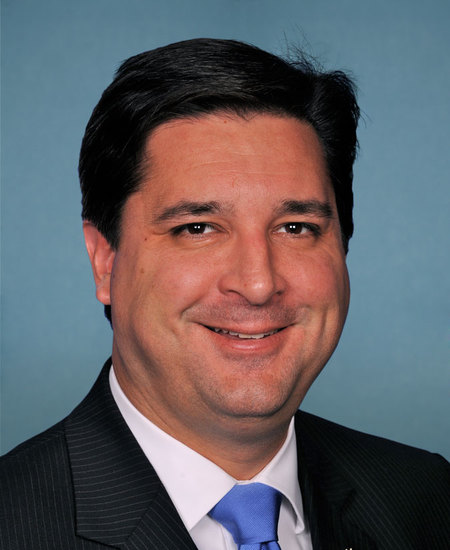
Rep. David Rouzer
Sponsored bills
Maddy summaryHR 5239, the Gulf of Mexico Commerce Protection Act, prohibits the National Oceanic and Atmospheric Administration (NOAA) from creating a vessel slowdown zone in the Gulf of Mexico until the Commerce Secretary completes and reports on a study. The study must prove that any proposed whale protection measures (specifically for Rice’s whales) would not harm supply chains or maritime commerce. The bill requires the Commerce Secretary to develop and report findings within 60 days to specific congressional committees, and explicitly bans nighttime transit bans or fixed slowdown zones in the required mitigation protocols. This bill directly affects NOAA’s regulatory authority and the Commerce Department’s study process, delaying potential environmental rules pending congressional review.
Maddy summaryHR 5241 amends tax code provisions to allow governmental pension plans to include firefighters, emergency medical technicians (EMTs), and paramedics who work full-time in firefighting or out-of-hospital emergency medical services for public safety agencies under local government contracts. The bill prevents these pension plans from being disqualified as "governmental plans" solely because they cover these specific public safety workers, as defined by the Homeland Security Act. This change directly affects state and local government pension systems that serve emergency response personnel. The policy update applies to plan years starting after the bill's enactment.
Maddy summaryHR 5130, the "Finish It Act," requires the Department of Defense to use stored border wall construction materials (valued at approximately $300 million) for building permanent barriers along the U.S.-Mexico border within 30 days of the bill's enactment. It mandates that states receiving materials certify they will use them exclusively for border barriers, with penalties for unused materials (requiring repayment of the original cost) and imposes a 1% budget cut for every two days of delay in implementation. The bill also demands a detailed report from the Department of Defense within 90 days, including internal communications about storage costs and contracts with private landowners. This legislation directly affects the Department of Defense and border states, focusing on redirecting existing resources rather than creating new funding or construction.
Maddy summaryThis bill amends the Food and Nutrition Act to prevent fees on SNAP (Supplemental Nutrition Assistance Program) electronic benefit transactions. It requires state agencies managing SNAP to update EBT (Electronic Benefit Transfer) systems to meet modern security standards and review technology contracts regularly. States must cover costs for these changes, with new funding provided for implementing the updated requirements. The changes take effect October 1, 2023, directly affecting state agencies that administer SNAP benefits.
Fair Access to Agriculture Disaster Programs Act This bill waives the adjusted gross income limitations for payments or benefits under specific Department of Agriculture (USDA) disaster assistance programs for a person or legal entity that derives a portion of their income from agriculture. (Currently, a person or entity is not eligible to receive certain benefits during a crop, fiscal, or program year if their average gross income exceeds $900,000.) Specifically, in the case of an excepted payment or benefit, the adjusted gross income limitation is waived if 75% or more of the average adjusted gross income for the person or entity is derived from farming, ranching, or silviculture activities. These activities include agritourism, direct-to-consumer marketing of agricultural products, and the sale of agricultural equipment owned by such person or entity. The bill applies to the USDA Livestock Indemnity Program; Livestock Forage Disaster Program; Emergency Assistance for Livestock, Honey Bees, and Farm-Raised Fish Program; Tree Assistance Program; and Noninsured Crop Disaster Assistance Program.
Flood Resiliency and Land Stewardship Act This bill amends the purpose of the Regional Conservation Partnership Program (RCPP) of the Department of Agriculture (USDA) to include the prevention and mitigation of the effects of flooding and drought and the improvement or expansion of flood resiliency. (Under the RCPP, USDA enters into agreements with eligible partners to deliver conservation projects in specific geographical areas. Within an RCPP project, producers enter into contracts and agreements with USDA to carry out eligible conservation activities.)
Maddy summaryHRES 624 is a non-binding resolution recognizing Gibraltar's right to self-determination regarding its status as a British Overseas Territory. It highlights that Gibraltarians have consistently voted (99.6% in 1967, 98.48% in 2002) to remain under UK sovereignty and notes U.S. military reliance on Gibraltar's facilities since 1801, including during WWII and the 2011 Libya operation. The resolution states the House honors Gibraltar's security contributions and affirms that Gibraltarians' views must be central to any future discussions about its status. It does not change U.S. policy or impose new obligations, merely expressing the House's position.
This resolution condemns Iran for the 1988 massacre of political prisoners. It also urges the Biden Administration and U.S. allies to publicly condemn the massacre and to pressure Iran to provide information to the families of the victims.
Build the Wall and Fight Fentanyl Act of 2023 This bill establishes accounts to fund the construction of physical barriers along the U.S. southern border and to provide grants to address fentanyl abuse. These accounts shall be funded from the sale of assets belonging to cartels that have been seized by the Drug Enforcement Administration, U.S. Immigration and Customs Enforcement, or U.S. Customs and Border Protection. The bill defines cartel as (1) an organization with operations in Mexico and the United States designated as a significant transnational criminal organization; (2) certain named organizations, such as the Sinaloa Cartel and the Juarez Cartel; and (3) other organizations as designated by the President.