Issue · Labor & Employment

Labor & Employment (Labor Standards)

Every labor & employment bill, vote, and legislator stance in Colorado, automatically classified by Maddy, our AI policy reader.

Total bills
10
2026 Regular Session
Top supporter
Yara Zokaie
100% support rate
Top opponent
Rick Taggart
0% support rate
Ranked legislators
10
5 support · 5 oppose
Key legislators

Who's moving labor standards in Colorado

Legislators moving labor standards in Colorado
Legislator Party Stance Support rate Votes
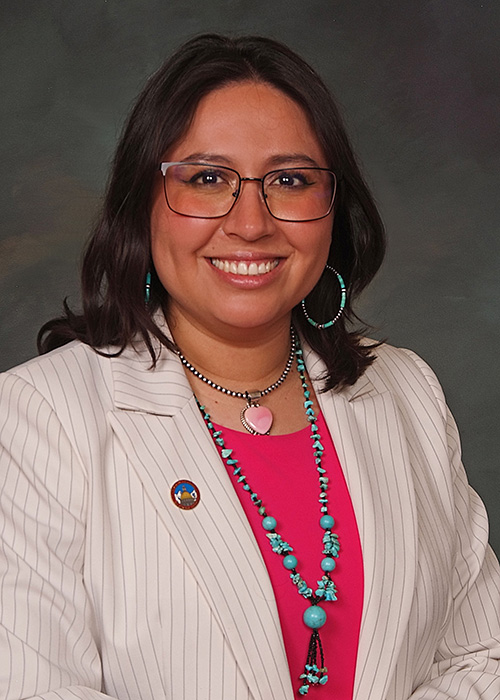
Yara Zokaie
Yara Zokaie House · District 52
D
Strong +
100% 15
Andy Boesenecker
Andy Boesenecker House · District 53
D
Strong +
100% 10
Brianna Titone
Brianna Titone House · District 27
D
Strong +
100% 10
Elizabeth Velasco
Elizabeth Velasco House · District 57
D
Strong +
100% 10
Emily Sirota
Emily Sirota House · District 9
D
Strong +
100% 10
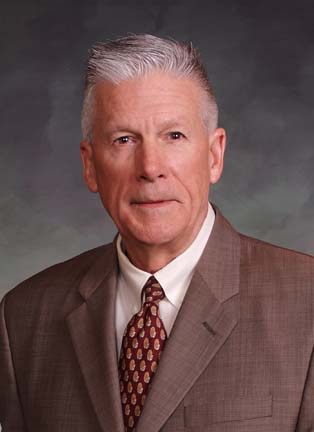
Rick Taggart
Rick Taggart House · District 55
R
Strong −
0% 9
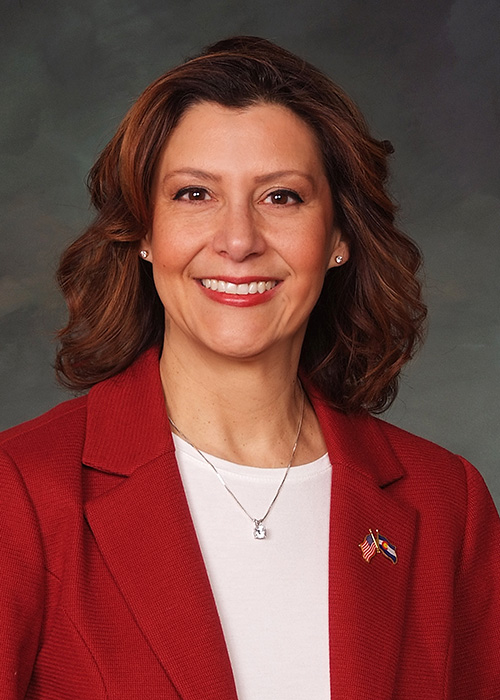
Lori Garcia Sander
Lori Garcia Sander House · District 65
R
Strong −
0% 8
Matt Soper
Matt Soper House · District 54
R
Strong −
0% 8
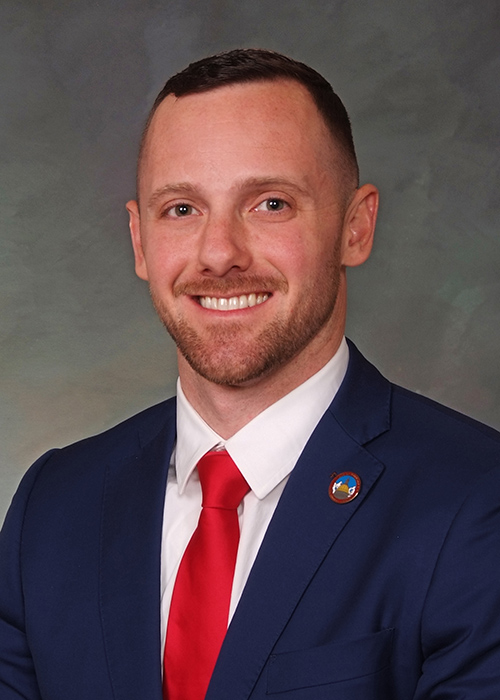
Scott Bottoms
Scott Bottoms House · District 15
R
Strong −
0% 7
Jarvis Caldwell
Jarvis Caldwell House · District 20
R
Strong −
0% 5
Showing 10 of 10 bills

All labor & employment bills

signed · Colorado · Senate Jun 3, 2026

SB 160: Personal Protective Equipment & Meatpackers

The act prohibits employers from making deductions from the wages or compensation of an employee for personal protective equipment. The act also requires an employer with 500 or more employees who are engaged in the slaughter of livestock or the rendering or packaging of meat to provide its employees reasonable access to restrooms. The division of labor standards and statistics in the department of labor and employment may fine an employer who fails to provide restroom access.(Note: This summary applies to this bill as enacted.)
in committee · Colorado · House Apr 23, 2026

HB 1319: Right to Be Out at Work

The bill prohibits an employer from:Subjecting an employee to an adverse employment action in response to the employee's disclosure of, or communication about, the employee's sexual orientation, gender identity, or gender expression or to the employee's status as a transgender, nonbinary, or transitioning individual; orRetaliating against an employee who supports, assists, or advocates for a coworker, student, or client in exercising their right to nondiscrimination, including by referring to an individual by their chosen names, pronouns, or personal titles.The bill allows an employee to determine the names, pronouns, and personal titles that are used to refer to the employee in the workplace, and the bill requires an employer, upon notification by an employee, to update all internal and public-facing records to reflect the employee's chosen name. If an employee chooses a name other than the employee's legal name, an employer must use the employee's legal name only where such use is required by law.The bill prohibits an employer from having a workplace dress code that imposes different requirements on the basis of an individual's sexual orientation, gender identity, or gender expression. An employer must allow each employee access to a restroom and changing facility that corresponds with the employee's gender identity.An employer operating a public building must ensure that the building includes at least one restroom that is compliant with the federal "Americans with Disabilities Act of 1990" and accessible to all individuals, regardless of the individual's sexual orientation, gender identity, or gender expression. An employer must provide private, nonbathroom spaces for nursing or pumping, which spaces are available to all parents regardless of their sexual orientation, gender identity, or gender expression.An employer must ensure equal access to certain employment benefits without regard to an employee's sexual orientation, gender identity, or gender expression.The bill requires every public employer to provide a voluntary, employee-initiated process for the development and implementation of a written transition plan for a transgender or transitioning employee. Upon request by an employee, a public employer shall promptly engage in good faith discussions with the employee, and, if applicable, the employee's designated union representative, to develop a transition plan. A transition plan may include consideration of:Internal and external communications regarding the employee's transition;Scheduling and approval of any absences related to the transition process;Procedures for updating and using the employee's chosen names, pronouns, and personal titles in employment contexts; andTraining or educational opportunities for coworkers, students, or other stakeholders to promote understanding of the experiences in the workplace of transgender individuals and individuals who are transitioning.An employee of a private employer may request to collaborate with their employer to develop and implement a transition plan.The bill requires an employer to permit an employee to use the employee's available sick or personal leave time for the purpose of changing the employee's legal name or obtaining gender-affirming medical care, including recovery time.The bill requires a public employer to provide annual training to all employees regarding inclusive workplaces and support for LGBTQ+ employees. The department of labor and employment (department), in consultation with labor unions and LGBTQ+ advocacy organizations, must develop and make available training materials for this purpose.The department may receive and investigate complaints alleging violations, issue findings and orders to provide relief, and refer cases involving egregious or willful violations to the Colorado civil rights division or to the attorney general. The types of relief that the department may order include a fine in an amount not to exceed $5,000 for each violation.The department is required to adopt rules to implement and enforce the bill.The bill takes effect June 1, 2028.(Note: This summary applies to this bill as introduced.)
in committee · Colorado · Senate Apr 9, 2026

SB 127: Family Medical Leave Insurance Duration Extensions

With regard to the family and medical leave insurance (FAMLI) program, the bill:Defines a neonatal intensive care unit (NICU) for the duration extension that applies to a covered individual who has a child receiving care in a NICU; andExtends the duration of paid FAMLI leave for claims arising on or after January 1, 2027, up to an additional 2 weeks, following the death of a family member for whom a covered individual cared for while using such leave.(Note: This summary applies to this bill as introduced.)
in committee · Colorado · Senate Mar 19, 2026

SB 81: Increase Agricultural Employee Overtime Protections

The bill increases overtime protections for agricultural employees by requiring that agricultural employees be paid at an overtime rate for any work performed in excess of:40 hours per workweek;12 hours per workday; or12 consecutive hours.(Note: This summary applies to this bill as introduced.)
Sub-Topics Child Labor Labor Standards Minimum Wage Tags Agriculture
passed · Colorado · Senate May 6, 2026

SB 91: Exclusion of Newspaper Deliverers as Employees

In current law , the 'Colorado Employment Security Act' excludes services performed by certain individuals engaged in the trade or business of delivering or distributing newspapers or shopping news from the definition of 'employment' . The bill adds the same exclusion to the 'Workers' Compensation Act of Colorado', the 'Paid Family and Medical Leave Insurance Act', and provisions concerning wages repeals that exclusion and adds clarifying language regarding how the independent contractor test should be applied to determine whether such individuals are employees. The bill adds the same clarifying language to the provisions concerning wages.(Note: Italicized words indicate new material added to the original summary; dashes through words indicate deletions from the original summary.)(Note: This summary applies to the reengrossed version of this bill as introduced in the second house.)
signed · Colorado · House Jun 4, 2026

HB 1272: Extreme Temperatures Worker Protections

The act requires the division of labor standards and statistics (division) in the department of labor and employment (CDLE), on or before January 15, 2027, to begin collecting data concerning temperature-related injury or illness or temperature-related emergencies at worksites and to:Develop a platform on CDLE's website where users can provide information about occurrences of temperature-related injury or illness or temperature-related emergencies;Obtain from the department of public health and environment (CDPHE) data that CDPHE has collected through its syndromic surveillance program regarding occurrences of heat-related injury or illness or heat-related emergencies; andCollect similar data from the division of workers' compensation and the Center for Improving Value in Health Care.     On or before July 1, 2028, the act requires the division to develop a model temperature-related injury and illness prevention plan (TRIIPP) that thereafter must be made available on CDLE's website. Additionally, the act requires the division to review and update the model TRIIPP at least every 5 years and grants the division authority to adopt rules necessary to implement the act.     $76,651 is appropriated from the general fund to the department for use by the division.(Note: This summary applies to this bill as enacted.)
Sub-Topics Labor Standards
signed · Colorado · House Jun 4, 2026

HB 1207: Disclosure of Demographic Workforce Data

The act requires, beginning July 1, 2027, a private entity conducting business in the state that employs 100 or more workers (employer) to include demographic workforce data collected through the United States equal employment opportunity commission's 'Employer Information Report' (EEO-1 data) in periodic reports to the secretary of state. An employer is required to provide the EEO-1 data to the secretary of state even if the federal government repeals or discontinues the federal requirement to submit the EEO-1 data to the United States equal employment opportunity commission.(Note: This summary applies to this bill as enacted.)
passed · Colorado · House May 12, 2026

HB 1273: Transportation Network Company Maximum Percent Fare Retention

The bill prohibits a transportation network company (TNC) from retaining more than 20% of a consumer fare paid for a driver's completion of a transportation task through the TNC's digital platform. 'Consumer fare' is defined in the bill as the amount a consumer pays for a transportation task, excluding tips, and pass-throughs such as payments for tolls, taxes, airport fees, and payments for a certified driver support organization . The amount that a TNC excludes from a consumer fare payment for a certified driver support organization must not exceed the per-task amount determined by rule and must be remitted to the certified driver support organization. Pass-throughs must be paid to the driver. A TNC is also not allowed to impose a fee on a TNC driver unless the amount of the fee plus the amount that the TNC retains from a consumer fare does not exceed 20% of the consumer fare.      The bill adds disclosures regarding airport fees, pass-throughs, taxes, and payments for a driver support organization to be added to periodic disclosures TNCs make to the division of labor standards and statistics in the department of labor and employment and changes the frequency of the disclosures from semi-annual reporting to annual reporting.      Finally, the bill applies the same process to complaints against TNCs concerning violations of disclosure and deactivation policy requirements as the process that is applied to wage complaints.(Note: Italicized words indicate new material added to the original summary; dashes through words indicate deletions from the original summary.)(Note: This summary applies to the reengrossed version of this bill as introduced in the second house.)
signed · Colorado · Senate May 4, 2026

SB 121: Overtime Threshold for Agricultural Employees

Beginning January 1, 2027, the act requires an agricultural employer to pay certain agricultural employees overtime pay for time worked in excess of 56 hours in a workweek. The act also increases penalties for an agricultural employer who commits wage theft and repeals the authority of the director of the division of labor standards and statistics to adopt rules concerning overtime pay for agricultural employees.(Note: This summary applies to this bill as enacted.)
Sub-Topics Child Labor Labor Standards Minimum Wage Tags Agriculture
passed · Colorado · House May 13, 2026

HB 1054: Protections for Worker Safety

Section 1 of the bill requires an employer to ensure the employer's workplace is free from recognized hazards, as interpreted consistent with the federal occupational safety and health administration's interpretation of the general duty clause of the 'Occupational Safety and Health Act of 1970' (OSH Act) as of September 1, 2025. Additionally, employers have the general duty to:Ensure that each workplace is constructed, equipped, arranged, operated, and conducted as to provide reasonable and adequate protection to the lives, health, and safety of all individuals employed or working in the workplace; andComply with standards for workplace health and safety adopted by rule by the division of labor standards and statistics in the department of labor and employment (division) attorney general.     The bill authorizes the following actions to address workplace health and safety concerns:The attorney general or the division may refer workplace health and safety concerns to relevant state or local authorities;The attorney general, the division, a labor organization, a worker organization, or a person aggrieved by a violation of the bill may file a civil action;For each violation of the bill or of rules adopted pursuant to the bill, a court may order the person an employer that violates the bill or rules to pay statutory damages to a person aggrieved by the violation; andA court may order a person an employer that violates the bill or rules adopted pursuant to the bill to pay a penalty to the attorney general for each violation.     The bill creates the workplace health and safety fund (fund) into which penalties collected pursuant to the bill are credited. The money in the fund may be used by the division attorney general for specified purposes.     The bill authorizes the division attorney general to adopt rules:To replace any requirement of the OSH Act or the 'Federal Mine Safety and Health Act of 1977' that is repealed or revoked; or amended in any manner that results in the federal protections of workers' rights or worker safety becoming less stringent; and      To define standards for workplace health and safety if there is no standard in effect under the OSH Act; andAs necessary to implement the bill.      Section 2 authorizes the attorney general to apply to the appropriate district court for an order for specified relief if a person fails to obey an investigative demand, subpoena, warrant, or other investigative process related to worker and employee protection.      Sections 2 3 through 8 11 make conforming amendments.(Note: Italicized words indicate new material added to the original summary; dashes through words indicate deletions from the original summary.)(Note: This summary applies to the reengrossed version of this bill as introduced in the second house.)