Issue · Education

Education (K-12 Education)

Every education bill, vote, and legislator stance in Colorado, automatically classified by Maddy, our AI policy reader.

Total bills
11
2026 Regular Session
Top supporter
Jennifer Bacon
100% support rate
Top opponent
Lori Garcia Sander
0% support rate
Ranked legislators
10
5 support · 5 oppose
Key legislators

Who's moving k-12 education in Colorado

Legislators moving k-12 education in Colorado
Legislator Party Stance Support rate Votes
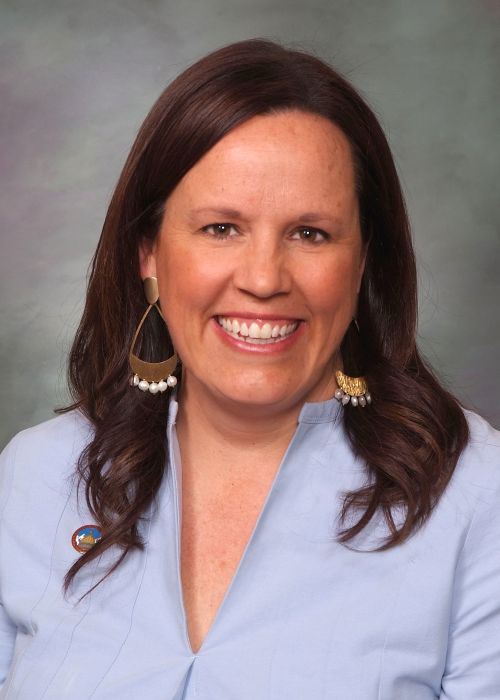
Jennifer Bacon
Jennifer Bacon House · District 7
D
Strong +
100% 11
Lindsay Gilchrist
Lindsay Gilchrist House · District 8
D
Strong +
100% 11
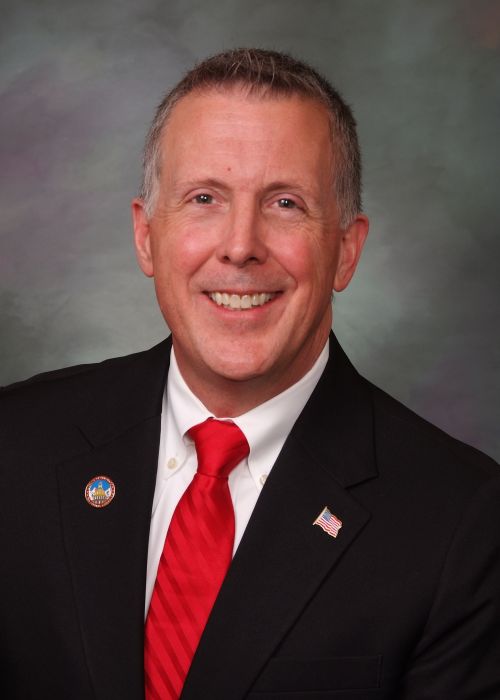
Andy Boesenecker
Andy Boesenecker House · District 53
D
Strong +
100% 7
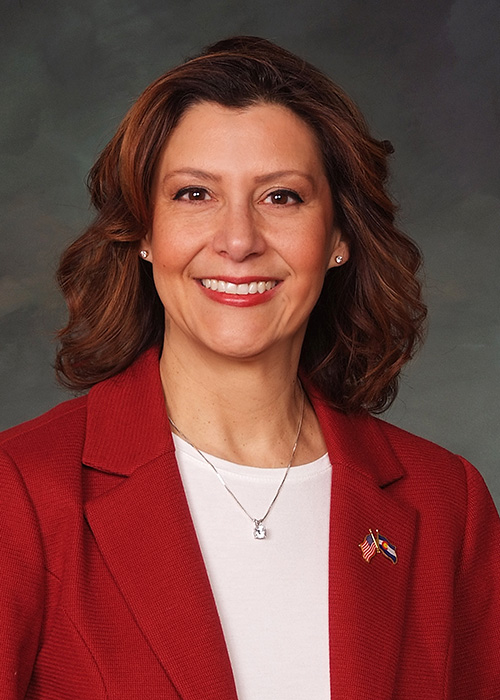
Brianna Titone
Brianna Titone House · District 27
D
Strong +
100% 7
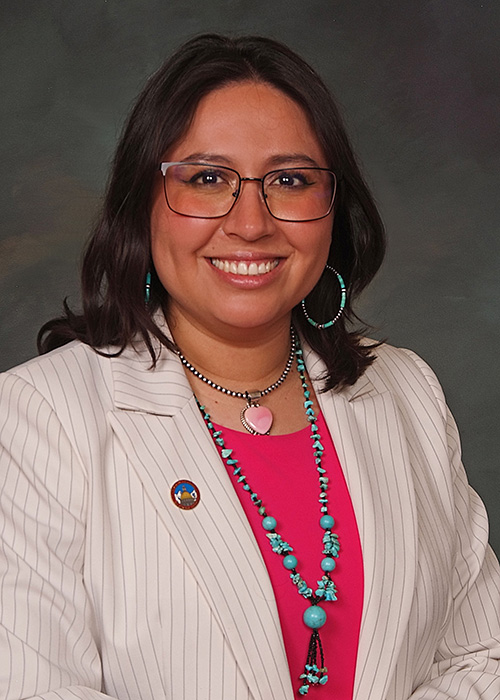
Elizabeth Velasco
Elizabeth Velasco House · District 57
D
Strong +
100% 7
Lori Garcia Sander
Lori Garcia Sander House · District 65
R
Strong −
0% 11
Dusty Johnson
Dusty Johnson House · District 63
R
Strong −
0% 10
Scott Bottoms
Scott Bottoms House · District 15
R
Strong −
0% 7
Max Brooks
Max Brooks House · District 45
R
Strong −
0% 5
Brandi Bradley
Brandi Bradley House · District 39
R
Strong −
0% 4
Showing 1–10 of 11 bills

All education bills

passed · Colorado · Senate May 20, 2026

SJR 23: Recognize Young Americans Bank

SJR 23 is a recognition bill that formally commends Young Americans Bank and the Young Americans Center for Financial Education for their long-term work in teaching financial literacy to students in Colorado. The measure highlights how these organizations provide real-world banking experiences and educational programs that support the state's new high school financial literacy requirements. This legislative action does not change any laws or allocate funding; instead, it simply acknowledges the contributions of these specific institutions to youth economic education.
Sub-Topics K-12 Education
in committee · Colorado · Senate Apr 20, 2026

SM 1: High-Stakes Standardized Testing

This bill is a memorial urging the U.S. Congress to end federal mandates that tie public school funding and accountability to high-stakes standardized testing. It argues that these tests have failed to improve student outcomes while wasting taxpayer money and reducing time for other learning activities. The legislation calls for restoring local control over education and redirecting funds toward evidence-based supports like smaller class sizes, better teacher pay, and mental health services. Additionally, it requests that Congress repeal punitive consequences based on test scores and allow states to use alternative assessment methods.
signed · Colorado · House May 28, 2026

HB 1353: Student State Assessment in Social Studies

The act eliminates the requirement for the department of education (department) to administer a state assessment in social studies to elementary school students and specifies that the department is only required to administer a state assessment in social studies to students enrolled in seventh grade in a public school.     The act also eliminates the requirement that the department administer a state assessment in social studies in a representative sample of public schools each year.     The act reduces by the appropriation made in the annual general appropriation act for the 2026-27 state fiscal year to the department of education from the state education fund for the statewide assessment program by $302,835.(Note: This summary applies to this bill as enacted.)
signed · Colorado · House Jun 3, 2026

HB 1416: Transfers to General Fund & Colorado Economic Development Fund

The act requires the state treasurer to transfer $1.2 million from the universal high school scholarship cash fund (fund) to the Colorado economic development fund and $2.3 million from the fund to the general fund on June 30, 2026.(Note: This summary applies to this bill as enacted.)
signed · Colorado · Senate Jun 4, 2026

SB 170: Task Force to Expand Effective Public Schools

The act creates the access to opportunity task force (task force) to study and report on how to expand access to effective public schools to address opportunity gaps.     The act requires the task force to report its findings and recommendations to the education committees of the house of representatives and the senate, the governor, the state board of education, the commissioner of education, and the department of education on or before January 1, 2027. If the first meeting of the task force is not until after July 31, 2026, then the report deadline is 5 months after the task force's first meeting.     The act specifies that the task force will only conduct a study and prepare a report if the department of education receives sufficient gifts, grants, and donations.(Note: This summary applies to this bill as enacted.)
passed both · Colorado · Senate May 20, 2026

SB 135: State Public K-12 Education Funding

The act requires the secretary of state to refer a ballot issue at the November 2026 general election to seek voter approval for the state, beginning in the 2026-27 state fiscal year, to retain and spend an amount of state revenue equal to the amount of state public K-12 education funding in excess of the limitation on state fiscal year spending and to increase state public K-12 education funding by up to 2% per year for 10 years.     The act directs legislative council staff to determine the amount of state public K-12 education funding and describes how legislative council staff will make that determination.     The act creates a positive factor to increase state public K-12 education funding. The amount of the positive factor compounds annually for 10 years. The positive factor for the 2026-27 budget year is 2% of the program foundation calculated for the 2025-26 budget year. For the 2027-28 through 2034-35 budget years, it is the sum of 2% of the prior year's program foundation plus the prior year's positive factor. For the 2035-36 budget year and beyond, it is the sum of 2% of the 2034-35 program foundation plus the 2034-35 positive factor.     A district's share of the positive factor is calculated proportionally based on the district's total program under the new school finance formula relative to the statewide total program.     A district may only use its positive factor funding for increasing teacher pay, improving teacher retention, lowering class sizes, and increasing access to career and technical courses.     For the 2026-27 state fiscal year, the children's account consists of an amount of money equal to the amount of state revenues that the state retains for a given fiscal year pursuant to voter approval of the act. For state fiscal years commencing on or after July 1, 2027, the account consists of that same amount minus an amount equal to the total dollar amount of warrants issued by the state treasurer to reimburse local governments for property tax exemptions. Money in the account must first be spent to pay districts their positive factor, then any remaining funds are appropriated for disability services and school services and to increase annual contact hours, and finally to programs prioritizing child care and full-day preschool.     The act directs the state auditor to conduct and publish a report on excess state revenues for each state fiscal year that the state retains and spends state revenues in excess of the limitation on state fiscal year spending. That report must include descriptions of:The amount of state revenues that the state retained and spent that would otherwise have been in excess of the limitation on state fiscal year spending; andHow the state expended the state revenues that the state retained and spent that would otherwise have been in excess of the limitation on state fiscal year spending.     Beginning August 1, 2027, the act requires each local education provider to post, online for free public access in a format that can be downloaded and sorted, its actual expenditures of any positive factor received.     Lastly, the act updates provisions regarding the expanded earned income tax credit, the family affordability tax credit, and the affordable housing financing fund to ensure that voter approval of the act does not adversely impact those programs.(Note: This summary applies to this bill as enacted.)
signed · Colorado · House Jun 3, 2026

HB 1193: Vision Tests for Pre-Kindergarten Students

The act requires that school districts test the vision of students in pre-kindergarten, in addition to testing the vision of students in kindergarten and the first, second, third, fifth, seventh, and ninth grades.     The act updates terminology by replacing the word 'sight' with the word 'vision'.(Note: This summary applies to this bill as enacted.)
signed · Colorado · House Jun 1, 2026

HB 1141: Discriminatory Practices in Public Schools

The act clarifies that an educational institution denies a person the full and equal enjoyment of a place of public accommodation when the educational institution:On the basis of a protected class, excludes a student from participation in, denies a student the benefits of, or otherwise subjects a student to discrimination in any of the educational institution's programs or activities;Denies educational services, benefits, or opportunities to a student or group of students by treating them differently from a similarly situated student who is, or group of students who are, part of a different subgroup of students within the same protected class; orHas actual notice that a hostile environment based on a protected class exists at the educational institution but fails to take prompt and effective steps reasonably calculated to eliminate the hostile environment, end the harassment that gave rise to the hostile environment, and prevent the harassment from recurring.     The act adds pregnancy and parental status as characteristics that may constitute a protected class for the purpose of 'harassment or discrimination' at an elementary or secondary public school.     The act requires each public institution of higher education (institution) to designate an individual to serve as the Title VI coordinator for the institution. The Title VI coordinator is responsible for ensuring the institution's compliance with the requirements of Title VI of the federal 'Civil Rights Act of 1964', enforcing the institution's Title VI grievance procedures, identifying institutional issues related to Title VI compliance, and aggregating and making publicly available data about alleged violations of Title VI at the institution.(Note: This summary applies to this bill as enacted.)
Sub-Topics K-12 Education
signed · Colorado · House May 4, 2026

HB 1050: Optional Individualized Readiness Plan for School

Under current law, a local education provider is required to ensure that a preschool or kindergarten student receives an individualized readiness plan (plan). The act makes it optional for local education providers to provide plans to students who demonstrate proficiency on specified assessment domains and the kindergarten reading assessment, unless the student's parent requests a plan.     Under current law, a local education provider is required to annually provide information concerning assessments to students' parents. The act requires this written notice to include:The results of the student's specified assessment domains and kindergarten reading assessment;If applicable, information explaining that because of the student's assessment results, the local education provider is not required, and does not intend, to provide a plan for the student; andLanguage indicating that the student's parent may request a plan.     Under current law, the department of education is required to submit an annual report to the education committees of the house of representatives and the senate concerning specified educational accountability requirements. One of the reporting requirements concerns the level of school readiness demonstrated by students enrolled in kindergarten. The act requires the department to report this information on a statewide basis and to disaggregate the information based on specific characteristics.(Note: This summary applies to this bill as enacted.)
signed · Colorado · House Jun 2, 2026

HB 1028: Second Language Educational Program for High School Students

Current law provides for a diploma endorsement of biliteracy by completing certain educational requirements in English in addition to a second language. The act changes the educational requirements for the biliteracy program and creates a diploma endorsement for bilingualism for graduating high school students.     The act allows high school students in local education providers that do not offer the biliteracy or the bilingualism program to access the program through other local education providers or a state institution of higher education. If the student's local education provider does not offer and chooses not to establish a program that offers the endorsement that the student is seeking, the student's local education provider may enter into an agreement with another local education provider or state institution of higher education that offers the endorsement that the student is seeking.     A local education provider or state institution of higher education may charge a fee to provide the diploma endorsement program. The fee must reflect the actual and indirect costs of running the diploma endorsement program. The enrolled student's local education provider must pay the fee on behalf of the student.(Note: This summary applies to this bill as enacted.)
Sub-Topics K-12 Education
Showing 1 to 10 of 11 bills
1 2 Next