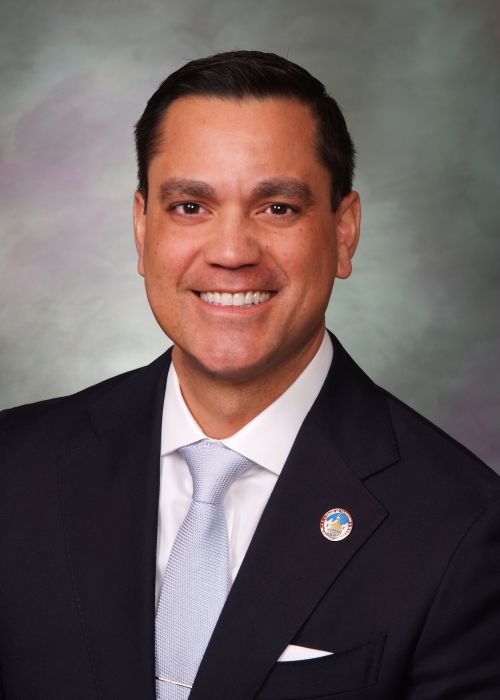
SJR 23 is a recognition bill that formally commends Young Americans Bank and the Young Americans Center for Financial Education for their long-term work in teaching financial literacy to students in Colorado. The measure highlights how these organizations provide real-world banking experiences and educational programs that support the state's new high school financial literacy requirements. This legislative action does not change any laws or allocate funding; instead, it simply acknowledges the contributions of these specific institutions to youth economic education.
This bill designates April 9, 2026, as "Home Education Day" in Colorado to honor parents who educate their children at home. It does not change any laws or affect how education is administered but serves as a symbolic recognition of home schooling within the state. The resolution highlights the number of home-educated students in Colorado and the estimated financial savings to taxpayers associated with this educational choice. Ultimately, the measure is a ceremonial gesture that celebrates home educators without altering existing policies or regulations.
HJR 1028 is a joint resolution that declares the Colorado House of Representatives' intent to honor a $2 million investment in school funding studies by creating a multi-year plan to address their findings. The bill directs the legislature to review the recommendations from two recent studies, which found that current school funding levels are inadequate and teacher salaries are too low, and to decide which study's methodology to follow for implementation. It requires the development of a structured plan that includes revenue triggers to phase in changes aimed at improving school funding equity and teacher compensation.
This bill is a memorial urging the U.S. Congress to end federal mandates that tie public school funding and accountability to high-stakes standardized testing. It argues that these tests have failed to improve student outcomes while wasting taxpayer money and reducing time for other learning activities. The legislation calls for restoring local control over education and redirecting funds toward evidence-based supports like smaller class sizes, better teacher pay, and mental health services. Additionally, it requests that Congress repeal punitive consequences based on test scores and allow states to use alternative assessment methods.
The act changes the requirement for an independent evaluation of the use of 'Colorado Reading to Ensure Academic Development Act' (READ Act) money from an annual requirement to a biennial requirement. The act adds a requirement that the Colorado department of education post an annual report on its website that summarizes data from local education providers on their reading curricula; programs, services, and supports; and student progress and includes any department input on proposed program changes. The act reduces the appropriation made in the annual general appropriation act for the 2026-27 state fiscal year to the department of education from the state education fund for the early literacy program external evaluation by $750,000.(Note: This summary applies to this bill as enacted.)
The act eliminates the requirement for the department of education (department) to administer a state assessment in social studies to elementary school students and specifies that the department is only required to administer a state assessment in social studies to students enrolled in seventh grade in a public school. The act also eliminates the requirement that the department administer a state assessment in social studies in a representative sample of public schools each year. The act reduces by the appropriation made in the annual general appropriation act for the 2026-27 state fiscal year to the department of education from the state education fund for the statewide assessment program by $302,835.(Note: This summary applies to this bill as enacted.)
The concurrent resolution submits a constitutional amendment to the voters of the state at the 2026 general election that adds to the nonexclusive list of inalienable rights of all persons the right to direct the upbringing, education, and care of their children.(Note: This summary applies to this concurrent resolution as introduced.)
Tags
Children
The act extends to July 1, 2027, certain requirements in existing law related to money appropriated to the Auraria higher education center (AHEC) for operational costs, including a requirement to use the money in accordance with baseline service level agreements entered into by AHEC's constituent institutions.(Note: This summary applies to this bill as enacted.)
In current law, a person who is a member of the Colorado National Guard who is accepted for enrollment at a designated institution of higher education (member) has all their tuition costs waived. All tuition waiver costs are currently funded by the state from money in the Colorado National Guard tuition fund. The act changes the funding mechanism of the Colorado National Guard tuition waiver program by requiring each designated institution of higher education to waive the remaining balance of a member's tuition cost in excess of the amount of any private, state, or federal financial assistance received. The act requires the department of military and veterans affairs to reimburse each institution for 50% of the cost of tuition waived by the institution and requires the general assembly to appropriate money to the Colorado National Guard tuition fund to cover the reimbursement.(Note: This summary applies to this bill as enacted.)
The act makes optional an appropriation to comply with matching requirements under the federal 'Richard B. Russell National School Lunch Act' and allows the amount to be appropriated from the healthy school meals for all program cash fund. The act allows money for administration of the summer electronic benefits transfer for children program to be appropriated from the healthy school meals for all program cash fund. The act makes an appropriation for the start smart nutrition program optional, repeals the start smart nutrition program cash fund, transfers the start smart nutrition program cash fund balance to the general fund, and allows an appropriation for the start smart nutrition program to be made from the healthy school meals for all program cash fund. The act makes an appropriation for the child nutrition school lunch protection program optional and allows an appropriation for the child nutrition school lunch protection program to be made from the healthy school meals for all program cash fund. Under current law, the department of education administers a local school food purchasing program and a local school food purchasing technical assistance and education grant program (legacy local school food programs) that are distinct from the local school food purchasing program and technical assistance and education grant programs within the 'Healthy School Meals for All Act' (HSMA local school food programs). The act permits the general assembly to appropriate money for the legacy local school food programs if the healthy school meals for all program cash fund does not fully fund the HSMA local school food programs. The act appropriates $3,001,741 from the healthy school meals for all program cash fund to the department of education for the affected programs. The act reduces appropriations for the 2026-27 state fiscal year to the department of education for the affected programs by $3,839,685, of which $229,097 is from the general fund and the remainder from various cash funds.(Note: This summary applies to this bill as enacted.)