

(1) Existing law requires the Secretary for Environmental Protection to implement a unified hazardous waste and hazardous materials management regulatory program, known as the unified program. Existing law requires every county to apply to the secretary to be certified to implement the unified program, and authorizes a city or local agency that meets specified requirements to apply to the secretary to be certified to implement the unified program, as a certified unified program agency. Existing law authorizes a state or local agency that has a written agreement with a certified unified program agency, and is approved by the secretary, to implement or enforce one or more of the unified program elements as a participating agency. Existing law requires the certified unified program agency in each jurisdiction, in conjunction with participating agencies, to develop and implement a single, unified inspection and enforcement program to ensure coordinated, efficient, and effective enforcement of the unified program and any local ordinance or regulation pertaining to the handling of hazardous waste or hazardous materials. Existing law requires the secretary to establish a statewide information management system capable of receiving all data collected by the unified program agencies and reported by regulated businesses and to make all nonconfidential data available on the internet. This bill would prohibit a city or county, or city and county, from approving a building permit for a new reactive chemical storage facility, as defined, with the potential for an explosion, including, but not limited to, due to thermal runaway reaction, that may cause injury or death, unless the proposed facility has a backup cooling system or other contingency system approved by the unified program agency and is not adjacent to a home. The bill would require a city council or county board of supervisors, before approving a building permit for that purpose, to provide the public with notice and the opportunity to comment. If a city or county, or city and county, approves a building permit for that purpose, the bill would require the city or county, or city and county, to notify the Office of Emergency Services and the Office of Environmental Health Hazard Assessment. The bill would make the approval of a building permit for certain reactive chemical storage facilities ineligible for a specified exemption from the California Environmental Quality Act. The bill would require a city, county, or city and county to include in the next revision of its emergency operations plan a specific designation for which emergency response department will serve as the lead agency for responding to hazardous materials incidents. By imposing additional requirements on cities and counties, the bill would impose a state-mandated local program. The bill would require the Office of Environmental Health Hazard Assessment to consider reactive chemical storage facilities as a factor in identifying disadvantaged communities for various purposes under existing law. This bill would revise the requirement for the secretary to make available on the internet all nonconfidential data collected by the unified program agencies and reported by regulated businesses to specifically authorize the secretary to determine the form and manner of making that data available on the internet. This bill would require the unified program agency in each jurisdiction to routinely conduct an inspection of each reactive chemical storage facility in its jurisdiction no less than once every 3 years. The bill would require the unified program agency to report the results of the inspection to the California Environmental Protection Agency, the Office of the State Fire Marshal, and the Office of Emergency Services. By imposing additional requirements on unified program agencies, the bill would impose a state-mandated local program. (2) Existing law requires the California Environmental Protection Agency to obtain and maintain state delegation of, and to implement, the federal accidental release prevention program, with certain amendments specific to the state. Pursuant to these provisions, a stationary source, as defined, with a process that has a regulated substance present in more than a threshold quantity is required to prepare and submit to the United States Environmental Protection Agency and the unified program agency a risk management plan, unless the unified program agency makes a specified determination to exempt the stationary source from the program. Existing law imposes criminal penalties upon a stationary source that knowingly violates the requirements of the program. This bill would expand the program's definition of "regulated substance" to include methyl methacrylate and would require the California Environmental Protection Agency to adopt a state threshold quantity applicable to methyl methacrylate through regulation. By adding an additional substance to the program, the bill would expand the scope of a crime and impose a state-mandated local program. The bill would provide that a stationary source that stores or uses methyl methacrylate is not eligible for exemption from the program. Because the bill would make changes to provisions enforced by unified program agencies, the bill would impose a state-mandated local program. (3) The bill would include findings that changes proposed by this bill address a matter of statewide concern rather than a municipal affair and, therefore, apply to all cities, including charter cities. (4) The California Constitution requires the state to reimburse local agencies and school districts for certain costs mandated by the state. Statutory provisions establish procedures for making that reimbursement. This bill would provide that with regard to certain mandates no reimbursement is required by this act for specified reasons. With regard to any other mandates, this bill would provide that, if the Commission on State Mandates determines that the bill contains costs so mandated by the state, reimbursement for those costs shall be made pursuant to the statutory provisions noted above.
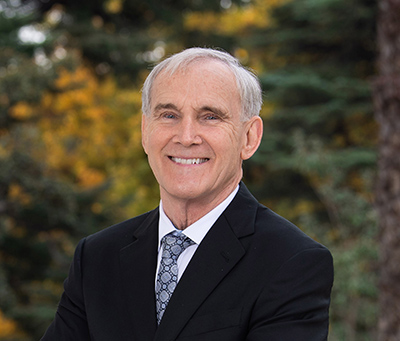
Rep. Steve Bennett
Sponsored bills
Existing law requires the Office of Emergency Services to enter into a joint powers agreement, as specified, with the Department of Forestry and Fire Protection to develop and administer a comprehensive wildfire mitigation program, that, among other things, encourages cost-effective structure hardening and retrofitting that creates fire-resistant homes, businesses, and public buildings. Existing law establishes the California Alternative Energy and Advanced Transportation Financing Authority to provide alternative methods of financing in providing and promoting the establishment of facilities using alternative methods and sources of energy and facilities needed for the development and commercialization of advanced transportation technologies, as provided. This bill would establish the California Wildfire Resilience Loan Program and would require the authority, upon appropriation by the Legislature, to administer the program to provide financial assistance for projects and activities to reduce wildfire-related risks and losses, including home hardening and defensible space improvements, as provided, and would make related changes.
(1) Existing law establishes various grant and loan programs for research, including, among others, the California Institute for Regenerative Medicine, California Firefighter Cancer Prevention and Research Program, and the Public Interest Research, Development, and Demonstration Program. This bill would establish the California Foundation for Science and Health Research within the Government Operations Agency. The bill would require the Secretary of Government Operations to oversee the process of appointing the director of the foundation, and would authorize the Secretary of Government Operations to delegate the task of hiring and determining the salaries, bonuses, and benefits of additional personnel to the director, as specified. The bill would require the director and personnel of the foundation to be responsible for implementing the strategic objectives of the California Foundation for Science and Health Research Council, as described below, administering grants, loans, and contracts awarded by the council, and all other duties as deemed necessary for the operation of the foundation. This bill would create the California Foundation for Science and Health Research and Innovation Acceleration Fund and require the moneys in the fund to be used by the foundation to award grants and make loans to, and enter into contracts with, public or private research companies, universities, academic medical centers, institutes, and organizations for scientific research and development and for certain economic sectors, as specified, in specific areas of research, including, but not limited to, biomedical, behavioral health, and climate research. The bill would also create the California Foundation for Science and Health Research and Innovation Acceleration Benefit Fund, to consist solely of private donations. The bill would make the moneys in the benefit fund available for the same purposes as the California Foundation for Science and Health Research and Innovation Acceleration Fund. This bill would require that, prior to the first grant from the foundation and no later than one year from the date the bill takes effect, the council develop various provisions and requirements to facilitate the foundation's goals of affordability and equitable access. The foundation shall impose various requirements on the grantees, loan recipients, and contractors, as specified, including, among other things, developing strategies to promote equitable access to the subject invention in various specified communities and making the data resulting from the bond-funded research available to the broader scientific community, except in cases involving national security interests. The council shall also establish standards requiring that all grants, awards, and contracts be subject to intellectual property agreements that balance the opportunity for the State of California to benefit from the inventions, technologies, patents, royalties, and licenses that result from research funded by certain public and private grants, as specified. This bill would create the California Foundation for Science and Health Research Council, as specified, which shall be vested with full power, authority, and jurisdiction over the foundation. The bill would require the council to, among other things, develop the strategic objectives and priorities of the foundation and provide the opportunity for public comment on the foundation's priorities, as specified, determine the research projects that will be funded by the California Foundation for Science and Health Research and Innovation Acceleration Fund, develop objectives and opportunities that offer support to early career researchers, and adopt certain regulations and standards, as specified. The bill would also require the council to consider how the foundation's research priorities relate to or support various economic and industry considerations, as specified. The bill would provide that a majority of the members of the council constitutes a quorum for the transaction of any business, for the performance of any duty, or for the exercise of any power of the council, except as otherwise provided. The bill would authorize the council to establish one or more scientific peer review panels consisting of experts in specified fields of research for the purposes of reviewing and prioritizing proposals on the basis of the scientific merit of the proposal, the potential benefit to the health and well-being of the population, natural resources, and environment of the state, and the demonstrated background, training, and expertise of the researchers and investigators to conduct the proposed work. This bill would require all research and development funded by the California Foundation for Science and Health Research and Innovation Acceleration Fund to be conducted under established standards of open scientific exchange, peer review, and public oversight. The bill would require the funds and contracts to be awarded on the basis of the research priorities established for the foundation by the council and the scientific merit of the proposed research, as determined by an open, competitive, scientific peer review process that ensures objectivity, consistency, and high quality. This bill would enact the California Science and Health Research Bond Act, which, if approved by the voters, would authorize the issuance of bonds in the amount of $7,500,000,000, pursuant to the State General Obligation Bond Law, to finance grants and loans to fund research and operate and maintain facilities for research. The bill would provide for the submission of the bond act to the voters at the March 7, 2028, statewide primary election. (2) Existing law establishes prohibitions and penalties with respect to ethical obligations and conflicts of interest for public officials, including a prohibition on engaging in activities that are incompatible with their official duties and a prohibition on being financially interested in a contract made by them in their official capacity or the board of which they are a part. This bill would authorize a council member to participate in a decision to approve or award a grant, loan, or contract for the purpose of research into a disease in which the member or their immediate family member has a personal interest, as specified. The bill would provide that service with specified educational institutions and organizations is not incompatible with a council member's duties. The bill would provide that the prohibition on being financially interested in a contract, as specified, does not apply if the council member recuses themself from a decision to award or approve a grant, loan, or contract that would otherwise be subject to the prohibition. The bill would provide that council members are subject to certain disclosure requirements relating to personal investments and potential conflicts of interest, as specified. (3) Existing law, the Bagley-Keene Open Meeting Act, requires that all meetings of a state body be open and public and all persons be permitted to attend any meeting of a state body, with specified exceptions for authorized closed sessions. This bill would require the Bagley-Keene Open Meeting Act to apply to all meetings of the council and scientific peer review panels, except as specified for when the council or scientific peer review panels meet to consider or discuss specified matters in closed sessions, including matters involving information relating to patients or medical or scientific research subjects, the disclosure of which would constitute an unwarranted invasion of personal privacy. Existing constitutional provisions require that a statute that limits the right of access to the meetings of public bodies or the writings of public officials and agencies be adopted with findings demonstrating the interest protected by the limitation and the need for protecting that interest. This bill would make legislative findings to that effect. (4) This bill would declare that it is to take effect immediately as an urgency statute.
Existing law requires the governing board of each school district to have general control of, and be responsible for, all aspects of the interscholastic athletic policies, programs, and activities in its school district, as provided, and requires the governing board of a school district to ensure that all interscholastic policies, programs, and activities in the school district are in compliance with state and federal law. Existing law authorizes the governing board of a school district to enter into associations or consortia with other governing boards for purposes of governing regional or statewide interscholastic athletics, as provided. Existing law describes the California Interscholastic Federation (CIF) as a voluntary organization that consists of school and school-related personnel with responsibility for administering interscholastic athletic activities in secondary schools and states the intent of the Legislature that the CIF, in consultation with the State Department of Education, implement specified policies relating to interscholastic athletics. Existing law, the 1998 California High School Coaching Education and Training Program, declares the intent of the Legislature to establish a California High School Coaching Education and Training Program, to be administered by school districts with an emphasis on specific components, including, among other components, sports psychology. Existing law requires every high school sports coach to complete, at their own expense, a coaching education program that meets the guidelines established by the California High School Coaching Education and Training Program. This bill would require specified trainings for coaches described in AB 1665 of the 2025–26 Regular Session to cover specified mental-health related topics, including, among other topics, trauma-informed care, as provided, and strategies of creating a positive team culture, as provided. The bill would require the department, on or before September 1, 2027, to identify existing training or develop a model youth athletics behavioral and mental health training, as specified, for persons who serve as coaches in youth sports organizations, both for recreational leagues and competitive or club leagues. The bill would require the department to post the training on its internet website and work with local partners to disseminate the training to appropriate youth athletic leagues, youth coaching entities, and relevant statewide organizations and associations. This bill would incorporate additional changes to Section 35179.1 of the Education Code proposed by AB 1665 to be operative only if this bill and AB 1665 are enacted and this bill is enacted last. This bill would make the operation of its provisions contingent upon the enactment of AB 1665 of the 2025–26 Regular Session.
Existing law prohibits a local agency from imposing a tax, permit fee, or other charge for the privilege of using its streets or highways, other than a permit fee for an extralegal load unless the local agency had imposed the fee prior to June 1, 1989. This bill would explicitly state that a fee, charge, surcharge, or component thereof imposed upon the provider of, or ratepayer for, public services by or for a local agency to recover the cost of street maintenance and repair and other costs associated with the use of its streets, roads, or highways to provide those public services is not a tax, permit fee, or other charge that is prohibited by the provision described above. The bill would provide that nothing in the Vehicle Code prohibits a local agency from imposing or collecting this fee, charge, or surcharge. The bill would delete obsolete references and make other technical changes. The bill would make various findings and declarations.
Existing law establishes the California Community Colleges, the California State University, the University of California, independent institutions of higher education, and private postsecondary educational institutions as the segments of postsecondary education in the state. Existing law establishes various programs that provide financial aid to students attending institutions in each of the segments. This bill would require the California State University, community college districts, and private postsecondary educational institutions and independent institutions of higher education that receive state financial assistance to, and would request the University of California to, for a student who has submitted a specified financial aid application and is a foster youth or former foster youth, as defined, upon the student's initial enrollment at the postsecondary educational institution, either (1) waive the unpaid portion of enrollment fees and costs, or (2) defer the unpaid portion of enrollment fees and costs until the student has received an initial disbursement of the student's financial aid award, as provided. If the postsecondary educational institution is unable to waive or defer costs related to books, supplies, materials, or equipment, the bill would require the institution to provide the student with clear information regarding available campus resources, institutional programs, or community-based assistance to help the student cover those costs. By imposing new duties on community college districts, the bill would impose a state-mandated local program. The California Constitution requires the state to reimburse local agencies and school districts for certain costs mandated by the state. Statutory provisions establish procedures for making that reimbursement. This bill would provide that, if the Commission on State Mandates determines that the bill contains costs mandated by the state, reimbursement for those costs shall be made pursuant to the statutory provisions noted above.
Existing federal law establishes the Supplemental Nutrition Assistance Program (SNAP) , known in California as CalFresh, under which supplemental nutrition assistance benefits allocated to the state by the federal government are distributed to eligible individuals by each county. Existing federal law limits a participant who is an able-bodied adult without dependents (ABAWD) to 3 months of CalFresh benefits in a 3-year period unless that participant has met work participation requirements or is otherwise exempt. Existing state law requires the State Department of Social Services to annually seek a federal waiver of this limitation. Existing state law requires the department to ensure that all recipients subject to the federal ABAWD time limit are permitted to meet the work requirements of the time limit through all forms of work, as specified. Existing federal law, Public Law 119-21, enacted on July 4, 2025, sets forth various changes to SNAP benefits, including the removal of an exemption from the time limit for certain former foster youth under 25 years of age, and the narrowing of an exemption for a household with a dependent under 18 years of age to instead a household with a dependent under 14 years of age, as specified. This bill would specify that an ABAWD participant includes a parent or other member of a household with responsibility for a dependent child 14 years of age or older as a result of Public Law 119-21. The bill would make various statements of legislative intent relating to, among other things, maximizing efforts to retain in the program as many eligible CalFresh recipients as possible, providing for the continuation of food benefits, mitigating harm, and streamlining the verification of exemptions for certain populations, in response to Public Law 119-21, as specified. The bill would state the intent of the Legislature that all exemptions provided by the state and the counties under Public Law 119-21, to the extent permitted by federal law and guidance, remain in effect for any recipient until, at the earliest, the next scheduled redetermination for that recipient, when the exemption is reassessed by the county, unless the automated exemption at redetermination allows for the exemption to continue. The bill would state legislative intent that a recipient not be discontinued from the CalFresh program due to the ABAWD work requirements under Public Law 119-21 before October 1, 2026, or until specified administrative activities are complete, whichever is later. The bill would generally require the department to provide data to certain legislative committees and all 58 county welfare departments on the total number of CalFresh recipients subject to, exempted from, or discontinued from the program potentially due to, the CalFresh ABAWD time limit and corresponding work requirements, as specified. Under the bill, prior to the first 2 reports, the data would be furnished to impacted counties with a minimum of 4 weeks for review prior to public reporting in order to ensure accuracy. The bill would also require the department to provide data on the total number of CalFresh recipients discontinued from the program, as specified. The bill would require the department to adopt, provide instructions to counties on, and automate for, compliance with CalFresh work requirements, in accordance with federal law, for individuals participating in extended foster care and who have been determined to be working at least 80 hours per month. To the extent that the bill would increase CalFresh eligibility for certain populations and expand county duties, the bill would impose a state-mandated local program. Existing law establishes the California Work Opportunity and Responsibility to Kids (CalWORKs) program, under which, through a combination of federal, state, and county funds, each county provides cash assistance and other benefits to qualified low-income families. Under existing law, in addition to specified CalWORKs aid amounts, a family is entitled to receive an allowance for recurring special needs relating to, among other things, food, utilities, and transportation. Under existing law, the allowance for each family per month is prohibited from exceeding that amount resulting from multiplying the sum of $10 by the number of recipients in the family who are eligible for assistance. This bill would increase the maximum threshold for the allowance by switching the factor from $10 to $15 within the formula. Existing law continuously appropriates moneys from the General Fund to defray a portion of county costs under the CalWORKs program. This bill would instead provide that the continuous appropriation would not be made for purposes of the bill. The California Constitution requires the state to reimburse local agencies and school districts for certain costs mandated by the state. Statutory provisions establish procedures for making that reimbursement. This bill would provide that, if the Commission on State Mandates determines that the bill contains costs mandated by the state, reimbursement for those costs shall be made pursuant to the statutory provisions noted above. This bill would declare that it is to take effect immediately as an urgency statute.
The Secretary of State is the chief elections officer of the state, and the Attorney General is the chief law officer of the state. Existing law requires a state or local agency that files or is served with an elections-related claim arising under federal law to provide written notice to the Secretary of State and the Attorney General within 3 court days. Existing law requires a state or local agency that intends to enter into a settlement, consent decree, or other court-approved agreement related to the claim to provide a draft copy of the settlement, consent decree, or agreement to the Secretary of State and the Attorney General at least 14 court days before entering into it. This bill would require a local agency, political subdivision, or elections official to provide notice to the Secretary of State and the Attorney General immediately, but no later than one calendar day, after becoming aware of any warrant, subpoena, or active law enforcement investigation pertaining to any election records or certified voting technology under their custody or control. The bill would authorize the Secretary of State or the Attorney General to intervene in, or initiate, any court proceedings to challenge a warrant or subpoena on any valid grounds or seek any other appropriate relief. The bill would repeal these provisions on January 1, 2030. By increasing the duties of local elections officials, this bill would create a state-mandated local program. The California Constitution requires the state to reimburse local agencies and school districts for certain costs mandated by the state. Statutory provisions establish procedures for making that reimbursement. This bill would provide that, if the Commission on State Mandates determines that the bill contains costs mandated by the state, reimbursement for those costs shall be made pursuant to the statutory provisions noted above. This bill would declare that it is to take effect immediately as an urgency statute.
The California Prompt Payment Act requires a state agency that awards a grant or that acquires property or services pursuant to a contract to make timely payments pursuant to the grant or contract. If a state agency or the Controller fails to take certain timely actions and payment is not issued within 45 calendar days from the state agency receipt of an undisputed invoice, the act requires the state agency or the Controller, as applicable, to pay certain penalties. The act provides an exception to certain penalty provisions applicable to services or equipment under the Medi-Cal program if the grant or contract was awarded to a nonprofit organization in an amount less than $500,000. The act defines the term "grant" to mean a signed final agreement between any state agency and a local government agency or organization authorized to accept grant funding for victim services or prevention programs administered by any state agency or restoration activities performed by a resource conservation district. The act also defines "nonprofit service organization" to mean a nonprofit entity that is organized to provide services to the public, but the act does not use that term in its provisions. This bill would revise the definition of "grant" to also mean a signed final agreement between a state agency and a nonprofit organization and would delete the $500,000 exception described above. The bill would remove the definition of "nonprofit service organization," and instead would define "nonprofit organization" to mean an organization that qualifies as an exempt organization under Section 501(c) (3) of the Internal Revenue Code. The act authorizes a state agency to dispute for reasonable cause an invoice, refund request, or claim for Medi-Cal reimbursement, as specified, and defines "reasonable cause" to mean a determination by a state agency that any of certain conditions exist, including that there is a discrepancy between the invoice or claimed amount and either the claimant's actual delivery of property or services to the state or the state's acceptance of those deliveries. This bill would revise the condition described above to require the discrepancy to be of an amount greater than $250 or 5% of the invoice or claimed amount, whichever is less, in order to qualify as a reasonable cause for the state agency to dispute it. Existing law establishes the Department of General Services in the Government Operations Agency for purposes of providing centralized services of state government. Existing law establishes various state grant programs. Existing federal law provides uniform administrative requirements, cost principles, and audit requirements for federal grant awards to nonfederal entities and provides guidelines for determining direct and indirect costs, as defined, charged to federal awards. This bill would require a state agency administering a grant program to reimburse a grantee's indirect costs, as defined, at one of specified rates as requested by the grantee in their grant program application, not to exceed 35% of the total grant award, unless prohibited by any other state or federal law. The bill would authorize the establishment of indirect cost pools, as specified. The bill would make these provisions applicable to a grant program administered by a state agency, regardless of whether the funding source is state funds, federal funds, or a combination thereof.
Existing law requires the State Energy Resources Conservation and Development Commission (Energy Commission) to prescribe, by regulation, standards for minimum levels of operating efficiency, and authorizes the Energy Commission to prescribe other cost-effective measures, to promote the use of energy- and water-efficient appliances whose use requires a significant amount of energy or water. Existing law prohibits the sale, and the offering for sale, of new appliances unless their manufacturers certify that they comply with the standards in effect at the time the appliances are manufactured. Existing law defines "sold or offered for sale in the state" to mean any sale of or offer to sell an appliance for end use in the state, regardless of the seller's physical location. This bill would expand the above-described provisions to also include the rental, importation, distribution, or lease of, or an offer for the rental, importation, distribution, or lease of, those appliances, as provided.