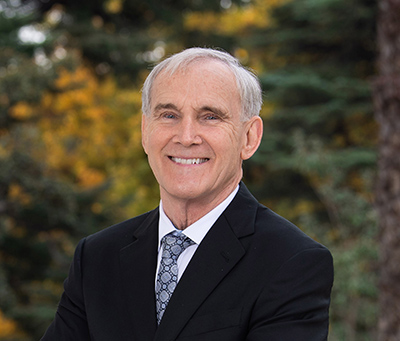
Photo of Steve Bennett
D California House · District 38 On the 2026 ballot

Rep. Steve Bennett

Compare
Total votes
13,616
all sessions
Attendance
96%
491 missed
Near the chamber average
With party
99%
of cast votes
Near the chamber average
Bipartisan score
0%
crosses aisle rarely
Near the chamber average
Sponsored
1,250
bills & resolutions
Near the chamber average
Committees
6
assignments
1,250 bills and resolutions

Sponsored bills

Total
1,250
Primary
102
Co-sponsor
1,148
This page
1,250
matching current filters
Primary AB 1934
Passed · California House · Lead sponsor
State Fire Marshal: home hardening certification program implementation plan.

Existing law requires the Office of the State Fire Marshal to develop and make available on its internet website a Wildland-Urban Interface Fire Safety Building Standards Compliance training intended for use in the training of local building officials, builders, and fire service personnel, as specified. Existing law authorizes the Office of the State Fire Marshal to allow certification of contractors who conduct defensible space, home hardening, fuel reduction, roadside clearance, and other contracting activities for wildlife resiliency efforts and who have completed specified training programs. Existing law requires the Office of the State Fire Marshal to develop and update a Wildland-Urban Interface Products listing of products and construction assemblies that comply with prescribed regulations regarding building in a wildland-urban interface area. Existing law authorizes the Office of the State Fire Marshal to expend funds from the Building Standards Administration Special Revolving Fund, upon an appropriation by the Legislature, for the purposes of researching and developing the products listing and the educational and training provisions. Existing law requires the Office of the State Fire Marshal to establish the State Fire Marshal's Wildfire Mitigation Advisory Committee. This bill would require, on or before January 1, 2028, the State Fire Marshal's Wildfire Mitigation Advisory Committee to develop an implementation plan for a home hardening certification program that identifies home hardening measures, including defensible space, that can be voluntarily implemented during renovation or property improvement projects, or both, to substantially reduce the risk of loss during a fire and bring existing building stock into alignment with state building standards for wildland-urban interface areas. The bill would require the committee, in developing the implementation plan for the home hardening certification program, to provide specified recommendations. The bill would authorize the Office of the State Fire Marshal to expend funds from the Building Standards Administration Special Revolving Fund, upon an appropriation by the Legislature, for the purposes of developing the implementation plan for the home hardening certification program. The bill would require the committee, on or before January 1, 2028, to provide a report to specified legislative committees on its findings and recommendations pursuant to these provisions. The bill would require, on or before January 1, 2029, the State Fire Marshal to establish the home hardening certification program based on the recommendations made by the Wildfire Mitigation Advisory Committee.

Passed Aug 30, 2026 0 co-sponsors
Co-sponsor AB 1699
Passed · California House · Co-sponsor
Good Fire Act: Prescribed Fire Liability Pilot Program: burn bosses: California Environmental Quality Act.

Existing law establishes, until January 1, 2028, the Prescribed Fire Liability Pilot Program, to be administered by the Department of Forestry and Fire Protection, to increase the pace and scale of the use of prescribed fire and cultural burning and to reduce barriers for conducting prescribed fires and cultural burning. Existing law creates the Prescribed Fire Claims Fund in the State Treasury to support coverage for losses from prescribed fires and cultural burning by nonpublic entities, such as cultural fire practitioners, private landowners, and nongovernmental entities. Under existing law, moneys in the fund are under the control of the department, and the department or a contracted third-party administrator is authorized to direct payments for claims from the fund, consistent with specified guidelines adopted by the department. These guidelines include, among other things, (1) a requirement that an eligible claim relate to either a prescribed fire conducted or supervised by a burn boss, as defined, or a cultural burn conducted or supervised by a cultural fire practitioner, and (2) a requirement that a claim shall not be paid from the fund unless the department reviewed and approved a burn plan before the prescribed fire or cultural burning. Existing law requires, upon order of the Department of Finance, the $20,000,000 appropriated to the Department of Forestry and Fire Protection by the Legislature in the Budget Act of 2021 be transferred into the fund, and provides that all moneys deposited or transferred into the fund be continuously appropriated to the department for these purposes. By Executive Order N-35-25, Governor Gavin Newsom suspended the limitation on public and governmental agencies enrolling in the Prescribed Fire Liability Pilot Program to the extent that the limitation would prohibit resource conservation districts and volunteer fire departments or districts from such enrollment. This bill would establish the Good Fire Act, which would indefinitely extend the Prescribed Fire Liability Program. The bill would explicitly state that the Prescribed Fire Claims Fund shall support coverage for losses from prescribed fires and cultural burning on any lands within the state. The bill would also expand program eligibility by changing the entities who may receive coverage for losses from prescribed fires and cultural burning from nonpublic entities to individuals and entities other than the department or the federal government, as provided. By extending the term of a continuous appropriation and authorizing the expenditure of continuously appropriated funds for new purposes, the bill would make an appropriation. This bill would eliminate the requirement for department approval for a plan reviewed and approved by a burn boss, and would require a burn plan to be submitted to the claims fund portal before ignition. The bill would also require the guidelines to include methods for prioritizing broadcast burns and burns by non-public individuals or entities or California Native American tribes in the event the fund is oversubscribed. Within one year of a claim being paid from the fund, the bill would require the department to submit a report to the Legislature regarding the claim process and propose statutory changes related to the fund, as provided. Existing law requires the State Fire Marshal, with the involvement of the Statewide Training and Education Advisory Committee, to develop a curriculum for, or amend into an existing curriculum, a certification program for burn bosses who possess authority to engage in a prescribed burning operation and to enter into the necessary contracts related to a prescribed burning operation. Existing law requires this curriculum to provide for the initial certification as well as the continuing education of burn bosses. Under existing law, specified civil liability protections and eligibility for claims from the Prescribed Fire Claims Fund extend to prescribed burns that, among other things, are reviewed and approved by a burn boss certified pursuant to these provisions, as provided. This bill would require, as part of the continuing education of burn bosses, the State Fire Marshal to require recertification no sooner than every 3 years. The bill would also require the department to consider methods to increase the pool of available instructors for the certification program, including the use of non-department instructors. The bill would require the department, in consultation with the Statewide Training and Education Advisory Committee, to develop a mechanism to allow specified individuals to be designated as a burn boss. The bill would authorize these individuals certified pursuant to this process to use the above-described recertification process to maintain currency. Existing law authorizes an entity that owns or controls brush-covered land, forest lands, woodland, grassland, shrubland, or a combination of those types of land within a state responsibility area to apply to the Department of Forestry and Fire Protection for permission to use prescribed burning for certain public purposes. Existing law requires the department, upon receipt of an application, to inspect the land in company with the applicant to determine whether a permit shall be granted, as provided. By Executive Order N-35-25, Governor Gavin Newsom suspended the above-described requirement that the department conduct a site visit or inspection before issuing a state burn permit for projects undertaken by burn bosses or cultural fire practitioners. This bill would authorize the department to waive the inspection requirement or modify the standard precautions for an application submitted by specified individuals. The California Environmental Quality Act (CEQA) requires a lead agency, as defined, to prepare, or cause to be prepared, and certify the completion of an environmental impact report on a project that it proposes to carry out or approve that may have a significant effect on the environment or to adopt a negative declaration if it finds that the project will not have that effect. CEQA also requires a lead agency to prepare a mitigated negative declaration for a project that may have a significant effect on the environment if revisions in the project would avoid or mitigate that effect and there is no substantial evidence that the project, as revised, would have a significant effect on the environment. Existing law exempts from CEQA specified wildfire risk reduction projects, including, among other projects, projects consisting of a prescribed fire or fuel reduction to reduce wildfire risk by reestablishing the fire return interval appropriate to the ecosystem for biodiversity or other benefits, excluding projects located on coastal sage scrub habitat or any other sensitive habitat. By Executive Order N-35-25, Governor Gavin Newsom suspended the requirements of CEQA as applied to the Department of Forestry and Fire Protection to the extent necessary for the department to assist local agencies and beneficial fire practitioners to complete beneficial fire projects that limit dangerous wildfire conditions to the greatest extent feasible. This bill would exempt from CEQA those actions taken by the department to assist in the implementation of prescribed fire or cultural burning projects that do not otherwise require compliance with CEQA. Existing law establishes various grant programs for purposes of wildfire prevention. This bill would require a state agency, department, board, or commission that has awarded grant funds for a project that includes the preparation for, or implementation of, a beneficial fire project to include as an allowable expense of the grant the payment of overtime or double rates of pay to employees or contractors who prepare for or implement the beneficial fire project when such expenses are necessary for the implementation of the beneficial fire project. Existing law authorizes the Director of Forestry and Fire Protection to provide grants to, or enter contracts or other cooperative agreements with, specified entities for the implementation and administration of projects and programs to improve forest health and reduce greenhouse gas emissions. Existing law authorizes the director to authorize advance payments and requires grantees who receive advance payments to file an accountability report with the department 4 months from the date of receiving the funds and every 4 months thereafter. This bill would instead require grantees who receive advance payments to file an accountability report within 6 months from the date of receiving the funds and every 6 months thereafter. This bill would incorporate additional changes to Section 4799.05 of the Public Resources Code proposed by AB 2513 to be operative only if this bill and AB 2513 are enacted and this bill is enacted last. This bill would declare that it is to take effect immediately as an urgency statute.

Passed Aug 30, 2026 1 co-sponsor
Primary AB 1960
Passed · California House · Lead sponsor
Wildfire Prevention Grants Program: wildfire mitigation validation.

Existing law requires the Department of Forestry and Fire Protection to establish a local assistance grant program for fire prevention and home hardening education activities in California and extends eligibility for grants to, among others, local agencies, resource conservation districts, fire safe councils, the California Conservation Corps, certified community conservation corps, Native American tribes, and qualified nonprofit organizations. Existing law requires the department, on or before December 31, 2023, and annually thereafter, to post on its internet website certain information regarding hazardous fuel reduction and vegetation management projects funded or conducted by the department for the preceding fiscal year, including projects funded under the department's Wildfire Prevention Grants Program, as provided. Existing law requires the Director of Forestry and Fire Protection to establish a statewide program to allow qualified entities, as defined, who have completed a specific training program developed and administered by the department to support and augment the department in its defensible space and home hardening assessment and education efforts. This bill would require the department, in consultation with the State Fire Marshal's Wildfire Mitigation Advisory Committee, to establish a wildfire mitigation validation program to provide voluntary official recognition to a community that achieves progress toward community-scale wildfire preparedness and mitigations. The bill would require the department, in consultation with the committee, to (1) set the wildfire mitigations, including, among other things, home hardening and defensible space requirements, and (2) set the minimum percentage of mitigations required to achieve recognition and set increases in those percentages, as provided. The bill would authorize the department, commencing with the 2028–29 fiscal year, to disburse funds appropriated for the Wildfire Prevention Grants Program to recognized communities that partner with fire safe councils or other eligible groups, as provided. The bill would authorize the department to prioritize disadvantaged recognized fire communities pursuant to its established procedures for prioritizing disadvantaged applicants for the Wildfire Prevention Grants Program.

Passed Aug 30, 2026 0 co-sponsors
Co-sponsor AB 1709
Passed · California House · Co-sponsor
Covered platforms: age restriction: e-Safety Advisory Commission.

Existing law, the Protecting Our Kids from Social Media Addiction Act, prohibits an operator of an addictive internet-based service or application from providing an addictive feed, as defined, to a user unless the operator does not have actual knowledge that the user is a minor, as specified, or the operator has obtained verifiable parental consent to provide an addictive feed to the user who is a minor. Existing law, the Digital Age Assurance Act, beginning January 1, 2027, requires a person who owns, maintains, or controls a software application, as defined, to request age bracket data sent by a real-time secure application programming interface or operating system with respect to a particular user from an operating system provider or a covered application store when the application is downloaded and launched. This bill would prohibit a covered platform, as defined, from providing an addictive feature, as defined, to a user who is under 16 years of age and would require a covered platform to implement reasonable measures to ensure that users under 16 years of age are not offered or provided any addictive feature on the covered platform. The bill would also authorize the Attorney General to adopt regulations to implement and enforce the bill in order to further the purpose of protecting minors online, including by altering the scope of "covered platform" if the Attorney General determines that doing so is necessary to ensure that "covered platform" applies to internet websites, online services, online applications, or mobile applications that make addictive features, as defined, available to users under 16 years of age. This bill would impose a civil penalty upon a noncompliant platform and would require its provisions to be enforced by a civil action brought only by the Attorney General or a local public prosecutor, as specified. This bill would also establish the e-Safety Advisory Commission within the Department of Justice as an independent advisory body that is only for administrative purposes to advise state government on certain matters related to online safety and would require the commission to, on or before January 1 of each year, report to the Legislature and the Governor on, among other things, its activities under the bill.

Passed Aug 30, 2026 1 co-sponsor
Co-sponsor SB 1417
Passed · California Senate · Co-sponsor
Mutual water companies: assessments and water charges: notice.

Existing law authorizes any corporation organized for or engaged in the business of selling, distributing, supplying, or delivering water for irrigation purposes, and requires any corporation organized for or engaged in the business of selling, distributing, supplying, or delivering water for domestic use, to provide in its articles or bylaws that water shall be sold, distributed, supplied, or delivered only to owners of its shares and that those shares are appurtenant to certain lands, as specified. Under existing law, these corporations are known as mutual water companies. This bill would prohibit a mutual water company from charging, issuing a bill, or otherwise seeking to hold tenants of shareholders responsible for the costs of water or its delivery, except for specified tenants, and would require all notices of charges for water to be sent to the last known address of the shareholder or tenant, as applicable, or by electronic mail if the shareholder or tenant, as applicable, has provided and verified the use of an electronic mail address to the company within the last year. Existing law authorizes a mutual water company that is not a public utility to levy assessments upon its shares, except as provided. This bill would require a mutual water company that operates a public water system and that proposes to levy an assessment or to increase the charge for water to shareholders by more than 20% to comply with specified notice and public meeting requirements before it seeks to collect the assessment or increase the water charge. The bill would require the mutual water company to prepare a written proposal at least 45 days before a public meeting to adopt a proposal to collect an assessment or to increase a water charge, as specified, and to convene a public meeting regarding the proposal, as provided. The bill would require the mutual water company to provide or send a copy of the written proposal and the notice of the public meeting, at least 45 days beforehand, to specified persons, along with other information, and to also provide or send a copy of the written proposal and the notice to a newspaper of general circulation or another specified communication outlet. The bill would also require the company to post a copy of the written proposal and the notice, at least 45 days beforehand, on the company's internet websites or social media platforms, as applicable. The bill would require the individual votes of board members of the mutual water company on the assessment or the increase of the water charge to be recorded in the minutes of the board meeting. The bill would prohibit the mutual water company from beginning to collect an assessment or increase a water charge earlier than 30 days after the public meeting where the proposed assessment is adopted. Existing law requires a mutual water company that operates a public water system to make certain records promptly available upon written request to an eligible person, as defined, upon payment of fees covering direct costs of duplication, including, among other documents, agendas and minutes of board meetings and copies of the mutual water company's annual budget and accounting report. Existing law defines "eligible persons" for purposes of this requirement to include, among others, shareholders of the mutual water company, a person who is an occupant, pursuant to a lease or rental agreement, of commercial space or a dwelling unit to which the mutual water company sells, distributes, supplies, or delivers drinking water, and an elected official of a city or county who represents people who receive drinking water directly from the mutual water company, as specified. This bill would additionally require a mutual water company to make available to those eligible persons, upon request, a copy of a written proposal to levy an assessment or to increase a water charge. The bill would also include as an eligible person, for purposes of all of the above-described provisions, the chief administrative officer for each city, county, and government water agency in the mutual water company's service area, as specified. The bill would prohibit a mutual water company that provides the requested records in digital form from charging for any duplication costs, as provided.

Passed Aug 30, 2026 1 co-sponsor
Co-sponsor AB 28
Passed · California House · Co-sponsor
Solid waste landfills: subsurface temperatures.

(1) The California Integrated Waste Management Act of 1989, administered by the Department of Resources Recycling and Recovery (CalRecycle) , generally regulates the disposal, management, and recycling of solid waste, as defined. The act authorizes CalRecycle to certify a local enforcement agency and requires CalRecycle and certified local enforcement agencies to perform specified functions with regard to the regulation of solid waste management, including issuing and enforcing solid waste facility permits. The act prohibits a person from operating a solid waste facility without a solid waste facilities permit, as provided. The California Global Warming Solutions Act of 2006 charges the State Air Resources Board with monitoring and regulating sources of emissions of greenhouse gases that cause global warming in order to reduce emission of greenhouse gases. The act requires the state board to adopt rules and regulations to achieve the maximum technologically feasible and cost-effective greenhouse gas emissions reductions, as provided. This bill would require the owner or operator of a solid waste landfill, as defined, to, among other things, notify the Department of Resources Recycling and Recovery if a subsurface elevated temperature event occurs. The bill would define "subsurface elevated temperature event" to mean an event where subsurface gas or waste temperatures at a solid waste landfill persistently exceed 131 degrees Fahrenheit over a substantial area and meets other performance criteria, as determined by the department. The bill would authorize the department to require the owner or operator of a solid waste landfill experiencing a subsurface elevated temperature event to create a corrective action plan that includes, but is not limited to, a cost assessment for fully implementing the corrective action plan. The bill would authorize the department or a local enforcement agency to impose an administrative civil penalty of $100,000 per day for failing to comply with these requirements, as provided. The bill would require all penalties collected to be deposited into the Landfill Subsurface Fire Mitigation Community Fund, which the bill would create in the State Treasury. The bill would continuously appropriate moneys in the fund to the California Alternative Energy and Advanced Transportation Financing Authority, to be paid to counties in which a subsurface elevated temperature event occurred to mitigate harm to a person or community affected by a subsurface elevated temperature event and to be paid to the authority for its costs of implementation. The bill would require the authority to develop guidelines for dispersing these funds, as specified. The bill would authorize the department to become the enforcement agency for a solid waste landfill experiencing a subsurface elevated temperature event, as specified. This bill would authorize the Secretary for Environmental Protection to select and coordinate a multiagency coordination group to investigate and provide recommendations on how to achieve resolution of a subsurface elevated temperature event, as specified. The bill would require a local health department to initiate community health needs assessments to identify and collect information regarding the effects of a subsurface elevated temperature event on an affected community and to share the findings, as provided. By requiring a local health department and a local air pollution control district to perform additional duties, the bill would impose a state-mandated local program. The bill would, upon request by a multiagency coordination group, require the owner or operator of a solid waste landfill that experiences a subsurface elevated temperature event to implement an air monitoring and sampling plan, as specified. The bill would require the owner and operator of a solid waste landfill that experiences a subsurface elevated temperature event to reimburse the members of a multiagency coordination group and the local health department for all reasonable and necessary expenses incurred, as specified. The bill would authorize the department to adopt regulations to implement and enforce them as emergency regulations, as specified. (2) This bill would declare its provisions to be severable. (3) The California Constitution requires the state to reimburse local agencies and school districts for certain costs mandated by the state. Statutory provisions establish procedures for making that reimbursement. This bill would provide that no reimbursement is required by this act for a specified reason.

Passed Aug 30, 2026 1 co-sponsor
Co-sponsor AB 2051
Passed · California House · Co-sponsor
Public resources: coastal resources: Coastal Resilience Permitting Working Group.

(1) The California Coastal Act of 1976 requires any person wishing to perform or undertake any development in the coastal zone, as defined, in addition to obtaining any other permit required by law from any local government or from any state, regional, or local agency, to obtain a coastal development permit, as provided. The act requires each local government lying in whole or in part within the coastal zone to prepare a local coastal program for that portion of the coastal zone within its jurisdiction. The act requires a land use plan of a proposed local coastal program to be submitted to the California Coastal Commission for certification. The act authorizes the commission to extend, for a period not to exceed one year, certain time limitations relating to local coastal programs for good cause. This bill would authorize the commission to retroactively extend, for good cause and a period not to exceed 5 years, a time limitation established for a local government to act on the commission's suggested modifications to a land use plan amendment that would authorize approval of an affordable housing development, as specified. (2) Existing law establishes the Natural Resources Agency and vests the agency with jurisdiction over various public resources. Existing law establishes the California Environmental Protection Agency and sets out its mission for programs, policies, and standards. Under existing law, various state entities, including the California Coastal Commission, the California Environmental Protection Agency, and the Department of Fish and Wildlife have responsibilities with respect to coastal permitting and development. This bill would require the Secretary of the Natural Resources Agency, in consultation with the Secretary for Environmental Protection, to convene a Coastal Resilience Permitting Working Group for the purpose of developing a Coastal Resilience Permitting Roadmap for coastal resilience projects proposed in specified areas. The bill would require the Coastal Resilience Permitting Working Group to consist of representatives from federal, state, and local agencies, including, among others, the California Coastal Commission, the California Environmental Protection Agency, and the Department of Fish and Wildlife. The bill would, on or before July 1, 2028, require the Secretary of the Natural Resources Agency to submit the Coastal Resilience Permitting Roadmap to the Governor and the relevant fiscal and policy committees of the Legislature. The bill would require, on or before April 1, 2027, the Secretary of the Natural Resources Agency, in collaboration with the California Coastal Commission, the San Francisco Bay Conservation and Development Commission, the Department of Fish and Wildlife, the State Water Resources Control Board, and representatives from the Regional Water Quality Control Boards to convene a Coastal Resilience Permit Advisory Group to support the deliberations of the Coastal Resilience Permitting Working Group.

Passed Aug 28, 2026 1 co-sponsor
Primary AB 2075
Passed · California House · Lead sponsor
Forestry: safety requirements: fire equipment: internal combustion engines.

(1) Under existing law, a person is prohibited from using or operating, on or near specified lands during a time of the year when burning permits are required, a motor engine, boiler, stationary equipment, welding equipment, cutting torches, tarpots, or grinding devices from which a spark, fire, or flame may originate without complying with specified requirements, including the requirement to maintain one serviceable round point shovel and one backpack pump water-type fire extinguisher fully equipped and ready for use at the immediate area during the operation. Existing law prohibits a person, except a member of an emergency crew or except the driver or owner of a service vehicle owned or operated by or for, or operated under contract with, a publicly or privately owned utility, as provided, from using or operating any vehicle, machine, tool, or equipment powered by an internal combustion engine operated on hydrocarbon fuels in an industrial operation located on specified land between April 1 and December 1 of any year, or at any other time when ground litter and vegetation will sustain combustion permitting the spread of fire, without providing and maintaining, for firefighting purposes only, suitable and serviceable tools in a fire toolbox in specified amounts, manners, and locations. Under existing law, a violation of these provisions is a crime. This bill would revise and recast those provisions by, among other things, instead requiring a person to maintain at least one backpack pump-type fire extinguisher fully equipped and ready for use, and a sufficient number of serviceable round point shovels so that each person at the operation can be equipped to fight fire, within the operating area, at a point accessible in the event of fire. The bill would require these fire tools to be no farther than 25 feet from the motor, engine, boiler, stationary equipment, welding equipment, cutting torches, tarpots, or grinding devices, with unrestricted access for the operator. The bill would provide that these requirements do not apply to a person operating a motorized vehicle to work on, clear, or grade any land in or near specified lands during any time of the year when burning permits are required, and would instead require the person to have in or affixed to the motor vehicle and ready for immediate use one serviceable round point shovel and one fully equipped fire extinguisher. The bill would eliminate the above-described exception from these provisions for a member of an emergency crew and the driver and owner a service vehicle owned or operated by or for, or operated under contract with, a publicly or privately owned utility. For these purposes the bill would define a person to mean a natural person, partnership, firm, association, corporation, limited liability company, or other legal entity. By expanding the scope of a crime, this bill would impose a state-mandated local program. This bill would, for purposes of the above-described requirement to maintain at least one backpack pump-type fire extinguisher and a sufficient number of serviceable round point shovels, require the State Board of Forestry and Fire Protection (board) to define the terms "operating area" and "point accessible in the event of a fire," and to develop requirements for the provision of suitable firefighting tools, as applied to rangeland operations on rangeland conducted by a rangeland operator, as provided. This bill would, as applied to timber operations on timberland conducted by a timber operator, require the board to adopt emergency regulations pursuant to the Administrative Procedure Act that (A) define the terms "operating area" and "point accessible in the event of a fire," (B) define the necessary number and types of tools needed in the fire toolbox, and (C) develop requirements for clearing areas around the operation and for the provision of suitable firefighting tools, as provided. (2) Existing law prohibits a person from using or operating on specified lands an internal combustion engine and a handheld portable, multiposition, internal combustion engine, as provided. Existing law prohibits a person from selling, offering for sale, leasing, or renting to a person an internal combustion engine unless the person provides a written notice to the purchaser or bailee, at the time of sale or at the time of entering into the lease or rental contract, stating that it is violation of law to use or operate the engine on specified types of land unless the engine is equipped with a spark arrester or the engine is constructed, equipped, and maintained for the prevention of fire, as provided. A violation of these provisions is a crime. Existing law also prohibits a person from selling, offering for sale, leasing, or renting any equipment powered by an internal combustion engine unless it has a permanent warning label attached that is in plain view to the operator that includes a specified warning. A violation of this provision is an infraction punishable by a fine of not more $100. This bill would, for purposes of the above-described provisions, define "person" to mean a natural person, partnership, firm, association, corporation, limited liability company, or other legal entity. By expanding the scope of a crime, this bill would impose a state-mandated program. (3) Existing law prohibits a person, during any time of the year when burning permits are required, as provided, from using, operating, or causing to be operated in the area a portable saw, augur, drill, tamper, or other portable tool powered by a gasoline-fueled internal combustion engine on or near specified land within 25 feet of any flammable material, without providing and maintaining at the immediate locations of use or operation of the saw or tool, for firefighting purposes, one serviceable round point shovel or one serviceable fire extinguisher, as specified. Under existing law, a violation of these provisions is a crime. This bill would define a person for these purposes to mean a natural person, partnership, firm, association, corporation, limited liability company, or other legal entity. By expanding the scope of a crime, this bill would impose a state-mandated local program. (4) Existing law prohibits, during any time of the year when burning permits are required in specified areas, as provided, a person, copartnership, firm, corporation, or company from using or operating in the area a steam-operated engine, machine equipment, mill, or industrial plant, located on specified lands, without providing one adequate force pump or water under pressure equivalent to a pump, and not less than 200 feet of hose, as provided. Under existing law, a violation of this provision is a crime. This bill would instead apply the above-described prohibitions to a natural person, partnership, firm, association, corporation, limited liability company, or other legal entity. By expanding the scope of a crime, the bill would impose a state-mandated local program. (5) The California Constitution requires the state to reimburse local agencies and school districts for certain costs mandated by the state. Statutory provisions establish procedures for making that reimbursement. This bill would provide that no reimbursement is required by this act for a specified reason. (6) This bill would incorporate additional changes to Section 4442 of the Public Resources Code proposed by SB 1167 to be operative only if this bill and SB 1167 are enacted and this bill is enacted last.

Passed Aug 28, 2026 0 co-sponsors
Co-sponsor SB 1079
Passed · California Senate · Co-sponsor
Department of Forestry and Fire Protection: Fire Innovation Unit.

Existing law establishes the Department of Forestry and Fire Protection and establishes various programs for the prevention and reduction of wildfires. This bill, which would be operative until January 1, 2033, and upon appropriation by the Legislature, would establish the Fire Innovation Unit within the department to serve as the department's innovation arm for wildfire technology research, coordination, procurement, and deployment for technologies that, among other things, improve ecosystem and landscape scale resilience. The bill would require the unit to consist of the Office of Wildfire Technology Research and Development, the Innovation, Outreach and Coordination Program, and the Rapid Acquisition and Deployment Program, as provided. The bill would authorize the unit to establish and administer a program to fund early-stage, mature, or dual-use technology projects that enhance wildfire prevention, preparedness, mitigation, and response through grants, contracts, or both. The bill would also authorize the unit to (1) administer or monitor pilot, prototype, or demonstration projects to evaluate, mature, and validate wildfire-related technologies, (2) collaborate with public and private educational and research institutions on wildfire technology and innovation, (3) establish testbeds to test or evaluate emerging technologies, (4) provide technical assistance to local, state, federal, and international fire agencies to facilitate deployment of wildfire-related technologies, (5) maintain a publicly accessible resource to provide visibility into these wildfire-related technologies, and (6) provide opportunities for participation in demonstrations, pilot programs, and field testing, as provided. This bill would require the department to submit an annual report to the Governor and the appropriate fiscal and policy committees of the Legislature summarizing certain information related to the unit, including, among other things, the technologies and projects evaluated, tested, or deployed.

Passed Aug 28, 2026 1 co-sponsor
Showing 1 to 10 of 1,250 bills
1 2 3 125 Next