Issue · Labor & Employment

Labor & Employment

Every labor & employment bill, vote, and legislator stance in California, automatically classified by Maddy, our AI policy reader.

Total bills
252
2025-2026 Regular Session
Top supporter
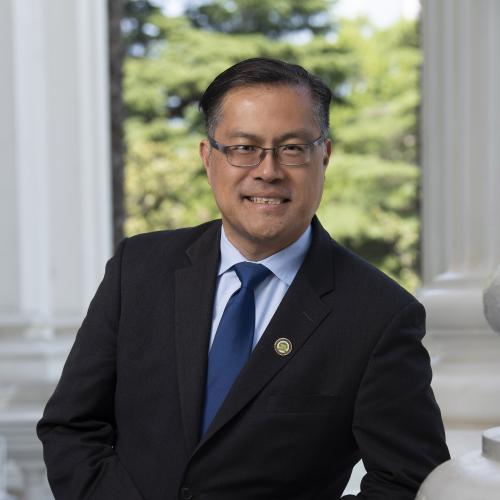
Mike Fong
100% support rate
Top opponent
Natasha Johnson
0% support rate
Ranked legislators
10
5 support · 5 oppose
Key legislators

Who's moving labor & employment in California

Legislators moving labor & employment in California
Legislator Party Stance Support rate Votes
Mike Fong
Mike Fong House · District 49
D
Strong +
100% 538
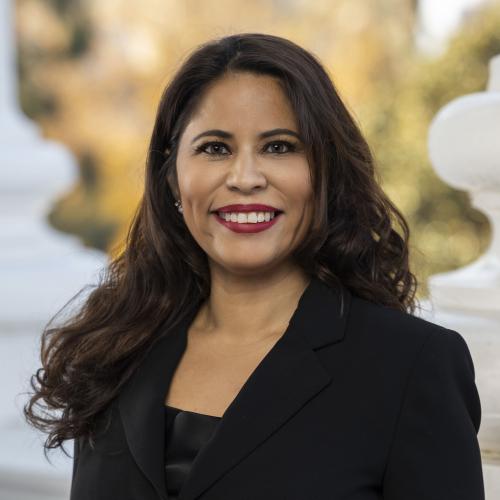
Celeste Rodriguez
Celeste Rodriguez House · District 43
D
Strong +
100% 301
JS
José Solache House · District 62
D
Strong +
100% 504
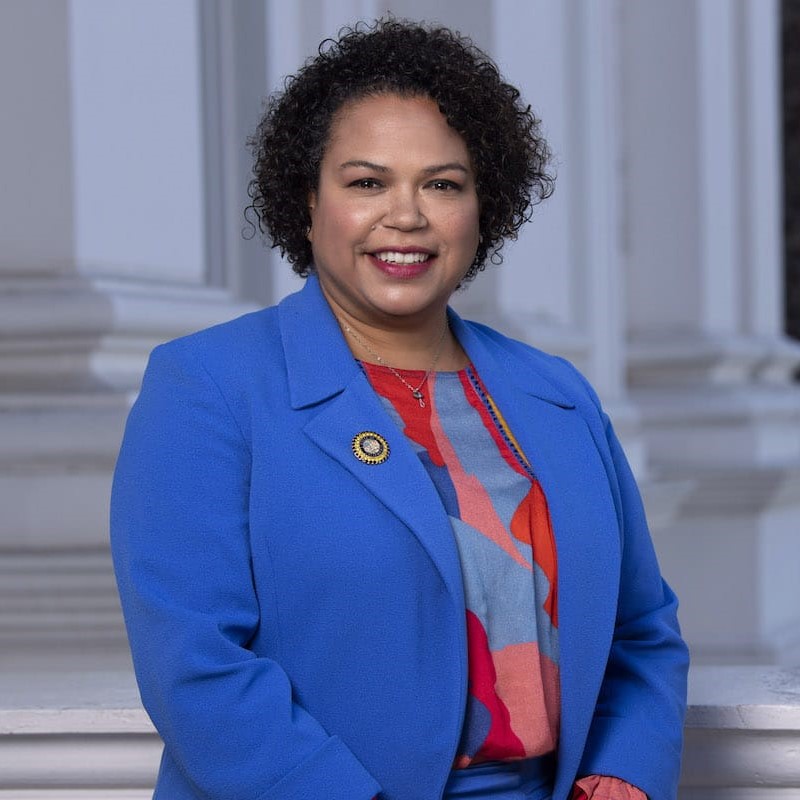
Liz Ortega
Liz Ortega House · District 20
D
Strong +
100% 391
Mia Bonta
Mia Bonta House · District 18
D
Strong +
100% 368
Natasha Johnson
Natasha Johnson House · District 63
R
Strong −
0% 231
Carl DeMaio
Carl DeMaio House · District 75
R
Strong −
0% 401
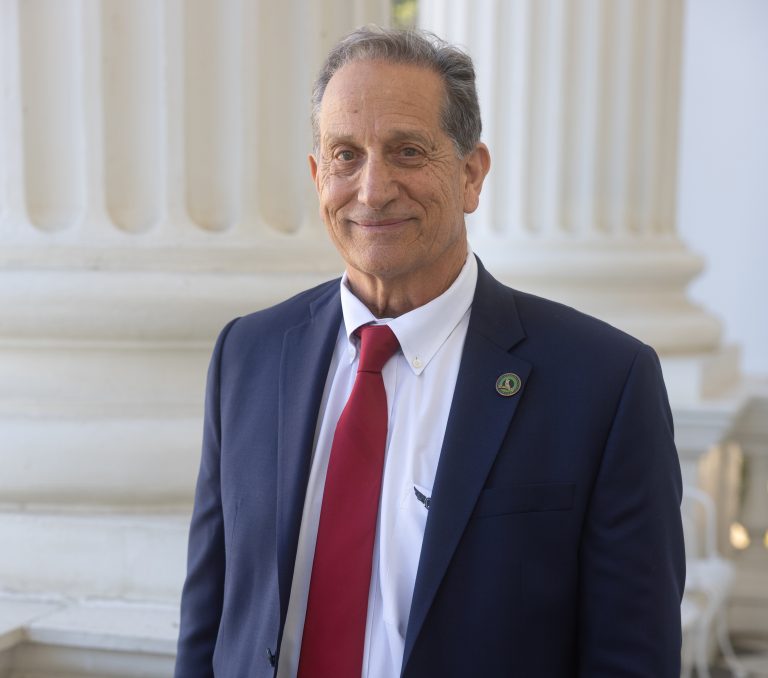
Stan Ellis
Stan Ellis House · District 32
R
Strong −
0% 365
Kelly Seyarto
Kelly Seyarto Senate · District 32
R
Strong −
1% 638
Diane Dixon
Diane Dixon House · District 72
R
Strong −
1% 532
Showing 191–200 of 252 bills

All labor & employment bills

failed · California · Assembly Feb 2, 2026

AB 1163: Employees: workplace violence prevention plans: topics and trainings.

Existing law establishes the system of public elementary and secondary schools in this state, and provides for the establishment of the local educational agencies, including school districts, that establish and operate the schools and provide instruction to pupils throughout the state. Existing law also establishes the system of public higher education in this state, including the operation of community colleges. This bill, contingent upon an appropriation for its purposes, would require the State Department of Education to, on or before January 1, 2027, develop a deescalation training and make it publicly available on its internet website. The bill would require, commencing in the 2026–27 academic year, and annually thereafter, a school district, county office of education, charter school, or community college to, for employees who regularly interact with pupils or students, require training on deescalation techniques designed to minimize the likelihood of pupils or students committing violent acts, as provided. By imposing additional duties on local educational agencies, the bill would impose a state-mandated local program. Existing law requires an employer, as specified, to establish, implement, and maintain, at all times in all work areas, an effective workplace violence prevention plan containing specified information. Existing law requires the employer to provide effective training to employees on the workplace violence prevention plan, as specified, initially when the plan is first established and annually thereafter. This bill would require a workplace violence prevention plan covering employees of a community college district, on or before July 1, 2026, to cover additional education-related topics, as provided, and to be in person and allow for questions to be asked and answered by a natural person in real time. The bill would require the training, as revised under the bill, to occur before a new employee begins their duties and as soon as practicable for existing employees, and then annually for all employees. By imposing additional duties on local educational agencies, the bill would impose a state-mandated local program. The California Constitution requires the state to reimburse local agencies and school districts for certain costs mandated by the state. Statutory provisions establish procedures for making that reimbursement. This bill would provide that, if the Commission on State Mandates determines that the bill contains costs mandated by the state, reimbursement for those costs shall be made pursuant to the statutory provisions noted above.
failed · California · Assembly Feb 2, 2026

AB 465: Local public employees: memoranda of understanding.

Existing law, the Meyers-Milias-Brown Act (act) , authorizes local public employees, as defined, to form, join, and participate in the activities of employee organizations of their own choosing for the purpose of representation on matters of labor relations and defines various terms for these purposes. The act prohibits a public agency from, among other things, refusing or failing to meet and negotiate in good faith with a recognized employee organization. Existing law states that the Legislature finds and declares that the duties and responsibilities of local agency employer representatives under the act are substantially similar to the duties and responsibilities required under existing collective bargaining enforcement procedures and therefore the costs incurred by the local agency employer representatives in performing those duties and responsibilities under that act are not reimbursable as state-mandated costs. This bill would require, on or after January 1, 2026, a memorandum of understanding between a public agency and a recognized employee organization to include specified provisions including, among other things, a provision providing for a system of progressive discipline that grants due process to an employee when they are disciplined, upon the request of the recognized employee organization. The bill would define "progressive discipline" and "due process" for this purpose. The bill would specify that the refusal or failure to include those provisions in a memorandum of understanding upon request of the recognized employee organization constitutes refusing or failing to meet and negotiate in good faith for purposes of the above-described prohibition. By imposing new requirements on public agencies, this bill would impose a state-mandated local program. The bill would include findings that changes proposed by this bill address a matter of statewide concern rather than a municipal affair and, therefore, apply to all cities, including charter cities. The California Constitution requires the state to reimburse local agencies and school districts for certain costs mandated by the state. Statutory provisions establish procedures for making that reimbursement. This bill would provide that no reimbursement shall be made pursuant to these statutory provisions for costs mandated by the state pursuant to this act, but would recognize that a local agency or school district may pursue any available remedies to seek reimbursement for these costs.
failed · California · Assembly Feb 2, 2026

AB 345: Apprenticeship programs: approval process.

Existing law provides for apprenticeship programs within the Division of Apprenticeship Standards within the Department of Industrial Relations, sponsored by specific entities and employers, and requires the Chief of the Division of Apprenticeship Standards to perform various functions with respect to apprenticeship programs and the welfare of apprentices, including the approval of new apprenticeship programs. Existing law makes any person who willfully discriminates in any recruitment or apprenticeship program, as specified, guilty of a misdemeanor. This bill would require the Division of Apprenticeship Standards to confirm the completeness of an application for a new apprenticeship program within 30 days of receiving the application. The bill would provide that, where the chief has not made a final determination on a completed application for a new program within 6 months of receiving the application, the program shall have conditional approval to operate if it satisfies specified conditions, including approval by the United States Department of Labor. The bill would require the chief to make a final determination on an application for a new apprenticeship program within one year of receiving a completed application. The bill would provide its provisions do not apply to apprenticeship programs in the building and construction trades or to firefighter programs. Because the bill would expand the scope of an existing crime with respect to willful violations of provisions of the law related to discrimination in apprenticeship and preapprenticeship programs, the bill would impose a state-mandated local program. The California Constitution requires the state to reimburse local agencies and school districts for certain costs mandated by the state. Statutory provisions establish procedures for making that reimbursement. This bill would provide that no reimbursement is required by this act for a specified reason.
Sub-Topics Apprenticeships
failed · California · Senate Feb 2, 2026

SB 826: California Workforce Development Board: port automation.

Prior law, until January 1, 2024, required the Labor and Workforce Development Agency and the California Workforce Development Board to oversee a stakeholder process to develop recommendations on how best to mitigate the employment impacts of automation at the Port of Los Angeles and the Port of Long Beach. That prior law created an industry panel consisting of 10 members, as specified, within the agency to inform the stakeholder process. That prior law authorized the California Workforce Development Board to contract the University of California, Los Angeles (UCLA) Labor Center to facilitate implementation and authorized the UCLA Labor Center to commission expert research and testimony to supplement the stakeholder process. That prior law required the industry panel to provide an annual update on the stakeholder process at a regularly scheduled meeting of the California Workforce Development Board. That prior law required the Labor and Workforce Development Agency and the California Workforce Development Board, upon the completion of the stakeholder process, but not later than July 1, 2023, to issue findings and recommendations on the most effective ways to implement policies and programs to mitigate the employment impacts of automation and the transitioning of seaport operations to low- and zero-emission operations on workers and individuals living in communities adjacent to the ports. This bill would reinstate the above-described provisions until January 1, 2029, to determine how to best mitigate national security, cybersecurity, workforce, and economic impacts of automation at California seaports. The bill would instead create an industry panel consisting of 17 members, as specified. The bill would require the Labor and Workforce Development Agency and the California Workforce Development Board, upon the completion of the stakeholder process, but not later than July 1, 2027, to issue findings and recommendations, as described above. The bill would condition the implementation of these provisions on an appropriation by the Legislature for this express purpose.
died · California · Senate Feb 2, 2026

SB 310: Failure to pay wages: penalties.

Existing law makes every person who fails to pay the wages of each employee subject to a specified penalty. Existing law makes the initial violation subject to a $100 penalty and each subsequent violation, or any willful or intentional violation, subject to a $200 penalty plus 25% of the amount unlawfully withheld. Existing law requires the penalty to either be recovered by an employee as a statutory penalty or by the Labor Commissioner as a civil penalty, as prescribed. This bill also would permit the $200 penalty for each subsequent violation, or any willful or intentional violation, to be recovered through an independent civil action, as specified.
Sub-Topics Labor Standards
passed both · California · Senate Aug 30, 2026

SB 632: Community colleges: California College Promise.

Existing law establishes the California College Promise, under the administration of the Chancellor of the California Community Colleges, to provide funding, upon appropriation by the Legislature, to each community college meeting prescribed requirements. Existing law authorizes a community college to use that funding to waive some or all of the fees for 2 academic years for first-time community college students and returning community college students, as defined, who are enrolled in 12 or more semester units or the equivalent, or fewer for students certified as "full time" by a staff person in the disabled student services program, as specified, and who complete and submit either a Free Application for Federal Student Aid or a California Dream Act application, except as provided. This bill would instead require, for purposes of eligibility for the California College Promise, that students be enrolled in 9 or more, rather than 12 or more, semester units or the equivalent, or fewer for a student certified as eligible, based on a commitment by the student that is analogous to the 9-semester-unit or equivalent workload, by a staff person in the disabled student services program. The bill would additionally require, as a condition of receiving funding for the California College Promise, community colleges to provide a written notification to initial recipients of the California College Promise that includes specified information related to the 2 academic years of eligibility for the California College Promise.
passed · California · Senate Aug 29, 2025

SB 442: Grocery retail store and retail drug establishment employees: self-service checkout.

Existing law imposes certain requirements on grocery employers, as defined, upon the purchase or change in control of a grocery establishment, including requiring a successor grocery employer to retain eligible grocery workers for a specified period after transfer of the grocery establishment. This bill would prohibit a grocery retail store or a retail drug establishment, as those terms are defined, from providing a self-service checkout option for customers unless specified conditions are satisfied, including having at least one manual checkout station staffed by an employee who is available to any given customer at the time that a self-service checkout option is made available to that customer. This bill would require a grocery retail store or retail drug establishment that offers self-service checkout to include self-service checkout in the employer's illness and prevention program, as required by regulations of the Division of Occupational Safety and Health. The bill also would require a grocery retail store or retail drug establishment that intends to implement self-checkout to notify workers and their collective bargaining representatives at least 60 days in advance of the implementation, as specified. The bill would not preempt any city, county, or city and county ordinance that provides equal or greater protection to workers. This bill would make an employer who violates the bill's provisions subject to a civil penalty of $1,000 per violation per day, not to exceed an aggregate penalty of $200,000.
signed · California · Assembly Jul 14, 2025

AB 751: Rest periods: petroleum facilities: safety-sensitive positions.

Existing law prohibits an employer from requiring an employee to work during a mandated meal or rest or recovery period, as specified. Existing law requires an employer who fails to provide an employee a mandated meal or rest or recovery period to pay the employee one additional hour of pay at the employee's regular rate of compensation for each workday that the meal or rest or recovery period was not provided. Existing law provides, until January 1, 2026, an exemption from the rest period requirements for specified employees who hold a safety-sensitive position at a petroleum facility, as defined, to the extent that the employee is required to carry and monitor a communication device and to respond to emergencies or is required to remain on employer premises to monitor the premises and respond to emergencies. Existing law requires another rest period to be authorized in the case of an interrupted rest period, as prescribed, and, if circumstances do not allow for the employee to take a rest period, requires the employer to pay the employee one hour of pay at the employee's regular rate of pay for the rest period that was not provided. This bill would extend that exemption indefinitely. The bill would specify that the exemption also applies to employees who hold a safety-sensitive position at a refinery that produces fuel through the processing of alternative feedstock.
Sub-Topics Labor Standards
passed both · California · Assembly Aug 27, 2026

AB 672: Real property tax: welfare exemption: community land trusts.

Existing property tax law, pursuant to constitutional authorization, provides for a "welfare exemption" for property used exclusively for religious, hospital, scientific, or charitable purposes and that is owned or operated by certain types of nonprofit entities, if certain qualifying criteria are met. Existing law also provides, until January 1, 2027, that property is within the welfare exemption if that property is owned by a community land trust, as defined, otherwise qualifying for the welfare exemption, and specified conditions are met, including that the property is being or will be developed or rehabilitated as housing, as specified. Existing law, however, makes community land trusts liable for property tax for the years for which the property was exempt from taxation if the property was not developed or rehabilitated, or if the development or rehabilitation is not in the course of construction, by January 1, 2027, for property acquired before January 1, 2022, or within 5 years of the lien date following acquisition of the property, for property acquired on and after January 1, 2022. This bill would extend the operation of these provisions until January 1, 2032. The bill would make various conforming changes, including with respect to the lien dates for which the exemption applies. Existing law requires any bill authorizing a new tax expenditure to contain, among other things, specific goals, purposes, and objectives that the tax expenditure will achieve, detailed performance indicators, and data collection requirements. This bill would state that it is the intent of the Legislature to apply those requirements to the above-described exemption and would set forth specified information relating to those requirements. In that regard, the bill would require the assessor to provide the State Board of Equalization with certain information and would require the assessor to retain that information, as specified. By imposing additional duties on local tax officials, the bill would impose a state-mandated local program. The California Constitution requires the state to reimburse local agencies and school districts for certain costs mandated by the state. Statutory provisions establish procedures for making that reimbursement. This bill would provide that, if the Commission on State Mandates determines that the bill contains costs mandated by the state, reimbursement for those costs shall be made pursuant to the statutory provisions noted above. Existing law requires the state to reimburse local agencies annually for certain property tax revenues lost as a result of any exemption or classification of property for purposes of ad valorem property taxation. This bill would provide that, notwithstanding those provisions, no appropriation is made and the state shall not reimburse local agencies for property tax revenues lost by them pursuant to the bill. This bill would take effect immediately as a tax levy.
passed · California · Assembly Aug 29, 2025

AB 291: Teachers: credentialed educator apprenticeship programs.

Under existing law, it is the public policy of this state to encourage the utilization of apprenticeship as a form of on-the-job training, when such training is cost effective in developing skills needed to perform public services. Existing law requires state and local public agencies to make a diligent effort to establish apprenticeship programs for apprenticeable occupations in their respective workforces. Existing law requires the Commission on Teacher Credentialing to, among other duties, establish standards for the issuance and renewal of credentials. Existing law requires, as a minimum requirement for a preliminary multiple-subject, single-subject, or education specialist teaching credential, the satisfactory completion of a program of professional preparation, as specified. This bill would require the commission and the Division of Apprenticeship Standards to partner in the dissemination, approval, and monitoring of credentialed educator apprenticeship programs in California, and to communicate apprenticeship requirements to professional preparation programs, local educational agencies, and other potential sponsors of educator apprenticeship programs. The bill, notwithstanding any other law, would authorize the commission to issue apprenticeship certificates or permits to educator candidates without a credential who are employed by local educational agencies and participating in approved credentialed educator apprenticeship programs, as specified. The bill would authorize the commission and the division to enter into a memorandum of understanding to establish processes and procedures for information sharing, application review, and data collection and reporting, and would authorize the Chief of the Division of Apprenticeship Standards, in consultation with the commission, to issue rules and regulations that govern credentialed educator apprenticeship programs, including the approval and denial of programs, registration of agreements, program administration and procedures, evaluations, working conditions, and minimum standards, as specified. The bill would require an applicant for a new credentialed educator apprenticeship program or for the expansion of an existing credentialed educator apprenticeship program into a new geographic or credential area to submit specified documentation to the chief. The bill would require the division to present the apprenticeship program application to the commission for its review, as provided, and would require the commission, if it is satisfied that specified conditions have been met, to provide written notice of that fact to the chief.
Showing 191 to 200 of 252 bills
Previous 1 19 20 21 26 Next