Issue · Labor & Employment

Labor & Employment

Every labor & employment bill, vote, and legislator stance in California, automatically classified by Maddy, our AI policy reader.

Total bills
258
2025-2026 Regular Session
Top supporter
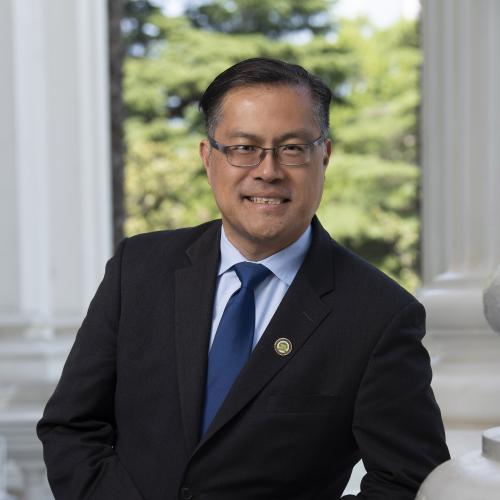
Mike Fong
100% support rate
Top opponent
Natasha Johnson
0% support rate
Ranked legislators
10
5 support · 5 oppose
Key legislators

Who's moving labor & employment in California

Legislators moving labor & employment in California
Legislator Party Stance Support rate Votes
Mike Fong
Mike Fong House · District 49
D
Strong +
100% 538
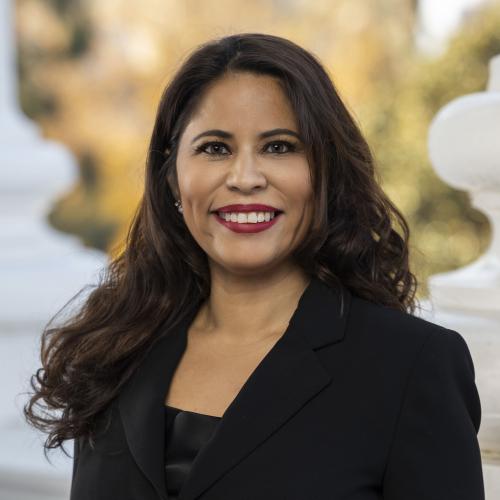
Celeste Rodriguez
Celeste Rodriguez House · District 43
D
Strong +
100% 301
JS
José Solache House · District 62
D
Strong +
100% 504
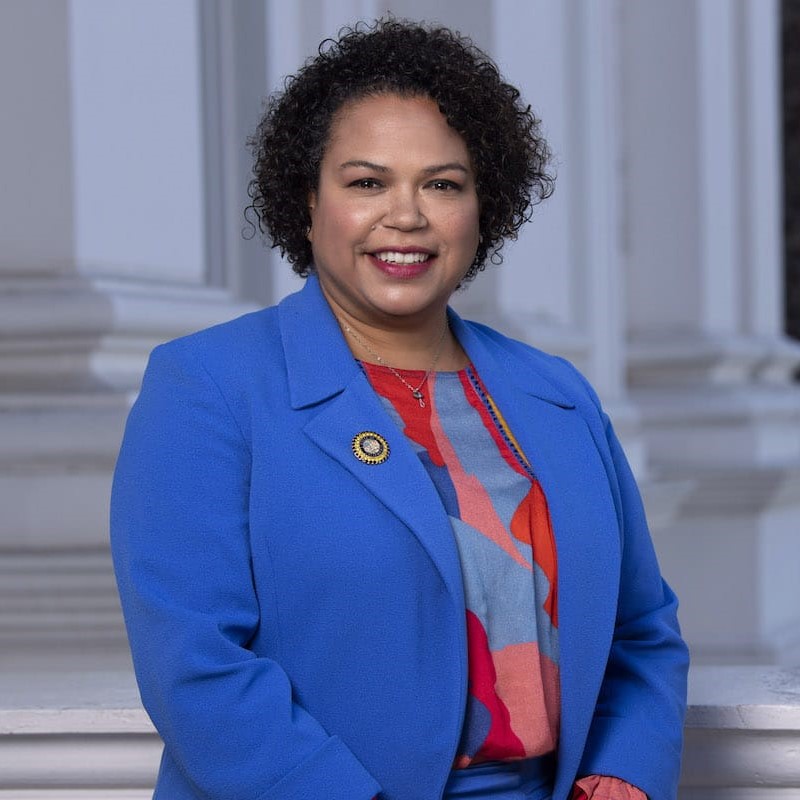
Liz Ortega
Liz Ortega House · District 20
D
Strong +
100% 391
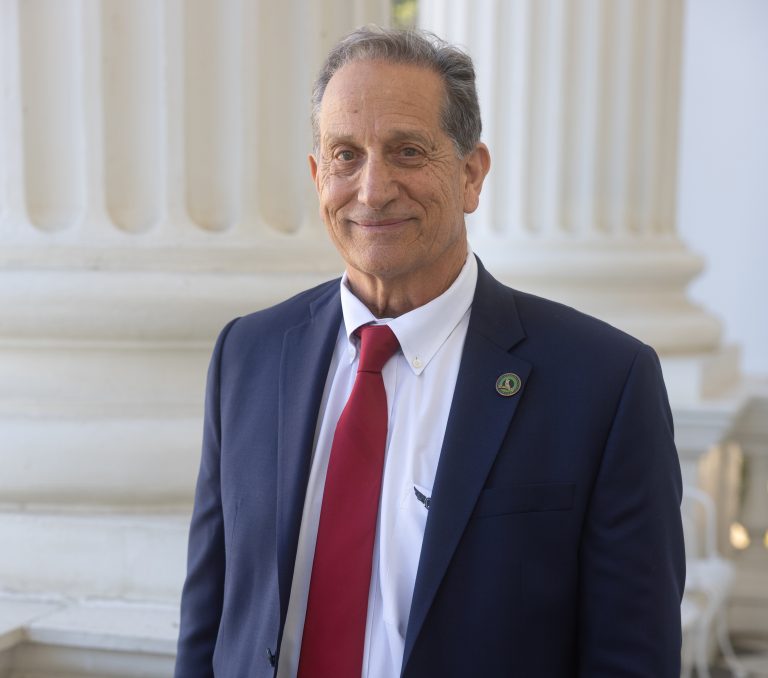
Mia Bonta
Mia Bonta House · District 18
D
Strong +
100% 368
Natasha Johnson
Natasha Johnson House · District 63
R
Strong −
0% 231
Carl DeMaio
Carl DeMaio House · District 75
R
Strong −
0% 401
Stan Ellis
Stan Ellis House · District 32
R
Strong −
0% 365
Kelly Seyarto
Kelly Seyarto Senate · District 32
R
Strong −
1% 638
Diane Dixon
Diane Dixon House · District 72
R
Strong −
1% 532
Showing 191–200 of 258 bills

All labor & employment bills

passed both · California · Assembly Aug 27, 2026

AB 1439: Public retirement systems: development projects: labor standards.

The California Constitution grants the retirement board of a public employee retirement system plenary authority and fiduciary responsibility for investment of moneys and administration of the retirement fund and system. These provisions qualify this grant of powers by reserving to the Legislature the authority to prohibit investments if it is in the public interest and the prohibition satisfies standards of fiduciary care and loyalty required of a retirement board. Existing law prohibits the boards of the Public Employees' Retirement System (PERS) and the State Teachers' Retirement System (STRS) from making certain new investments or renewing existing investments of public employee retirement funds, including in a thermal coal company, as defined. Existing law provides that a board is not required to take any action regarding those investments unless the board determines in good faith that the action is consistent with the board's fiduciary responsibilities established in the California Constitution. This bill would request the University of California, Berkeley, Labor Center to conduct an independent study to analyze the extent of labor standards protections in California real estate and infrastructure development projects funded through the real asset portfolios of PERS and STRS. The bill would request that the study and a report of its findings be completed and provided to the Legislature and the Department of Finance by January 1, 2028, as specified.
failed · California · Senate Feb 2, 2026

SB 527: Worker classification: employees and independent contractors: athletic coaches.

Existing law, as established in the case of Dynamex Operations W. v. Superior Court (2018) 4 Cal.5th 903 (Dynamex) , creates a presumption that a worker who performs services for a hirer is an employee for purposes of claims for wages and benefits arising under wage orders issued by the Industrial Welfare Commission. Existing law requires a 3-part test, commonly known as the "ABC" test, to determine if workers are employees or independent contractors for those purposes. Existing law establishes that, for purposes of the Labor Code, the Unemployment Insurance Code, and the wage orders of the Industrial Welfare Commission, a person providing labor or services for remuneration is considered an employee rather than an independent contractor unless the hiring entity demonstrates that the person is free from the control and direction of the hiring entity in connection with the performance of the work, the person performs work that is outside the usual course of the hiring entity's business, and the person is customarily engaged in an independently established trade, occupation, or business. This test is known as the "ABC" test, as described above. Existing law charges the Labor Commissioner with the enforcement of labor laws, including worker classification. Existing law exempts specified occupations and business relationships from the application of the ABC test described above. Existing law, instead, provides that these exempt relationships are governed by the multifactor test previously adopted in the case of S. G. Borello & Sons, Inc. v. Department of Industrial Relations (1989) 48 Cal.3d. This bill would extend the above-specified exemption to a sports coach for an elementary or secondary private school or local educational agency, as prescribed, and would define terms, including "sports coach," for these purposes.
failed · California · Assembly Feb 2, 2026

AB 1212: University of California: faculty and employee housing.

Existing law authorizes a school district and the California State University (CSU) to establish and implement programs that address the housing needs of teachers or faculty, as applicable, and school district or CSU employees who face challenges in securing affordable housing, as specified. The act provides that it specifically creates a state policy supporting housing for teachers and school district employees, and for faculty and CSU employees, as described by specified federal law and permits school districts, CSU campuses, and developers in receipt of local or state funds or tax credits designated for affordable rental housing to restrict occupancy to teachers and school district employees, or faculty and CSU employees, as applicable, on land owned by school districts or the CSU, so long as that housing does not violate any other applicable laws. Existing law defines various terms for these purposes. This bill would authorize the University of California to establish and implement a similar program to the school district and CSU programs described above to address the housing needs of University of California faculty or employees who face challenges in securing affordable housing, as specified. The bill would provide that it specifically creates a state policy supporting housing for University of California faculty or campus or medical center employees as described by specified federal law and permits the University of California campuses or medical centers, or developers, in receipt of local or state funds or tax credits designated for affordable rental housing to restrict occupancy to University of California faculty or employees on land owned by the University of California or an auxiliary enterprise, as defined, so long as that housing does not violate any other applicable laws. The bill would define various terms for these purposes.
passed · California · Assembly Mar 24, 2025

HR 17: Relative to women in carpentry.

HR 17 is a California Assembly resolution recognizing the success of the B.O.O.T.S. program (Bridging Outstanding Opportunities with Tradeswomen Skills), a four-week preapprenticeship initiative for women interested in carpentry. The resolution highlights the program's 74% graduation rate and its role in preparing women for union carpentry careers, noting 74% of graduates are hired by signatory contractors. It does not create new laws or provide funding, but formally acknowledges the program's contribution to increasing women's participation in the trades. The resolution was unanimously adopted by the Assembly on March 24, 2025.
failed · California · Assembly Feb 2, 2026

AB 1163: Employees: workplace violence prevention plans: topics and trainings.

Existing law establishes the system of public elementary and secondary schools in this state, and provides for the establishment of the local educational agencies, including school districts, that establish and operate the schools and provide instruction to pupils throughout the state. Existing law also establishes the system of public higher education in this state, including the operation of community colleges. This bill, contingent upon an appropriation for its purposes, would require the State Department of Education to, on or before January 1, 2027, develop a deescalation training and make it publicly available on its internet website. The bill would require, commencing in the 2026–27 academic year, and annually thereafter, a school district, county office of education, charter school, or community college to, for employees who regularly interact with pupils or students, require training on deescalation techniques designed to minimize the likelihood of pupils or students committing violent acts, as provided. By imposing additional duties on local educational agencies, the bill would impose a state-mandated local program. Existing law requires an employer, as specified, to establish, implement, and maintain, at all times in all work areas, an effective workplace violence prevention plan containing specified information. Existing law requires the employer to provide effective training to employees on the workplace violence prevention plan, as specified, initially when the plan is first established and annually thereafter. This bill would require a workplace violence prevention plan covering employees of a community college district, on or before July 1, 2026, to cover additional education-related topics, as provided, and to be in person and allow for questions to be asked and answered by a natural person in real time. The bill would require the training, as revised under the bill, to occur before a new employee begins their duties and as soon as practicable for existing employees, and then annually for all employees. By imposing additional duties on local educational agencies, the bill would impose a state-mandated local program. The California Constitution requires the state to reimburse local agencies and school districts for certain costs mandated by the state. Statutory provisions establish procedures for making that reimbursement. This bill would provide that, if the Commission on State Mandates determines that the bill contains costs mandated by the state, reimbursement for those costs shall be made pursuant to the statutory provisions noted above.
failed · California · Assembly Feb 2, 2026

AB 465: Local public employees: memoranda of understanding.

Existing law, the Meyers-Milias-Brown Act (act) , authorizes local public employees, as defined, to form, join, and participate in the activities of employee organizations of their own choosing for the purpose of representation on matters of labor relations and defines various terms for these purposes. The act prohibits a public agency from, among other things, refusing or failing to meet and negotiate in good faith with a recognized employee organization. Existing law states that the Legislature finds and declares that the duties and responsibilities of local agency employer representatives under the act are substantially similar to the duties and responsibilities required under existing collective bargaining enforcement procedures and therefore the costs incurred by the local agency employer representatives in performing those duties and responsibilities under that act are not reimbursable as state-mandated costs. This bill would require, on or after January 1, 2026, a memorandum of understanding between a public agency and a recognized employee organization to include specified provisions including, among other things, a provision providing for a system of progressive discipline that grants due process to an employee when they are disciplined, upon the request of the recognized employee organization. The bill would define "progressive discipline" and "due process" for this purpose. The bill would specify that the refusal or failure to include those provisions in a memorandum of understanding upon request of the recognized employee organization constitutes refusing or failing to meet and negotiate in good faith for purposes of the above-described prohibition. By imposing new requirements on public agencies, this bill would impose a state-mandated local program. The bill would include findings that changes proposed by this bill address a matter of statewide concern rather than a municipal affair and, therefore, apply to all cities, including charter cities. The California Constitution requires the state to reimburse local agencies and school districts for certain costs mandated by the state. Statutory provisions establish procedures for making that reimbursement. This bill would provide that no reimbursement shall be made pursuant to these statutory provisions for costs mandated by the state pursuant to this act, but would recognize that a local agency or school district may pursue any available remedies to seek reimbursement for these costs.
failed · California · Assembly Feb 2, 2026

AB 345: Apprenticeship programs: approval process.

Existing law provides for apprenticeship programs within the Division of Apprenticeship Standards within the Department of Industrial Relations, sponsored by specific entities and employers, and requires the Chief of the Division of Apprenticeship Standards to perform various functions with respect to apprenticeship programs and the welfare of apprentices, including the approval of new apprenticeship programs. Existing law makes any person who willfully discriminates in any recruitment or apprenticeship program, as specified, guilty of a misdemeanor. This bill would require the Division of Apprenticeship Standards to confirm the completeness of an application for a new apprenticeship program within 30 days of receiving the application. The bill would provide that, where the chief has not made a final determination on a completed application for a new program within 6 months of receiving the application, the program shall have conditional approval to operate if it satisfies specified conditions, including approval by the United States Department of Labor. The bill would require the chief to make a final determination on an application for a new apprenticeship program within one year of receiving a completed application. The bill would provide its provisions do not apply to apprenticeship programs in the building and construction trades or to firefighter programs. Because the bill would expand the scope of an existing crime with respect to willful violations of provisions of the law related to discrimination in apprenticeship and preapprenticeship programs, the bill would impose a state-mandated local program. The California Constitution requires the state to reimburse local agencies and school districts for certain costs mandated by the state. Statutory provisions establish procedures for making that reimbursement. This bill would provide that no reimbursement is required by this act for a specified reason.
Sub-Topics Apprenticeships
failed · California · Senate Feb 2, 2026

SB 826: California Workforce Development Board: port automation.

Prior law, until January 1, 2024, required the Labor and Workforce Development Agency and the California Workforce Development Board to oversee a stakeholder process to develop recommendations on how best to mitigate the employment impacts of automation at the Port of Los Angeles and the Port of Long Beach. That prior law created an industry panel consisting of 10 members, as specified, within the agency to inform the stakeholder process. That prior law authorized the California Workforce Development Board to contract the University of California, Los Angeles (UCLA) Labor Center to facilitate implementation and authorized the UCLA Labor Center to commission expert research and testimony to supplement the stakeholder process. That prior law required the industry panel to provide an annual update on the stakeholder process at a regularly scheduled meeting of the California Workforce Development Board. That prior law required the Labor and Workforce Development Agency and the California Workforce Development Board, upon the completion of the stakeholder process, but not later than July 1, 2023, to issue findings and recommendations on the most effective ways to implement policies and programs to mitigate the employment impacts of automation and the transitioning of seaport operations to low- and zero-emission operations on workers and individuals living in communities adjacent to the ports. This bill would reinstate the above-described provisions until January 1, 2029, to determine how to best mitigate national security, cybersecurity, workforce, and economic impacts of automation at California seaports. The bill would instead create an industry panel consisting of 17 members, as specified. The bill would require the Labor and Workforce Development Agency and the California Workforce Development Board, upon the completion of the stakeholder process, but not later than July 1, 2027, to issue findings and recommendations, as described above. The bill would condition the implementation of these provisions on an appropriation by the Legislature for this express purpose.
died · California · Senate Feb 2, 2026

SB 310: Failure to pay wages: penalties.

Existing law makes every person who fails to pay the wages of each employee subject to a specified penalty. Existing law makes the initial violation subject to a $100 penalty and each subsequent violation, or any willful or intentional violation, subject to a $200 penalty plus 25% of the amount unlawfully withheld. Existing law requires the penalty to either be recovered by an employee as a statutory penalty or by the Labor Commissioner as a civil penalty, as prescribed. This bill also would permit the $200 penalty for each subsequent violation, or any willful or intentional violation, to be recovered through an independent civil action, as specified.
Sub-Topics Labor Standards
passed both · California · Senate Aug 30, 2026

SB 632: Community colleges: California College Promise.

Existing law establishes the California College Promise, under the administration of the Chancellor of the California Community Colleges, to provide funding, upon appropriation by the Legislature, to each community college meeting prescribed requirements. Existing law authorizes a community college to use that funding to waive some or all of the fees for 2 academic years for first-time community college students and returning community college students, as defined, who are enrolled in 12 or more semester units or the equivalent, or fewer for students certified as "full time" by a staff person in the disabled student services program, as specified, and who complete and submit either a Free Application for Federal Student Aid or a California Dream Act application, except as provided. This bill would instead require, for purposes of eligibility for the California College Promise, that students be enrolled in 9 or more, rather than 12 or more, semester units or the equivalent, or fewer for a student certified as eligible, based on a commitment by the student that is analogous to the 9-semester-unit or equivalent workload, by a staff person in the disabled student services program. The bill would additionally require, as a condition of receiving funding for the California College Promise, community colleges to provide a written notification to initial recipients of the California College Promise that includes specified information related to the 2 academic years of eligibility for the California College Promise.
Showing 191 to 200 of 258 bills
Previous 1 19 20 21 26 Next