Issue · Healthcare

Healthcare

Every healthcare bill, vote, and legislator stance in California, automatically classified by Maddy, our AI policy reader.

Total bills
487
2025-2026 Regular Session
Top supporter
Susan Rubio
99% support rate
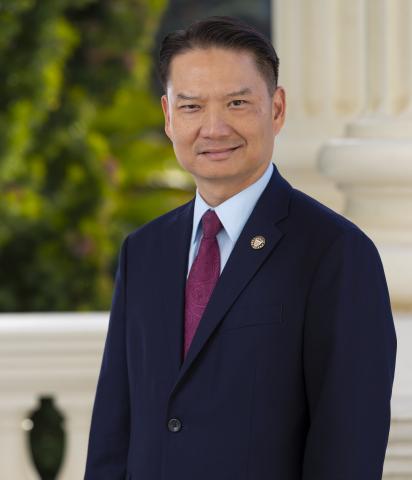
Top opponent
Brian Jones
3% support rate
Ranked legislators
10
5 support · 5 oppose
Key legislators

Who's moving healthcare in California

Legislators moving healthcare in California
Legislator Party Stance Support rate Votes
Susan Rubio
Susan Rubio Senate · District 22
D
Strong +
99% 210
JA
Jesse Arreguín Senate · District 7
D
Strong +
99% 252
ML
Monique Limón Senate · District 21
D
Strong +
99% 212
Celeste Rodriguez
Celeste Rodriguez House · District 43
D
Strong +
98% 188
Jerry McNerney
Jerry McNerney Senate · District 5
D
Strong +
98% 227
Brian Jones
Brian Jones Senate · District 40
R
Strong −
3% 184
Tri Ta
Tri Ta House · District 70
R
Strong −
4% 235
Tony Strickland
Tony Strickland Senate · District 36
R
Strong −
4% 224
Kelly Seyarto
Kelly Seyarto Senate · District 32
R
Strong −
5% 317
Natasha Johnson
Natasha Johnson House · District 63
R
Strong −
5% 140
Showing 461–470 of 487 bills

All healthcare bills

passed both · California · Assembly Aug 27, 2026

AB 280: Health care coverage: provider directories.

Existing law, the Knox-Keene Health Care Service Plan Act of 1975, provides for the licensure and regulation of health care service plans by the Department of Managed Health Care, and makes a willful violation of the act a crime. Existing law provides for the regulation of health insurers by the Department of Insurance. Existing law requires a health care service plan and a health insurer that contracts with providers for alternative rates of payment to publish and maintain a provider directory or directories with information on contracting providers that deliver health care services enrollees or insureds, and requires a health care service plan and health insurer to regularly update its printed and online provider directory or directories, as specified. Existing law authorizes the departments to require a plan or insurer to provide coverage for all covered health care services provided to an enrollee or insured who reasonably relied on materially inaccurate, incomplete, or misleading information contained in a plan's or insurer's provider directory or directories. This bill would require the Department of Managed Health Care to select a central utility and develop uniform provider directory standards requiring a health care service plan to use the designated central utility to collect, manage, and verify the consistency and completeness of their provider directories. The bill would also require health insurers to use the designated central utility and follow the uniform provider directory standards. The bill would require plans and health insurers to submit their provider directories to the central utility for analysis, and would require the central utility to create a consistency report for each directory. This bill would require a plan or insurer to provide coverage for all covered benefits provided to an enrollee or insured who reasonably relied on inaccurate, incomplete, or misleading information contained in the plan's or insurer's provider directory or directories and to reimburse the provider the agreed upon amount, or, if none, a reasonable and customary amount, as specified, for those services. The bill would prohibit a provider from collecting an additional amount from an enrollee or insured other than the applicable in-network cost sharing, which would count toward the in-network deductible and out-of-pocket maximum. The bill would require the health care service plan or the insurer, as applicable, to ensure the accuracy of a request to add back a provider who was previously removed from a directory and approve the request within 10 business days of receipt, if accurate. The bill would authorize a health care service plan or insurer to include a specified statement in the provider listing before removing the provider from the directory if the provider does not respond within 5 calendar days of the plan's or insurer's annual notification. The bill would require a plan or insurer to comply with its provisions on and after July 1, 2027. Because a violation of the bill's requirements by a health care service plan would be a crime, the bill would impose a state-mandated local program. The California Constitution requires the state to reimburse local agencies and school districts for certain costs mandated by the state. Statutory provisions establish procedures for making that reimbursement. This bill would provide that no reimbursement is required by this act for a specified reason.
passed both · California · Senate Aug 28, 2026

SB 626: Perinatal health screenings and treatment.

Existing law requires a licensed health care practitioner who provides prenatal, postpartum, or interpregnancy care for a patient to offer to screen or appropriately screen a mother for maternal mental health conditions. For purposes of that requirement, existing law defines "maternal mental health condition" to mean a mental health condition that occurs during pregnancy, the postpartum period, or interpregnancy, as specified. This bill would limit the definition of "maternal mental health condition" to a mental health condition that occurs during the pregnancy or the postpartum period, as specified. The bill would authorize a licensed health care practitioner to satisfy the above-described requirement for maternal mental health screening by referring the patient or client to another licensed health care practitioner who is authorized to screen, evaluate, diagnose, and treat the patient or client for a maternal mental health condition. The bill would require a licensed health care practitioner who provides prenatal, postpartum, or perinatal care for a patient or client who screens positive for a maternal mental health condition to ensure that the patient or client receives appropriate clinical evaluation, and, if the practitioner diagnoses a patient or client with a maternal mental health condition, offer or provide treatment to the patient or client, consistent with the provider's scope of practice. Existing law, the Knox-Keene Health Care Service Plan Act of 1975, provides for the licensure and regulation of health care service plans by the Department of Managed Health Care and makes a willful violation of the act a crime. Existing law provides for the regulation of health insurers by the Department of Insurance. Existing law requires a health care service plan or health insurer to develop a maternal mental health program designed to promote quality and cost-effective outcomes. Existing law requires the program to, among other things, conduct specified maternal mental health screenings during pregnancy and the postpartum period. Existing law requires the program guidelines and criteria to be provided to relevant medical providers, including all contracting obstetric providers. Existing law encourages health care service plans and health insurers to, among other things, improve screening, treatment, and referral to maternal mental health services. For purposes of these provisions, existing law defines "maternal mental health" to mean a mental health condition that occurs during pregnancy or during the postpartum period, as specified. This bill would modify the term to "maternal mental health condition" and define it as a mental health condition that occurs during the pregnancy or the postpartum period, as defined by the most recent clinical guidelines adopted by the American College of Obstetricians, as specified. The bill would instead require the above-described maternal mental health program to include maternal mental health screening to be conducted during pregnancy and one or more mental health screenings to be conducted during the postpartum period in accordance with applicable clinical guidelines and the standards of care appropriate to the provider's scope of practice, as specified. The bill would require program guidelines and criteria to be provided to relevant licensed health care practitioners, as defined, including all contracting obstetric providers. The bill would require a health care service plan or health insurer to provide case management or care coordination for an enrollee or insured who screens positive for a maternal mental health condition in accordance with the plan's or insurer's existing case management and care coordination programs. The bill would encourage health care service plans and health insurers to improve treatment, including through the use of outpatient prescription drugs approved for maternal mental health by the United States Food and Drug Administration. Because a willful violation of these provisions by a health care service plan would be a crime, the bill would impose a state-mandated local program. The California Constitution requires the state to reimburse local agencies and school districts for certain costs mandated by the state. Statutory provisions establish procedures for making that reimbursement. This bill would provide that no reimbursement is required by this act for a specified reason.
signed · California · Senate Sep 9, 2025

SJR 4: Research and education: federal funding cuts: the National Institutes of Health and postsecondary educational institutions.

This measure would urge the administration of President Donald J. Trump and the Congress of the United States to rescind the National Institutes of Health funding cuts. This measure also affirms the Legislature's commitment to postsecondary educational institutions.
passed · California · Senate Aug 25, 2025

SR 53: Relative to Childhood Cancer Awareness Month.

Senate Resolution 53 designates September 2025 as Childhood Cancer Awareness Month in California, encouraging residents, businesses, and organizations to host events that raise awareness about childhood cancer and support affected families year-round. The resolution also expresses the state's commitment to advancing research for cures and less toxic treatments, while honoring children battling cancer and thanking healthcare providers and parents who support patients. This procedural resolution does not create new laws but formally recognizes and promotes statewide engagement with childhood cancer issues.
signed · California · Assembly Oct 7, 2025

AB 688: Telehealth for All Act of 2025.

Existing law establishes the Medi-Cal program, which is administered by the State Department of Health Care Services, under which qualified low-income individuals receive health care services. The Medi-Cal program is, in part, governed and funded by federal Medicaid program provisions. Under existing law, in-person, face-to-face contact is not required under the Medi-Cal program when covered health care services are provided by video synchronous interaction, asynchronous store and forward, audio-only synchronous interaction, remote patient monitoring, or other permissible virtual communication modalities, when those services and settings meet certain criteria. Existing law required the department, on or before January 1, 2023, to develop a research and evaluation plan that, among other things, proposes strategies to analyze the relationship between telehealth and access to care, quality of care, and Medi-Cal program costs, utilization, and program integrity. The department created that plan in December of 2022 and published the Biennial Telehealth Utilization Report in April of 2024. This bill, the Telehealth for All Act of 2025, would require the department, commencing in 2028 and every 2 years thereafter, to use Medi-Cal data and other data sources available to the department to produce analyses in a publicly available Medi-Cal telehealth utilization report. The bill would authorize the department to include those analyses in each of the department's Biennial Telehealth Utilization Reports, as specified. The bill would require the analyses to address telehealth access and utilization data, including various metrics on telehealth visits and claims, disaggregated by geographic, demographic, and social determinants of health categories to identify disparities. The bill would require the department to identify additional data elements for inclusion in future reports to help to identify and address access-to-care issues or provide greater insight into utilization of telehealth modalities.
Sub-Topics Telehealth
signed · California · Assembly Sep 5, 2025

AJR 3: Public social services: Social Security, Medicare, and Medicaid.

This measure would call on the state's Representatives in Congress to support legislation to repeal all of the provisions of the federal One Big Beautiful Bill Act that adversely affect Social Security, Medicare, and Medicaid programs, to oppose privatization of these programs, and to protect and improve these programs, and would call on the President of the United States to immediately restore program staffing levels, to work with Congress to protect and improve these programs, and to disavow any efforts to privatize Social Security.
Sub-Topics Medicare
signed · California · Assembly Oct 13, 2025

AB 224: Health care coverage: essential health benefits.

Existing law requires the Department of Insurance to regulate health insurers. Existing law requires an individual or small group health insurance policy issued, amended, or renewed on or after January 1, 2017, to include, at a minimum, coverage for essential health benefits pursuant to the federal Patient Protection and Affordable Care Act. Existing law requires a health insurance policy to cover the same health benefits that the benchmark plan, the Kaiser Foundation Health Plan Small Group HMO 30 plan, offered during the first quarter of 2014, as specified. This bill would express the intent of the Legislature to review California's essential health benefits benchmark plan and establish a new benchmark plan for the 2027 plan year for health insurers. The bill would require, commencing January 1, 2027, if the United States Department of Health and Human Services approves a new essential health benefits benchmark plan for the state, as specified, the benchmark plan for health insurers to include certain additional benefits, including coverage for specified fertility services and specified durable medical equipment.
Sub-Topics Insurance
signed · California · Assembly Oct 11, 2025

AB 489: Health care professions: deceptive terms or letters: artificial intelligence.

Existing law establishes various healing arts boards within the Department of Consumer Affairs that license and regulate various healing arts licensees. Existing laws, including, among others, the Medical Practice Act and the Dental Practice Act, make it a crime for a person who is not licensed as a specified health care professional to use certain words, letters, and phrases or any other terms that imply that they are authorized to practice that profession. Existing law requires, with certain exemptions, a health facility, clinic, physician's office, or office of a group practice that uses generative artificial intelligence, as defined, to generate written or verbal patient communications pertaining to patient clinical information, as defined, to ensure that those communications include both (1) a disclaimer that indicates to the patient that a communication was generated by generative artificial intelligence, as specified, and (2) clear instructions describing how a patient may contact a human health care provider, employee, or other appropriate person. Existing law provides that a violation of these provisions by a physician shall be subject to the jurisdiction of the Medical Board of California or the Osteopathic Medical Board of California, as appropriate. This bill would make provisions of law that prohibit the use of specified terms, letters, or phrases to falsely indicate or imply possession of a license or certificate to practice a health care profession, as defined, enforceable against an entity who develops or deploys artificial intelligence (AI) or generative artificial intelligence (GenAI) technology that uses one or more of those terms, letters, or phrases in its advertising or functionality. The bill would prohibit the use by AI or GenAI technology of certain terms, letters, or phrases that indicate or imply that the advice, care, reports, or assessments being provided through AI or GenAI is being provided by a natural person with the appropriated health care license or certificate. This bill would make a violation of these provisions subject to the jurisdiction of the appropriate health care profession board, and would make each use of a prohibited term, letter, or phrase punishable as a separate violation. By expanding the scope of existing crimes, this bill would impose a state-mandated local program. The California Constitution requires the state to reimburse local agencies and school districts for certain costs mandated by the state. Statutory provisions establish procedures for making that reimbursement. This bill would provide that no reimbursement is required by this act for a specified reason.
Sub-Topics Medical Licensing Primary Care Tags Artificial Intelligence
signed · California · Assembly Oct 11, 2025

AB 1415: California Health Care Quality and Affordability Act.

Existing law, the California Health Care Quality and Affordability Act, establishes within the Department of Health Care Access and Information the Office of Health Care Affordability to analyze the health care market for cost trends and drivers of spending, develop data-informed policies for lowering health care costs for consumers and purchasers, set and enforce cost targets, and create a state strategy for controlling the cost of health care and ensuring affordability for consumers and purchasers. Existing law requires the office to conduct ongoing research and evaluation on payers, fully integrated delivery systems, and providers to determine whether the definitions or other provisions of the act include those entities that significantly affect health care cost, quality, equity, and workforce stability. Existing law defines multiple terms relating to these provisions, including a health care entity to mean a payer, provider, or a fully integrated delivery system and a provider to mean specified entities delivering or furnishing health care services. This bill would update the definitions applying to these provisions, including defining a provider to mean specified entities delivering or furnishing health care services. The bill would include additional definitions, including, but not limited to, a hedge fund to mean a pool of funds managed by investors for the purpose of earning a return on those funds, regardless of strategies used to manage the funds, subject to certain exceptions. The bill would require the office to conduct ongoing research and evaluation on management services organizations, as specified, and to establish requirements for management services organizations to submit data and other information as necessary to carry out the functions of the office. Existing law requires a health care entity to provide the Office of Health Care Affordability with written notice of agreements or transactions that do specified actions, including sell or transfer, among other things, a material amount of its assets to one or more entities. The bill would similarly require a noticing entity, as defined, to provide the office written notice of agreements or transactions between the noticing entity and a health care entity or management services organization, or an entity that owns, or controls the health care entity or management services organization that perform the same specified actions described above. The bill would additionally require a management services organization to provide the office with written notice of any agreement or transaction between the organization and any other entity.
signed · California · Senate Oct 13, 2025

SB 62: Health care coverage: essential health benefits.

Existing law, the Knox-Keene Health Care Service Plan Act of 1975, requires the Department of Managed Health Care to license and regulate health care service plans and makes a willful violation of the act a crime. Existing law requires an individual or small group health care service plan contract issued, amended, or renewed on or after January 1, 2017, to include, at a minimum, coverage for essential health benefits pursuant to the federal Patient Protection and Affordable Care Act. Existing law requires a health care service plan contract to cover the same health benefits that the benchmark plan, the Kaiser Foundation Health Plan Small Group HMO 30 plan, offered during the first quarter of 2014, as specified. This bill would express the intent of the Legislature to review California's essential health benefits benchmark plan and establish a new benchmark plan for the 2027 plan year for health care service plans. The bill would require, commencing January 1, 2027, if the United States Department of Health and Human Services approves a new essential health benefits benchmark plan for the state, as specified, the benchmark plan for health care service plans to include certain additional benefits, including coverage for specified fertility services and specified durable medical equipment. Because a violation of the bill by a health care service plan would be a crime, the bill would impose a state-mandated local program. The California Constitution requires the state to reimburse local agencies and school districts for certain costs mandated by the state. Statutory provisions establish procedures for making that reimbursement. This bill would provide that no reimbursement is required by this act for a specified reason.
Sub-Topics Insurance
Showing 461 to 470 of 487 bills
Previous 1 46 47 48 49 Next