Issue · Education

Education

Every education bill, vote, and legislator stance in West Virginia, automatically classified by Maddy, our AI policy reader.

Total bills
328
2026 Regular Session
Top supporter
Mickey Petitto
100% support rate
Top opponent
Corby Dillon
17% support rate
Ranked legislators
10
5 support · 5 oppose
Key legislators

Who's moving education in West Virginia

Legislators moving education in West Virginia
Legislator Party Stance Support rate Votes
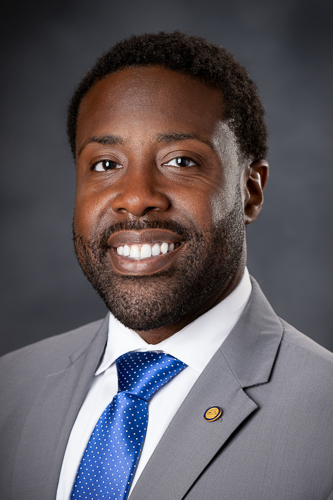
Mickey Petitto
Mickey Petitto House · District 70
R
Strong +
100% 29
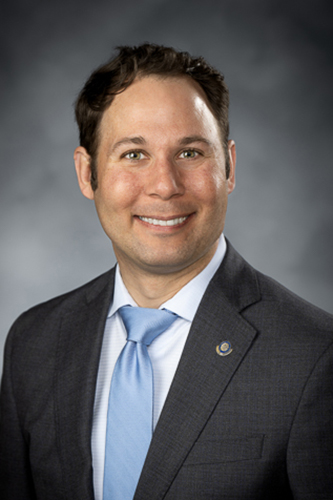
Erica Moore
Erica Moore House · District 15
R
Strong +
94% 46
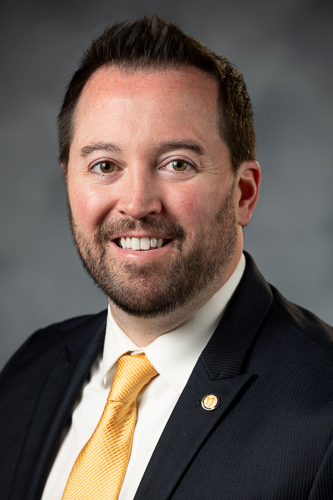
Jimmy Willis
Jimmy Willis House · District 3
R
Strong +
94% 44
John Jordan
John Jordan House · District 42
R
Strong +
94% 43
Joe Parsons
Joe Parsons House · District 16
R
Strong +
93% 37
Corby Dillon
Corby Dillon House · District 29
R
Strong −
17% 47
Sean Hornbuckle
Sean Hornbuckle House · District 25
D
Oppose
33% 40
Evan Hansen
Evan Hansen House · District 79
D
Oppose
33% 47
Joey Garcia
Joey Garcia Senate · District 13
D
Oppose
33% 12
Shawn Fluharty
Shawn Fluharty House · District 5
D
Oppose
33% 44
Showing 271–280 of 328 bills

All education bills

in committee · West Virginia · House of Delegates Jan 29, 2026

HB 4904: Relating to critical vacancies in public education

This bill defines a "critical vacancy" as a teaching position essential for student success, safety, and compliance with certification standards. It requires school districts to have certified staff fill these vacancies immediately - without waiting for permanent hires - by assigning them to the relevant classroom. The bill also establishes a process for recruiting new teachers through posted critical need positions, temporary employment of recent graduates, and optional financial incentives like signing bonuses.
Sub-Topics School Safety Teachers
in committee · West Virginia · House of Delegates Jan 14, 2026

HB 4104: American Civics and History Act

HB 4104, the American Civics and History Act, requires all West Virginia public schools to teach at least one semester of U.S. history, one semester of U.S. and West Virginia government, and one semester of American civics before eighth and twelfth grades. The courses must cover government structures (like separation of powers and federalism), analyze political ideologies (including democracy and socialism) using primary sources such as the Constitution and Federalist Papers, and emphasize interactive learning like debates. All instructional materials must be reviewed and approved by the West Virginia Department of Education every four years, with factual errors corrected before use. The bill supplements existing curriculum requirements without replacing them, focusing on factual accuracy and balanced discussion.
Sub-Topics Curriculum
in committee · West Virginia · Senate Jan 14, 2026

SB 69: Requiring higher education institutions to accept Classic Learning Test

SB 69 requires West Virginia's public colleges and universities to accept the Classic Learning Test (CLT) as a valid standardized test for college admissions, alongside the ACT and SAT. It directly affects students applying to these institutions who take the CLT, ensuring they cannot be forced to take additional tests if they meet the CLT score requirements. The bill amends existing law to explicitly include the CLT in the list of accepted tests, preventing institutions from requiring alternate assessments for admission. This change provides more testing options for applicants without altering the core admission criteria or requirements.
in committee · West Virginia · Senate Jan 14, 2026

SB 9: Requiring age-appropriate instruction on Holocaust in public schools

This bill requires all West Virginia public schools to provide age-appropriate Holocaust education starting in the sixth grade. It mandates instruction on the systematic annihilation of European Jews and other groups by Nazi Germany, emphasizing human behavior and responsible citizenship. Schools must use guidance from the West Virginia Commission on Holocaust Education to develop this curriculum. The requirement applies to all public schools in the state and explicitly prohibits teaching this content before sixth grade.
Sub-Topics Curriculum
in committee · West Virginia · House of Delegates Feb 17, 2026

HB 4950: To establish the West Virginia Freedom and Innovation Pilot Act of 2026

HB 4950 establishes the West Virginia Freedom and Innovation Pilot Act of 2026, creating a voluntary program for any West Virginia county to join. Participating counties would receive $5,775 per enrolled student (as of December 2025) with a 1% annual funding increase if enrollment grows, while being exempt from state-mandated staffing ratios, service quotas, and central salary schedules - though they must still follow the Third Grade Success Act and federal requirements. Counties in the program maintain full control over school calendars, class sizes, salaries, and benefits, but administrative costs are capped at 7% of their total annual budget. The pilot begins July 1, 2026, and will be reviewed by the Legislative Oversight Commission on Education Accountability by July 1, 2031, after which it will sunset unless extended.
in committee · West Virginia · House of Delegates Jan 19, 2026

HB 4115: To modify the required amount of contracted teaching days and provide for breaks per semester for teachers.

HB 4115 reduces the required number of instructional days for students in West Virginia from 180 to 160 per school year. It mandates that county school boards provide built-in breaks for teachers during the fall and spring semesters, to be scheduled after standardized testing. The 20 days saved from the reduced instructional requirement will be allocated to these breaks. This change directly affects public school teachers and county school districts by altering the school calendar to include additional time off for educators.
in committee · West Virginia · House of Delegates Feb 3, 2026

HB 4641: Relating to codifying the guidelines for nutritionally adequate school breakfasts and lunches

HB 4641 (the "Feed to Achieve Act") requires West Virginia county school boards to provide nutritionally adequate breakfasts and lunches meeting current federal standards, directly affecting all elementary students. It mandates limits on added sugar and sodium in school meals based on the Dietary Guidelines for Americans, and phases in free breakfasts for elementary students where feasible using existing funds like donations or federal programs. Schools must adopt approved breakfast delivery systems (e.g., "Breakfast in the Classroom") and track participation rates, while the state reports annually on program impacts to legislative committees. The bill codifies existing USDA meal patterns without creating new federal funding requirements.
Sub-Topics Student Health
in committee · West Virginia · Senate Jan 20, 2026

SB 516: Increasing state minimum salary for teachers

SB 516 sets a new state minimum salary of $50,000 for all West Virginia public school teachers beginning in the 2026-2027 school year, replacing the previous minimum schedule. It also provides a $2,000 annual base salary increase for every teacher and an additional $1,200 annual increase specifically for teachers providing math instruction or special education services. The bill amends the state salary schedule to reflect these changes, ensuring all teachers meet the new $50,000 minimum regardless of experience level or degree. This policy directly affects every public school teacher in West Virginia, with the changes taking effect for the 2026-2027 school year.
in committee · West Virginia · House of Delegates Jan 14, 2026

HB 4145: Creating a school choice office.

HB 4145 would create a school choice office within the Governor's Office, funded by legislative appropriation, to assist students and parents navigating school options in West Virginia. The office would coordinate with the Department of Education to provide information about public schools, private/parochial schools, virtual learning, homeschooling, learning pods, and micropods. It would specifically use the existing statewide homeschool online portal as a primary tool to share these options with families. The bill focuses on administrative coordination rather than altering funding or enrollment rules.
in committee · West Virginia · House of Delegates Jan 14, 2026

HB 4189: Relating to Hope Scholarships awards

HB 4189 modifies West Virginia's Hope Scholarship program by adding income-based eligibility limits for families. It sets award percentages based on family income relative to federal poverty levels (e.g., full awards for families at or below 450% poverty, 10% for those at or below 750%). The bill also requires counties to be reimbursed for services provided to scholarship recipients and mandates parents submit tax documentation to verify income, with strict confidentiality protections. This directly affects low-to-moderate-income families seeking scholarship funds for K-12 education expenses.
Showing 271 to 280 of 328 bills
Previous 1 27 28 29 33 Next