

Affordable housing; religious organizations and other nonprofit tax-exempt properties. Allows for the administrative approval of development and construction of housing on land owned by property tax-exempt religious organizations or certain property tax-exempt nonprofit organizations and provides that zoning ordinances shall allow the by-right development and construction of housing on real property owned by such organizations, subject to various conditions and limitations. The bill provides that the review of such developments be completed pursuant to general law and states that localities shall not require a special exception, special use permit, conditional use permit, rezoning, or any discretionary review or approval process. The bill requires that at least 60 percent of the housing development's total units be for affordable housing and that the housing development remain affordable for at least 30 years. The bill also provides that all such housing is subject to local real property taxation following completion, unless explicitly exempted by the locality. The bill has a delayed effective date of January 1, 2027, and expires on January 1, 2031. This bill is identical to SB 388.
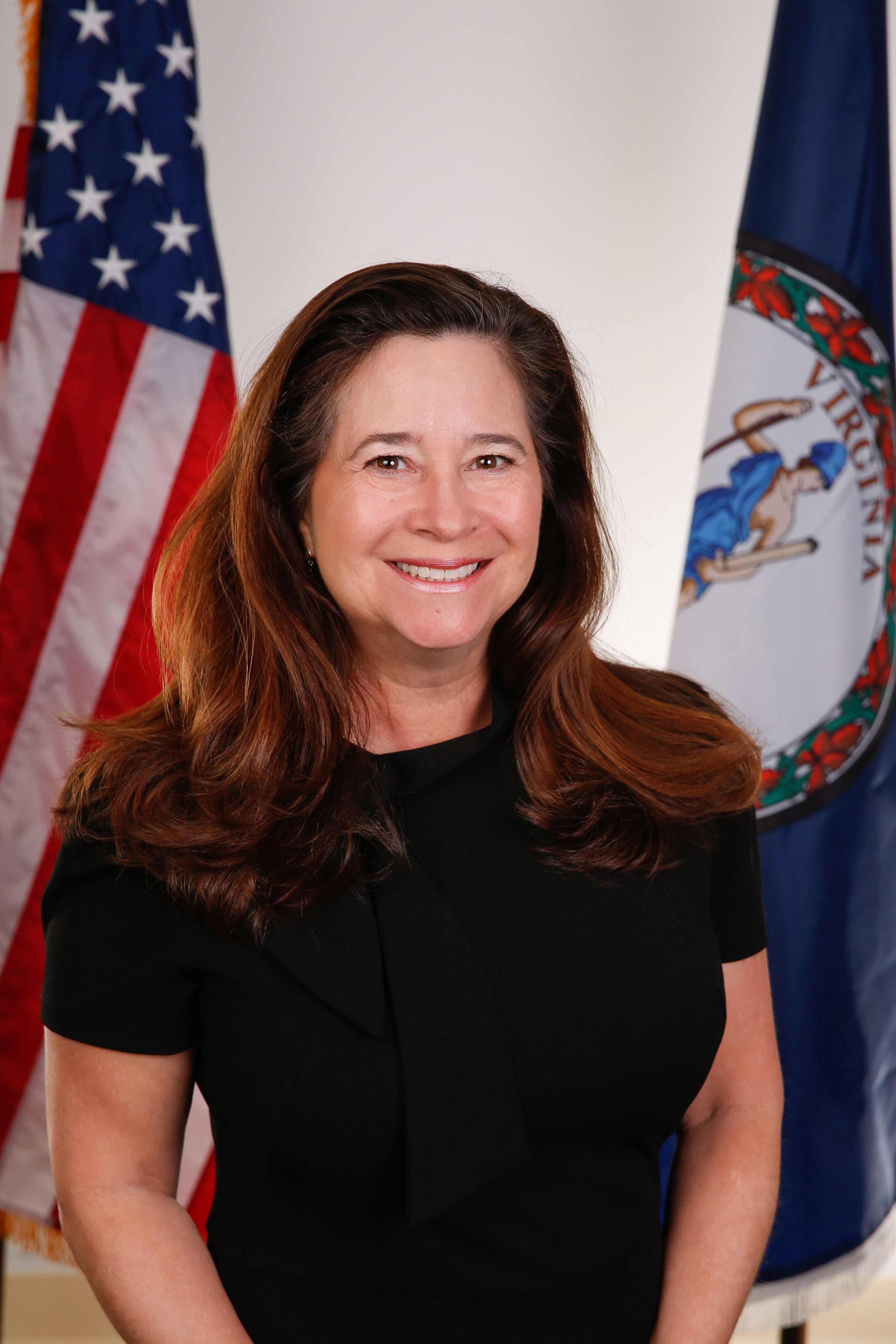
Del. Shelly Simonds
Sponsored bills
Commission on Federally Recognized Tribes; purpose; powers; sunset extended. Renames the Commission on Updating Virginia Law to Reflect Federal Recognition of Virginia Tribes as the Commission on Federally Recognized Tribes and expands its purpose. The bill extends the sunset of the Commission to July 1, 2027. As introduced, this bill was a recommendation of the Commission on Updating Virginia Law to Reflect Federal Recognition of Virginia Tribes.
An Act to amend and reenact §§ 9.1-914, 15.2-914, 15.2-2292, 18.2-371.1, 19.2-389, as it is currently effective and as it shall become effective, 20-124.6, 22.1-289.02, 22.1-289.04, 22.1-289.05:1 through 22.1-289.08, 22.1-289.010, 22.1-289.011, 22.1-289.012, 22.1-289.014 through 22.1-289.019, 22.1-289.021 through 22.1-289.028, 22.1-289.030, 22.1-289.035 through 22.1-289.038, 22.1-289.040 through 22.1-289.046, 22.1-289.049, 22.1-289.050, 22.1-289.055, 22.1-289.056, 22.1-289.059, 22.1-296.3, 32.1-46, 63.2-603, 63.2-1506, 63.2-1515, and 63.2-1527 of the Code of Virginia, relating to early childhood care and education; terminology.
Issuance of vacatur for victims of human trafficking. Expands the current process for the issuance of writs of vacatur for victims of human trafficking to include ancillary matters, defined in the bill, and any charge or arrest related to a qualifying offense as defined in current law. The bill also expands the list of qualifying offenses eligible for such writ. This bill is identical to SB 748.
Employee Child Care Assistance Program established. Establishes the Employee Child Care Assistance Program to provide matching funds in order to incentivize employers to contribute to the child care costs of their employees. The Program shall be administered by the Virginia Early Childhood Foundation. To participate in the Program, an employer shall agree to make child care contributions to the eligible mixed delivery provider on behalf of the employee or to a third-party administrator, as defined by the bill, and shall provide any other information deemed necessary by the Foundation. The bill specifies that, to the extent funds are available, the Foundation shall issue a state match to a third-party administrator. Program funds shall be awarded on a first-come, first-served basis; however, the bill clarifies that the Foundation is encouraged to prioritize awards to proposals involving contributions from small businesses. The bill requires the Foundation to provide an interim report to the General Assembly by September 1, 2028, and a summative report to the General Assembly by September 1, 2030, on the effectiveness and impact of the Program.
Minimum off-street parking requirements in certain areas. Provides that a locality shall not require, as a condition of zoning approval, minimum off-street parking for residential, multifamily, or mixed-use development located within a designated area, as defined in the bill, in amounts exceeding (i) 0.5 parking spaces per dwelling unit for multifamily or mixed-use residential development and (ii) one parking space per dwelling unit for one-family and two-family dwellings and townhouses. The bill also provides that no locality shall adopt or enforce any provision of a zoning ordinance that imposes minimum off-street parking requirements for residential, multifamily, or mixed-use development located within a designated area in excess of such limitations. The bill further provides that any locality with a population greater than 20,000 shall, by ordinance, provide for an administrative reduction of minimum off-street parking requirements of not less than 20 percent for residential, multifamily, or mixed-use development proposed on parcels not located within a designated area. This bill incorporates HB 262.
Siting of battery energy storage projects; commercial solar photovoltaic generation facilities; permitted accessory use. Deems battery energy storage projects as a permitted accessory use in all zoning districts on any parcel of land that is subject to an approved special exception, as defined in the bill, for a commercial solar photovoltaic generation facility, if such battery energy storage project is located within the boundaries of the parcel covered by the existing special exception and complies with any applicable federal, state, and local safety or fire codes and environmental regulations. The bill prohibits a host locality from requiring a special exception or any other local land use approval on such battery energy storage project. The bill clarifies that nothing in the provisions of the bill shall be construed to (i) limit the authority of a host locality to enforce compliance with applicable codes or ensure the safe operation of the battery energy storage project or (ii) preclude the developer of a battery energy storage project from negotiating a siting agreement with the host locality. The bill also clarifies that any battery energy storage project for which an initial interconnection request has been filed with an electric utility or a regional transmission organization prior to July 1, 2030, and is constructed in accordance with the provisions of the bill shall be subject to the applicable local ordinance and regulation in effect on July 1, 2026. This bill is identical to SB 443.
Department of Housing and Community Development; loans for the construction of mixed income housing; report. Directs the Department of Housing and Community Development, in collaboration with the Virginia Housing Development Authority, to create a two-year pilot program that would provide loan origination and servicing activities for mixed income housing and submit a report on its findings to the General Assembly by November 1 of each year of the pilot program. The bill provides that any funding for the pilot program, subject to the appropriation act, shall be utilized from up to 15 percent of the annual deposit made to the Virginia Housing Trust Fund. This bill is identical to HB 196 and SB 490.
Employment; paid sick leave; civil penalties; civil actions. Requires one hour of paid sick leave for every 30 hours worked for all employees of private employers and state and local governments, with certain exceptions. The bill requires that employees who are employed and compensated on a fee-for-service basis accrue paid sick leave in accordance with regulations adopted by the Commissioner of Labor and Industry. The bill provides that employees transferred to a separate division or location remain entitled to previously accrued paid sick leave and that employees retain their accrued paid sick leave under any successor employer. The bill allows employers to provide a more generous paid sick leave policy than prescribed by its provisions and specifies that employees, in addition to using paid sick leave for their physical or mental illness or to care for a family member, may use paid sick leave to seek or obtain certain services or to relocate or secure an existing home due to domestic abuse, sexual assault, or stalking. The bill requires the Commissioner to promulgate regulations for the implementation and enforcement of the bill's provisions by July 1, 2027.The bill authorizes the Commissioner, in the case of a knowing violation, to subject an employer to a civil penalty not to exceed $150 for the first violation, $300 for the second violation, and $500 for each successive violation. The Commissioner or Attorney General may commence administrative proceedings or bring a civil action to enforce the bill's provisions. Additionally, the bill authorizes an aggrieved employee to bring a civil action against the employer in which he may recover double the amount of any unpaid sick leave and the amount of any actual damages suffered as the result of the employer's violation. Certain provisions of the bill have a delayed effective date of July 1, 2027. This bill is identical to SB 199.
Voter registration; restoration of political rights upon release from incarceration; certain adjudications. Provides that any person who loses his political rights as a result of a felony conviction shall be invested with those rights upon his release from incarceration and shall be entitled to register to vote. The bill directs the Department of Corrections and the State Board of Local and Regional Jails to transmit to the Department of Elections certain information for incarcerated persons with a pending date of release and requires the Department of Elections to process the information and make the necessary changes to the voter registration system to permit such persons to register to vote by the date of the person's scheduled date of release. On the date of an incarcerated person's release, the appropriate authority is required by the bill to provide a voter registration application, information on returning the form by mail or completing it by electronic means, and an official release document to serve as a safety net for voter registration. The bill also amends the language regarding adjudications of mental incompetency for purposes of being qualified to vote; a person adjudicated to lack the capacity to understand the act of voting shall not be entitled to vote until that capacity has been reestablished. The bill has a delayed effective date of January 1, 2027, contingent upon the approval of the constitutional amendments at the November 3, 2026, general election. This bill is identical to SB 162.