

Maddy summaryThis bill reauthorizes and expands the Accelerating Access to Critical Therapies for ALS Act through 2031, extending funding for research into treatments for amyotrophic lateral sclerosis. It requires drug manufacturers to share interim clinical trial data with the FDA to better assess the progress of investigational drugs and clarifies that phase 3 clinical trial definitions include combined phase 2/3 trials and planned trials not yet enrolling participants. The legislation also mandates the FDA to publish an updated five-year action plan for ALS and other rare neurodegenerative diseases, including resource needs and coordination strategies with broader disease communities. Additionally, the bill requires the Government Accountability Office to submit a report on the program's implementation four years after enactment.
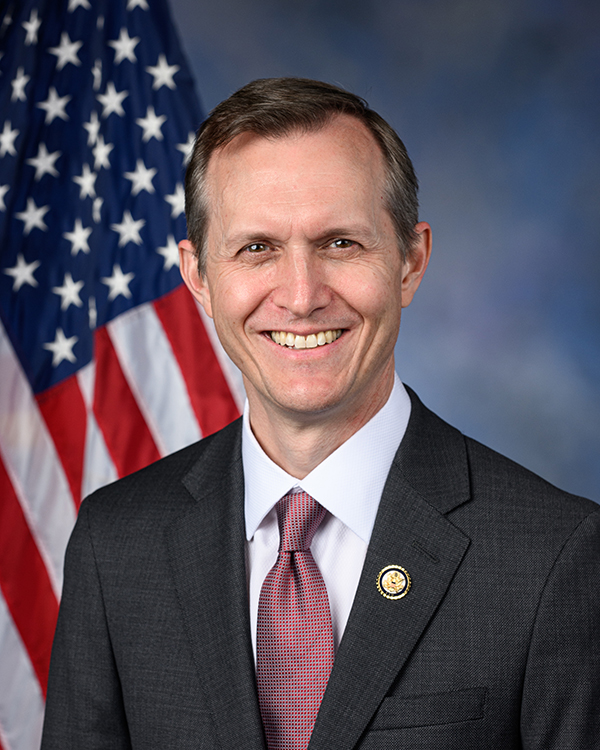
Rep. George Whitesides
Sponsored bills
Maddy summaryThe PILOT Act directs the Department of Defense to submit a report by January 1, 2027, on whether to allow graduates of accredited civilian test pilot schools to work as test pilots for the military. This report will evaluate the current number of available pilots, the risks and benefits of opening these roles to civilians, and how to create a certification system to ensure civilian training matches military standards. The legislation does not immediately change hiring rules but instead requires an official study to determine if such changes are feasible and advisable.
Maddy summaryHR 4283 designates the U.S. Postal Service facility at 1157 West Mission Avenue in Escondido, California, as the "Captain E. Royce Williams Post Office Building." The bill updates all official references (laws, maps, documents) to this specific post office to use the new name. This is a ceremonial naming bill with no policy changes or direct impact on citizens' rights or obligations. It affects only the postal facility's official designation and related records.
Maddy summaryThe Geo POWER Act creates a new milestone-based financing program to support geothermal energy projects in areas with limited or no existing geothermal power generation, including regions near Indian lands. This program awards funding based on the achievement of specific technical and financial milestones rather than upfront capital, aiming to reduce risks for future projects. The initiative prioritizes projects that generate public data to characterize new geothermal resources and require a minimum electricity generation capacity of 30 megawatts. The Department of Energy must award financing to at least three different proposals across three different states, ensuring geographic diversity in project selection.
Maddy summaryThis resolution supports designating July 20, 2026, as "National Moon Landing Day" to honor the historic Apollo 11 mission and the ongoing Artemis program. The bill encourages Americans to celebrate the achievements of NASA astronauts, engineers, and scientists while honoring those who lost their lives during space exploration efforts. It also aims to inspire young people to pursue careers in STEM fields and promote public awareness of the economic and scientific benefits of human spaceflight.
Maddy summaryHR 4288 would rename the Department of Veterans Affairs community-based outpatient clinic in San Jose, California, as the "Corporal Patrick D. Tillman VA Clinic." The bill directly affects this specific VA facility, updating all official references to it. The key provision requires the clinic to be designated by this new name in all federal records, documents, and maps following the bill's enactment. This is a procedural naming bill honoring Corporal Tillman, a former NFL player and Army Ranger killed in action in Afghanistan in 2004.
Maddy summaryThis bill requires Medicare Advantage plans to implement electronic pre-approval systems for medical services by 2028 and meet transparency reporting standards starting in 2027. Plans must publicly report data on approval/denial rates, appeal outcomes, response times, and technology use for pre-approval requests, including details on how denials relate to clinical criteria. It establishes a 24-hour response timeframe for certain requests and mandates annual reviews of pre-approval requirements based on data and input from seniors and providers. The law directly affects Medicare Advantage plans, seniors enrolled in these plans, and healthcare providers who submit pre-approval requests. These changes aim to make the pre-approval process faster, more transparent, and more accountable for seniors seeking covered medical services.
Maddy summaryThe TOTAL Screen Time Act directs the National Institute of Standards and Technology to create a voluntary technical standard that allows parents and guardians to set screen time limits across various devices like phones, tablets, and computers. This standard must protect the privacy of minors by avoiding centralized data collection and unnecessary data sharing between devices while maintaining device cybersecurity. The bill requires the NIST Director to consult with government agencies, device developers, medical professionals, and advocacy groups before establishing the standard. Additionally, the Director must submit regular reports to Congress and the public detailing the progress of developing and adopting this standard until 2032.
Maddy summaryThe STOP Senior Fraud Act empowers financial institutions to temporarily delay or refuse transactions for accounts held by older adults, vulnerable individuals, or those with a history of financial exploitation if there is a reasonable suspicion of fraud. Under this bill, these delays can last up to 55 days, with a possible extension to 85 days if an internal review confirms the risk, and must be accompanied by notifications to trusted contacts and relevant authorities. Financial institutions are also required to provide staff training on identifying and handling potential exploitation cases, while the law includes protections to shield banks from liability when acting in good faith. The legislation defines specific terms such as "older adult" as anyone 62 or older and "financial exploitation" as the unauthorized taking or control of assets through deception or undue influence.
Maddy summaryHR 4398, the Veteran Burial Timeliness and Death Certificate Accountability Act, requires Veterans Affairs (VA) physicians or nurse practitioners to certify the death of a veteran who dies of natural causes within 48 hours of learning of the death. This directly affects veterans' families, who previously faced delays of up to eight weeks in burial and access to survivor benefits due to slow death certifications. The bill mandates annual reports to Congress on VA compliance with the 48-hour rule, including statistics on delays and their causes. The key change is establishing a strict timeline for death certification to prevent unnecessary delays in honoring veterans' final arrangements.