Issue · Technology

Technology (Artificial Intelligence)

Every technology bill, vote, and legislator stance in Virginia, automatically classified by Maddy, our AI policy reader.

Total bills
21
2026 Regular Session
Top supporter
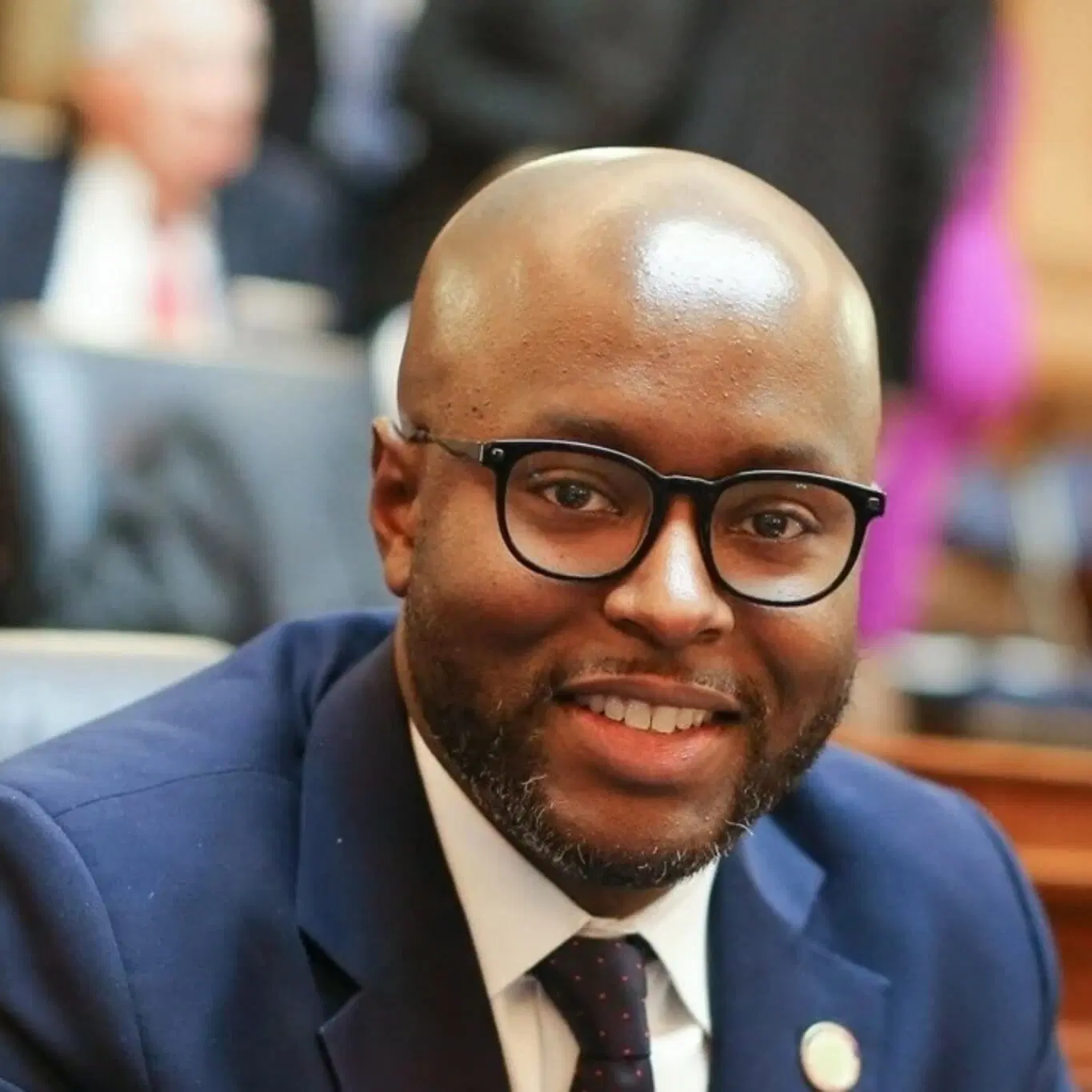
Alex Askew
100% support rate
Top opponent
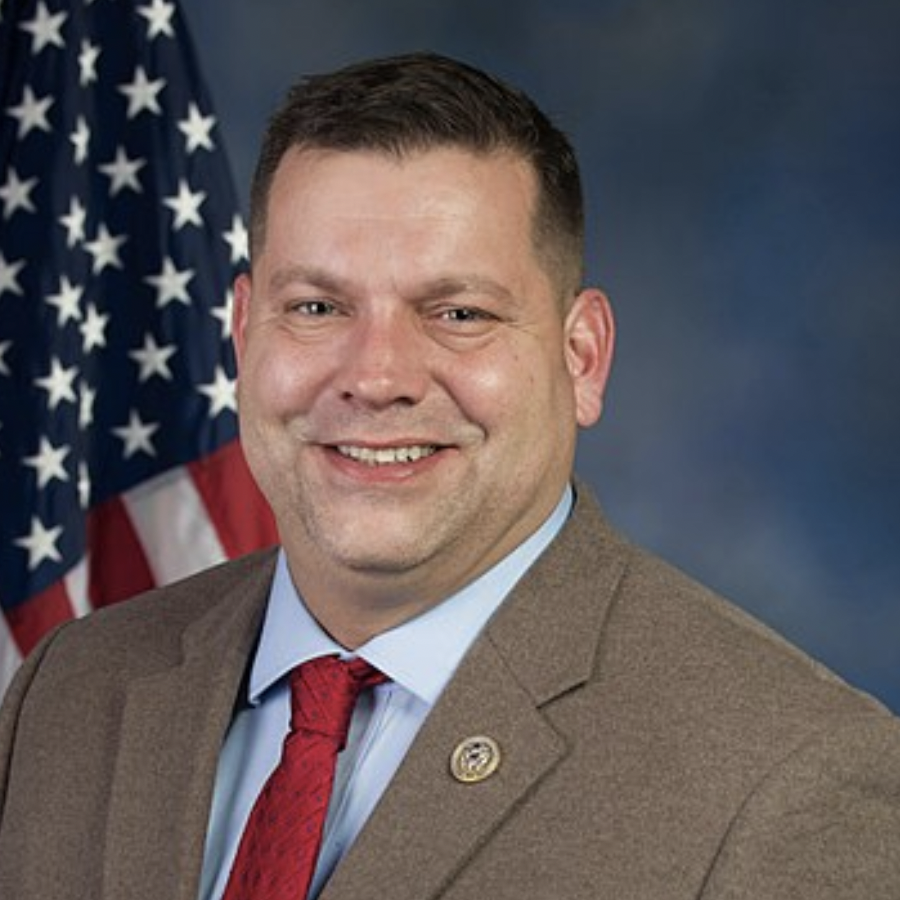
Tom Garrett
0% support rate
Ranked legislators
10
5 support · 5 oppose
Key legislators

Who's moving artificial intelligence in Virginia

Legislators moving artificial intelligence in Virginia
Legislator Party Stance Support rate Votes
Alex Askew
Alex Askew House · District 95
D
Strong +
100% 6
Anne Ferrell Tata
Anne Ferrell Tata House · District 99
R
Strong +
100% 6
Destiny LeVere Bolling
Destiny LeVere Bolling House · District 80
D
Strong +
100% 6
Rae Cousins
Rae Cousins House · District 79
D
Strong +
100% 6
Shelly Simonds
Shelly Simonds House · District 70
D
Strong +
100% 6
Tom Garrett
Tom Garrett House · District 56
R
Strong −
0% 6
Eric Zehr
Eric Zehr House · District 51
R
Strong −
0% 4
Phil Scott
Phil Scott House · District 63
R
Strong −
0% 4
Bill DeSteph
Bill DeSteph Senate · District 20
R
Strong −
0% 3
Bill Stanley
Bill Stanley Senate · District 7
R
Strong −
0% 3
Showing 1–10 of 21 bills

All technology bills

in committee · Virginia · House of Delegates Feb 18, 2026

HB 758: Artificial Intelligence Chatbots and Minors Act; established, prohibited practices, penalties.

Artificial Intelligence Chatbots and Minors Act established; prohibited practices; penalties. Creates the Artificial Intelligence Chatbots and Minors Act to require that deployers that operate or distribute a chatbot in the Commonwealth (i) ensure that any chatbot operated or distributed by the deployer does not make human-like features, defined in the bill, available to minors to use, interact with, purchase, or converse with and (ii) implement reasonable age verification systems to ensure that chatbots with human-like features are not made available to minors. The bill also requires deployers operating or distributing a chatbot that is a social artificial intelligence companion, defined in the bill, to ensure such chatbot is not available to minors. The bill provides that a violation of its provisions constitutes a prohibited practice under the Virginia Consumer Protection Act.
in committee · Virginia · House of Delegates Feb 9, 2026

HB 635: Artificial Intelligence Chatbots Act; established, prohibited practices, penalties.

Artificial Intelligence Chatbots Act established; prohibited practices; penalties. Creates the Artificial Intelligence Chatbots Act, which prohibits an operator from making a companion chatbot, as those terms are defined in the bill, available to a user in the Commonwealth unless the companion chatbot is incapable of certain actions specified in the bill. The bill also requires an operator of a companion chatbot to include a disclaimer to users of all ages that a companion chatbot is not a human via a static, persistent disclosure and notify a user via a pop-up that he is not engaging with a human counterpart at specified intervals. The bill makes it unlawful for any operator of a companion chatbot to operate or provide a companion chatbot to a user unless such companion chatbot contains a protocol to take reasonable efforts for detecting and addressing expressions of suicidal ideation or self-harm by a user to the companion chatbot. The bill also includes certain data privacy and transparency requirements. The bill provides that a violation of its provisions constitutes a prohibited practice under the Virginia Consumer Protection Act.
in committee · Virginia · House of Delegates Feb 18, 2026

HB 713: Fostering Access, Innovation, and Responsibility in Artificial Intelligence Act; established.

Fostering Access, Innovation, and Responsibility in Artificial Intelligence Act established. Establishes the Fostering Access, Innovation, and Responsibility in Artificial Intelligence Act (FAIR AI Act) that requires a developer of a base artificial intelligence model, as defined in the bill, to clearly and conspicuously disclose, in a manner that is appropriate for the medium of the content and is easily accessible to the user of such model, in the terms of service governing the use of such model, certain elements related to the artificial intelligence system. The bill creates the FAIR AI Enforcement Fund for the purpose of supporting agency enforcement of artificial intelligence system misuse, bias, and workforce disruption. Finally, the bill limits the defenses available in any criminal or civil action against a defendant that is alleged to have developed, modified, or deployed an artificial intelligence system that caused harm to a plaintiff. The bill has a delayed effective date of July 1, 2027.
passed · Virginia · Senate Mar 2, 2026

SB 269: Mental health service providers; definitions, use of artificial intelligence system, civil penalty.

Use of artificial intelligence system by mental health service providers; civil penalty. Permits the use of an artificial intelligence system by mental health service providers to assist in providing therapy or counseling services if such mental health service provider maintains full responsibility for all interactions, outputs, and data use associated with the system. The bill prohibits the use of an artificial intelligence system to provide therapy or counseling services without a mental health service provider. The bill specifies that records kept by mental health service providers must comply with health records privacy requirements; creates an exception for religious counseling, peer support, or self-help materials and educational resources; and establishes a civil penalty not to exceed $10,000 for violations of the statute.
passed · Virginia · Senate Feb 4, 2026

SB 232: Consumer Data Protection Act; prohibitions and duties relating to minors.

Consumer Data Protection Act; prohibitions and duties relating to minors. Prohibits a controller of an online service, product, or feature from entering into certain agreements with a known minor, unless such controller obtains verified consent from the minor's parent as specified in the bill. The bill imposes certain duties on a controller of an online service, product, or feature related to advertising, algorithm use, and reasonable care toward known minors. The bill expands the consumer rights of a parent to minors and adds a provision allowing a parent to obtain a copy of the minor's data. Current law offers certain consumer rights to the parents of children younger than age 13. The bill has a delayed effective date of January 1, 2027.
signed · Virginia · House of Delegates Apr 8, 2026

HB 797: Artificial intelligence; framework for person/entity acting as an independent verification org.

Joint Commission on Technology and Science; artificial intelligence; independent verification organizations. Directs the Joint Commission on Technology and Science (JCOTS) to evaluate the feasibility and impact of developing a framework for any person or entity seeking to act as an independent verification organization that assesses artificial intelligence models' or applications' adherence to standards reflecting best practices for the prevention of personal injury and property damage. The bill directs JCOTS to submit a report with its recommendations and any findings to the Chairs of the Senate Committees on Finance and Appropriations and General Laws and Technology and the House Committees on Appropriations and Communications, Technology and Innovation by November 1, 2026. This bill is identical to SB 384.
in committee · Virginia · House of Delegates Feb 2, 2026

HB 1170: Law-enforcement agencies & sheriff's dept.; policy on use of covered artificial intelligence syst.

Department of Criminal Justice Services; law-enforcement agencies and sheriff's departments; policy on use of covered artificial intelligence systems. Requires the Department of Criminal Justice Services to establish a model policy for the use of a covered artificial intelligence system, defined in the bill, by any state or local law-enforcement agency or sheriff's department by October 1, 2026. The bill also requires each local law-enforcement agency and sheriff's department and the Department of State Police to establish and adopt a written policy for the use of a covered AI system by such agency or department that meets or exceeds the model policy established by the Department of Criminal Justice Services by January 1, 2027. The bill requires such policies be publicly available on the law-enforcement agency's or sheriff's department's website.
in committee · Virginia · Senate Feb 4, 2026

SB 365: Fostering Access, Innovation, and Responsibility in Artificial Intelligence Act; established.

Fostering Access, Innovation, and Responsibility in Artificial Intelligence Act established. Establishes the Fostering Access, Innovation, and Responsibility in Artificial Intelligence Act (FAIR AI Act) that requires a developer of a base artificial intelligence model, as defined in the bill, to clearly and conspicuously disclose, in a manner that is appropriate for the medium of the content and is easily accessible to the user of such model, in the terms of service governing the use of such model, certain elements related to the artificial intelligence system. The bill creates the FAIR AI Enforcement Fund for the purpose of supporting agency enforcement of artificial intelligence system misuse, bias, and workforce disruption. Finally, the bill limits the defenses available in any criminal or civil action against a defendant that is alleged to have developed, modified, or deployed an artificial intelligence system that caused harm to a plaintiff. The bill has a delayed effective date of July 1, 2027.
in committee · Virginia · House of Delegates Feb 2, 2026

HB 1294: Use of artificial intelligence-based tools; covered artificial intelligence, disclosure of use.

Use of artificial intelligence-based tools; covered artificial intelligence; disclosure of use. Requires the use of covered artificial intelligence, as defined in the bill, in a criminal investigation to be disclosed in a police report filed for that investigation. Such a report shall be submitted to the attorney for the Commonwealth upon arrest or issuance of a summons and made available to the individual under investigation or such individual's counsel. The bill provides that any use of covered artificial intelligence subsequent to arrest shall be disclosed to the attorney for the Commonwealth and the individual under investigation as soon as practicable but no later than 30 calendar days following such use. The bill enumerates what each report shall include regarding the use of covered artificial intelligence and provides that the first draft of any report or record created in whole or in part by generative artificial intelligence shall be retained for as long as the final report is retained. The bill also provides that the program used to generate a draft or final report shall maintain an audit trail that identifies (i) the person who used artificial intelligence to create or edit the report; (ii) any changes made to the report following the initial draft; and (iii) the video and audio footage used to create a report, if any. The bill provides that the Attorney General may investigate and, if warranted, bring a civil action against any law-enforcement agency to obtain equitable or declaratory relief to enforce the provisions of the bill and provides that a resident of the jurisdiction may bring a civil action against the law-enforcement agency to obtain equitable or declaratory relief to enforce the provisions of the bill. The bill requires such plaintiff to provide written notice of any alleged violation to the law-enforcement agency at least 90 days prior to filing suit, in a manner that is reasonably calculated to enable the law-enforcement agency to cure the alleged violation.
passed · Virginia · Senate Feb 23, 2026

SB 586: Health carriers; use of artificial intelligence, disclosures.

Health carriers; use of artificial intelligence; disclosures. Requires health carriers to disclose to the State Corporation Commission's Bureau of Insurance how artificial intelligence is used to manage claims coverage and to submit all information enabling decisions made by artificial intelligence to the Bureau upon request. The bill also requires health carriers to provide notice to enrollees and health care providers when artificial intelligence has been used to issue an adverse determination and to provide a clear and timely process for appeal of such determination.
Showing 1 to 10 of 21 bills
1 2 3 Next