Issue · Technology

Technology

Every technology bill, vote, and legislator stance in Virginia, automatically classified by Maddy, our AI policy reader.

Total bills
305
119th Congress
Top supporter
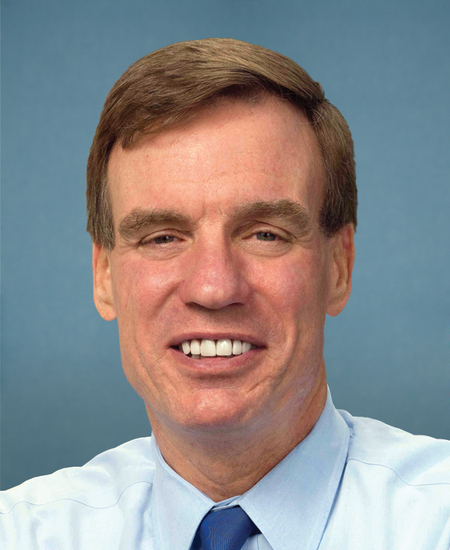
Mark R. Warner
82% support rate
Top opponent
H. Morgan Griffith
27% support rate
Ranked legislators
10
5 support · 5 oppose
Key legislators

Who's moving technology in Virginia

Legislators moving technology in Virginia
Legislator Party Stance Support rate Votes
Mark R. Warner
Mark R. Warner Senate
D
Strong +
82% 228
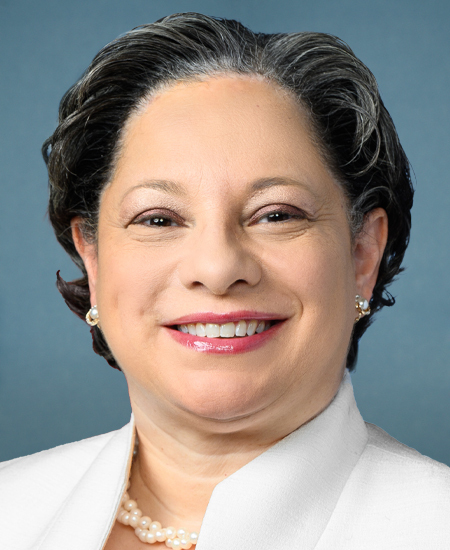
Jennifer L. McClellan
Jennifer L. McClellan House · District 4
D
Support
77% 262
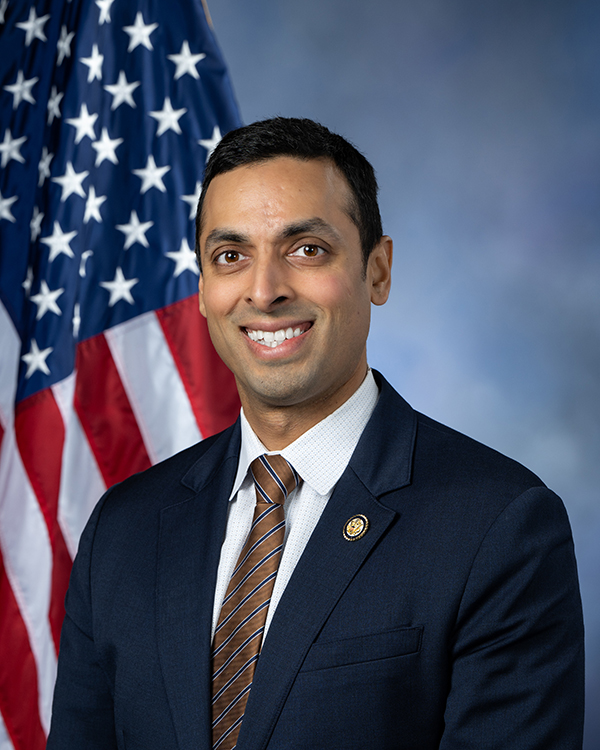
Suhas Subramanyam
Suhas Subramanyam House · District 10
D
Support
77% 261
Eugene Simon Vindman
Eugene Simon Vindman House · District 7
D
Support
76% 261
Donald S. Beyer, Jr.
Donald S. Beyer, Jr. House · District 8
D
Support
73% 261
H. Morgan Griffith
H. Morgan Griffith House · District 9
R
Oppose
27% 262
Ben Cline
Ben Cline House · District 6
R
Oppose
27% 262
John J. McGuire III
John J. McGuire III House · District 5
R
Oppose
27% 261
Jennifer A. Kiggans
Jennifer A. Kiggans House · District 2
R
Oppose
32% 262
Robert J. Wittman
Robert J. Wittman House · District 1
R
Oppose
36% 260
Showing 1–10 of 305 bills

All technology bills

in committee · United States · House Sep 8, 2026

HR 10322: Data Center Fair Share Act

The Data Center Fair Share Act requires electric utilities to ensure that large commercial customers, defined as those with a peak demand of 100 megawatts or more at a single site, pay the full incremental costs for any power grid upgrades needed to serve them. This obligation applies even if the customer later cancels their contract or stops purchasing electricity from the utility. The bill mandates that state regulatory authorities and nonregulated utilities begin considering these new standards within one year of enactment and complete the process within two years. States that fail to implement these federal requirements will face a penalty where 100 percent of their apportioned federal highway funds are withheld starting in the first fiscal year after the deadline passes.
in committee · United States · House Sep 10, 2026

HR 10347: Data Science and Literacy Act of 2026

The Data Science and Literacy Act of 2026 establishes a competitive grant program administered by the Secretary of Education to support state agencies, local school districts, tribal schools, and higher education institutions in expanding data literacy and statistics education from pre-kindergarten through postsecondary levels. Eligible recipients must use funds for activities such as developing new curricula, providing professional development for teachers, and creating partnerships with industry or community organizations to reduce access gaps for underrepresented students. The bill authorizes $10 million annually for fiscal years 2027 through 2031, requiring grantees to submit biannual reports on student outcomes disaggregated by race, ethnicity, gender, and income status. Additionally, the legislation amends existing federal law to require the collection of demographic and background data on secondary school STEM teachers in each state every five years.
Sub-Topics K-12 Education
in committee · United States · House Aug 31, 2026

HR 10199: Sell Your Stocks or Step Down Act

The Sell Your Stocks or Step Down Act would prohibit high-ranking federal officials, including the President, Vice President, Members of Congress, senior executive branch employees, and federal judges, from directly or indirectly owning or trading most stocks, commodities, futures, and digital assets. To comply with these rules, covered individuals must sell their existing eligible investments at fair market value within 30 days of taking office or the bill's enactment, though they may keep diversified mutual funds, government bonds, and certain other specific holdings. The legislation establishes strict penalties for non-compliance, including daily fees that can reach up to 50 percent of the value of the remaining portfolio and mandatory disgorgement of any profits made from illegal trades. These fines must be paid out of personal funds rather than government resources, with all collected penalties deposited into the Treasury specifically for deficit reduction.
in committee · United States · Senate Aug 7, 2026

S 5381: ADVERSARIES Act

The ADVERSARIES Act requires the Under Secretary of the Bureau of Industry and Security to conduct a review within 90 days of enactment regarding how U.S.-based affiliates of foreign entities on the Entity List or Military End User List might be acquiring controlled items that their parent companies are restricted from accessing. The review must also assess national security risks posed by foreign adversary exploitation of vulnerabilities in information and communications technology, including whether specific sectors pose undue risk to export control effectiveness. Following the review, officials must submit a report to relevant congressional committees detailing their findings, any planned actions to address identified threats within the next year, and recommendations for changes to U.S. law.
in committee · United States · Senate Aug 5, 2026

S 5246: MATCH IT Act of 2026

The MATCH IT Act of 2026 directs the Department of Health and Human Services to create a uniform definition for patient match rates and establish a minimum data set required to accurately link patients with their medical records. These new standards would be integrated into federal health information technology certification criteria and Medicare interoperability program requirements, affecting electronic health record vendors and healthcare providers participating in these programs. To encourage adoption, the bill introduces a voluntary bonus measure within the Medicare Promoting Interoperability Program that allows eligible providers to receive payment adjustments for achieving high patient match rates, such as 90 percent or higher. Additionally, the legislation mandates the creation of an anonymous reporting program where providers can submit matching accuracy data to help the government monitor progress and adjust incentive thresholds over time.
Sub-Topics Medicare
in committee · United States · Senate Aug 3, 2026

S 5217: RECOVER PII Act

The RECOVER PII Act expands identity protection coverage for individuals affected by federal agency data breaches, extending the duration of protection for the remainder of their lives and increasing the minimum insurance amount to $5 million. Additionally, the bill allows federal agencies to use appropriated funds to reimburse employees or their contractors for up to 100 percent of the costs associated with privacy-enhancing services, such as software or hardware designed to mitigate data risks. These provisions aim to provide long-term financial support and resources to victims of data breaches while ensuring that reimbursement claims are supported by necessary documentation.
in committee · United States · House Jul 23, 2026

HR 9925: FRONTIER Act

The FRONTIER Act establishes a regulatory framework for the largest artificial intelligence developers to manage and disclose risks associated with their most powerful models, known as "frontier models." It requires companies meeting specific revenue and spending thresholds to create public safety frameworks, undergo independent third-party audits, and report incidents or potential harms to the Department of Commerce. The bill also creates a system where the Secretary of Commerce can issue emergency orders to suspend or restrict model development if an imminent catastrophic risk is identified. Additionally, the legislation preempts state laws that impose new obligations on AI developers regarding risk transparency, auditing, and incident reporting to ensure a uniform national approach.
in committee · United States · Senate Jul 30, 2026

S 5187: PHD Talent Act of 2026

The PHD Talent Act of 2026 establishes a five-year pilot program to help universities create accelerated doctoral programs in critical fields like artificial intelligence, quantum computing, and biotechnology. These programs aim to train U.S. citizens and permanent residents by shortening the time to earn a doctorate, integrating undergraduate and graduate coursework, and providing funding that covers at least three years of doctoral study. The Department of Energy will award grants to universities that partner with national laboratories and industry to offer these tracks, which also include structured mentorship and research rotations to build dual expertise in a specific science and computational methods. The legislation authorizes $250 million for the program between 2028 and 2032 and requires the Department of Energy to submit annual reports to Congress on the initiative's progress and student outcomes.
in committee · United States · House Aug 3, 2026

HR 10017: Permanent CBDC Ban Act

This bill, titled the Permanent CBDC Ban Act, aims to permanently prohibit the Federal Reserve from issuing a central bank digital currency. It achieves this by amending the Federal Reserve Act to remove the specific legal authority that allows the Reserve to create such a digital currency. The legislation directly affects the Federal Reserve by stripping away its power to launch a digital version of the dollar. By deleting the relevant subsection of the law, the bill ensures that the Reserve cannot issue a CBDC in the future.
in committee · United States · Senate Jul 21, 2026

S 5055: National Workforce Transition Fund Act of 2026

This bill creates a temporary National Workforce Transition Fund to help workers and employers manage labor market changes caused by artificial intelligence and emerging technologies. The fund is financed by exempting AI data centers from certain tax depreciation limits, with the resulting revenue transferred to the Treasury and then allocated to the fund over five years. A new National Workforce Transition Board will oversee the program, developing strategies to assess workforce impacts and directing resources toward training, job placement, and employer retention initiatives. The legislation prioritizes support for workers facing employment disruption without requiring them to prove that technology was the sole cause of their job loss, while also funding improvements to labor market data systems. All provisions related to the fund and workforce activities are set to expire five years after the bill is enacted.
Showing 1 to 10 of 305 bills
1 2 3 31 Next