

Maddy summaryThe ALERT Act (HR 7613) requires the Federal Aviation Administration to improve aviation safety through several key measures. It mandates the evaluation and potential implementation of enhanced collision avoidance systems (ACAS-Xa) for commercial aircraft and ACAS-Xr for rotorcraft, with specific deadlines for rulemaking and installation. The bill establishes committees to develop recommendations for safety technology requirements, requires safety risk assessments for air traffic controllers, and addresses operational procedures at high-traffic airports like Ronald Reagan Washington National. These provisions affect air carriers, air traffic controllers, rotorcraft operators, and Department of Defense aircraft operations. The act aims to enhance situational awareness and reduce midair collision risks through technology upgrades and improved safety protocols.
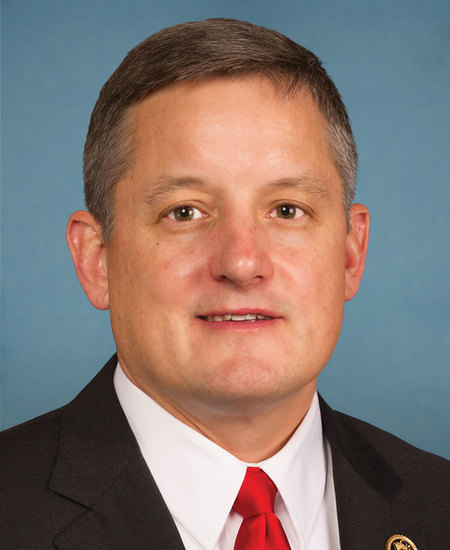
Rep. Bruce Westerman
Sponsored bills
Maddy summaryThis resolution expresses support for designating April 2026 as "Second Chance Month" to raise awareness about barriers faced by people with criminal records. The bill does not create new laws or change existing policies but serves as a symbolic gesture to highlight challenges in employment, housing, and education for formerly incarcerated individuals. It calls on communities, employers, and organizations to promote awareness of these obstacles and encourage efforts to help people reintegrate into society. The resolution honors the bipartisan First Step Act of 2018 and the Second Chance Act of 2007, which provide reentry services to incarcerated individuals.
Maddy summaryThis resolution requires Members of Congress who must reimburse the Treasury for payments related to sexual harassment or discrimination claims to publicly disclose the details of those reimbursements in the House chamber. It mandates that the Office of Congressional Workplace Rights report these cases to the Clerk, who will then read the Member's name, the reimbursement amount, and related information aloud during a House session. Members who fail to comply within 30 days face restrictions on committee assignments and leadership duties, while former Members are barred from entering the House building until they complete reimbursement and undergo the public disclosure process. The measure also establishes that failures to comply with these requirements can be investigated separately by the House Ethics Committee.
Maddy summaryHR 5688, the Non-Domiciled CDL Integrity Act, changes rules for issuing commercial driver's licenses (CDLs) to people who don't live in the state where the license is issued. It allows states to issue CDLs to foreign nationals with lawful U.S. immigration status and work-related visas (valid for up to one year or until their stay ends), requiring states to verify status before issuing and keep records for two years. For residents of U.S. territories like Puerto Rico, it requires proof of U.S. citizenship or permanent residency before issuing CDLs, with similar verification and record-keeping rules. The bill directly affects commercial drivers from foreign countries and U.S. territories seeking CDLs in states where they are not residents.
Enhanced Iran Sanctions Act of 2025 This bill imposes sanctions on certain foreign persons (individuals and entities) that are involved in Iran's petroleum sector as well as certain associated persons. The bill also requires or authorizes actions to facilitate the enforcement of sanctions on Iran. Specifically, the bill requires the President to impose visa- and property-blocking sanctions on any foreign person that, after the bill's enactment, knowingly engages in any transaction related to the processing, export, or sale of oil, condensates, gas, liquefied natural gas, or other petrochemical products in whole or in part from Iran. The President must also impose sanctions on certain foreign persons associated with a sanctioned individual or entity. For example, the President must sanction the subsidiaries and corporate officers of a sanctioned business. The bill provides certain exceptions to these sanctions, including specifying that sanctions do not apply to the importation of goods or to conducting or facilitating transactions for humanitarian assistance. The Department of State must establish an interagency working group that shall seek to establish a multilateral contact group to coordinate international efforts to enforce sanctions on Iran. The bill expands the State Department rewards program to authorize a reward payment to any individual who furnishes information leading to the identification of a person (1) subject to sanctions under this bill, or (2) that has attempted or is attempting to evade sanctions under this bill.
Maddy summaryThis bill creates a tax credit for businesses selling products made with U.S.-grown cotton. The credit equals 24% of the cotton's market value if processed only in the U.S. or in countries with U.S. trade deals, or 18% for other processing locations. To qualify, cotton must be digitally traced from U.S. farms to finished products and certified by the USDA as meeting origin requirements. It directly affects clothing and textile manufacturers selling qualifying products in the U.S. market.
Maddy summaryThis bill modifies federal sentencing for young people under 18 who were previously trafficked, abused, or assaulted before committing violent crimes. It allows judges to sentence below mandatory minimums and suspend parts of a sentence to account for the trauma the offender experienced. The law specifically applies to those convicted of violent offenses after the bill's enactment, provided the court finds clear evidence they were victimized under specific federal trafficking or abuse laws within the prior year. It directly affects minors with documented histories of victimization who commit violent acts, giving judges discretion to consider their trauma during sentencing.
Maddy summaryThis bill amends the Fair Labor Standards Act to change how tipped employees' wages are calculated. It removes the previous requirement that tipped workers must "customarily and regularly receive more than $30 a month in tips" to qualify for the lower cash wage rate. Instead, it requires that the combined cash wage plus tips must equal or exceed the standard federal minimum wage for the pay period chosen by the employer (ranging from daily to monthly). The bill directly affects restaurant servers, bartenders, and other tipped workers who receive cash wages plus tips. It simplifies wage calculations for employers while ensuring tipped employees earn at least the full minimum wage when tips are included.
Maddy summaryHR 909, the Crime Victims Fund Stabilization Act of 2025, modifies how funds from the False Claims Act are deposited into the Crime Victims Fund. It specifies that from 2025 through 2029, certain False Claims Act proceeds (specifically those for qui tam plaintiff payments and government damage reimbursements) cannot be deposited into the fund. This change directly affects the composition of the Crime Victims Fund by excluding these specific revenue streams during the specified period. The bill does not create new benefits or alter victim services; it only adjusts fund allocation rules for existing False Claims Act revenues.
Maddy summaryThe SPEED Act reforms the National Environmental Policy Act (NEPA) to streamline federal environmental reviews for projects. It limits agencies to considering only "proximate" environmental effects directly tied to a specific project (not speculative or distant impacts), sets strict 180-day deadlines for court remands, and restricts judicial review to procedural errors - not environmental outcomes. This primarily affects federal agencies (like the EPA or Corps of Engineers) and project developers (e.g., for infrastructure, energy, or construction projects) by reducing review scope and accelerating approvals. The bill clarifies NEPA is purely procedural, prohibiting courts from substituting their judgment on environmental effects or delaying actions for new scientific data after deadlines.