Maddy summaryHR 6945 clarifies that states may use federal grants under Section 403 of the Social Security Act to support pregnancy centers meeting specific criteria. These centers must promote protecting both mother and unborn child life while providing services like counseling, pregnancy testing, and material support (e.g., diapers, baby clothes). The bill explicitly prohibits interpreting existing law as barring such funding for eligible centers. It does not create new funding but defines which pregnancy resource organizations qualify for existing grants.
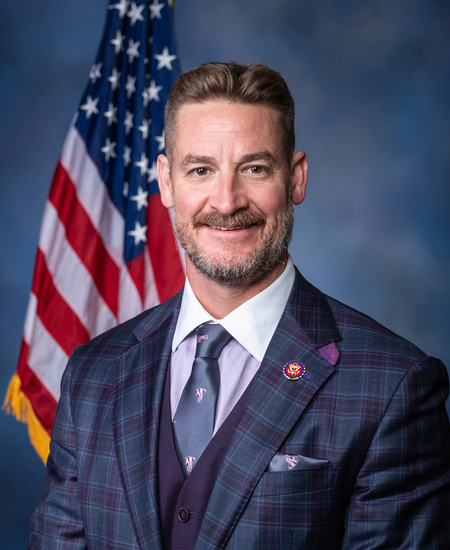
Rep. W. Gregory Steube
Sponsored bills
Maddy summaryHR 7235, the "Protecting Motherhood Act," requires all federal agencies to stop using the term "birthing person" in official documents and instead use specific terms like "female," "mother," "pregnant woman," or "woman." It directly affects federal agencies that produce regulations, forms, or communications, mandating the use of these defined terms when referring to individuals based on biological sex. The bill provides detailed definitions for terms like "female" (based on biological sex at conception) and "pregnant woman" (an adult human female carrying a child). The law takes effect 30 days after enactment. This is a procedural change focused solely on terminology in government documents, with no direct impact on healthcare access or services.
Maddy summaryThe No Tax on Boat Loan Interest Act of 2026 would allow individuals to deduct interest paid on loans for qualifying U.S.-manufactured recreational motorboats from their taxable income, similar to how interest on car loans is treated. It defines qualifying boats as motorboats manufactured in the U.S. for recreational use, excluding non-U.S. built vessels, and requires taxpayers to provide the boat's hull identification number on their tax return. This change applies to loans taken out after December 31, 2024, and primarily affects individual boat owners who finance purchases meeting these criteria.
Maddy summaryThe WATCH Act requires foreign laboratories receiving U.S. federal funding for animal research to undergo quarterly inspections to verify compliance with animal welfare standards. These inspections will evaluate animal care committees, treatment protocols, and record-keeping, with results published publicly. Laboratories found non-compliant will be given a chance to correct issues before facing suspension or revocation of their research grants. The law takes effect 180 days after enactment and requires coordination with foreign regulatory authorities to implement these oversight measures.
Maddy summaryThis bill amends the Social Security Act to provide work incentives for Purple Heart recipients receiving disability benefits. It removes the standard earnings penalty that would reduce benefits when veterans earn above the "substantial gainful activity" (SGA) threshold, instead allowing benefits to continue with a reduced rate ($1 reduction for every $4 earned above the threshold, but not below $0). It also specifically applies a higher SGA earnings limit to Purple Heart recipients under Social Security disability rules. The changes affect veterans who received a Purple Heart for a service-connected injury and are currently receiving Social Security disability benefits. The bill takes effect six months after enactment.
Maddy summaryHR 7122, the Ensuring Consistency in Nutrition Labels Act, requires food manufacturers to ensure their product labels accurately reflect nutrient content within a 5% tolerance. If actual nutrient levels exceed the declared amount by more than 5% for specific nutrients (like calories or fat), the food would be considered "misbranded" under federal law. The bill mandates the FDA to update its labeling regulations within 60 days of enactment to implement this 5% deviation rule. This directly affects food producers who must comply with stricter labeling accuracy standards for nutrient declarations on packaging.
Maddy summaryHR 7097, the "No American Benefits Abroad Act," bans individuals receiving means-tested welfare benefits from sending money abroad via international wire transfers. The bill requires wire transfer providers to verify in writing whether a customer receives public assistance (like SNAP or TANF) before processing any international transfer. It directly affects people enrolled in income-based welfare programs who might otherwise send funds overseas. The law focuses on preventing public assistance funds from being used for international transfers, without altering eligibility for benefits.
Maddy summaryHR 2617, the "Say No to Indoctrination Act," amends the Elementary and Secondary Education Act to prohibit public K-12 schools receiving federal funds from teaching "concepts related to gender ideology" as defined in Executive Order 14168. The bill adds this specific restriction to Section 8526 of the ESEA, directly affecting curriculum content in federally funded schools. This policy change would require schools to avoid instructional materials or lessons addressing gender identity concepts as defined by the referenced executive order.
Maddy summaryHR 2516, the Accreditation for College Excellence Act of 2025, prohibits accreditation agencies from requiring colleges to support specific political views, ideologies, or partisan positions. It explicitly prevents agencies from assessing institutions based on their commitment to any ideology or requiring adherence to statements of faith for religious institutions. The bill also limits federal criteria for accreditation to only what is necessary, ensuring colleges comply with their accreditor’s standards - not additional unrelated requirements. This directly affects all colleges seeking federal funding through accredited programs by clarifying permissible accreditation standards.
Maddy summaryHR 909, the Crime Victims Fund Stabilization Act of 2025, modifies how funds from the False Claims Act are deposited into the Crime Victims Fund. It specifies that from 2025 through 2029, certain False Claims Act proceeds (specifically those for qui tam plaintiff payments and government damage reimbursements) cannot be deposited into the fund. This change directly affects the composition of the Crime Victims Fund by excluding these specific revenue streams during the specified period. The bill does not create new benefits or alter victim services; it only adjusts fund allocation rules for existing False Claims Act revenues.