Maddy summaryHRES 987 is a symbolic House resolution denouncing Venezuela's Nicolás Maduro as an "authoritarian, despotic, and murderous regime" and commending former President Trump for ordering a January 3, 2026, operation to arrest Maduro. It references prior congressional efforts to address Maduro's alleged human rights abuses and election interference. The resolution expresses support for the operation described as targeting Maduro's "brutal narcoterrorism and crimes against humanity." As a non-binding resolution, it does not create new policy but serves as a formal statement of congressional position.
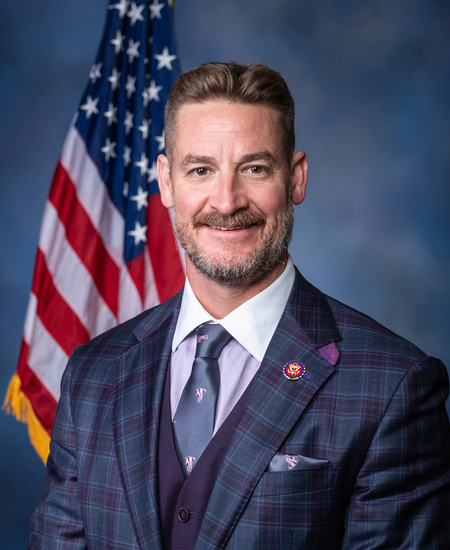
Rep. W. Gregory Steube
Sponsored bills
Maddy summaryHRES 984 is a symbolic resolution designating January 9, 2026, as "National Law Enforcement Appreciation Day." It directly honors all federal, state, local, and tribal law enforcement officers across the United States for their service and sacrifices. The resolution expresses the House's support and gratitude, encourages public observance through ceremonies, and recognizes officers who have made the ultimate sacrifice. As a non-binding resolution, it does not create new laws or policies but serves as a formal expression of appreciation.
Maddy summaryHR 3492, the Protect Children’s Innocence Act, makes it a federal crime to perform genital or bodily mutilation or chemical castration on minors under 18, except for specific medical reasons. The bill broadly defines prohibited procedures to include gender transition-related surgeries (like hysterectomies or mastectomies) and medical treatments such as puberty blockers or cross-sex hormones administered to minors. It criminalizes these acts when they occur across state lines, involve payments, or use interstate commerce, while explicitly banning religious tradition as a defense. Exceptions include medically necessary procedures for health emergencies, childbirth, or conditions certified by a physician.
Maddy summaryHR 498, the "Do No Harm in Medicaid Act," prohibits federal Medicaid funding for gender transition procedures for individuals under 18 years old. The bill amends the Social Security Act to define "specified gender transition procedures" broadly, including surgeries, hormone treatments, and certain medications, and bans federal Medicaid coverage for these services for minors. Exceptions are made only for medically necessary treatments related to precocious puberty, genetic disorders of sex development, or urgent medical conditions requiring bodily correction (like infections or injuries from prior procedures). This directly affects minors enrolled in Medicaid state plans, as states would no longer receive federal funds for these specific covered services.
Essential Caregivers Act of 2025 This bill prohibits certain health care facilities from limiting the access of essential caregivers to residents of those facilities, including during designated emergency periods. Specifically, the bill generally prohibits Medicare skilled nursing facilities, Medicaid nursing facilities, Medicaid intermediate care facilities, and associated inpatient rehabilitation facilities from restricting the access of essential caregivers to residents of the facilities, including during emergency periods in which visitation rights are otherwise restricted. During emergency periods, facilities may restrict access for an initial period of up to seven days and for one additional maximum seven-day period (if the additional period is approved by the state health department). Facilities may restrict access for a total of 7 days (or 14 days with the approval of the state health department) during an emergency period. Essential caregivers must agree to comply with any safety protocols set by the facility, which may be no more stringent for caregivers compared to those for staff. Caregivers who fail to comply with these requirements may be denied access, subject to an appeals process.
Maddy summaryThis bill, the Protecting Ballot Measures From Foreign Influence Act of 2025, bans foreign nationals from contributing money to state and local ballot initiatives and referendums. It amends the Federal Election Campaign Act to explicitly include these state and local voting measures under the existing prohibition on foreign contributions for federal elections. The key provision requires that contributions to ballot measures - like state-level policy votes - must not come from foreign individuals or entities. The law would apply to all contributions made after its enactment date.
Miracle on Ice Congressional Gold Medal Act This act provides for the award of Congressional Gold Medals to the members of the 1980 U.S. Olympic men's ice hockey team in recognition of the team's achievement at the 1980 Winter Olympic Games.
Maddy summaryThe HOMEFRONT Act of 2025 exempts military housing for single service members and families (under the Department of Defense) from the National Historic Preservation Act, meaning these facilities won’t need to meet historic preservation standards. It allows the Secretary of Defense to temporarily exclude up to 0.1% of such housing units from the exemption, but excludes any historic sites listed on the National Register as of January 20, 2025. The bill also prohibits landlords of privatized military housing from requiring tenants to sign nondisclosure agreements related to leases or housing services, applying retroactively to all existing agreements. These changes directly affect military housing residents and the Department of Defense’s management of housing facilities.
Maddy summaryHR 1623 (the SCREEN Act) requires online platforms that profit from hosting pornographic content to implement age verification technology, preventing minors from accessing such material. Covered platforms must publicly disclose their verification process and securely handle age data collected through these systems. The law applies specifically to platforms where pornographic content is a regular business activity, not all websites. It mandates that only adults can access pornographic content on these platforms, without banning the content itself.
Maddy summaryThis bill renames a specific plaza in Washington D.C. (the area between H and K Streets on 16th Street Northwest) from "Black Lives Matter Plaza" to "Charlie Kirk Freedom of Speech Plaza." It requires the District of Columbia to install two standard street signs with the new name at the plaza's intersections within 90 days of enactment. The bill only affects the plaza's official designation and signage, with no substantive policy changes or new regulations. It directly impacts how the location is referenced in official documents and public signage.