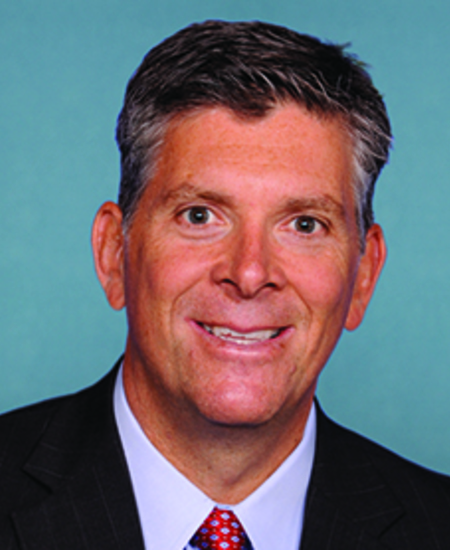
Photo of Darin LaHood
R United States House · District 16 · Illinois On the 2026 ballot

Rep. Darin LaHood

Compare
Total votes
2,818
all sessions
Attendance
97%
87 missed
Lower than 82% of chamber peers
With party
96%
of cast votes
Higher than 82% of chamber peers
Bipartisan score
2%
crosses aisle rarely
Lower than 83% of chamber peers
Sponsored
724
bills & resolutions
Near the chamber average
Committees
7
assignments
724 bills and resolutions

Sponsored bills

Total
724
Primary
97
Co-sponsor
627
This page
724
matching current filters
Co-sponsor HR 3747
Passed · United States House · Co-sponsor
Accelerating Access to Dementia and Alzheimer’s Provider Training Act

Maddy summaryThe AADAPT Act reauthorizes and expands Project ECHO grants to improve Alzheimer’s and dementia care through technology-enabled training. It specifically funds grants for healthcare providers in rural, frontier, or medically underserved areas to enhance early diagnosis, quality care, and provider retention for dementia patients. The bill authorizes $1 million annually (2027-2032) for these dementia-focused training programs, requiring funds to supplement - not replace - existing resources. This directly supports primary care providers licensed to serve underserved communities, using collaborative online learning to address care gaps.

Passed Jul 21, 2026 1 co-sponsor
Co-sponsor HR 9693
In committee · United States House · Co-sponsor
Patients First Act of 2026

Maddy summaryThe Patients First Act of 2026 modifies how Medicare reimburses physicians and primary care providers to improve access and stabilize payments. It establishes a new hybrid payment model for primary care services from 2027 to 2031, which pays a monthly fee per patient to eligible independent practices while covering specific services like care management and telehealth without cost-sharing for patients. The bill also updates the formula for calculating reimbursement rates to account for high inflation years and requires more frequent updates to the costs used in calculating payments. Additionally, the legislation reforms the performance-based payment system by adding care efficiency measures, creating a task force to recommend new quality metrics, and adjusting penalties for providers who fail to report on certain data.

In committee Jul 15, 2026 1 co-sponsor
Co-sponsor HR 9641
In committee · United States House · Co-sponsor
Essential Caregivers Act of 2026

Maddy summaryThe Essential Caregivers Act of 2026 requires nursing homes, long-term care hospitals, rehabilitation facilities, and intermediate care facilities to allow two chosen family members or friends to visit residents during times when regular visitation is suspended. These essential caregivers must agree to follow the facility's existing safety and infection control rules, which are no more restrictive than those applied to staff. While facilities can limit access for the first seven days of a suspension or deny entry if a caregiver shows symptoms of a serious infectious disease, they cannot block visits for end-of-life care. Additionally, the bill mandates that complaints about denied access to essential caregivers be investigated and resolved within three days.

In committee Jul 15, 2026 1 co-sponsor
Co-sponsor HR 3514
In committee · United States House · Co-sponsor
Improving Seniors’ Timely Access to Care Act of 2025

Maddy summaryThis bill requires Medicare Advantage plans to implement electronic pre-approval systems for medical services by 2028 and meet transparency reporting standards starting in 2027. Plans must publicly report data on approval/denial rates, appeal outcomes, response times, and technology use for pre-approval requests, including details on how denials relate to clinical criteria. It establishes a 24-hour response timeframe for certain requests and mandates annual reviews of pre-approval requirements based on data and input from seniors and providers. The law directly affects Medicare Advantage plans, seniors enrolled in these plans, and healthcare providers who submit pre-approval requests. These changes aim to make the pre-approval process faster, more transparent, and more accountable for seniors seeking covered medical services.

In committee Jul 15, 2026 1 co-sponsor
Co-sponsor HR 5347
Passed · United States House · Co-sponsor
Health Care Efficiency Through Flexibility Act

Maddy summaryThis bill requires the Medicare program to ensure specific electronic reporting methods (like digital clinical quality measures) are available for Accountable Care Organizations (ACOs) participating in the Medicare Shared Savings Program from 2025 through 2029. It clarifies that ACOs won’t be penalized for missing data from certain participants if they meet other reporting rules and demonstrate the participant couldn’t collect data via the required digital method. Additionally, it creates a voluntary pilot program (2028-2032) where selected ACOs report only two quality measures digitally instead of all required measures, with special rules about how this data affects performance scoring. The bill directly affects MSSP ACOs and changes their quality reporting requirements and flexibility.

Passed Jul 13, 2026 1 co-sponsor
Co-sponsor HR 9538
In committee · United States House · Co-sponsor
Residential Recovery for Seniors Act

Maddy summaryThe Residential Recovery for Seniors Act expands Medicare coverage to include three specific levels of residential treatment for substance use disorders: clinically managed low-intensity, clinically managed high-intensity, and medically managed services. To qualify for this coverage, facilities must meet strict standards regarding staffing, clinical assessments, and adherence to evidence-based criteria developed by recognized medical associations. The bill also establishes a new payment system that reimburses these facilities on a per-day basis, starting in fiscal year 2027, with rates initially set to cover 100% of their estimated costs.

In committee Jun 30, 2026 1 co-sponsor
Co-sponsor HR 9535
In committee · United States House · Co-sponsor
Securing Agriculture's Workforce Act of 2026

Maddy summaryThe Securing Agriculture's Workforce Act of 2026 modernizes the H-2A visa program by transferring administrative authority to the Department of Homeland Security and introducing a unified online platform to streamline applications for employers and workers. Key provisions include establishing new housing standards with mandatory inspections, creating a system for staggered worker entry and exit, and allowing workers to transfer between employers without losing their status. The bill also defines specific job classifications for wage calculations, expands the scope of covered agricultural activities, and provides legal protections for employers who document the employment of workers seeking visa status. Additionally, it requires agencies to develop a heat illness prevention plan and allows for contract termination due to natural disasters.

In committee Jun 30, 2026 1 co-sponsor
Primary HR 9518
In committee · United States House · Lead sponsor
Health Savings for Families Act of 2026

Maddy summaryThe Health Savings for Families Act of 2026 allows individuals to contribute money to their own Health Savings Accounts even if their spouse already has a similar health flexible spending account. This change removes the previous restriction that prevented dual contributions when a spouse maintained a comparable health reimbursement arrangement. The provision applies to plan years starting after December 31, 2026, and limits the spouse's account reimbursements to expenses that would have been eligible if the individual were not involved.

In committee Jun 29, 2026 0 co-sponsors
Co-sponsor HR 9250
In committee · United States House · Co-sponsor
Great American Outdoors Act 250

Maddy summaryThis bill redesignates the existing National Parks and Public Land Legacy Restoration Fund as the America's Legacy Restoration Fund to address deferred maintenance on federal lands. It directs revenue from recreation fees and a portion of energy development income into the fund, which must be used primarily for repairing critical infrastructure like roads, trails, and buildings managed by agencies such as the National Park Service and the Forest Service. The legislation establishes strict rules requiring that most funds go toward non-transportation projects, mandates transparency through public dashboards tracking project status, and sets aside a small percentage for matching private donations. Additionally, the bill increases entrance fees for foreign visitors to ensure they contribute to the fund, while prohibiting the use of these specific funds for land acquisition or employee bonuses.

In committee Jun 24, 2026 1 co-sponsor
Primary HR 9150
In committee · United States House · Lead sponsor
Boxing Therapy for Parkinson’s Access Act

Maddy summaryThis bill allows veterans diagnosed with Parkinson's disease or similar movement disorders to access boxing-based exercise classes as part of their medical treatment. Under the new provisions, eligible veterans enrolled in the VA health care system can receive these classes directly at a VA facility or get reimbursement to attend them at a non-VA location. The policy change takes effect 180 days after the bill is enacted, providing a specific therapeutic option for managing the symptoms of these neurological conditions.

In committee Jun 23, 2026 0 co-sponsors
Showing 11 to 20 of 724 bills