

Maddy summaryHR 5267, the American Franchise Act, clarifies when franchisors can be considered joint employers of franchisee employees under federal labor laws. It defines "substantial direct and immediate control" over essential employment terms like wages, benefits, hours, hiring, and discipline - requiring franchisors to actively set these terms to be deemed joint employers. The bill explicitly excludes routine brand standards, training, or minimal safety requirements from constituting such control. This directly affects franchisors and franchisees by limiting joint employer liability to cases where franchisors exert significant, ongoing influence over core employment decisions. The law applies prospectively to new cases after enactment, not past disputes.
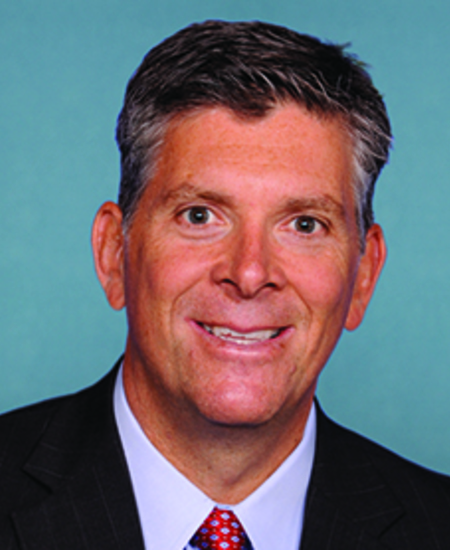
Rep. Darin LaHood
Sponsored bills
Maddy summaryHR 1869 creates a new DOJ task force within the Criminal Division to investigate and prosecute international trade crimes, such as customs evasion, smuggling, and trade-based money laundering. It requires the DOJ to hire specialized prosecutors, coordinate with agencies like U.S. Customs and Border Protection, and focus on specific violations covered under statutes like 18 U.S.C. §§ 541-546 and 21 U.S.C. § 331. The bill authorizes $20 million in funding for fiscal year 2026 (with 80% dedicated to criminal prosecutions), mandates annual reports to Congress on enforcement activities, and requires the DOJ to develop multi-agency partnerships to address these crimes. This directly affects federal prosecutors, border enforcement agencies, and industries impacted by trade violations.
Maddy summaryThis bill designates the Route 66 National Historic Trail, covering approximately 2,400 miles from Chicago, Illinois, to Santa Monica, California, along all historical alignments of U.S. Highway 66 (1926-1985). It directs the National Park Service to administer the trail while respecting its unique character, requiring tribal consultation for significant impacts on Native American tribes, and explicitly prohibiting land acquisition beyond 1/4 mile on either side of the trail. The bill clarifies it does not create buffer zones, disrupt energy infrastructure (including pipelines or renewable projects), or designate the trail as part of the National Park System, while affirming existing authority for easements and rights-of-way.
National Law Enforcement Officers Remembrance, Support and Community Outreach Act. [ sic ] This bill temporarily directs the Department of the Interior to award a grant to the National Law Enforcement Officers Memorial Fund for the expenses associated with operating and enhancing the community outreach, public education, and officer safety and wellness programs of the National Law Enforcement Museum.
Maddy summaryThe First-Time Homebuyer Affordability Act amends the Internal Revenue Code to exempt qualified mortgage bonds from the federal government's annual volume cap on tax-exempt securities. By removing this limit, the bill allows for a greater issuance of these specific bonds, which are typically used to finance home loans for first-time buyers. This change directly affects financial markets and lenders by enabling them to issue more tax-advantaged debt without being constrained by existing statutory limits. The provision applies to all obligations issued after the date of the Act's enactment.
Maddy summaryHR 7008, the Stop Insider Trading Act, restricts Members of Congress, their spouses, and dependent children from purchasing certain investments like stocks in publicly traded companies. It requires 7-14 days' advance public notice before selling any such investment, including the sale date, description, and number of shares. Exceptions apply for work-related transactions (e.g., employer compensation) and reinvesting dividends. Violations trigger a fee of $2,000 or 10% of the investment’s value (whichever is greater), plus any net gain, paid from personal funds - not congressional allowances or campaign donations. The bill aims to prevent conflicts of interest by increasing transparency around congressional financial dealings.
Maddy summaryThis bill designates the U.S. Postal Service facility at 14855 South Van Dyke Road in Plainfield, Illinois, as the "Staff Sergeant Jose Dueñez Jr. Post Office Building." It directly affects the postal facility and all official references to it. The key provision requires that any future law, document, or record referring to the location must use the new name. This is a purely procedural renaming with no funding, policy changes, or impact beyond official nomenclature.
Maddy summaryThis bill names a U.S. Postal Service facility at 1300 East Northwest Highway in Palatine, Illinois, as the "Bernie Bluestein Post Office Building." It updates all official references in federal laws, documents, and records to reflect this new name for the location. The change is purely administrative and affects how the building is identified in government materials. No new policies or funding are involved; it is a ceremonial designation.
Maddy summaryHR 2466 designates the U.S. Postal Service facility at 5225 Harrison Avenue in Rockford, Illinois, as the "Jay P. Larson Post Office Building." The bill updates all federal references - including laws, maps, and official documents - to use this new name for the building. It does not create new policies or affect residents, businesses, or postal services. This is a ceremonial naming bill with no financial or operational changes.
Maddy summaryThis bill reauthorizes and expands the Accelerating Access to Critical Therapies for ALS Act through 2031, extending funding for research into treatments for amyotrophic lateral sclerosis. It requires drug manufacturers to share interim clinical trial data with the FDA to better assess the progress of investigational drugs and clarifies that phase 3 clinical trial definitions include combined phase 2/3 trials and planned trials not yet enrolling participants. The legislation also mandates the FDA to publish an updated five-year action plan for ALS and other rare neurodegenerative diseases, including resource needs and coordination strategies with broader disease communities. Additionally, the bill requires the Government Accountability Office to submit a report on the program's implementation four years after enactment.